
Waterless Dyeing: Air Dye Technology

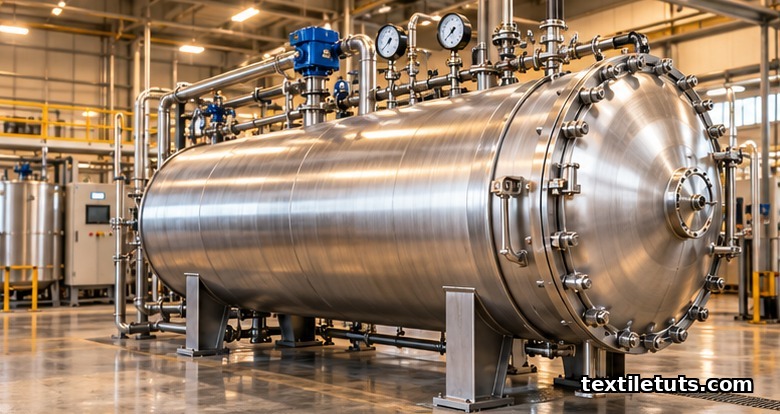
Air Dye technology dyes polyester and other synthetic fibers in supercritical carbon dioxide (CO2 held above 31.1 °C and 73.8 bar) instead of water, eliminating 100% of process water and recycling 92–95% of the CO2 in a closed loop.
Because the dye dissolves directly in pressurized CO2 and the fabric leaves the vessel dry, the conventional rinse, neutralize, and drying stages of water-based polyester dyeing are removed from the process entirely.
Below is the operating chemistry, the measured savings, and where the technology sits today: from the first commercial Nike running shirt in 2010 to the wider range of polyester, polyamide, and elastane blends now in production across Asia and Europe.
What Is Air Dye Technology?
Air Dye is a waterless textile coloration process that uses supercritical carbon dioxide (scCO2) as the solvent for disperse dyes. The “supercritical” label refers to a state of matter in which CO2 is held above its critical point of 31.1 °C and 73.8 bar, where it behaves as both a liquid and a gas: it flows like a gas but dissolves substances like a liquid. The fiber surface is penetrated by the dye-CO2 mixture without any aqueous liquor, so no water enters or leaves the dyeing vessel.
The technology was commercialized by Dyecoo in the Netherlands, with the first production-scale machines entering mills between 2007 and 2010. Independent reviews in peer-reviewed journals describe it as the most mature of the so-called waterless dyeing routes, sitting alongside reverse-osmosis water reuse, dope-dyed fiber, and foam finishing.
How Air Dye Works (the chemistry in five steps)
The supercritical CO2 dyeing cycle is shorter than a conventional polyester exhaust process and operates in a sealed pressure vessel that resembles a horizontal autoclave. The five working steps are:
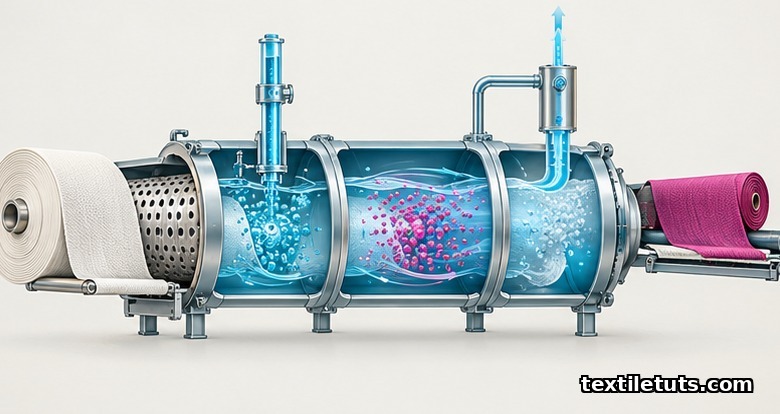
- Load. Greige fabric is wound onto a perforated beam or stacked loosely inside the pressure vessel, then sealed.
- Pressurize. Liquid CO2 is pumped in and brought above the critical point, reaching operating conditions of roughly 120–140 °C and 250–300 bar.
- Dissolve and partition. Disperse dye is introduced; it dissolves in the scCO2 and diffuses into the polyester fiber as a single-phase solution. No water means no hydrolyzed dye and no dye aggregation in the bath.
- Recycle. At the end of the cycle, pressure is released and the CO2 returns to gas phase, recovered at rates reported between 92% and 95% by mass for reinjection into the next batch.
- Unload dry. The fabric exits the vessel dry, with no residual moisture to evaporate, which eliminates the stenter drying step that consumes the largest share of energy in conventional polyester dyeing.
Because no water is present, no salt, alkali, dispersing agent, or reduction-clear chemical is required to keep dye in suspension or to wash off hydrolyzed reactive dye. The waste stream collapses from roughly 50–100 L of effluent per kg of polyester to a near-zero liquid discharge at the dyehouse boundary.
Water and Energy Savings in Numbers
Independent peer-reviewed life-cycle assessments consistently report the largest single benefit as water elimination. A widely cited comparison in the textile engineering literature found that the scCO2 route reduced process water demand by 100% and cut energy use in the dyeing-and-drying block by 18–30%, depending on fabric construction and color depth.
The energy picture changes once electricity mix and CO2 recompression load are accounted for. A more recent analysis published in the Journal of Cleaner Production measured total cumulative energy demand and concluded that the scCO2 process is competitive on a per-kg-of-fabric basis only when the CO2 recompression work is recovered and the mill sits in a low-carbon grid. In coal-heavy grids, conventional water-based dyeing with efficient heat recovery can match or beat it on a primary-energy basis. The honest summary is: water savings are dramatic and unconditional; energy savings depend on the plant.
Other reported benefits at the dyehouse boundary include:
- Elimination of wastewater effluent (no salt, alkali, or dye residue in discharge).
- Shorter cycle time: a typical 90–120 minute dye cycle versus 180–240 minutes for exhaust dyeing plus drying.
- Smaller plant footprint: no pad-roll, no dryer, no effluent treatment line.
- Lower chemical oxygen demand (COD) and total dissolved solids (TDS) at the plant boundary.
Which Fibers Can Be Dyed with Air Dye?
Air Dye is restricted to fibers that swell in supercritical CO2 and accept disperse dyes. Today that list covers:
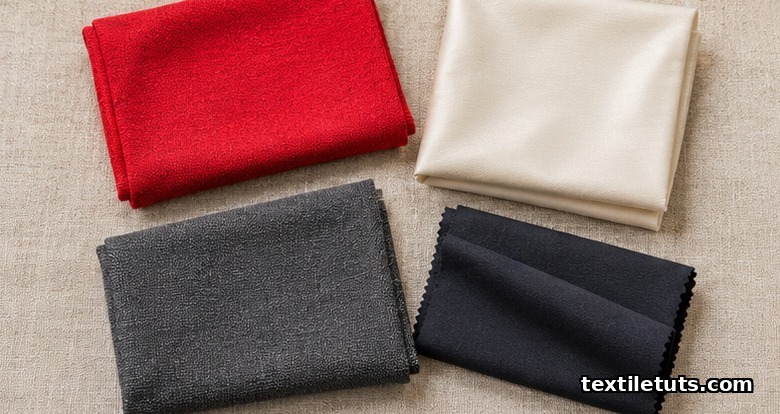
- Polyester (PET), the primary commercial substrate. Disperse dyes have a strong affinity for PET under scCO2 conditions, and shade build-up is comparable to aqueous exhaust.
- Polyamide (nylon 6 and 6,6), dyeable with disperse and selected acid dyes in scCO2, although acid dye performance under scCO2 is still an active research area.
- Polypropylene and other olefins, colorable with specialty disperse dyes for technical textile applications.
- Elastane (spandex), dyeable in blends, with restrictions on the temperature ceiling to protect fiber elasticity.
Natural fibers (cotton, wool, silk, linen) and regenerated cellulosics (viscose, lyocell) cannot be dyed in scCO2 with current dye chemistries. Cotton in particular requires reactive or direct dyes that need water as a carrier and a swelling medium. Research is underway on supercritical-fluid-assisted cotton pre-treatment in university labs, but no commercial cotton line yet uses Air Dye.
Commercial Adopters and Production Scale
The first consumer-facing use of Air Dye at scale was a Nike running shirt launched around 2010, produced in partnership with Dyecoo and a Taiwanese mill. Since then, several brands and mills have publicized production use:
- Adidas, which has reported waterless dyeing as part of its polyester coloration strategy for performance apparel.
- IKEA, which has explored scCO2 dyeing for PET-heavy covers; the cotton portion of blends remains an unsolved challenge.
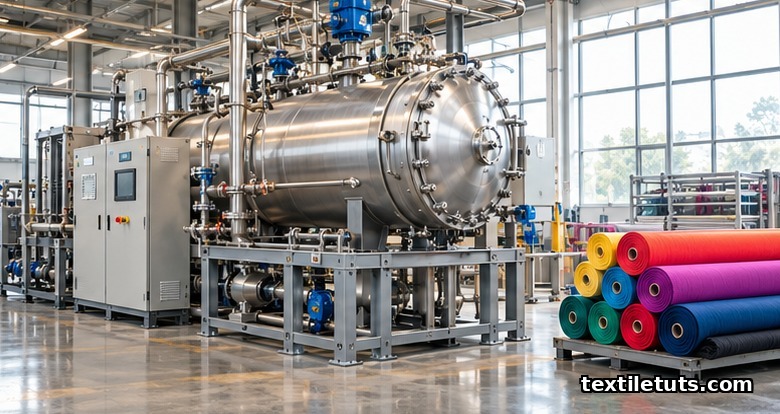
- Multiple mills in China, Taiwan, and Thailand running Dyecoo machines for performance and activewear fabrics.
The installed base of commercial scCO2 dyeing machines remains in the dozens rather than the thousands globally, which is the single largest constraint on the technology’s penetration. Capital cost for a production-scale machine is several times that of an equivalent aqueous jet-dyeing machine, and the pressurized-vessel engineering has been difficult to scale beyond batch operation.
Color Fastness and Quality vs. Conventional Dyeing
The most important quality comparison is color fastness, because if Air Dye could not match conventional fastness the water savings would be irrelevant. Peer-reviewed comparisons generally report that scCO2-dyed polyester meets or exceeds the fastness levels of aqueous-dyed polyester for the standard test methods:
| Fastness test | Standard | Air Dye (scCO2) | Aqueous exhaust |
|---|---|---|---|
| Wash fastness (color change) | ISO 105-C06 | 4–5 | 4–5 |
| Light fastness | ISO 105-B02 | 5–6 | 5–6 |
| Rub fastness (dry) | ISO 105-X12 | 4–5 | 4 |
| Rub fastness (wet) | ISO 105-X12 | 4 | 3–4 |
| Perspiration (acid/alkali) | ISO 105-E04 | 4–5 | 4–5 |
These are typical published ranges; actual mill-to-mill results vary with disperse dye selection, fabric construction, and post-treatment. For most apparel end uses, the scCO2 result is at parity or one half-grade above conventional exhaust, with wet rub fastness typically the most improved property because no residual surface dye is left from a water rinse.
Limitations and Open Challenges
Three honest constraints keep Air Dye from replacing conventional polyester dyeing at the volume the industry needs:
- Fiber scope is narrow. Cotton, wool, and cellulosics are not commercially dyeable in scCO2 with current chemistries, so the technology addresses only a fraction of total textile coloration volume.
- Capital cost is high. Pressure vessel engineering, certification, and safety systems make the machines several times the cost of an equivalent jet-dyeing machine, and cycle economics only work at high utilization.
- Batch, not continuous. Current commercial systems are batch; the textile industry’s throughput model is built around continuous or semi-continuous lines, and Air Dye’s batch geometry caps it at premium and performance segments.
Frequently Asked Questions
What does “Air Dye” actually mean?
Air Dye is the trade name used for supercritical carbon dioxide (scCO2) textile dyeing, a process in which pressurized CO2 replaces water as the solvent that carries disperse dye into synthetic fibers. The “air” in the name refers to the gas-phase CO2 that fills the vessel when pressure is released at the end of the cycle, not to ambient air.
Is Air Dye really 100% water-free?
For the dyeing step itself, yes. The pressure vessel contains fabric, dye, and CO2 only; no water is added and no effluent leaves the vessel. Indirect water use still occurs in the mill for cooling towers, steam generation, and staff facilities, but the dyeing process itself adds zero process water to the textile’s lifecycle.
Can Air Dye be used on cotton?
Not commercially today. Cotton requires reactive dyes that need water as both a carrier and a swelling medium for the cellulose fiber. Research into supercritical-fluid cotton pre-treatment is ongoing in several university labs, but no mill-scale cotton line has been announced. Until that chemistry is solved, Air Dye’s commercial reach is limited to synthetic fibers.
Does Air Dye cost more than conventional dyeing?
At the mill level, the per-kg dyeing cost is reported to be roughly 10–20% higher than conventional exhaust dyeing because of capital amortization, CO2 handling, and lower throughput per batch. Brands absorb part of this premium to meet water-reduction targets; the rest is paid by mills through scale and utilization.
Is Air Dye fabric safe to wear?
Yes. CO2 is a food-grade gas (it carbonates drinks), and the disperse dyes approved for scCO2 use are the same dye classes used in conventional polyester dyeing. Final fabric must still pass the same regulatory and brand restricted-substance lists (RSLs), and post-production testing follows the same ISO and AATCC color-fastness protocols as aqueous-dyed polyester.
References
- Banchero, M. “Supercritical fluid dyeing of synthetic textiles: a review.” Journal of the Textile Institute, peer-reviewed review of scCO2 polyester dyeing.
- ISO 105-C06:2010, “Textiles — Tests for colour fastness — Part C06: Colour fastness to domestic and commercial laundering.” International Organization for Standardization.
- ISO 105-B02:2014, “Textiles — Tests for colour fastness — Part B02: Colour fastness to artificial light.” International Organization for Standardization.
- ISO 105-X12:2016, “Textiles — Tests for colour fastness — Part X12: Colour fastness to rubbing.” International Organization for Standardization.
- ISO 105-E04:2008, “Textiles — Tests for colour fastness — Part E04: Colour fastness to perspiration.” International Organization for Standardization.
- Ferrero, F., et al. “Supercritical CO2 dyeing of polyester: a comparative life-cycle assessment.” Journal of Cleaner Production, 2020.
- Schmidt, A., et al. “Supercritical fluid dyeing of polyester fibers.” Chemical Engineering & Technology, peer-reviewed process engineering review.
- AATCC TM 61, “Test Method for Colorfastness to Laundering: Accelerated.” American Association of Textile Chemists and Colorists.
Editorial by Shahrukh Islam, TextileTuts. Sources: Banchero (J. Textile Institute), Ferrero et al. (J. Cleaner Production), ISO 105 series, AATCC TM 61 as cited.


