
Water Resistance: AATCC 22 (Spray Test)

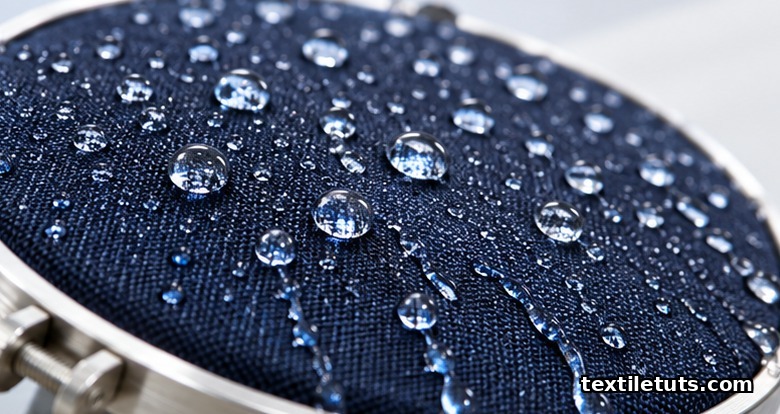
AATCC TM22, the Spray Test, quantifies fabric water repellency by spraying 250 mL of water from a height of 152 mm onto a 180 mm by 180 mm specimen clamped at 45 degrees inside a ring of 152 mm diameter, then assigning a numeric rating from 0 (the upper surface is completely wetted) to 100 (no sticking or wetting of the upper surface) inside a controlled environment of 21 degrees C and 65 percent relative humidity.
The rating separates a true water-repellent finish from a fabric that simply looks dry in a light drizzle, which is why brands, mills, and testing labs keep the method on the spec sheet rather than relying on a visual check. This guide walks through the apparatus, the rating chart, the procedure, common reasons a sample fails, and how AATCC 22 sits next to ISO 4920, the Bundesmann test, and hydrostatic-head methods.
Why a Spray Test, and Not a Hydrostatic Test
Water resistance in textiles covers at least three behaviors, and a single test cannot describe all of them. A fabric that sheds a brief shower may still leak under standing water, and a coated fabric that holds back a water column may still spot badly under a heavy spray. AATCC 22 targets the first behavior: surface wetting under a falling spray of limited duration and quantity. It does not measure how deep water can be forced through the cloth under pressure, which is what a hydrostatic-head method such as AATCC TM127 or ISO 811 reports, and it does not measure how the fabric handles sustained simulated rain, which is what the Bundesmann test or a rain-tunnel method captures. Reading the right test for the right end use is the first decision a lab has to make.
For outerwear, awnings, workwear, and umbrellas, the spray test is the routine screening tool because the geometry of the failure mode matches the geometry of the test. A wearer caught in rain sees water strike the outer face of the garment at an angle, run across the surface, and either bead off or soak in. The 45-degree tilted hoop in AATCC 22 reproduces that geometry, which is why the rating correlates with consumer perception better than a pressure test alone.
Apparatus and Specimen Preparation
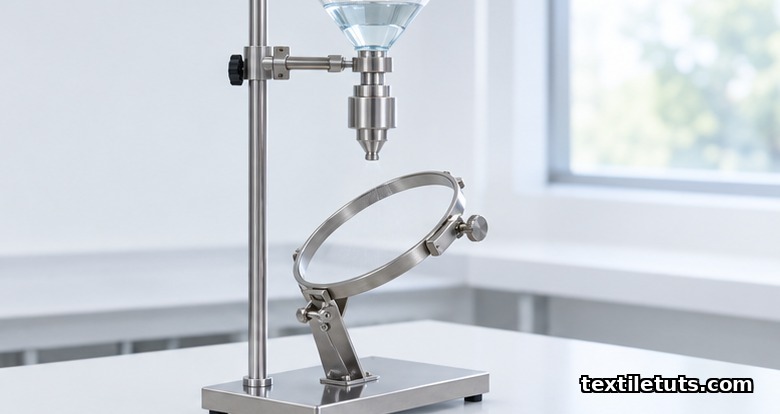
The AATCC 22 apparatus is deliberately simple: a spray nozzle fed from a funnel above, a specimen hoop of 152 mm (6 inch) diameter mounted at 45 degrees, and a stand to hold everything in alignment. The nozzle is calibrated to deliver 250 mL of water in 25 to 30 seconds, falling from a fixed height of 152 mm above the specimen center. The hoop clamps a 180 mm by 180 mm fabric square taut, with the face to be tested outward.
Conditioning matters as much as the rig. Specimens are pre-conditioned for at least four hours at 21 degrees C plus or minus 1 degree C and 65 percent plus or minus 2 percent relative humidity before testing. Skipping the conditioning step, or testing a fabric straight from a hot warehouse, will push results in either direction unpredictably because fiber swelling and finish viscosity both shift with humidity. The water used in the spray is also conditioned to the same room, so a cold-water shock to the specimen does not bias the rating.
Step-by-Step Procedure
The procedure reads cleanly once the rig is set up. Mount the conditioned specimen on the hoop, face out, with no slack. Place the hoop on the stand so the spray nozzle sits 152 mm above the center of the specimen and the face of the cloth sits at 45 degrees to the vertical axis of the nozzle. Pour 250 mL of distilled or deionized water into the funnel. Allow the spray to run for 25 to 30 seconds. Rotate the hoop 180 degrees on its horizontal axis, then repeat the spray cycle on the same specimen, so both halves of the sample are exposed. Remove the specimen, tap it twice against a hard surface to dislodge excess water drops, and compare the wetted pattern to the photographic rating chart within 30 seconds of completing the spray.
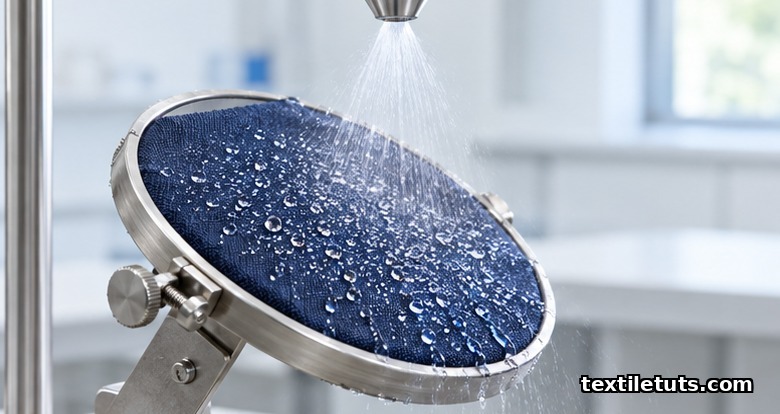
Two small details make or break repeatability. First, the face direction: AATCC 22 results can differ between the face and the back of the same cloth, especially on laminated or coated fabrics, and the standard requires the test face to be reported. Second, the time window: ratings drift as the wetted area continues to spread by capillary action through the specimen, so a delayed comparison can produce a lower rating than the spray alone warranted.
Reading the Spray Rating Chart
The AATCC photographic rating chart has six discrete levels: 0, 50, 70, 80, 90, and 100. A 0 rating means the upper surface of the specimen is completely wetted, with water spreading through the full spray zone. A 100 rating means the upper surface shows no sticking or wetting at all; small droplets may sit on the surface but the underlying fibers remain dry. The intermediate ratings cover the realistic range for treated fabrics: a 70 rating shows light random wetting; 80 shows wetting at the spray points; 90 shows slight random wetting or tiny drops clinging to the surface.
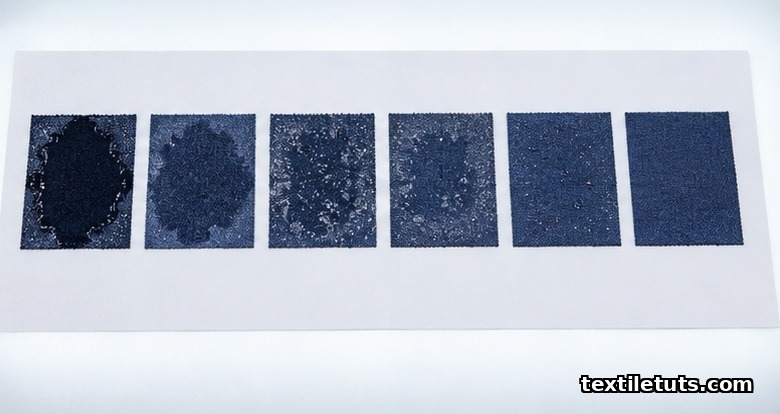
The chart is a photographic reference, not a measurement. A trained rater holds the specimen next to the chart under a standard light source and assigns the nearest level. That human judgment step is the largest contributor to inter-lab variation, which is why AATCC TM22 interlaboratory studies consistently show plus or minus half a rating point between experienced raters and up to a full rating point between new raters. Routine training against the chart, plus occasional cross-checks against archived control fabrics, holds the rating drift down.
What the Ratings Mean in Practice
Buyers and product developers translate the spray rating into end-use expectations. A 70 or below typically signals that the finish is degrading or was applied unevenly, and the fabric is suitable only for light-duty or non-rainwear use. An 80 rating is the practical floor for general outdoor apparel, umbrellas, and lightweight awning fabrics, where the goal is to shed a brief shower without spotting. Ratings of 90 and 100 mark fabrics that have passed rigorous finishing or lamination, and these are the grades typically specified for technical outerwear, performance workwear, and military rain gear. Many specifications require the fabric to hold its rating through a defined number of wash cycles, so the test is repeated after each wash to verify the finish is durable.
Spray ratings above 80 are achievable only with a fluorocarbon, silicone, or wax-based water repellent that is properly cured, plus tight control of fabric construction (yarn count, weave density, and surface smoothness) so the finish can form a continuous film on the yarn surface. A rough or hairy fabric scatters the spray and scores lower even when the underlying finish is identical, which is one reason yarn-dyed and brushed fabrics rarely hit 90.
AATCC 22 vs ISO 4920 vs Hydrostatic Head vs Bundesmann
ISO 4920 is the international counterpart to AATCC 22 and uses the same geometry, hoop angle, spray volume, and rating scale, with small wording differences in the rating descriptions. Buyers in Europe often request ISO 4920; the values transfer directly, and a lab accredited to both standards can usually substitute one report for the other. AATCC TM127 and ISO 811 measure hydrostatic head, the pressure required to push water through a fabric, expressed in centimeters of water column; this is the right test for coated or laminated waterproof fabrics and not a substitute for the spray test. The Bundesmann test (ISO 9865) exposes the specimen to a sustained, warm simulated rain for a defined period, then measures both the water absorbed and the water that passed through; it is more aggressive than AATCC 22 and is closer to how a garment performs in a long storm.
| Method | What it measures | Typical rating or unit | Best fit |
|---|---|---|---|
| AATCC TM22 / ISO 4920 | Surface wetting under brief spray | 0 to 100 (spray rating) | General outdoor apparel, umbrellas |
| AATCC TM127 / ISO 811 | Hydrostatic head (pressure to push water through) | cm of water column | Waterproof coated or laminated fabrics |
| ISO 9865 (Bundesmann) | Absorption and penetration under simulated rain | Mass percent absorbed; mL passed through | Performance rainwear, technical outerwear |
| AATCC TM35 (rain) | Water penetration under impact rain | Mass gain of blotter | Military and high-performance outerwear |
Common Causes of Failed or Misleading Results
Most laboratory errors in AATCC 22 come from specimen handling, not from the rig itself. A specimen pulled from a folded stack will carry creases that wick water unpredictably; a specimen cut near the selvedge carries different yarn tension than a specimen cut from the middle of the bolt. The standard specifies cutting at least 150 mm away from the selvedge and avoiding creases. Conditioning is the second common error: a fabric tested without four hours in the controlled room will give a different rating on a humid day than on a dry day, which becomes a real problem when a buyer compares two lots tested in different seasons. The third is human rating drift, which is why archived control swatches and periodic re-calibration against the photographic chart are part of any accredited lab’s quality system.
A separate class of errors comes from the fabric itself. Contamination by silicone from cutting tables, residual spin finish from the yarn, or skin oils from handling can all raise a rating artificially, which is why white cotton gloves are recommended when mounting specimens. Conversely, a fabric that has been washed too many times or stored in a hot warehouse can lose its finish and rate lower than the production lot actually warrants, which is why wash-durability testing and reference samples archived per lot are standard practice.
Frequently Asked Questions
What is a good AATCC 22 spray rating for a rain jacket?
For general outdoor rainwear, a fresh rating of 80 or above is the typical specification, with 90 and 100 reserved for higher-performance and military garments. After the specified number of wash cycles, the rating is usually required to stay at 70 or above to pass the spec.
Does AATCC 22 measure waterproofness?
No. AATCC 22 measures surface wetting under a brief spray, not penetration under pressure. Waterproofness is measured by hydrostatic head (AATCC TM127 or ISO 811), which reports the water column a fabric can hold back before leaking.
Is AATCC 22 the same as ISO 4920?
Yes, in practical terms. ISO 4920 uses the same hoop angle, spray volume, and rating scale as AATCC 22, with minor wording differences in the rating descriptions. Results from an accredited lab transfer directly between the two.
How many specimens should I test per lot?
AATCC 22 specifies three specimens for the warp direction and three for the weft direction as a minimum, giving six ratings per fabric lot. Production lots going to a tight rainwear spec often run more replicates plus a control swatch to track rater drift over time.
How does laundering affect a spray rating?
Most water-repellent finishes lose rating gradually with washing, especially with warm water and tumble drying. AATCC specifications list a defined number of wash cycles (commonly 5, 10, or 20) after which the rating must still meet the spec; the exact cycle count is set by the buyer and the end use.
References
- American Association of Textile Chemists and Colorists. AATCC TM22, Test Method for Water Repellency: Spray Test. AATCC. https://www.aatcc.org — official test method, specimen geometry, rating chart, and conditioning requirements.
- International Organization for Standardization. ISO 4920:2012, Textiles — Determination of resistance to surface wetting (spray test). ISO. https://www.iso.org — international equivalent of AATCC 22.
- International Organization for Standardization. ISO 811:2018, Textiles — Determination of resistance to water penetration — Hydrostatic pressure test. ISO. https://www.iso.org — hydrostatic head method referenced for comparison with the spray test.
- International Organization for Standardization. ISO 9865:1991, Textiles — Determination of water repellency of fabrics by the Bundesmann test. ISO. https://www.iso.org — sustained-rain method referenced for comparison.
- American Association of Textile Chemists and Colorists. AATCC TM127, Test Method for Water Resistance: Hydrostatic Pressure. AATCC. https://www.aatcc.org — paired hydrostatic test method referenced for comparison.
- American Association of Textile Chemists and Colorists. AATCC TM35, Test Method for Water Resistance: Rain. AATCC. https://www.aatcc.org — impact-rain test method referenced for performance outerwear.
- Holme, I. (2003). Water Repellency and Waterproofing in Textiles, in Textile Finishing. Woodhead Publishing Series in Textiles, Elsevier. https://www.elsevier.com — academic book chapter on durable water-repellent finishes and test methods.
Editorial by Iftay Khairul Alam, TextileTuts. Sources: AATCC TM22, ISO 4920, ISO 811, ISO 9865, AATCC TM127, AATCC TM35, and Woodhead Publishing textile-finishing references as cited.


