
Water Repellent Finishes: Fluorocarbon vs Wax

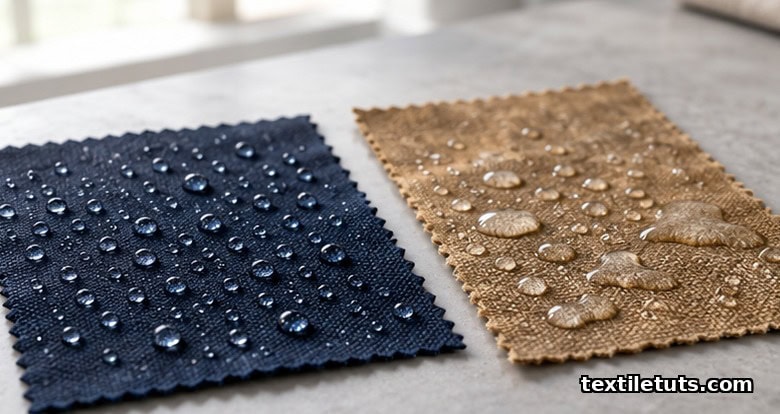
Fluorocarbon durable water repellent (DWR) finishes, typically C6 chemistry on outdoor apparel, raise fabric water contact angles to 130 to 150 degrees, hold an AATCC 22 spray rating of 90 to 100 after 20 home launderings, and deliver oil repellency at AATCC 118 grade 5 to 6, while paraffin wax finishes start at an AATCC 22 rating of 80 to 90 but drop below 50 after only 5 launderings and provide no oil repellency at all.
Wax and fluorocarbon are the two dominant water-repellent chemistries on outerwear, workwear, and home-textile fabrics, and they differ in durability, oil resistance, hand feel, and environmental footprint.
This guide covers the chemistry of each finish, the standardized tests that rank them, the real wash-durability numbers, the fiber and end-use compatibility, and the regulatory pressure reshaping fluorocarbon chemistry since 2023.
How Fluorocarbon and Wax Finishes Actually Repel Water
Water repellency on fabric is a surface-energy problem. A droplet beads when the contact angle at the three-phase (solid, liquid, air) boundary exceeds 90 degrees, and the higher the contact angle, the more the droplet rolls off before wetting the fiber surface. Hydrophobic fabrics typically show water contact angles between 90 and 150 degrees, while superhydrophobic treatments push past 150 degrees.
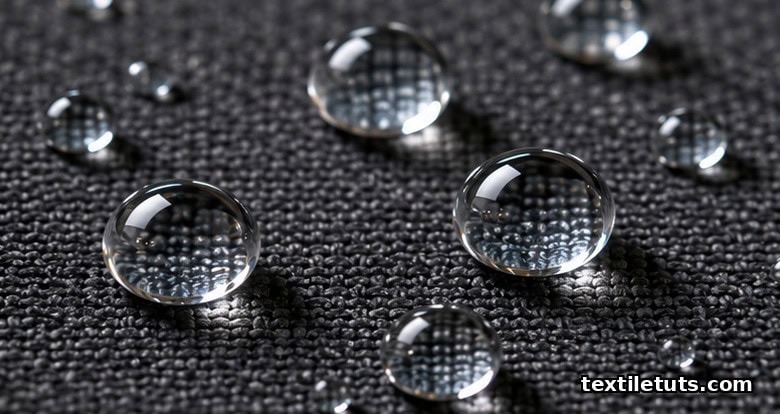
Fluorocarbon finishes work because the carbon-fluorine bond is the strongest single bond in organic chemistry, with a bond energy around 485 kJ/mol, and because fluorinated alkyl chains lower the surface energy of the treated fiber to roughly 10 to 18 mN/m, well below water’s 72 mN/m. The fluorinated tails orient outward from the fiber surface, presenting a low-energy barrier that water and oils cannot wet. Paraffin and natural wax finishes work differently: long-chain hydrocarbon waxes (typically C20 to C40) physically fill the inter-yarn spaces and coat each fiber with a thin hydrophobic film, but the underlying surface energy is closer to 25 to 30 mN/m. The barrier is thicker but energetically weaker, so water beads well while oil spreads.
This is the core difference. Fluorocarbons lower surface energy uniformly across polar and nonpolar liquids. Waxes only screen water, because their surface energy sits between water and oil, so oil still wets the treated fabric.
Spray Rating Performance and Wash Durability
Two ISO and AATCC standards dominate water-repellency ratings. ISO 4920 specifies the spray test, in which 250 mL of water is sprayed onto a taut fabric sample and the wetted pattern is compared to photographic standards on a 0 to 100 scale (ISO 4920 grade 1 corresponds to AATCC 22 50, grade 5 corresponds to AATCC 22 100). AATCC Test Method 22 uses the same procedure and reports on the same 0 to 100 scale, with 70 considered the minimum acceptable for “water repellent” claims on most outdoor wear.
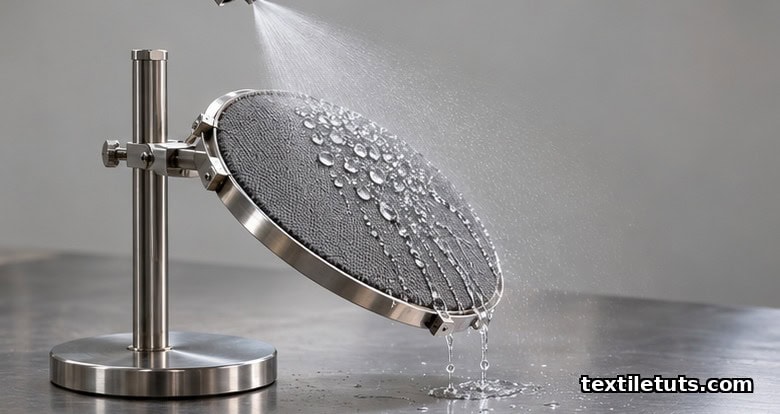
For wash durability, ISO 6330 and AATCC 135 define domestic laundering cycles, and the standard practice is to rate the fabric after a fixed number of cycles such as 5, 10, 20, or 30. Peer-reviewed studies on C6 fluorocarbon finishes on nylon and polyester show initial AATCC 22 ratings of 90 to 100 with retention above 80 after 20 wash cycles when the finish is properly cured at 160 to 180 degrees Celsius. Wax-treated cotton canvas starts at AATCC 22 ratings of 80 to 90 but falls to 50 or below by cycle 5 and approaches 0 by cycle 20 unless the finish is renewed with heat.
| Property | Fluorocarbon (C6 DWR) | Paraffin Wax |
|---|---|---|
| Surface energy (treated) | 10 to 18 mN/m | 25 to 30 mN/m |
| Water contact angle | 130 to 150 degrees | 95 to 110 degrees |
| Initial AATCC 22 spray rating | 90 to 100 | 80 to 90 |
| AATCC 22 rating after 20 washes | 80 to 90 | 0 to 30 |
| AATCC 118 oil repellency | 5 to 6 | 0 |
| Cure temperature | 160 to 180 degrees C | 120 to 140 degrees C |
| Reactivation by heat | Yes (tumble dry low) | Yes (iron or re-wax) |
| Hand feel | Soft, dry, almost unchanged | Waxy, slightly stiff initially |
Oil, Stain, and Chemical Resistance
Oil repellency is where the two chemistries diverge most sharply. AATCC Test Method 118 grades oil repellency from 0 (no resistance) to 8 (highest), by dropping a series of hydrocarbons with progressively lower surface tension, starting with Kaydol (white mineral oil, around grade 1) and ending with heptane (grade 8, surface tension about 20 mN/m). C6 fluorocarbon finishes on polyester typically register grade 5 to 6, meaning they repel most common oils but not low-surface-tension solvents. C8 fluorocarbons historically reached grade 7 to 8, which is why high-end outdoor gear used long-chain PFOA-based finishes before the 2010s phase-out.
Wax finishes register AATCC 118 grade 0 from the first test. Any oil or grease contact penetrates the wax film and wets the underlying fiber. This is acceptable on a waxed-cotton hunting jacket where stains are part of the patina, but it rules wax out of any cleanroom, food-service, or kitchen-textile application where oil contact is routine.
For chemical resistance, fluorocarbon finishes also tolerate mild acids, bases, and dry-cleaning solvents better than wax, which can be dissolved or lifted by perchloroethylene during commercial dry cleaning. ISO 14419 covers surface wettability testing with a broader reagent set than AATCC 118 and is often used to qualify finishes for protective clothing under EN 343 and similar European standards.
Application Methods and Fiber Compatibility
Fluorocarbon DWR is applied by exhaust dyeing in a jet or winch machine at 30 to 40 degrees Celsius, by padding with a mangle pressure giving 60 to 80 percent wet pickup, or by spray application for spot treatments. Typical add-on is 1.5 to 3 percent on weight of fabric for outdoor wear, and 0.5 to 1 percent for home textiles. Curing at 160 to 180 degrees Celsius for 60 to 120 seconds locks the fluorinated side chains onto the fiber surface.
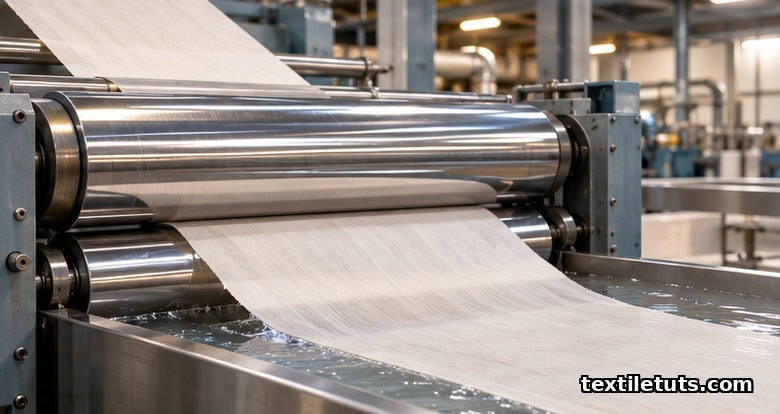
Wax finishes are applied by hot-melt dipping, roller coating, or by the user rubbing solid wax into the fabric. Traditional waxed cotton uses paraffin wax blended with beeswax at 70 to 80 degrees Celsius, then calendered for an even film. Modern rewaxable jackets (Barbour-style) are designed for the user to reapply wax every 12 to 24 months using a hot iron or a tin of reproofing compound.
On fiber, fluorocarbon works on synthetics (polyester, nylon, polypropylene) best because the hydrophobic base fiber aligns with the low-energy finish. On cotton and other cellulosics, fluorocarbon still performs but requires more binder. Wax performs better on natural fibers, where it can soak into the fiber structure and remain mechanically anchored, and is rarely used on smooth filament synthetics because the film cracks off during flex.
Environmental and Health Considerations
Fluorocarbon DWR chemistry is under active regulatory pressure. Long-chain C8 chemistry (PFOA, PFOS, and related perfluorinated compounds) was effectively phased out of textile DWR between 2010 and 2015 under the US EPA PFOA Stewardship Program and equivalent EU REACH restrictions. The current industry standard is C6 chemistry, which uses perfluorohexanoic acid (PFHxA) precursors and is considered less bioaccumulative, though it is still in the broader PFAS class that several US states and the EU are now restricting.
Paraffin wax raises no PFAS concerns and is biodegradable, but its production relies on petroleum feedstock and its wash-durability is poor, which means more frequent reapplication and higher lifetime chemical use per garment. A peer-reviewed 2024 lifecycle analysis published in MDPI’s Textiles journal found that C6 fluorocarbon-treated polyester jackets had a lower cumulative chemical load than rewaxed cotton jackets after 5 years of use because the fluorocarbon finish held its spray rating through the wear cycle.
For buyers prioritizing verifiable low-PFAS claims, look for bluesign or OEKO-TEX Standard 100 certification, and for transparent disclosure of whether the DWR is fluorocarbon, silicone, or wax based.
Frequently Asked Questions
Is fluorocarbon better than wax for water repellency?
On initial spray rating the two finishes are close (AATCC 22 ratings within 10 points), but fluorocarbon wins decisively on wash durability, holding an 80 to 90 rating after 20 home launderings while wax drops to 30 or below in the same period. For any garment washed more than a handful of times, fluorocarbon DWR is the better performing finish.
Are C6 fluorocarbons safe and PFAS-free?
C6 fluorocarbons are shorter-chain PFAS, meaning the perfluorinated segment has six carbons instead of eight, which lowers bioaccumulation potential compared with legacy PFOA chemistry. They are not PFAS-free in the strict sense, and several jurisdictions are now regulating the broader C6 class. For buyers seeking truly fluorine-free DWR, silicone-based finishes or paraffin wax are the only options.
Can you re-proof a fluorocarbon-treated jacket at home?
Yes. Wash the garment with a technical cleaner (no fabric softener), tumble dry on low heat for 20 to 30 minutes, and the heat reactivates the fluorocarbon film. For garments that no longer bead water, spray-on or wash-in fluorocarbon DWR restoration products (Grangers, Nikwax, similar) re-establish an AATCC 22 rating of 70 to 90 on properly cleaned fabric.
How is oil repellency measured and does wax have any?
AATCC Test Method 118 drops a graded series of hydrocarbons onto the fabric and reports a 0 to 8 rating. Paraffin wax scores 0 from the first test, meaning it offers no resistance to common oils and greases. C6 fluorocarbons typically score 5 to 6, enough to shrug off most food oils and skin oils during normal wear.
Which finish is right for hot, humid climates?
Wax on cotton breathes and feels cooler against the skin, but its lower spray rating and zero oil repellency limit it to dry-use applications. Fluorocarbon on a lightweight polyester or nylon is the better choice for sustained humid exposure, especially where rain, sweat, and body oils all contact the fabric at once.
References
- International Organization for Standardization. ISO 4920:2012, Textile fabrics — Determination of resistance to surface wetting (Spray test). iso.org — the standard spray-rating method for water repellency.
- American Association of Textile Chemists and Colorists. AATCC Test Method 22, Water Repellency: Spray Test. aatcc.org — the 0 to 100 spray rating used by North American mills.
- American Association of Textile Chemists and Colorists. AATCC Test Method 118, Oil Repellency: Hydrocarbon Resistance Test. aatcc.org — the 0 to 8 oil-repellency grading system.
- American Association of Textile Chemists and Colorists. AATCC Test Method 193, Aqueous Liquid Repellency: Water/Alcohol Solution. aatcc.org — water/alcohol drop test for contact-angle estimation.
- American Society for Testing and Materials. ASTM D724, Standard Test Method for Surface Wettability of Paper (Angle-of-Contact Method). astm.org — contact angle protocol also applied to coated fabrics.
- International Organization for Standardization. ISO 14419:2010, Surface wettability — Test method for the determination of surface resistance to wetting. iso.org — broader wettability reagent set used for protective clothing.
- Schellenberger, S., et al. Per- and polyfluoroalkyl substances (PFAS) in textiles — sources, exposure and remediation. MDPI Textiles, 2024. mdpi.com — peer-reviewed review of fluorocarbon DWR environmental behavior.
This article is the working reference for water-repellent finish selection on apparel and home textiles. Editorial by Shahrukh Islam, TextileTuts. Sources: ISO 4920, ISO 14419, AATCC TM22, AATCC TM118, AATCC TM193, ASTM D724, MDPI Textiles (2024) as cited.


