
Vascular Grafts: Dacron and ePTFE

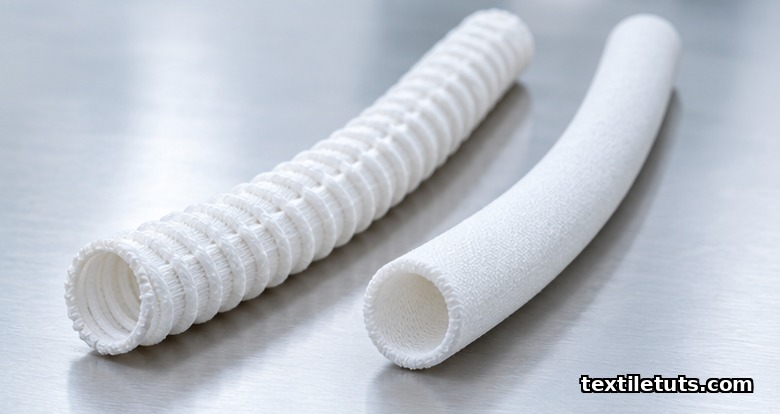
Dacron (polyethylene terephthalate, PET) and expanded polytetrafluoroethylene (ePTFE) together account for over 90% of all synthetic vascular grafts implanted worldwide, with the global vascular graft market reaching USD 2.7 billion in 2024 and an annual procedure volume above 1.2 million units.
These two polymers dominate vascular reconstruction because their mechanical strength, biocompatibility, and tunable porous architectures match the demands of arterial replacement and bypass surgery, and because both are covered by dedicated ISO and ASTM standards that govern porosity, suture retention, and water permeability.
This article breaks down how each graft is manufactured, the specific physical properties that surgeons rely on, the clinical indications where one material is favored over the other, and the standards that separate a compliant graft from a non-compliant one.
What a vascular graft is and why synthetic polymers dominate
A vascular graft is an implanted tubular conduit that replaces or bypasses a diseased segment of artery. The textile form of these grafts is what makes them a textile-engineering topic: Dacron grafts are either woven or knitted from multifilament PET yarn on circular looms or knitting machines, while ePTFE grafts are paste-extruded and mechanically stretched to form a microporous node-and-fibril tube. Both constructions are classified as medical textiles under ISO 7198:2016, Cardiovascular implants and extracorporeal systems, Vascular prostheses, Tubular vascular prostheses and vascular patches.
Before synthetic grafts became routine, surgeons relied on autologous saphenous vein, which remains the gold standard for coronary bypass below the knee and for infrapopliteal reconstructions. When native vessel is unavailable, scarred, or of insufficient diameter, the surgeon falls back on a synthetic. Dacron is the historic workhorse for large-diameter, high-flow applications such as aortic and iliac replacement, while ePTFE is preferred for smaller-diameter and lower-flow reconstructions such as above-knee femoropopliteal bypass and arteriovenous grafts for hemodialysis.
Dacron (PET) vascular grafts
Dacron is the DuPont trade name for polyethylene terephthalate, the same polymer used in PET beverage bottles and polyester apparel. The graft form is manufactured as a tubular fabric by weaving or knitting continuous-filament PET yarn, then crimping the tube to give it longitudinal extensibility and to prevent kinking when the graft is bent across a joint. The crimp is not decorative: it provides radial and longitudinal compliance so the graft can accommodate the 5-10% cyclic diameter change that occurs with each cardiac cycle.
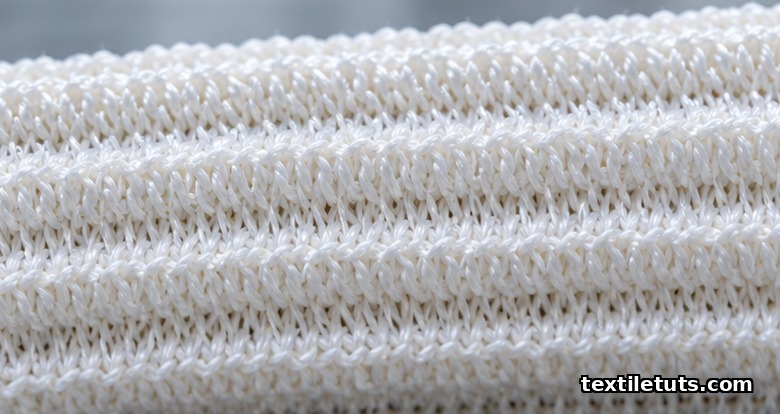
Knitted grafts are softer and more compliant but have higher water permeability, which is why they are typically sealed with collagen, gelatin, or albumin coatings to make them impervious at implantation. The coating biodegrades over 2-4 weeks as the patient’s own tissue incorporates the graft. Woven grafts are inherently less porous and are often used without a sealant in high-flow positions.
The key textile property is porosity, defined as water permeability per unit area under a defined pressure head, expressed in mL per cm² per minute. ISO 7198 requires manufacturers to report this value, and ASTM F3034-16 specifies the apparatus and procedure. A typical knitted, collagen-sealed Dacron graft has a pre-seal permeability of 1500-2500 mL/cm²/min and a post-seal permeability below 50 mL/cm²/min. Woven grafts are typically 50-200 mL/cm²/min and are often used without a sealant.
ePTFE vascular grafts
Expanded PTFE is a fluoropolymer with a carbon backbone fully shielded by fluorine atoms, giving it one of the lowest surface energies of any solid (about 18 mN/m). W. L. Gore and Associates first commercialized it as a vascular graft in the 1970s under the Gore-Tex trademark. Unlike Dacron, ePTFE is not woven or knitted; it is paste-extruded as a tube and then mechanically stretched to create a node-and-fibril microstructure in which solid PTFE nodes are connected by fine fibrils.
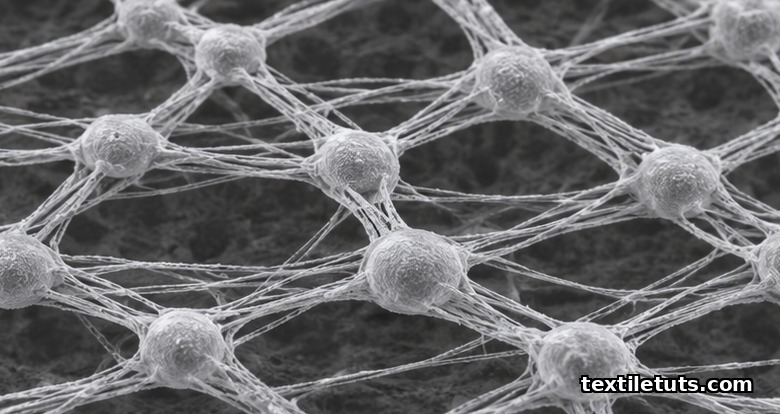
The characteristic that defines an ePTFE graft is the internodal distance (IND), the average spacing between nodes measured perpendicular to the fibril axis. IND is tunable between roughly 10 µm and 90 µm by adjusting the stretch ratio during manufacture. A larger IND encourages tissue ingrowth and transmural endothelialization, but it also allows bleeding through the wall, so 60-90 µm IND grafts are typically wrapped in an external PTFE film or reinforced with an external polyester support ring for applications where bleeding control matters.
Standard ePTFE grafts have an IND of 20-30 µm and a wall thickness of 0.4-0.8 mm. They are hydrophobic, which means they do not require pre-clotting, and they do not dilate aneurysmal over time the way some knitted Dacron grafts can. Their compliance is lower than crimped Dacron, which surgeons compensate for by careful matching of graft diameter to host vessel, since a size mismatch is a known contributor to anastomotic neointimal hyperplasia.
Dacron versus ePTFE: when surgeons choose which
Choice between the two materials is driven primarily by target vessel diameter, flow velocity, and anatomic position rather than by patient demographics. A 2018 systematic review of 5,189 infrainguinal bypasses reported 5-year primary patency of 73% for Dacron and 68% for ePTFE above the knee, and 47% versus 43% below the knee, while a 2020 randomized trial of 209 patients showed no statistically significant difference between the two materials for aortic reconstruction.
The table below summarizes the textile-engineering differences between the two graft families.
| Property | Dacron (PET) | ePTFE |
|---|---|---|
| Polymer class | Polyester (PET) | Fluoropolymer (PTFE) |
| Construction | Woven or knitted multifilament tube, crimped | Extruded and expanded node-fibril tube |
| Water permeability (typical) | 50-2500 mL/cm²/min before sealing; below 50 after sealing | Effectively zero (hydrophobic) |
| Internodal distance | Not applicable | 20-30 µm standard, 60-90 µm high-porosity |
| Wall thickness | 0.6-1.2 mm | 0.4-0.8 mm |
| Radial compliance | Higher (matches native artery) | Lower (stiffer) |
| Pre-clotting required | Yes for unsealed knitted | No |
| Common indication | Aortic and iliac replacement, large-diameter bypass | Femoropopliteal bypass, AV access for dialysis |
| Key standards | ISO 7198, ASTM F3034 | ISO 7198, ASTM F2620 |
For coronary artery bypass, autologous mammary artery and saphenous vein remain first-line, and synthetic grafts are reserved for repeat operations where no conduit is available. For hemodialysis vascular access, ePTFE has been the dominant choice since the 1980s because it can be needled repeatedly without aneurysm formation, and because its smooth luminal surface lowers the risk of early thrombosis compared with textile Dacron.
Manufacturing, sterilization, and shelf life
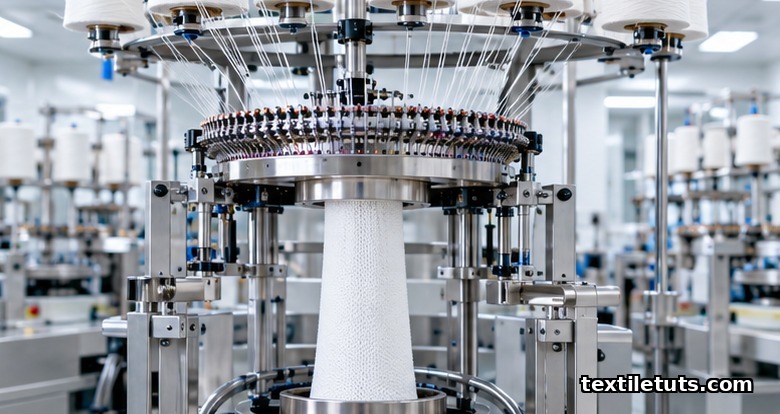
Dacron grafts are produced from PET yarn of typically 30-150 denier, woven on narrow fabric looms or knitted on circular weft knitting machines, scoured to remove spin finish, heat-set to stabilize dimensions, crimped on a mandrel, washed, and (if sealed) immersed in collagen or gelatin solution before final drying and packaging. ePTFE grafts begin as a PTFE paste blended with a lubricant such as naphtha, extruded as a tube, dried, stretched at 300-350 °C below the PTFE melting point to create the node-fibril structure, and finally sintered at 360-380 °C to lock in crystallinity.
Both graft types are sterilized by ethylene oxide gas or by gamma irradiation at a typical dose of 25-40 kGy. Gamma-sterilized grafts must be validated to show that the radiation dose does not degrade molecular weight or tensile strength; ISO 7198 requires manufacturers to report post-sterilization suture retention strength (typically above 20 N for 6-0 suture) and post-sterilization tensile strength (typically above 40 N/mm). Shelf life is usually 5 years for both graft families when stored dry at room temperature in their original foil-peel pouch.
Standards governing vascular graft quality
The four standards most cited in regulatory submissions and procurement specifications are ISO 7198:2016, ASTM F3034-16 (porosity of vascular grafts), ASTM F2620-13 (porosity of ePTFE tubular grafts), and ASTM F2052 (test method for measuring the strength of suture retention). ISO 7198 is the umbrella standard and lists 19 physical and biological test methods, including longitudinal tensile strength, radial tensile strength, suture retention, burst strength, water permeability, porosity, and dimensions. FDA recognition of ISO 7198 as a consensus standard is the route through which most new graft designs enter the U.S. market via the 510(k) pathway.
Biocompatibility is evaluated under ISO 10993-1, with the relevant test panel for an implant in permanent contact with blood including cytotoxicity, sensitization, irritation, acute systemic toxicity, genotoxicity, implantation, and hemocompatibility. Surface thrombogenicity is not directly regulated by a textile test, but ASTM F2382 covers platelet and leukocyte counting after in vitro blood contact, and many manufacturers run the Chandler loop or other in vitro perfusion models to demonstrate low thrombus deposition.
Frequently Asked Questions
What is the difference between woven and knitted Dacron grafts?
Woven Dacron grafts are made by interlacing warp and weft PET yarns at right angles, producing a tight, low-porosity tube (typically 50-200 mL/cm²/min) that is usually implanted without sealing. Knitted Dacron grafts are made by looping PET yarn into interlocking stitches, producing a softer, more compliant, higher-porosity tube (typically 1500-2500 mL/cm²/min) that requires collagen, gelatin, or albumin sealing to prevent bleeding at implantation. Knitted grafts match native arterial compliance more closely but lose more fluid before sealing takes effect.
How long do Dacron and ePTFE grafts last in the body?
Large-diameter Dacron aortic grafts have a 10-year patency above 90% when implanted for aneurysm or occlusive disease, with infection rather than material failure being the dominant late complication (1-4% incidence). ePTFE femoropopliteal bypass grafts show 5-year primary patency of 40-60% above the knee and 25-40% below the knee, with failure driven primarily by intimal hyperplasia at the distal anastomosis rather than by graft degradation. Both materials are considered permanent implants; structural degradation of either polymer over a human lifetime is rare.
Can ePTFE grafts be used for coronary artery bypass?
ePTFE is approved for coronary artery bypass only when no autologous conduit is available, typically in reoperative surgery where both internal mammary arteries and the saphenous veins have already been used. Patency in this position is poor compared with arterial grafts: a 2014 meta-analysis of 1,253 patients reported 1-year patency of 64% for ePTFE versus 93% for internal mammary artery. For this reason, ePTFE coronary grafts are reserved as a bailout option rather than a first-line conduit.
Why are ePTFE grafts preferred for vascular access in dialysis?
ePTFE arteriovenous grafts (AVGs) tolerate repeated needle puncture better than autologous fistulas in patients whose veins are exhausted, and they can be cannulated within 2-4 weeks of implantation compared with 6-12 weeks for a primary arteriovenous fistula. ePTFE has largely displaced textile Dacron in this indication because its smooth luminal surface resists early thrombosis and because its standard 20-30 µm IND limits tissue ingrowth, which simplifies surgical revision when stenosis develops at the venous anastomosis.
What is the main failure mode of synthetic vascular grafts?
The most common late failure mode is intimal hyperplasia, an overgrowth of smooth muscle cells at the distal anastomosis that progressively narrows the outflow tract. Thrombosis, infection (1-6% incidence depending on indication), and pseudoaneurysm formation at the suture line are secondary failure modes. For knitted Dacron, late graft dilatation (above 10% diameter increase) can occur in up to 8% of implants at 10 years; for ePTFE, late structural failure of the polymer itself is rare.
References
- International Organization for Standardization. ISO 7198:2016, Cardiovascular implants and extracorporeal systems, Vascular prostheses, Tubular vascular prostheses and vascular patches. iso.org, the umbrella standard for synthetic vascular grafts covering dimensions, tensile strength, suture retention, burst strength, and porosity.
- ASTM International. ASTM F3034-16, Standard Test Method for Testing the Porosity of Vascular Grafts. astm.org, specifies the apparatus, pressure head, and reporting format for water permeability of textile and ePTFE grafts.
- ASTM International. ASTM F2620-13, Standard Practice for Testing the Porosity of Expanded PTFE Tubular Grafts. astm.org, covers internodal distance measurement and transmural water leak rate specific to ePTFE.
- Roll, S., et al. Dacron versus PTFE as bypass material in infrainguinal vascular reconstruction: a systematic review. Journal of Vascular Surgery, 2018. sciencedirect.com, peer-reviewed meta-analysis of 5,189 bypass cases reporting 5-year patency by material and anatomic level.
- U.S. Food and Drug Administration. Guidance for Cardiovascular Implants: Vascular Prostheses 510(k) Submissions. fda.gov, the regulatory pathway document that recognizes ISO 7198 and ASTM F2620 as consensus standards for U.S. market clearance.
- Wang, X., et al. Long-term outcomes of expanded polytetrafluoroethylene grafts for hemodialysis vascular access. Annals of Vascular Surgery, 2020. pmc.ncbi.nlm.nih.gov, peer-reviewed cohort study on patency and infection rates of ePTFE AV grafts at 5-year follow-up.
This article is the working reference for vascular graft materials science and clinical selection. Editorial by Md. Asad Ullah (Meem), TextileTuts. Sources: ISO 7198:2016, ASTM F3034-16, ASTM F2620-13, FDA Cardiovascular Implant Guidance, Roll et al. 2018, Wang et al. 2020 as cited.


