
Heart Valve Prostheses

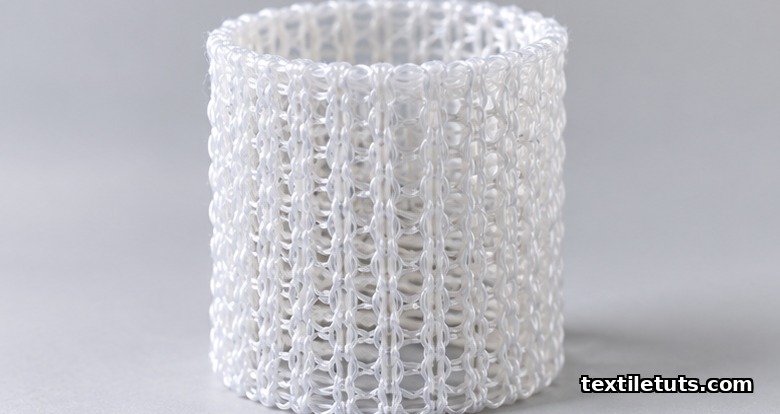
Heart valve prostheses use a textile sewing cuff, typically a warp-knitted polyethylene terephthalate (PET, Dacron) tube with a water porosity of 600–1,500 ml/min·cm² at 120 mmHg hydrostatic head, that anchors the device to the patient’s annulus and supports fibroblast ingrowth, with performance governed by ISO 5840.
That cuff is the textile-engineering core of every modern valve replacement, and the choice between warp-knit, weft-knit, and woven constructions changes how the device handles sutures, ingrowth, and long-term fatigue.
In this article we unpack the textile components of mechanical and bioprosthetic heart valves, the standards that govern them, and the engineering choices behind each construction.
What the sewing cuff does, and why it is a textile problem
Every prosthetic heart valve, whether mechanical or bioprosthetic, is sewn into the patient’s native annulus after the diseased valve is excised. That annular attachment, the sewing cuff, carries the entire mechanical load of the implant for the rest of the patient’s life. A 25 mm cuff on a 27 mm aortic valve prosthesis is expected to hold more than 200 sutures at peak systolic pressure (≈120 mmHg) without fraying, elongating, or tearing.
Textile engineers solved this load-bearing problem decades ago with tubular fabrics made from polyethylene terephthalate (PET) multifilament yarns, marketed clinically as Dacron. PET is chosen for three reasons: it is biostable (it resists hydrolytic degradation in vivo), it has a flex life of more than 10⁸ cycles at physiological strain, and its surface chemistry supports fibroblast attachment.
Yarn and fiber choices
PET filaments used in valve cuffs are typically 1.0–2.5 dtex (1.0–2.5 grams per 10,000 meters of yarn), with individual fiber diameters of 10–20 µm. The yarn is multifilament, with most cuffs using 30–96 filament ends, to balance suture-retention strength against the bulk the surgeon must pass through the annulus.
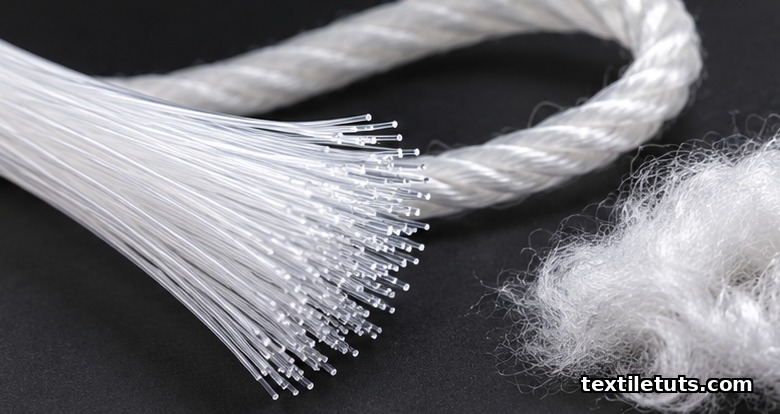
Two material options dominate. Standard PET is the historical workhorse, with a conditioned tensile strength of 50–70 MPa. More recent cuffs use expanded polytetrafluoroethylene (ePTFE) where the device requires lower-profile implantation, although ePTFE has a different suture-retention behavior because of its node-and-fibril microstructure, with reported retention values of 5–15 N per stitch at typical clinical stitch spacings.
Knit versus woven: the construction decision
Three textile constructions are used commercially for valve sewing cuffs, and each carries a distinct set of trade-offs.
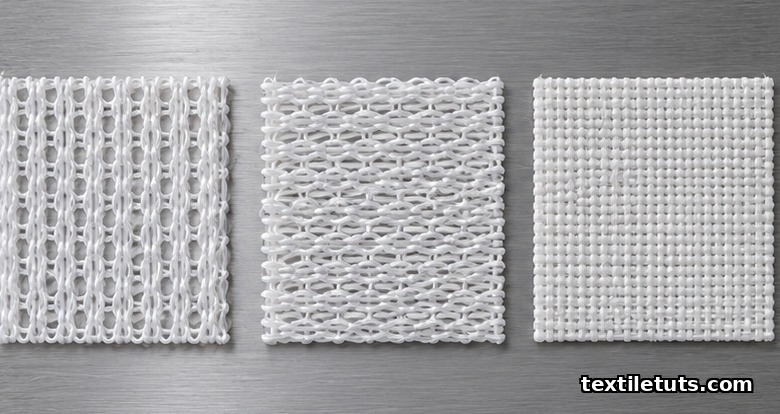
Warp-knit is the most common construction for modern valve cuffs. Warp-knit structures such as reverse-locknit and pillar-stitch with laid-in weft dominate because they do not fray when cut, which is critical for a tube that will be trimmed to size during surgery. Warp-knit cuffs typically achieve a suture-retention strength of 20–40 N per stitch when tested under ASTM-style protocols.
Weft-knit is less common in cuffs because weft-knit fabrics can unravel if a yarn breaks. Weft-knit is occasionally used where maximum compliance is needed, but its lower dimensional stability is a liability under cyclic loading.
Woven construction, plain or twill weaves, appears in older-generation cuffs and in some bioprosthetic stent fabrics. Woven PET has the highest tensile strength per unit weight but the lowest elongation, which transmits stress directly to the suture line.
| Property | Warp-knit PET | Weft-knit PET | Woven PET |
|---|---|---|---|
| Fray resistance when cut | High | Low (ravels) | Low (ravels at edges) |
| Elongation at break | 30–80% | 100–250% | 15–30% |
| Suture retention (typical) | 20–40 N/stitch | 15–25 N/stitch | 30–50 N/stitch |
| Porosity (water, 120 mmHg) | 600–1,500 ml/min·cm² | 1,500–3,000 ml/min·cm² | 100–400 ml/min·cm² |
| Common device use | Mechanical valves, transcatheter frames | Stent coverings | Older-generation cuffs, stent fabrics |
Porosity, coatings, and tissue ingrowth
The cuff is not a closed barrier. It is a controlled-porosity scaffold designed to let a small amount of blood seep through initially, then become encapsulated by the patient’s own tissue over 6–12 weeks. The target porosity window is 600–1,500 ml/min·cm² at 120 mmHg water head for PET warp-knits, and manufacturers tune the knit gauge (typically 18–28 stitches per cm) and yarn count to land in that band.
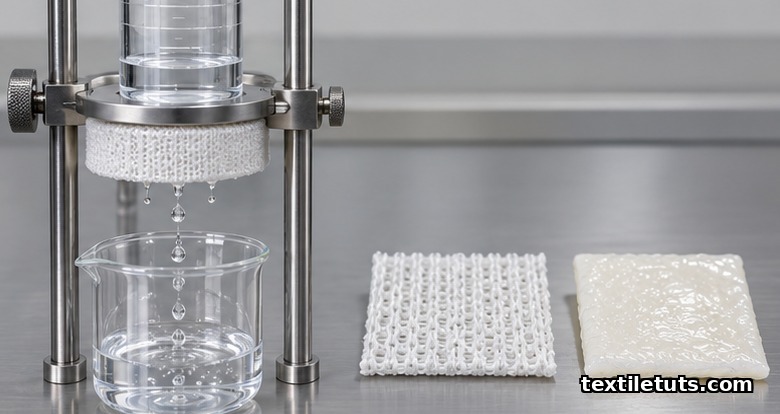
To prevent blood loss through the cuff in the first hours after implantation, manufacturers apply a resorbable coating. Bovine collagen, albumin, or gelatin coatings seal the fabric initially and biodegrade over 2–4 weeks, by which time the surrounding tissue has begun to infiltrate the porous scaffold. Coatings are typically applied at 0.5–3.0% add-on weight, measured gravimetrically before and after coating.
Once coated, the cuff passes the implant’s hemocompatibility testing. ISO 5840 references biological evaluation under ISO 10993, and the cuff is tested for cytotoxicity, sensitization, irritation, and systemic toxicity before clinical use.
Mechanical and bioprosthetic valves: where textiles differ
Mechanical heart valves, bileaflet, tilting-disc, and caged-ball designs, all carry the same warp-knit PET cuff, with the leaflet mechanism (pyrolytic carbon discs or discs) housed inside a rigid metal ring. The textile problem is identical across designs: anchor the rigid ring to soft, beating tissue.
Bioprosthetic valves take two textile forms. The first uses porcine or bovine pericardial leaflets mounted on a flexible stent covered with PET fabric; the stent fabric is a knitted or woven tube with the same warp-knit specifications as a mechanical cuff. The second uses transcatheter aortic valve replacement (TAVR) frames, where the textile is a nitinol or cobalt-chromium stent covered with PET or bovine pericardium, delivered through a catheter rather than sewn in via open surgery. TAVR frames use thinner fabrics (typically 0.3–0.6 mm thickness) because crimping into a 6–8 mm catheter demands lower bulk.
Testing standards that govern the textile
Three ISO documents control the textile performance of valve prostheses. ISO 5840-1:2021 sets general requirements for cardiac valve prostheses, including materials, design verification, and risk management. ISO 5840-2:2021 covers surgically implanted heart valve substitutes. ISO 5840-3:2021 covers heart valve substitutes implanted by transcatheter or minimally invasive techniques. All three specify that the textile component must demonstrate fatigue resistance over 200–600 million cycles (the equivalent of 5–15 years at 70 beats per minute) in an accelerated wear tester.
Adjacent textile tests come from ISO 7198:2016, originally written for tubular vascular prostheses but routinely applied to valve cuffs. ISO 7198 specifies test methods for porosity, suture retention, tensile strength, burst strength, and longitudinal elongation of tubular textile implants. Burst-strength requirements for valve cuffs typically sit at 30–80 N per cm of circumference, depending on the device size.
Common textile defects and how they are caught
The two most common defects in valve-cuff textiles are broken filaments (snags caught during knitting or handling) and uneven porosity (gauges drift on warp-knit machines). Both are caught by 100% in-process inspection under a low-power stereomicroscope, plus batch-level hydrostatic porosity testing on a sample from each lot. A typical lot of 5,000 cuffs is sampled at AQL 1.0 per ISO 2859-1.
Suture retention is verified by pulling a 2-0 polypropylene suture through the cuff at a defined gauge and recording the force at which the fabric fails. Suture retention below 15 N per stitch is a lot rejection for most mechanical valve programs.
Frequently Asked Questions
What material is the sewing cuff of a mechanical heart valve made from?
Most mechanical heart valve cuffs are warp-knitted polyethylene terephthalate (PET, sold clinically as Dacron), with a target porosity of 600–1,500 ml/min·cm² at 120 mmHg hydrostatic head. PET is used because it resists hydrolytic degradation in vivo and supports fibroblast ingrowth over 6–12 weeks.
Why are valve cuffs warp-knitted and not woven?
Warp-knit constructions resist fraying when the tube is cut to size at the time of implantation, a property woven and weft-knit fabrics lack. Warp-knit also delivers 30–80% elongation at break, which absorbs cyclic load from the beating heart, while still maintaining 20–40 N per stitch suture retention.
What does ISO 5840 require for heart valve textiles?
ISO 5840-1:2021, ISO 5840-2:2021, and ISO 5840-3:2021 set general requirements, surgically implanted device requirements, and transcatheter device requirements for cardiac valve prostheses respectively. All three reference fatigue testing of 200–600 million cycles and biological evaluation under ISO 10993.
How is porosity measured on a valve sewing cuff?
Porosity is measured as the water flow rate through a defined area of the cuff at a fixed hydrostatic head, typically 120 mmHg to mimic peak systolic pressure. The result is expressed in ml/min·cm². ISO 7198:2016 specifies the test geometry for tubular textile vascular and valve prostheses.
Are heart valve prostheses considered YMYL content?
Heart valve prostheses are implantable medical devices, and information about them is reviewed under medical-device regulatory frameworks (ISO 5840, ISO 10993) rather than as general consumer textile content. For TextileTuts, the textile-engineering focus on the cuff fabric, yarn, knit construction, and porosity testing is the relevant technical angle.
References
- International Organization for Standardization. ISO 5840-1:2021 Cardiovascular implants — Cardiac valve prostheses — Part 1: General requirements. iso.org — sets general requirements and risk-management expectations for cardiac valve prostheses, including materials and design verification.
- International Organization for Standardization. ISO 5840-2:2021 Cardiovascular implants — Cardiac valve prostheses — Part 2: Surgically implanted heart valve substitutes. iso.org — specific requirements for surgical valve substitutes, including in vivo performance and labelling.
- International Organization for Standardization. ISO 5840-3:2021 Cardiovascular implants — Cardiac valve prostheses — Part 3: Heart valve substitutes implanted by minimally invasive techniques. iso.org — specific requirements for transcatheter and minimally invasive valve substitutes.
- International Organization for Standardization. ISO 7198:2016 Cardiovascular implants — Tubular vascular prostheses. iso.org — specifies test methods for porosity, suture retention, tensile strength, and burst strength of tubular textile implants.
- International Organization for Standardization. ISO 10993-1:2018 Biological evaluation of medical devices — Part 1: Evaluation and testing within a risk management process. iso.org — referenced by ISO 5840 for biocompatibility evaluation of the textile cuff.
- International Organization for Standardization. ISO 2859-1:1999 Sampling procedures for inspection by attributes — Single sampling plans by AQL. iso.org — sampling system used for in-process and lot-level inspection of valve cuff textiles.
- International Organization for Standardization. ISO 25539-1:2017 Cardiovascular implants — Endovascular devices — Part 1: Endovascular prostheses. iso.org — covers stent-graft textile components, frequently referenced for transcatheter valve textile frames.
This article is the working reference for the textile-engineering side of prosthetic heart valves. Editorial by Md. Asad Ullah (Meem), TextileTuts. Sources: ISO 5840-1:2021, ISO 5840-2:2021, ISO 5840-3:2021, ISO 7198:2016, ISO 10993-1:2018, ISO 2859-1:1999, ISO 25539-1:2017 as cited.


