
US Textile Industry: Supply Chain and Where Fabric Is Made

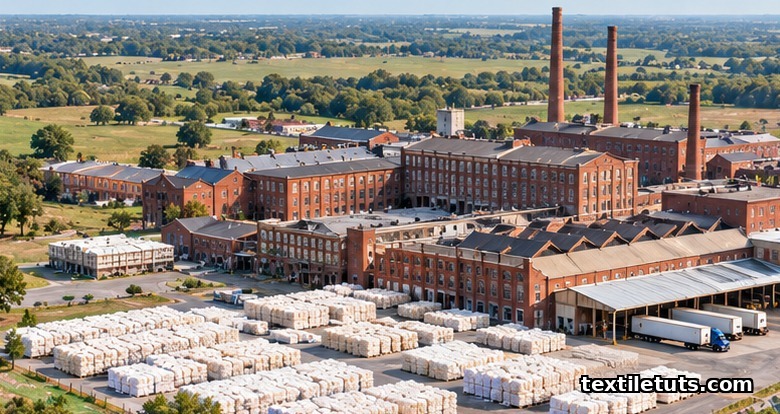
The US textile industry shipped approximately $64.8 billion in textiles and apparel in 2023, according to the National Council of Textile Organizations (NCTO), while roughly 97 percent of garments sold to American consumers were imported.
Domestic yarn, fabric, and nonwoven output continues to anchor the supply chain, but it now specializes in technical textiles, industrial fabrics, and contract manufacturing for US brands rather than the basic apparel cuts that dominate retail shelves.
This article walks through where US fabric is actually made, which states concentrate the supply chain, and which product categories remain commercially viable for domestic mills in 2024.
Where US Fabric Production Concentrates by State and Region
The historic “Textile Belt” of the American South still dominates domestic fabric output, with four states accounting for roughly 60 percent of US textile shipments: North Carolina, Georgia, South Carolina, and Alabama. North Carolina alone hosts the headquarters of Parkdale Mills (the largest US yarn spinner), Unifi (recycled polyester yarn), Glen Raven (performance fabrics including Sunbrella), and Burlington Industries (workwear and uniform fabrics).

South Carolina houses Milliken & Company, a privately held producer of technical textiles, specialty chemicals, and floor coverings with global operations anchored in Spartanburg. Georgia is home to major carpet and tufted-textile operations around Dalton, the self-described “Carpet Capital of the World,” where Shaw Industries (a Berkshire Hathaway subsidiary) and Mohawk Industries maintain their largest US plants.
California represents a different kind of textile geography. The Los Angeles area retains cut-and-sew capacity for premium denim, technical outer shells, and fashion apparel, supported by a deep pool of sewing operators serving brands like American Giant, Buck Mason, and True Religion. Alabama and Tennessee specialize in industrial nonwovens and needle-punched geotextiles produced at scale by companies such as Propex and Tensar.
Massachusetts and Rhode Island, once the heart of the New England textile economy, now host a small but technically sophisticated cluster focused on narrow weaving, technical fibers, and coated fabrics used in filtration, defense, and aerospace. The Northeast cluster survives because the products it makes are not interchangeable with commodity imports.
The Yarn-to-Fabric-to-Garment Pipeline Inside the United States
US fabric manufacturing follows three sequential stages, each with a distinct domestic footprint:
1. Fiber production. The United States is one of the world’s largest cotton producers, harvesting between 14 and 20 million 480-pound bales annually depending on weather and acreage. The USDA reports that US cotton farmers planted 10.2 million acres in 2024, with Texas, Georgia, and Mississippi leading production. Nearly all of this raw cotton is exported as fiber or shipped to domestic spinning mills. Synthetic fibers (polyester, nylon, acrylic) are produced almost exclusively overseas; the US no longer maintains large-scale polymerization for apparel-grade filament yarn.
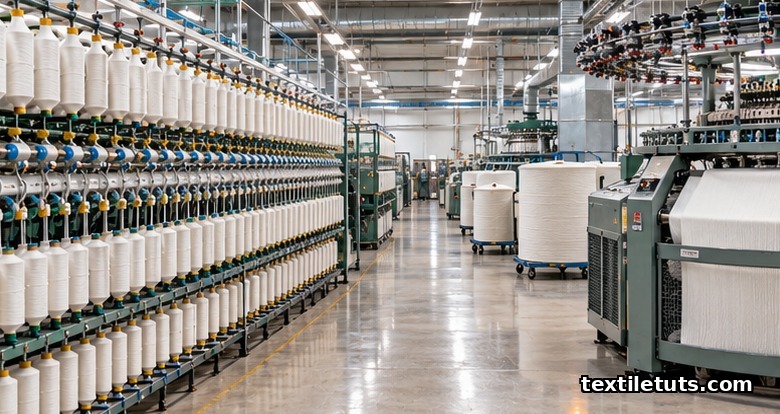
2. Yarn spinning. Parkdale Mills operates more than 30 ring-spinning and open-end spinning plants in the Carolinas, Virginia, and Mexico, producing roughly 2.5 million pounds of cotton yarn per week. Swisstex Direct, based in Greenville, SC, knits technical yarns for industrial filtration. Synthetic yarn production for apparel has largely migrated offshore, but Unifi’s Repreve recycled polyester operation in Yadkinville, NC keeps a meaningful domestic footprint, processing post-consumer plastic bottles into filament yarn at a reported rate of more than 30 million bottles per year.
3. Fabric formation. Weaving and knitting are where the US retains the most capacity. Weaving dominates in North Carolina (home to Cotswold Industries and Culp Inc.) for upholstery and mattress ticking, while circular knitting dominates in the Los Angeles basin for cotton jersey, French terry, and rib knit used in T-shirts and sweatshirts. Weft-insertion knitting for technical textiles is concentrated around Greenville, SC at companies including Vulcres and Coats.
4. Dyeing and finishing. Wet processing capacity has shrunk the most, but a few specialized commission dyers and finishers remain, including Tintoria Piana (cotton dyeing for premium shirting), Garmon Chemicals’ finishing lab, and the Cone Denim White Oak facility before its 2017 closure. Most US cut-and-sew operations now ship greige fabric to Mexico or Asia for dyeing, which adds 60 to 90 days to the lead time.
What US Mills Actually Produce in 2024
Three product categories still anchor the domestic fabric supply:
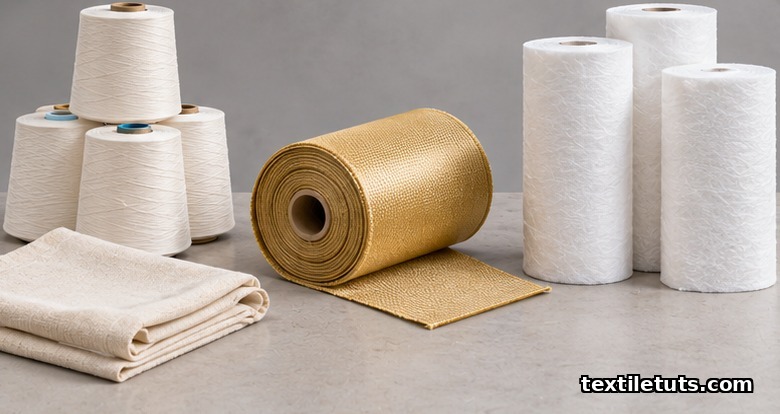
- Cotton yarn and woven cotton fabric for US military contracts, workwear (Carhartt, Dickies), and mattress ticking. Berry-compliant Berry Amendment sourcing keeps cotton uniform fabric inside the US for defense applications.
- Technical and performance textiles including aramid fabrics for body armor (DuPont’s Kevlar is woven domestically), flame-resistant fabrics for oil and gas workers, and high-tenacity geotextiles for civil engineering.
- Nonwovens for hygiene products, filtration, roofing substrate, and automotive interior. The US is a net exporter of nonwovens, with Berry Global, Glatfelter, and Lydall among the largest producers.
What has effectively disappeared from domestic supply: cut-and-sew apparel for fast fashion, basic synthetic filament T-shirt fabric, and commodity denim. These product lines migrated to Mexico, Central America, and Asia between 1995 and 2015 under the North American Free Trade Agreement (NAFTA) and the WTO’s phase-out of textile import quotas (the Multi-Fiber Arrangement ended January 1, 2005).
Why So Much Apparel Is Imported Even When Fabric Is Domestic
The US imports roughly 97 percent of the apparel its consumers wear, even though it still produces a meaningful share of the world’s yarn and intermediate fabrics. The reason is structural: apparel manufacturing is labor-intensive, and US sewing wages (typically $15 to $22 per hour plus benefits) make basic T-shirts, jeans, and underwear uneconomical against Bangladesh ($100 to $200 per month), Vietnam ($300 to $500 per month), and Ethiopia ($50 to $100 per month).
This does not mean US fabric has no role. The “yarn-forward” rule of origin under US free trade agreements requires that yarn spinning, fabric forming, dyeing, and finishing all occur in the agreement region to qualify for duty-free entry into the United States. As a result, US yarn and greige fabric are exported to Mexico and Central America, where they are cut and sewn, then re-imported to the US as finished garments under preferences like the United States-Mexico-Canada Agreement (USMCA).
OTEXA data show that the US imported $85.4 billion in apparel in 2023, while US exports of textiles and apparel reached $30.1 billion. The combined trade deficit of roughly $55 billion reflects the structural imbalance between fiber-rich production and labor-poor assembly.
Standards Governing US-Made Fabric Quality
Three standards-setting bodies govern quality, safety, and testing across the domestic supply chain:
ASTM International publishes standard test methods for physical properties such as ASTM D5034 (grab tensile strength), ASTM D737 (air permeability), and ASTM D2261 (tongue tear strength). Compliance is typically contractually required for US military and first-responder fabric specifications.
AATCC (American Association of Textile Chemists and Colorists) sets colorfastness, dimensional stability, and appearance-retention tests. AATCC 135 (dimensional changes after home laundering) and AATCC 61 (colorfastness to laundering) are referenced in nearly every US apparel brand specification. AATCC TM30 (anti-microbial activity) has grown in relevance as performance fabrics target odor control.
ISO (International Organization for Standardization) provides harmonized global standards, with ISO 139 (textiles conditioning atmospheres), ISO 3801 (mass per unit length), and ISO 105 (colorfastness series) widely adopted. For products sold globally, dual compliance with both AATCC and ISO is common and often required by brands that ship to Europe and Asia.
US federal regulation under the Consumer Product Safety Commission (CPSC) also restricts flammability (16 CFR Part 1610 for apparel, 16 CFR Part 1631 for carpets), lead content, and phthalates in textile substrates. The Federal Trade Commission (FTC) enforces country-of-origin labeling through the Textile Fiber Product Identification Act and the Wool Products Labeling Act, and applies its “all or virtually all” standard to finished garments labeled “Made in USA” per the 2021 Made in USA labeling update.
Major US Textile Manufacturers and Their Specialty
A short list illustrates how specialized the domestic base has become:
- Milliken & Company (Spartanburg, SC) – technical textiles, flame resistance, specialty chemicals, floor coverings.
- Parkdale Mills (Gastonia, NC) – largest US cotton spinner, more than 30 plants, 2.5 million pounds per week.
- Unifi (Greensboro, NC) – Repreve recycled polyester, filament yarn, knit fabrics.
- Glen Raven (Burlington, NC) – Sunbrella performance fabrics, automotive textiles.
- Berry Global (Evansville, IN) – nonwovens for hygiene, filtration, healthcare.
- Mohawk Industries (Calhoun, GA) – tufted carpet and rugs.
- Shaw Industries (Dalton, GA) – carpet, resilient flooring, performance yarns.
- Propex (Chattanooga, TN) – geotextiles, erosion control, concrete reinforcement.
None of these firms produce basic apparel fabric for fast fashion, and that is the point. The US textile industry survives by specializing where domestic capability, intellectual property, or federal rules give it a defensible position.
Frequently Asked Questions
Where is most fabric manufactured in the United States?
North Carolina leads US fabric output by value, hosting the headquarters of Parkdale Mills, Unifi, Glen Raven, and Burlington Industries. South Carolina, Georgia, Alabama, and Tennessee round out the top five, with California’s Los Angeles basin remaining a hub for knit fabric and finished apparel.
How much of US apparel is imported?
The US imported $85.4 billion in apparel in 2023, according to the Office of Textiles and Apparel (OTEXA) within the International Trade Administration. That figure represents roughly 97 percent of US apparel consumption by unit volume, leaving the domestic cut-and-sew base concentrated in niche and technical categories.
Are there still cotton mills operating in the US?
Yes. Parkdale Mills operates more than 30 cotton spinning plants across the Carolinas and Virginia, making it the largest US cotton yarn producer. Texas, Oklahoma, and the Mississippi Delta also host small and mid-sized cotton ginning operations, though most US cotton is exported as raw fiber rather than spun domestically. US cotton exports reached 11.7 million bales in the 2023/24 marketing year, according to USDA data.
What is the largest US textile export category?
Nonwoven fabrics were the largest US textile export category by value in 2023, with shipments exceeding $5 billion. Other major export categories include cotton yarn, technical fabrics for filtration and automotive use, and high-performance fibers such as aramid. The combined US textile export value reached $30.1 billion in 2023, against $85.4 billion in apparel imports.
Does the US government require country-of-origin labeling for fabric?
The Federal Trade Commission (FTC) requires country-of-origin labeling for most textiles and apparel under the Textile Fiber Product Identification Act and the Wool Products Labeling Act. Cut-and-sew operations inside the US can label finished garments “Made in USA” only if “all or virtually all” of the product is made in the United States, a strict standard documented in the FTC’s 2021 Made in USA labeling update.
References
- National Council of Textile Organizations. 2023 US Textile Industry Overview. https://www.ncto.org/ – Domestic textile shipment values, employment, and trade data.
- US Bureau of Labor Statistics. Textile Mills and Fabricated Textile Product Manufacturing (NAICS 313 and 314). https://www.bls.gov/iag/tgs/iag313.htm – Employment and wage statistics.
- US Department of Agriculture. Cotton Outlook and Crop Production Reports. https://www.usda.gov/ – US cotton acreage, yield, and bale production data.
- Office of Textiles and Apparel (OTEXA). US Textile and Apparel Trade Statistics. https://www.trade.gov/textiles-apparel – Annual import and export data.
- ASTM International. ASTM D5034 Standard Test Method for Breaking Strength and Elongation of Textile Fabrics (Grab Test). https://www.astm.org/d5034 – Tensile-strength testing protocol.
- AATCC. AATCC Test Method 135: Dimensional Changes of Fabrics After Home Laundering. https://www.aatcc.org/test/ – Shrinkage and growth measurement protocol.
- International Organization for Standardization. ISO 139: Textiles – Standard Atmospheres for Conditioning and Testing. https://www.iso.org/standard/60200.html – Conditioning atmosphere specification.
- Federal Trade Commission. Made in USA Standard. https://www.ftc.gov/ – Country-of-origin labeling guidance for textiles and apparel.
This article is the working reference for the US textile supply chain. Editorial by Mohammad Yousuf (Anik), TextileTuts. Sources: NCTO, BLS, USDA, OTEXA, ASTM, AATCC, ISO, FTC as cited.


