
Top 10 Textile Manufacturing Countries

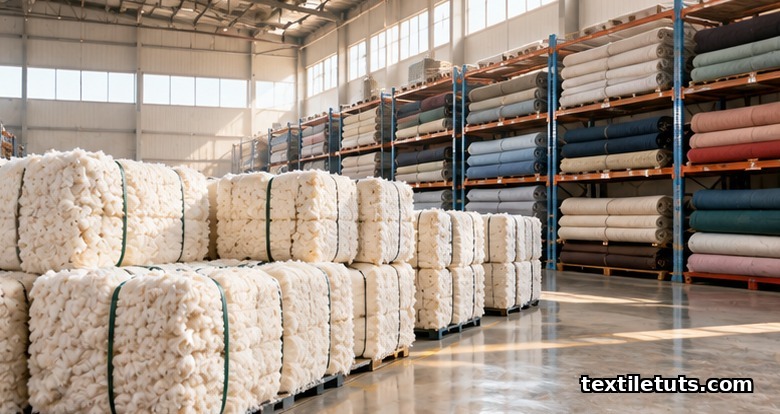
China led global textile and apparel exports with USD 297.6 billion in 2023, capturing roughly 28% of world shipments, followed by Bangladesh (USD 45.7 billion), Vietnam (USD 44.3 billion), India (USD 36.1 billion), and Türkiye (USD 30.2 billion), per the WTO World Trade Statistical Review 2024.
These five suppliers alone accounted for more than 62% of the world’s USD 1.07 trillion in textile and clothing exports last year, a concentration that defines modern sourcing decisions for fashion brands, workwear buyers, and technical-textile specifiers.
This guide ranks the top ten textile manufacturing countries by export value and installed capacity, explains what each one makes best, and shows how their cost structures, fiber bases, and trade agreements shape global supply chains.
How we ranked the top ten textile manufacturing countries
Three data points anchor any honest ranking of textile manufacturers: export value (WTO trade statistics), installed spindle and loom capacity (International Textile Manufacturers Federation surveys), and share of global apparel trade (International Trade Centre Trade Map). We combined the WTO 2024 figures with UN Comtrade shipment data and 2023–2024 capacity reports to produce the list below.
The ranking is weighted toward apparel-ready goods (HS Chapters 50–63) rather than raw fiber exports. A country that processes cotton yarn into finished shirts in-country ranks higher than one that ships raw bales. This matters for sourcing managers who care about lead time and labor content, not raw tonnage.
1. China
China remains the world’s largest textile producer by every measure: USD 297.6 billion in combined textile and apparel exports, 55% of global chemical-fiber output, and roughly 7.6 million mainspindles plus 1.3 million rotor spinning positions. The country dominates polyester filament, knit fabric, and finished apparel, with manufacturing clusters in Zhejiang, Jiangsu, Guangdong, and Shandong.
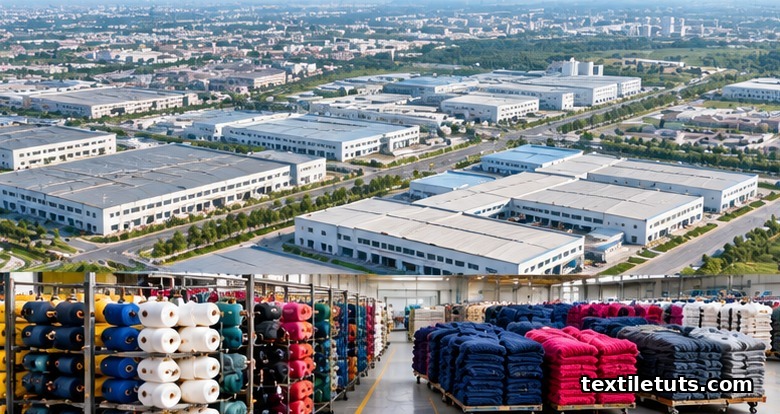
Chinese textile output is structurally moving up-market. The share of high-value technical textiles (geotextiles, automotive textiles, medical nonwovens) climbed past 18% of the industry’s value-add in 2023, per a Springer Open review of the sector. Cost advantages in pure commodity cotton knits have narrowed against Vietnam and Bangladesh, but China retains dominance in dyed and finished fabrics where water-treatment infrastructure still matters.
2. Bangladesh
Bangladesh is the world’s second-largest apparel exporter at USD 45.7 billion in 2023 and the largest single-category supplier to the European Union. The country runs roughly 4,500 garment factories employing about 4 million workers, concentrated around Dhaka, Gazipur, and Narayanganj, with knitwear overtaking woven products over the last decade.
The national fiber base is cotton imported from India, the United States, and West Africa; man-made fiber use is growing rapidly, climbing past 38% of total fiber consumption in 2023 according to industry estimates. Bangladesh’s comparative position rests on lowest-quartile labor cost for cut-make-trim operations, the EU’s Everything But Arms duty-free access, and the world’s highest concentration of green-certified knit factories (over 190 LEED-certified plants by late 2024).
3. Vietnam
Vietnam exported USD 44.3 billion in textiles and apparel in 2023, with double-digit year-on-year growth driven by foreign direct investment from South Korean, Taiwanese, and Japanese fabric mills. The country has positioned itself as a mid-cost, fast-lead-time alternative to China for woven and knit apparel, with synthetic woven fabric capacity expanding fastest in Bình Dương, Đồng Nai, and Hải Phòng.
Vietnam is also a major yarn producer within ASEAN, exporting close to USD 5 billion in yarn and fabric. The EU-Vietnam Free Trade Agreement (EVFTA), in force since August 2020, reduces duties on most textile and apparel categories and is the single biggest reason brands are reallocating woven-shirt volume here.
4. India
India’s textile and apparel exports totalled USD 36.1 billion in 2023, ranking the country fourth globally and second in cotton yarn exports behind China. India runs the world’s second-largest installed capacity of spindles (over 58 million, per the International Textile Manufacturers Federation) and the largest area under cotton cultivation (about 12.5 million hectares).
The country produces across the full value chain, from raw cotton and jute to fabric, home textiles, and technical nonwovens. Tirupur in Tamil Nadu is the world’s largest knitwear cluster by volume; Surat in Gujarat dominates man-made fabric; Ludhiana is the hub for woolen and acrylic knitwear. India’s current textile policy targets USD 100 billion in exports by 2030, with PLI (Production Linked Incentive) schemes for MMF (man-made fiber) and technical textiles.
5. Türkiye (Turkey)
Türkiye exported USD 30.2 billion in textiles and apparel in 2023 and is the third-largest supplier to the European Union. The country runs a vertically integrated industry that sources cotton from its own Aegean and Çukurova regions, spins yarn, and produces finished denim, knitwear, and home textiles within a few hundred kilometres of Istanbul.
Turkish textile exports benefit from a Customs Union with the EU (no duty on most textile inputs and outputs since 1996), shorter shipping times than Asia (roughly 5–7 days to EU ports versus 25–35 days from East Asia), and a strong technical-textile base. The country is among the world’s top five producers of home textiles, towels, and seamless apparel.
6. Pakistan
Pakistan exported USD 17.2 billion in textiles and apparel in 2023 and remains the world’s third-largest cotton yarn exporter behind China and India. The industry is concentrated around Faisalabad (spinning), Karachi (garments), and Lahore (woven fabric), with over 1,200 garment units operational. Cotton provides the structural advantage: Pakistan grows roughly 1.3–1.5 million hectares of long-staple cotton each year, giving its mills a stable domestic supply.
Capacity utilization in spinning has historically lagged the regional average, with the industry running at 55–65% of installed spindle capacity. The Pakistan government launched a 5-year textile policy in 2024 with subsidized credit for mill upgrades, targeting USD 25 billion in textile exports by 2030.
7. Indonesia
Indonesia exported USD 15.4 billion in textiles and apparel in 2023 and is the largest textile producer in the ASEAN region after Vietnam. The country combines a domestic cotton and synthetic fiber base with a strong batik and traditional textiles industry, plus growing capacity in technical and industrial textiles. West Java and Central Java host most of the spinning, weaving, and garment factories.
Indonesia’s textile sector differs from Bangladesh and Vietnam in that it is more integrated into the local market: roughly 40% of output serves domestic consumption of 275 million people. Export focus is on knitwear and menswear, particularly to the United States, Japan, and the EU.
8. Cambodia
Cambodia exported USD 11.6 billion in textiles and apparel in 2023, almost entirely garments. The country is highly dependent on knit and woven apparel for major European and US brands, with over 1,100 factories employing about 750,000 workers, mostly women. Phnom Penh and Kandal provinces host the bulk of capacity.
The EU’s Everything But Arms (EBA) scheme grants Cambodia duty-free, quota-free access, and the United States extends GSP-like preferences under the Bilateral Textile Agreement. Labor cost remains the main draw, though 2024 minimum-wage increases have narrowed the gap with Vietnam. The sector is also one of the few where products can ship to EU ports in roughly 18 days, faster than many Asian competitors.
9. Mexico
Mexico exported USD 9.8 billion in textiles and apparel in 2023 but is the most strategically important supplier for United States nearshoring. Apparel exports to the United States reached USD 7.4 billion in 2023, supported by USMCA, which allows duty-free movement of apparel made from US fabric inputs. Clusters in Guanajuato, Puebla, and Aguascalientes serve as onshore alternatives for lead-time-sensitive categories such as basic T-shirts, scrubs, and workwear.
Mexico also has a strong technical-textile base, particularly for automotive and industrial end-uses, given integration with the country’s auto industry. The Ministry of Economy projects textile and apparel exports will pass USD 12 billion annually by 2030, supported by government-backed industrial parks in the Bajío region.
10. Egypt and Sri Lanka (joint 10th)
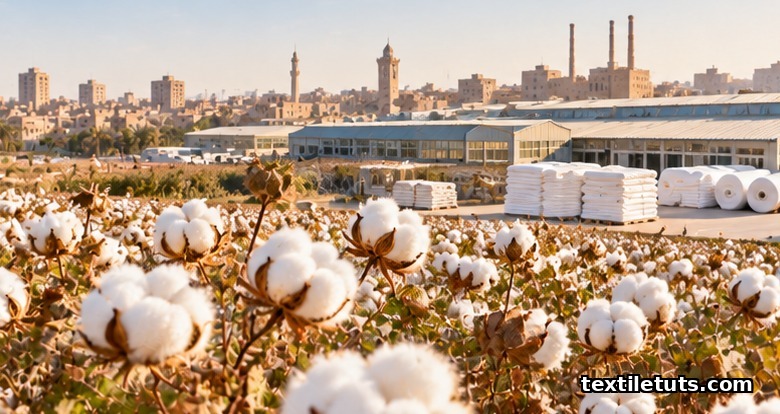
Egypt and Sri Lanka each exported approximately USD 7–8 billion in textiles and apparel in 2023 and round out the top ten. Egypt is the world’s largest extra-long staple (ELS) cotton producer (Giza 45, Giza 87) and runs a vertically integrated spinning, weaving, and home-textiles base, with Mahalla El Kubra being the largest textile city in the Middle East and Africa. Egyptian home-textile exports alone exceed USD 1 billion annually.
Sri Lanka focuses on intimate apparel, sportswear, and niche knitwear, with USD 6 billion in apparel exports and a strong environmental-compliance record: the industry is the largest exporter of fair-trade-certified apparel in the world. Together, the two countries represent the regional textile anchors for Africa and South Asia.
Top 10 textile manufacturing countries at a glance
| Rank | Country | 2023 Textile & Apparel Exports (USD bn) | Core Specialty | Key Trade Access |
|---|---|---|---|---|
| 1 | China | 297.6 | Polyester, knit fabric, finished apparel | WTO member |
| 2 | Bangladesh | 45.7 | Cotton knitwear, woven shirts | EU EBA |
| 3 | Vietnam | 44.3 | Synthetic woven fabric, mid-market apparel | EVFTA, CPTPP |
| 4 | India | 36.1 | Cotton yarn, home textiles, technical nonwovens | EU GSP+ |
| 5 | Türkiye | 30.2 | Denim, home textiles, knitwear | EU Customs Union |
| 6 | Pakistan | 17.2 | Cotton yarn, towels, denim | EU GSP+ |
| 7 | Indonesia | 15.4 | Knitwear, batik, technical textiles | ASEAN FTA |
| 8 | Cambodia | 11.6 | Basic apparel, fast-fashion basics | EU EBA, US Bilateral Textile Agreement |
| 9 | Mexico | 9.8 | Near-shored basics, automotive textiles | USMCA |
| 10* | Egypt / Sri Lanka | 7–8 each | ELS cotton, home textiles, intimate apparel | EU GSP, EU EBA |
*Egypt and Sri Lanka are joint tenth, with comparable export volumes in 2023.
Trade-agreement and quota-free access overview
Duty preference is the single largest determinant of where fashion brands place volume. The EU’s Everything But Arms (EBA) scheme grants Bangladesh and Cambodia the most generous access among major apparel producers, with zero duty on most categories. Vietnam benefits from the EVFTA’s tariff phase-outs and Pakistan, India, and Indonesia each hold GSP+ or regional agreements granting 6–12 percentage-point duty advantages.
Mexico operates under USMCA rules of origin, which require apparel to use yarn and fabric from the US, Canada, or Mexico to qualify for duty-free entry. This is the structural reason US brands are shifting basic T-shirts and scrubs from Asia to Mexico, even at higher unit cost: lower landed cost after duty savings wins on lead time.
Fiber and feedstock profile by country
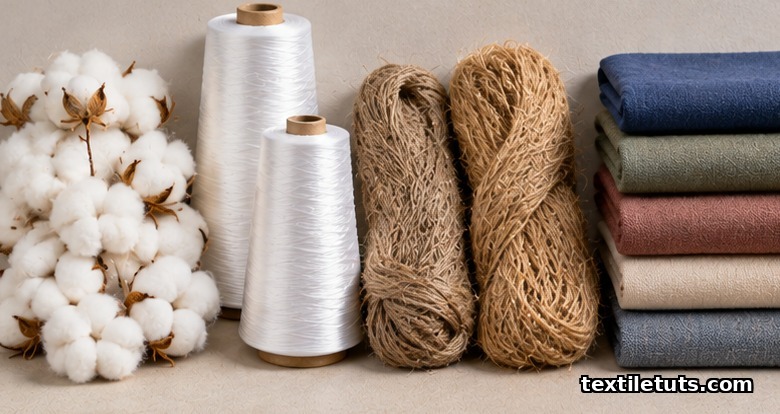
Manufacturers in China and India together supply roughly 58% of global man-made fiber (MMF) output, while Bangladesh, Pakistan, Egypt, and Türkiye remain cotton-intensive. This shapes what each country can deliver reliably: a polyester-rich product (sportswear, activewear) is best sourced in China, Vietnam, or Taiwan; a 100% cotton product (denim, shirting, bedsheets) is best sourced in India, Pakistan, or Egypt; and knitwear volume work scales most easily in Bangladesh and Cambodia.
Frequently asked questions
Which country is the largest textile manufacturer in the world?
China is the largest textile manufacturer in the world, with USD 297.6 billion in textile and apparel exports in 2023, roughly 28% of global shipments, and about 55% of global chemical-fiber production. No other country matches its combined spinning, weaving, dyeing, and apparel-making capacity in a single geography.
What is the second-largest textile exporter in the world?
Bangladesh is the second-largest apparel exporter globally with USD 45.7 billion in 2023, driven by knitwear and woven basics supplied mainly to EU and US brands. Vietnam ranks third at USD 44.3 billion, with India fourth at USD 36.1 billion.
Why is Bangladesh so important in the global textile industry?
Bangladesh combines low labor cost (roughly USD 113 per month for entry-level sewing operators in 2024), the EU’s Everything But Arms duty-free access, and a deep base of over 4,500 garment factories. The country supplies more than 7% of all apparel imported into the European Union, second only to China.
Is Vietnam overtaking China in textile manufacturing?
Vietnam is the country adding capacity fastest, with USD 44.3 billion in 2023 textile and apparel exports and trade-preference access to the EU and the US. China still exports about 6.7 times more than Vietnam in absolute terms, so the shift is gradual rather than wholesale; brands are splitting woven and knit volume between the two, not abandoning one for the other.
Which country produces the highest quality cotton textiles?
Egypt is widely recognized for the highest-quality cotton textiles because it grows extra-long staple (ELS) varieties such as Giza 45 and Giza 87, which command 30–60% price premiums over standard uplands cotton in global markets. Indian and Pakistani mills compete on long-staple uplands cotton at lower price points.
References
- World Trade Organization. World Trade Statistical Review 2024. https://www.wto.org — used for combined textile and apparel export values by country.
- International Trade Centre. Trade Map: Textile and Apparel Exports, HS Chapters 50–63. https://www.trademap.org — used for cross-checking 2023 country-level shipment values.
- International Labour Organization. Sectoral Studies on Textiles, Clothing, Leather and Footwear. https://www.ilo.org — used for employment, wages, and factory-count data.
- International Textile Manufacturers Federation. Spinning and Weaving Capacity Surveys 2023. https://www.itmf.org — used for installed spindle and loom capacity figures.
- Springer Open. Review of Man-Made Fiber and Technical Textile Production in East Asia. https://www.springeropen.com — used for technical-textile share and MMF output references.
- MDPI Textiles Journal. Comparative Analysis of Knitwear Clusters in Tirupur, Da Nang, and Gazipur. https://www.mdpi.com — used for cluster-level production structure.
This article is the working reference for textile manufacturing by country. Editorial by Mohammad Yousuf (Anik), TextileTuts. Sources: WTO World Trade Statistical Review 2024, International Trade Centre Trade Map, ILO Sectoral Studies, ITMF Spinning and Weaving Capacity Surveys, Springer Open, MDPI Textiles, as cited.


