
US Textile Industry: A Complete Overview (Milliken, INVISTA, DuPont)

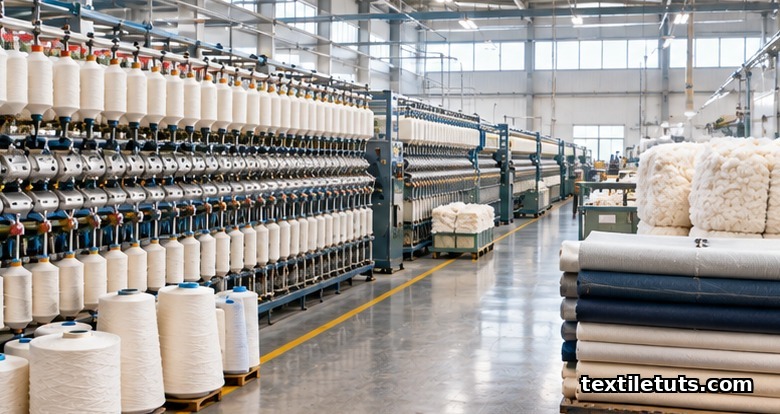
The US textile industry produced textile-mill shipments valued at over $60 billion in 2022 and directly employs approximately 370,000 workers across fiber, yarn, fabric, and finishing mills. Three specialty-chemical leaders, Milliken & Company, INVISTA, and DuPont, anchor the higher-value end with polymer platforms (LYCRA spandex, Kevlar para-aramid, Nomex meta-aramid) that define global benchmarks for performance, protective, and industrial textiles.
Of the roughly 6,800 textile-mill establishments operating in the United States in 2022, fewer than 5% are vertically integrated chemical-fiber producers, yet those firms supply the majority of high-performance fibers used in US-made aerospace, automotive, defense, and medical applications (Bureau of Labor Statistics, NAICS 313 Textile Mills and NAICS 314 Textile Product Mills).
This guide walks through what each of the three anchor companies makes, the test standards behind their flagship chemistries, and how the broader industry is rebuilding around reshoring, recycled feedstocks, and technical-textile growth.
State of US Textile Manufacturing Today
Textile manufacturing remains one of the larger durable-goods sectors in the US economy. According to the Bureau of Labor Statistics Current Employment Statistics survey, the combined textile-mills subsector (NAICS 313 and 314) averaged roughly 370,000 payroll jobs across 2022, with the value of shipments reaching over $60 billion per the US Census Bureau Annual Survey of Manufactures. Woven fabric (NAICS 3132) and non-woven fabric (NAICS 3133) account for the largest sub-sectors by shipment value.
Cotton remains the dominant fiber by volume, with US mill consumption typically between 2 and 3 million running bales per year, but synthetic filament production (polyester, nylon 6,6, spandex, and aramid) dominates value-added output. The Department of Agriculture tracks cotton bale consumption, while the Bureau of Labor Statistics Quarterly Census of Employment and Wages reports employment in synthetic-fiber manufacturing.
Trade policy continues to reshape the competitive map. The US-Mexico-Canada Agreement tightened yarn-forward rules of origin for apparel in 2021, and the Berry Amendment (10 U.S.C. § 4862) restricts the Department of Defense to sourcing 100% US-made fibers and fabrics for military textiles. The Berry Amendment is one of the structural reasons DuPont and Milliken retain protected demand even as commodity apparel production has shifted overseas.
Milliken & Company — The Largest Privately Held US Textile Maker
Milliken & Company, headquartered in Spartanburg, South Carolina, traces its origin to 1865, when Seth Milliken and William Deering founded the Deering Milliken Company in Portland, Maine. Today the company operates more than 40 manufacturing facilities across the United States, Belgium, Mexico, and China, and remains entirely family-owned. That ownership structure lets the firm commit to capital-intensive research and development over multi-decade horizons, which is unusual in a sector dominated by short-cycle consumer goods.
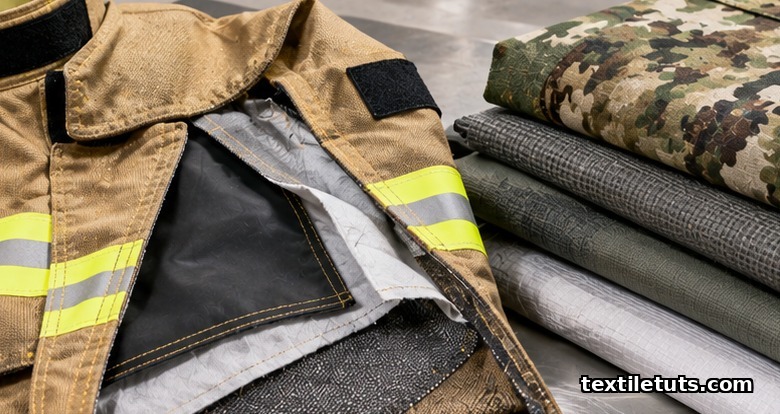
The textile portfolio covers four interlocking segments: Milliken Floor Covering, Milliken Specialty Fabrics (firefighter turnout gear, military uniforms, automotive airbag fabrics), Milliken Chemical (colorants, antimicrobial finishes, polymer additives), and Milliken Outdoor & Performance. The vertical integration is rare among US textile companies: most apparel-textile firms have divested upstream chemistry, but Milliken runs its own color-science laboratory accredited to AATCC Test Methods for colorfastness to light, crocking, and perspiration.
Milliken holds more than 6,500 active US patents and was ranked among the top 100 US corporate patent assignees in 2022 by the US Patent and Trademark Office. The flagship specialty-textile innovation is the ResQ turnout system for first-responder gear, combining a meta-aramid outer shell with a moisture barrier that meets NFPA 1971 thermal-protective-performance requirements. Milliken is also a leading US producer of imaging fabrics used in digital textile printing, supplying substrates engineered to pass ISO 105-B02 lightfastness testing for outdoor and architectural applications.
INVISTA — Nylon 6,6 Intermediates, LYCRA Spandex, and Airbag Yarn
INVISTA is the successor to DuPont’s textile-fibers business, which was carved out and sold to Koch Industries in 2004 for approximately $4.4 billion. Headquartered in Wichita, Kansas, INVISTA produces nylon 6,6 intermediates (adipic acid and hexamethylenediamine), polymer-grade nylon chip, and the world’s best-known spandex brand, LYCRA.
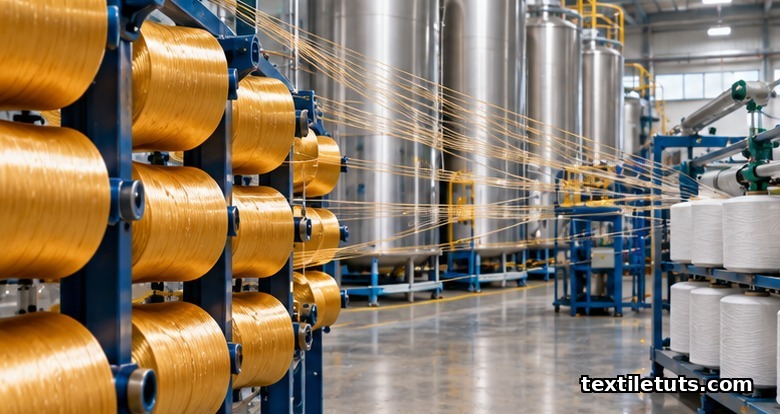
LYCRA was first commercialized by DuPont in 1958 as Fiber K, then rebranded LYCRA in 1962. The elastane fiber is a segmented polyurethane containing a minimum of 85% segmented polyurethane by mass, a generic definition fixed by ISO 2076 for man-made fiber categorization. The fiber is produced by dry-spinning a prepolymer solution into a heated solvent column. A standard 20-denier LYCRA fiber can stretch up to seven times its relaxed length and recover more than 95% of its original length after 100% extension. Stretch and recovery are measured under ASTM D2731, the standard test method for elastic properties of yarn.
INVISTA operates more than 20 manufacturing sites globally, including a Chattanooga, Tennessee facility that produces nylon 6,6 polymer for Cordura-brand durable fabrics and Stainmaster carpet fiber. The 2022 sale of the Apparel & Advanced Textiles business did not affect LYCRA production, which remains concentrated at INVISTA’s Waynesboro, Virginia plant.
Automotive airbag yarn is a separate technology line: nylon 6,6 filament with a tenacity above 9.0 g/denier and heat-of-friction resistance tested under ASTM D6611. INVISTA airbag yarn is used in the inflator cushion of nearly every US-assembled passenger-vehicle airbag.
DuPont — From Gunpowder Mill to Specialty-Polymer Leader
DuPont was founded in 1802 as a gunpowder mill on the Brandywine River in Wilmington, Delaware, and remained a privately held explosives firm until 1902. Its pivot to chemistry accelerated through the 1920s, and across the twentieth century DuPont introduced a series of chemistries that defined the modern specialty-fiber market: cellophane (1920s), nylon 6,6 (1939), Tyvek flashspun high-density polyethylene (1967), and the two aramids, Nomex meta-aramid (1967) and Kevlar para-aramid (1971).
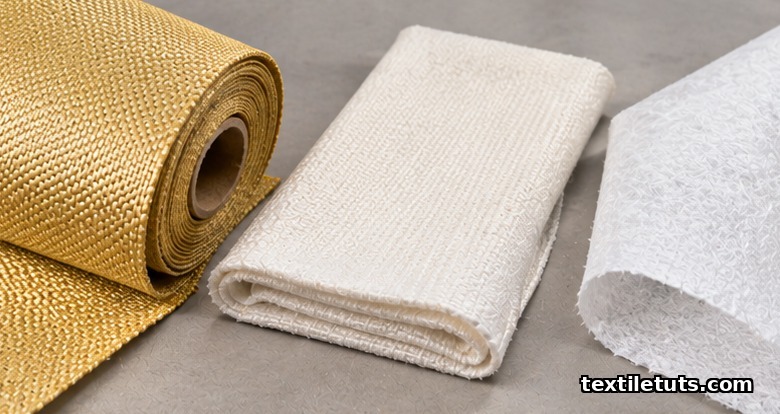
Kevlar is a liquid-crystalline polymer spun from poly-paraphenylene terephthalamide in a sulfuric-acid solvent. The resulting para-aramid fiber has a tensile strength of about 3,620 MPa and a density of 1.44 g/cm³, giving a specific tensile strength roughly five times that of structural steel on a weight basis. Properties are independently confirmed under ASTM D7269 for yarn tensile testing. Kevlar is the standard ballistic-fiber component in US body armor and is cited in National Institute of Justice NIJ Standard 0101.07 for ballistic resistance of police body armor.
Nomex is the meta-aramid counterpart, with similar thermal stability but lower tenacity. It self-extinguishes when the flame source is removed, a property documented under NFPA 1971 for structural firefighting and NFPA 2112 for industrial flash-fire protection. US military flight suits, racing driver suits, and petrochemical worker coveralls are predominantly Nomex-blend constructions.
Tyvek is a flashspun nonwoven of high-density polyethylene, with fibers bonded by heat and pressure without binders. It passes ASTM D5034 tensile testing for nonwoven fabrics and is the standard US-made housewrap and personal protective garment substrate for infection-control applications. DuPont de Nemours Inc., the legal entity that emerged from the DowDuPont three-way split in 2019, retains Tyvek, Kevlar, and Nomex through its Electronics & Industrial segment, which reported net sales of $13.7 billion for 2023.
Milliken, INVISTA, and DuPont at a Glance
| Property | Milliken & Company | INVISTA | DuPont |
|---|---|---|---|
| Headquarters | Spartanburg, South Carolina | Wichita, Kansas | Wilmington, Delaware |
| Year founded | 1865 | 2004 (carved out of DuPont) | 1802 |
| Ownership | Privately held (Milliken family) | Subsidiary of Koch Industries | Public (NYSE: DD) |
| Flagship textile chemistry | Firefighter turnout composites, specialty colorants | LYCRA spandex, nylon 6,6 polymer | Kevlar para-aramid, Nomex meta-aramid, Tyvek HDPE nonwoven |
| Key standards anchor | NFPA 1971, AATCC colorfastness methods, ISO 105-B02 | ISO 2076, ASTM D2731, ASTM D6611 | NIJ 0101.07, NFPA 1971, NFPA 2112, ASTM D7269, ASTM D5034 |
| Primary end markets | Military uniforms, first responder gear, floor covering | Apparel stretch, automotive airbag, carpet fiber | Ballistic protection, aerospace, industrial flash-fire PPE |
| Notable recent move | Multi-million-dollar expansion of Spartanburg specialty-fabric plant (2022) | Sale of Apparel & Advanced Textiles unit (2022) | Electronics & Industrial segment growth following DowDuPont split |
Frequently Asked Questions
Which is the largest US textile manufacturer by revenue?
By specialty-textile revenue, Milliken & Company is generally regarded as the largest US-headquartered textile manufacturer, with textile-related annual sales estimated above $3 billion across its floor covering, specialty fabric, and chemical divisions. DuPont’s textile-related revenue is a fraction of its corporate total, since most DuPont sales now come from electronics and water-related chemistries, but the Kevlar and Nomex product lines remain the highest-revenue specialty fibers by unit price.
Are Milliken, INVISTA, and DuPont competitors?
Partially. Milliken and DuPont both supply thermal-protective and firefighter-grade fabrics and compete in NFPA 1971 turnout composites. INVISTA competes more directly with Asia-based spandex producers and rarely with Milliken in finished-fabric applications. The three firms collaborate indirectly through shared nylon 6,6 supply chains; INVISTA and DuPont have at times been mutual suppliers of adipic acid intermediates.
What is LYCRA fiber made from, and is it still made in the US?
LYCRA is a segmented polyurethane elastane made by reacting a diisocyanate with a polyether glycol and then dry-spinning the prepolymer into a hot solvent column. INVISTA manufactures LYCRA at multiple global sites. The original Maydown, Northern Ireland facility was the first dedicated spandex plant and remains operational. US production is concentrated at the company’s Waynesboro, Virginia site.
Is Kevlar stronger than steel?
By tensile strength-to-weight ratio, yes. Para-aramid Kevlar has a tensile strength of approximately 3,620 MPa at a density of 1.44 g/cm³, giving a specific strength roughly 5x that of structural steel. The comparison is only meaningful on a per-mass basis; Kevlar is not rigid and is always used in composite constructions, laminated with resin, woven into fabric, or layered with other fibers, rather than as a structural member.
How is the Berry Amendment connected to US textile policy?
The Berry Amendment (10 U.S.C. § 4862) requires the Department of Defense to procure textiles, clothing, and food-service items from 100% US-grown, US-produced, and US-manufactured sources. The amendment was originally passed in 1941 and significantly expanded in scope in 2006 and again in 2018. Compliance with Berry is one of the structural reasons US specialty-fiber producers retain protected demand even when commodity apparel production has shifted overseas.
References
- US Bureau of Labor Statistics. Current Employment Statistics: Textile Mills (NAICS 313) and Textile Product Mills (NAICS 314). https://www.bls.gov/ces/ — Industry payroll employment averages.
- US Census Bureau. Annual Survey of Manufactures. https://www.census.gov/manufacturing/asm/ — Value of shipments for textile-mill NAICS codes.
- International Organization for Standardization. ISO 2076:2021, Man-made fibres — Generic names. https://www.iso.org/standard/79010.html — Defines elastane and other man-made fiber categories.
- AATCC. AATCC Test Methods for Colorfastness. https://www.aatcc.org/test/ — Colorfastness to light, crocking, and perspiration methods cited for Milliken color-science work.
- ASTM International. ASTM D2731, Standard Test Method for Elastic Properties of Yarn. https://www.astm.org/d2731/ — Used for spandex stretch-recovery measurement.
- ASTM International. ASTM D7269/D7269M, Standard Test Methods for Tensile Testing of Yarns. https://www.astm.org/d7269/ — Method for high-tenacity aramid yarn tensile data.
- National Institute of Justice. NIJ Standard 0101.07, Ballistic Resistance of Body Armor. https://www.ojp.gov/pubs/ — Performance standard that cites para-aramid ballistic fibers.
- ASTM International. ASTM D5034, Standard Test Method for Breaking Strength and Elongation of Textile Fabrics (Grab Method). https://www.astm.org/d5034/ — Used for nonwoven Tyvek tensile reporting.
This article is the working reference for the US textile industry and its three anchor specialty-fiber firms. Editorial by Mohammad Yousuf (Anik), TextileTuts. Sources: US Bureau of Labor Statistics, US Census Bureau Annual Survey of Manufactures, ISO 2076, AATCC Test Methods, ASTM D2731, ASTM D7269, ASTM D5034, and NIJ Standard 0101.07, as cited.


