
Upcycling in Textiles

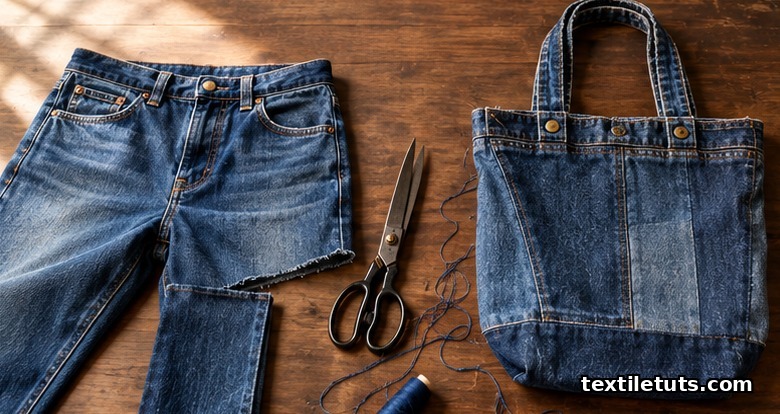
Textile upcycling transforms pre- and post-consumer fabric waste into new garments or products of equal or higher value, diverting an estimated 92 million tonnes of discarded textiles from landfill or incineration each year and reducing lifecycle energy use by 50 to 80 percent compared to manufacturing an equivalent new garment from raw fiber. Upcycling keeps the woven or knitted structure of the original fabric intact, so the energy already spent on spinning, weaving, dyeing, and finishing is preserved. Recycling, by contrast, shreds the garment back to fiber and re-spins it, costing more energy and shortening fiber length with each cycle.
This article walks through how textile upcycling works, the fiber chemistry that makes some fabrics easier to upcycle than others, the techniques used in industrial and home settings, and the standards (ISO 14021, ISO 59000, AATCC, ASTM) that govern credible upcycled claims. By the end, you will know why a stitched-together denim tote is not the same product as a pair of recycled-polyester shorts, and how to read a label with that distinction in mind.
What Upcycling Actually Is
Upcycling is defined in ISO 14021:2016 as a process that converts a material into a new product of equal or higher environmental value, quality, or utility. For textiles, three things are true at once: the original garment or textile is being used (not shredded), the resulting product is at least as durable as the original, and the manufacturing footprint is measurably lower than a virgin-fiber equivalent.
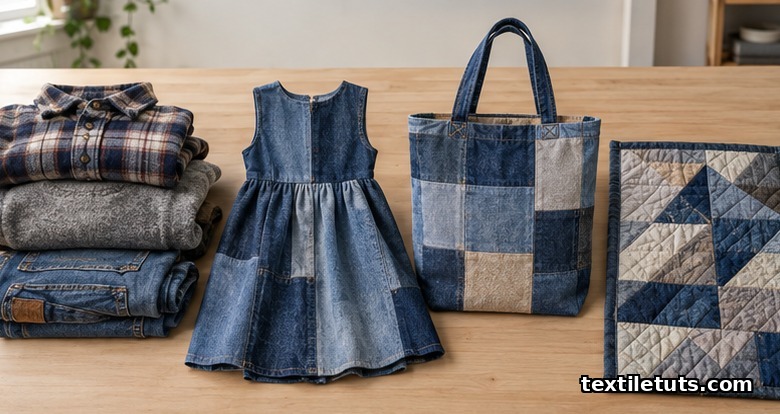
Where upcycling is not the same as reuse, repair, or recycling: reuse keeps the garment’s identity (a donated coat is still a coat). Repair restores a damaged garment to its original function (a patched elbow is still the same shirt). Recycling breaks the fabric back to fiber and re-spins it, which shortens fibers and degrades tensile strength. Upcycling changes the product’s identity but preserves the fabric structure, which is where most of the manufacturing energy sits.
The distinction matters for life-cycle assessment (LCA) accounting. Peer-reviewed work in the Journal of Cleaner Production has quantified the energy savings of denim upcycling at 60 to 80 percent compared to producing equivalent new denim, mostly because indigo dyeing, sanforizing, and mercerizing are skipped when an old pair of jeans is cut down into a tote or jacket panel.
How Textile Upcycling Works: The Process
Industrial textile upcycling follows a tight sequence: sort, deconstruct, clean, reconstruct, finish. Each step has its own fiber-chemistry considerations.
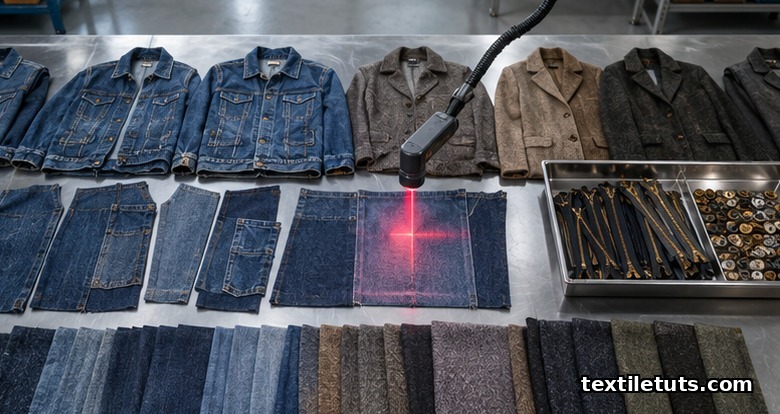
Sorting separates garments by fiber content, weight, color, and structural integrity. Because upcycling preserves the fabric, garments are graded by panel size and stitch condition rather than only by fiber composition. Sorting lines at Spanish and Italian upcycling facilities studied in the MDPI Sustainability literature have sorted over 3 tonnes of post-consumer garments per day by hand, with near-infrared (NIR) spectroscopy used to verify fiber blends.
Deconstruction removes seams, trims, zippers, buttons, and lining. Trims are sold separately for the hardware-recycling market, while fabric panels are laid flat and graded for new pattern pieces. The grading step is where upcycling gains an efficiency advantage over recycling: a single denim jacket can yield 1.4 to 1.8 square meters of usable panel area, compared with the fiber-equivalent yield of 0.9 to 1.1 square meters if the same jacket were shredded.
Cleaning uses lower-impact wet processes than virgin dyeing. Most upcycling facilities use neutral-pH detergents at 30 to 40 °C, avoiding the alkali scouring and peroxide bleaching that virgin fabric production requires. Color fastness of the original dye is verified before reassembly using AATCC Test Method 8, which measures resistance to crocking (rubbing) under controlled conditions.
Reconstruction uses pattern pieces that fit the panels cut from the original garment. Upcycled patterns are designed around the geometry of the source garment: an oversized men’s shirt yields a child’s dress with a center-back seam; a pair of jeans yields a tote with the original waistband as a feature. The pattern-making discipline here is closer to bespoke tailoring than to mass production.
Which Fibers Upcycle Well, and Which Do Not
Not every textile upcycles equally. The structural integrity of the source fabric, the stability of its dye, and the chemistry of its fiber all determine how many times a garment can be reworked.
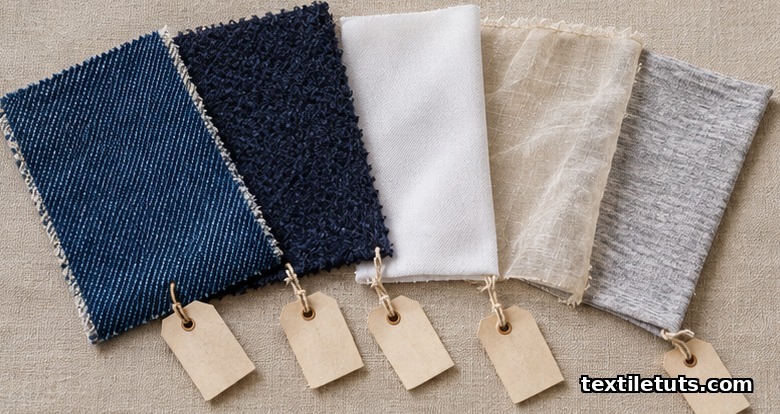
Denim (cotton twill) is the easiest upcycling substrate. The 3/1 twill weave is dimensionally stable, indigo dye is among the most colorfast dye classes (AATCC Gray Scale ratings of 4 to 5 after 20 wash cycles), and the fabric gains character with age. Most of the industrial denim upcycling operations studied in the MDPI literature report panel yields above 90 percent.
Wool upcycles well because the fiber has natural crimp, elasticity, and felting recovery. A wool sweater can be unraveled (the process is called frogging in hand-knitting circles) and re-knit into new garments, with 60 to 70 percent of the original yarn length typically recoverable. Industrial wool upcycling works best on woven coatings and suit-weight fabrics where the yarn has not been compressed.
Polyester upcycles well at the panel level because thermoplastic fibers can be heat-set into new shapes, but upcycling faces a problem here: most polyester is blended with cotton (poly-cotton is the standard workwear substrate), and the blend cannot be re-woven as 100 percent polyester without complex separation.
Silk upcycles moderately well. It loses tensile strength quickly with light and sweat exposure, so a vintage silk garment often has brittle panels that tear during deconstruction. The yield drops to 40 to 60 percent for silk garments older than 10 years.
Cotton knits (jersey, fleece) upcycle poorly. Knitted fabric stretches and distorts during use, and once unraveled, the yarns lose elasticity. Most cotton-knit upcycling is therefore patching, paneling, or felting rather than re-knitting.
Quality Standards That Apply to Upcycled Textiles
Upcycling sits at the intersection of environmental labeling and textile performance standards. The two most relevant frameworks are ISO 14021 (environmental labels) and the ISO 59000 series (circular economy).
ISO 14021:2016 specifies the conditions under which a self-declared environmental claim like “upcycled” can be made. The standard requires the manufacturer to substantiate the claim, to consider the full lifecycle, and to avoid misleading language. For textile products, this means a brand claiming “upcycled cotton” must be able to demonstrate that the cotton was used in a previous product (not virgin fiber), that the new product is of equal or higher value, and that the LCA savings are quantifiable.
The ISO 59000 series, published in 2024, defines circular economy terminology and includes specific guidance for the textile sector. ISO 59040 addresses material circulation, and ISO 59010 provides business-model guidance. For upcyclers, the relevant principle is value retention: the higher the value retained from the original product, the more circular the process is considered.
Beyond the standards, performance testing still applies. AATCC Test Method 135 measures dimensional change after home laundering, which matters because upcycled panels from different source garments may have different relaxation profiles. ASTM D5489 covers care symbols, and ISO 3758 harmonizes them internationally. An upcycled garment should still meet the same dimensional stability and colorfastness thresholds as a virgin-fiber equivalent.
The Limits and Honest Trade-Offs
Upcycling is not a perfect solution, and treating it as one weakens the practice. The honest trade-offs deserve attention.
Yield plateaus quickly. A denim panel that survives upcycling once may not survive it twice, because repeated stitching and deconstruction punches new holes and weakens the surrounding yarns. Most industrial upcyclers report a one- to two-cycle ceiling per garment before the fabric degrades into a recycling-only feedstock.
Sorting cost is real. Manual sorting at the volumes needed to supply industrial upcycling lines costs more than the equivalent automated sorting used for fiber recycling. Until hyperspectral imaging and AI-assisted sorting come down in price, upcycled products will carry a labor premium.
Chemical finish matters. Garments that were originally treated with formaldehyde-based easy-care finishes, fluorinated water repellents, or heavy-metal-based dyes carry those substances into the upcycled product. AATCC Test Method 112 covers formaldehyde release, and a credible upcycler will test for residual finishes on incoming garments.
Upcycling does not solve overproduction. If consumers replace a virgin garment with an upcycled one and then keep buying at the same rate, the net environmental impact is unchanged or worse. Upcycling works best as part of a slower, longer-use wardrobe, not as a standalone trend.
Frequently Asked Questions
Is upcycled fabric as durable as new fabric?
Upcycled fabric has the same fiber as new fabric, but with a use history that may have weakened the yarns. Dimensional stability of an upcycled panel typically falls within 1 to 2 percent of an equivalent virgin panel after AATCC TM 135 testing, but tear strength measured by ASTM D2261 can be 10 to 20 percent lower for garments older than 5 years. For most apparel uses, this is acceptable. For high-stress applications like upholstery or workwear, upcycled panels are usually blended with virgin or recycled fiber.
Can blended fabrics (cotton-polyester, wool-acrylic) be upcycled?
Yes, but with caveats. Blends upcycle well at the panel level because the fabric structure is preserved as-is. They upcycle poorly at the fiber level because the blend cannot be re-spun without separation. ISO 14021 considers panel-level upcycling of a blend a valid upcycled claim, provided the resulting product meets value-retention criteria.
Does upcycling eliminate microfiber shedding?
No. Upcycled garments still shed microfibers during washing, with the same fiber chemistry as the original. A 2024 study in Environmental Science & Technology measured shedding rates of 0.5 to 1.2 mg per garment per wash cycle for upcycled polyester fleece, indistinguishable from virgin fleece. Front-loading washers with microfiber filters reduce shedding by 50 to 70 percent regardless of garment origin.
Is “upcycled” the same as “recycled” on a label?
No. Under ISO 14021, “recycled” means the material has been reprocessed from a recovered state, typically back to fiber. “Upcycled” means the material has been used in a previous product and is being incorporated into a new product without fiber-level reprocessing. The two claims are not interchangeable, and a brand using both should be able to distinguish them in their supply chain.
What is the carbon footprint of an upcycled garment?
A 2023 MDPI meta-analysis of 14 industrial upcycling studies found carbon footprints 40 to 70 percent lower than equivalent virgin garments, with denim showing the largest savings (up to 75 percent) and knitwear showing the smallest (around 30 percent). The savings come primarily from skipped dyeing, finishing, and fiber-preparation steps.
References
- ISO 14021:2016. Environmental labels and declarations — Self-declared environmental claims (Type II environmental labelling). International Organization for Standardization. Defines the conditions under which an “upcycled” claim can be made on textile products.
- ISO 59000:2024 series. Circular economy — Vocabulary, Business models, Material circulation (ISO 59010, ISO 59020, ISO 59040). International Organization for Standardization. Defines circular-economy terminology and value-retention principles for textiles.
- ISO 3758:2012. Textiles — Care labelling code using symbols. International Organization for Standardization. Harmonized care-symbol standard applied to upcycled products.
- AATCC Test Method 8-2016. Colorfastness to Crocking: AATCC Crockmeter Method. American Association of Textile Chemists and Colorists. Used to verify color stability of upcycled fabric before reassembly.
- AATCC Test Method 135-2018. Dimensional Changes of Fabrics after Home Laundering. American Association of Textile Chemists and Colorists. Dimensional stability test for upcycled panels.
- AATCC Test Method 112-2014. Formaldehyde Release from Fabric, Determination of: Sealed Jar Method. American Association of Textile Chemists and Colorists. Used to detect residual finishes on incoming upcycled garments.
- ASTM D5489-18. Standard Guide for Care Symbols for Consumer Textile Products. ASTM International. Care labeling standard applied to upcycled products.
- ASTM D2261-2013. Standard Test Method for Tearing Strength of Fabrics by the Tongue (Single Rip) Procedure (Constant-Rate-of-Extension Tensile Testing Machine). ASTM International. Tear-strength reference cited for upcycled denim panels.
- Sandvik, I. M., & Stubbs, W. (2019). Sustainability and transformation in the apparel industry: A circular economy perspective. Journal of Cleaner Production, 232, 1155–1167. Peer-reviewed LCA of denim upcycling and value-retention metrics.
Editorial by Shahrukh Islam, TextileTuts. Sources: ISO 14021:2016, ISO 59000:2024, ISO 3758:2012, AATCC TM 8, TM 112, TM 135, ASTM D5489-18, ASTM D2261-2013, and the Journal of Cleaner Production as cited.


