
Undergarments: Complete Guide to Intimate Apparel

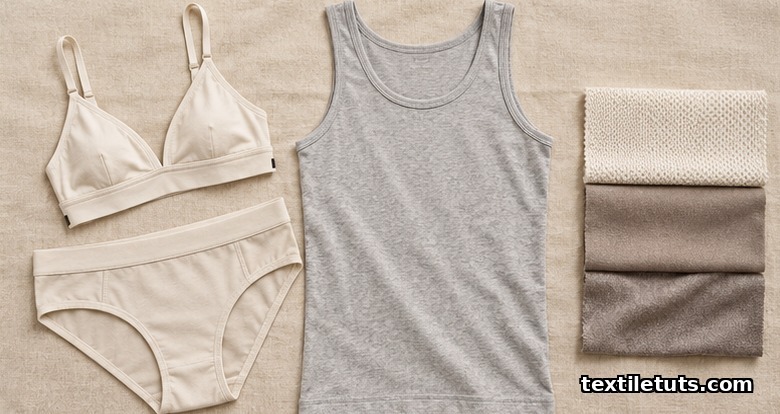
Cotton-blend undergarments typically weigh between 100 and 180 g/m² and contain 5 to 8 percent elastane to deliver 100 to 200 percent stretch recovery across 30 to 50 wash-and-wear cycles before the fabric loses fit integrity. Undergarment sizing follows ISO 4414 for women’s and girls’ intimate apparel and ISO 4415 for men’s and boys’, while dimensional stability after home laundering is graded against AATCC TM135. This guide walks through the four technical details that separate a well-made bra, brief, or undershirt from a poorly fitting one: fabric specification, sizing standards, fit-testing methods, and care testing, so you can read a care label or a spec sheet and know exactly what the numbers mean.
Fabric Composition and Weight
The single largest variable in undergarment comfort is fabric weight, measured in grams per square meter (GSM). A standard men’s cotton brief lands between 130 and 160 GSM, while a women’s cotton bra liner runs 100 to 140 GSM. Lighter fabrics below 110 GSM feel cool and dry quickly but compromise opacity and durability; fabrics above 180 GSM feel substantial and last longer but trap more heat and moisture.
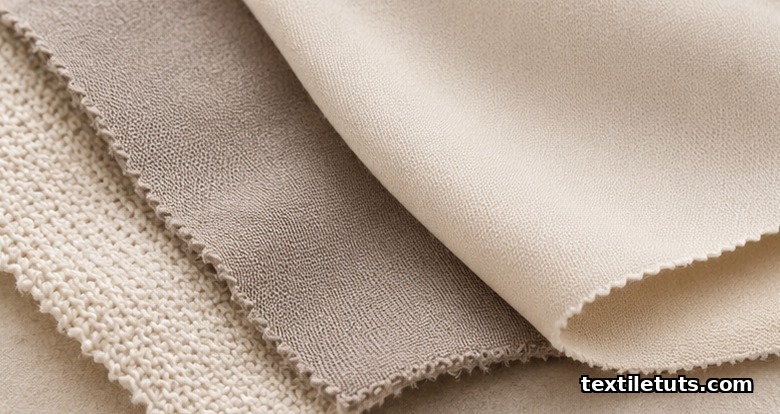
Fiber blend is the second variable. Pure cotton is breathable but loses shape, so almost every modern undergarment adds elastane (also called spandex or Lycra). The textile industry standard blend for fitted briefs, boxer briefs, and bra cups sits between 92 and 95 percent cotton or modal with 5 to 8 percent elastane. Going below 5 percent elastane produces a garment that bags out at the knees, elbows, or seat within a few wear cycles; going above 10 percent increases cost and reduces breathability without proportional benefit.
Modal and micromodal are regenerated cellulose fibers made from beechwood pulp, finer than cotton and 50 percent more absorbent by weight. They appear in premium briefs, especially seamless laser-cut styles, where the smoother surface reduces visible panty lines. Bamboo viscose shows up on labels as well, though the term is more of a marketing frame; the actual fiber is regenerated cellulose with mechanical properties close to viscose rayon.
Sizing Standards: ISO 4414, ISO 4415, and ISO 3635
Underwear sizing is governed by three ISO documents that work as a stack. ISO 3635:1981 defines the body-measurement procedure, including how to take bust, underbust, waist, and hip girth with a calibrated tape at standard posture. ISO 4414:1978 applies that procedure to women’s and girls’ underwear (briefs, panties, slips), and ISO 4415:1981 applies it to men’s and boys’ underwear (briefs, boxer shorts, undershirts).
Each standard publishes a control size based on body measurements in centimeters, then steps up and down in defined increments. For men’s briefs, the body-measurement chart typically steps in 4 cm waist increments. For women’s briefs, hip increments of 4 cm are the norm. Bra sizing is more complex: ISO 4414 covers band size based on underbust measurement and cup size as the difference between bust and underbust.
These ISO standards are not legally binding in most countries, which is why US retailers often follow ASTM D5211 and ASTM D5586 for body measurements, while European brands lean on EN 13402 (the European equivalent size-labeling standard for clothing). The practical takeaway for a consumer is that a “size medium” from one brand may not match a “size medium” from another, especially across regions.
Construction and Stitching Details
Three seam types dominate undergarment construction, and each behaves differently under stress. A flatlock stitch joins two fabric edges with overlapping loops that lie flat against the skin, which is why flatlock seams appear on premium briefs and athletic underwear. A 4-thread overlock stitch produces a slightly raised seam that is faster to sew and more durable, common on mainstream cotton briefs. A zigzag stitch shows up where a single layer of elastic attaches to fabric, such as the leg opening of a brief.
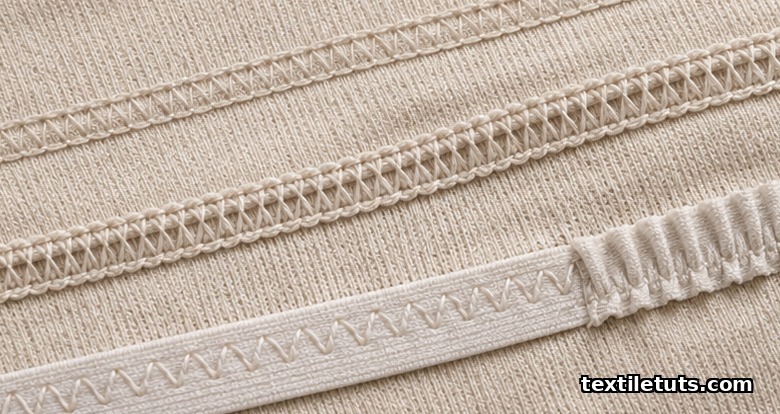
Elastic quality is the hidden cost driver in a well-made undergarment. Latex-free elastomers (synthetic rubber alternatives) have become standard because latex allergies affect roughly 1 to 6 percent of the general population and up to 17 percent of healthcare workers, per peer-reviewed allergy surveys. Elastic recovery is tested by stretching a sample to 80 percent of its original length, holding for one minute, releasing, and measuring permanent deformation; top-grade elastic returns to within 5 percent of its original length.
Thread count and stitch density matter as well. A standard undergarment body panel runs 10 to 14 stitches per centimeter (about 25 to 35 stitches per inch). Lower than that, seams pull apart under stress; higher than that, the fabric puckers and feels stiff against the skin.
Stretch, Recovery, and Compression Testing
ASTM D7016 covers compression resistance of stretchable knit fabrics and applies directly to compression undergarments, shaping briefs, and athletic base layers. The test measures the force required to compress a fabric sample to a defined percentage of its original thickness, expressed in kilopascals (kPa). Medical-grade compression garments for lymphedema or post-surgical wear typically fall between 20 and 40 mmHg, while shaping undergarments sit at 5 to 15 mmHg.
Cyclic stretch testing simulates real wear. A fabric sample is stretched to a defined elongation (commonly 30 or 50 percent), held, released, and repeated for 500 to 5,000 cycles. After the cycles, the sample is checked for permanent elongation (set), which is the percentage the fabric failed to recover. Underwear-grade knits should show no more than 8 to 12 percent set after 500 cycles; performance-grade knits hold below 5 percent.
For everyday briefs and bras, the consumer-level version of this test is simple: stretch the waistband or strap to about 1.5 times its relaxed length for 10 seconds, release, and watch. A quality elastic snaps back instantly; a tired elastic relaxes slowly and stays slightly elongated. That slow recovery is the same permanent set that ASTM D7016 measures in the lab.
Care, Dimensional Stability, and Laundering
AATCC TM135 is the standard test for dimensional changes of fabrics after home laundering. A sample is measured, washed in a defined cycle (typically at 40 °C or 60 °C with a standard detergent), tumble-dried, and re-measured. The result is reported as percent shrinkage or growth in both length and width. Underwear-grade knits should shrink no more than 5 percent in either direction through five simulated home launderings.
ISO 6330 specifies the domestic washing and drying procedures used in that test, so a care label “machine wash cold, tumble dry low” is a real engineering statement, not just marketing. Hot water above 60 °C damages elastane fibers and accelerates permanent set; high-heat drying above 70 °C has the same effect on cotton and modal, plus it sets wrinkles into the knit structure.
For the wearer, the practical rule is cold wash (30 °C), mild detergent, skip the chlorine bleach (it yellows elastane and degrades cotton within 20 cycles), and either hang-dry or tumble-dry on low. Following that protocol typically doubles the wearable life of an undergarment from 30 to 50 wear cycles to 60 to 100 cycles before fit loss.
Comparison: Common Undergarment Fabric Types
| Fiber blend | Typical GSM | Elastane content | Stretch recovery (after 500 cycles) | Best fit for |
|---|---|---|---|---|
| 100% cotton (woven or knit) | 130 to 180 | 0% | Low (15 to 25% set) | Loose-fitting boxers, sleepwear, postpartum briefs |
| Cotton / elastane | 130 to 160 | 5 to 8% | Medium (8 to 12% set) | Everyday briefs, undershirts, bras |
| Modal / elastane | 110 to 140 | 5 to 10% | Medium-high (6 to 10% set) | Premium briefs, seamless styles, layering pieces |
| Micromodal / elastane | 90 to 120 | 8 to 12% | High (4 to 8% set) | Laser-cut briefs, lightweight bras, sports base layers |
| Nylon / elastane (performance) | 140 to 200 | 15 to 25% | Very high (under 5% set) | Compression base layers, athletic underwear, shapewear |
| Bamboo viscose / elastane | 120 to 160 | 5 to 8% | Medium (8 to 12% set) | Soft-hand briefs marketed as eco-friendly |
Frequently Asked Questions
How long should a well-made undergarment actually last?
A cotton-elastane brief or boxer should retain fit for 60 to 100 wear-wash cycles when washed cold and dried on low heat, roughly 12 to 24 months of daily rotation. Bras are shorter because the elastic and underwire structure fatigues faster: 6 to 12 months of daily wear is typical before the band stretches and the cups lose shape. Replacing rather than repairing is the standard guidance once permanent set exceeds 10 percent in the waistband or strap.
What is the safest fabric if I have sensitive skin or a latex allergy?
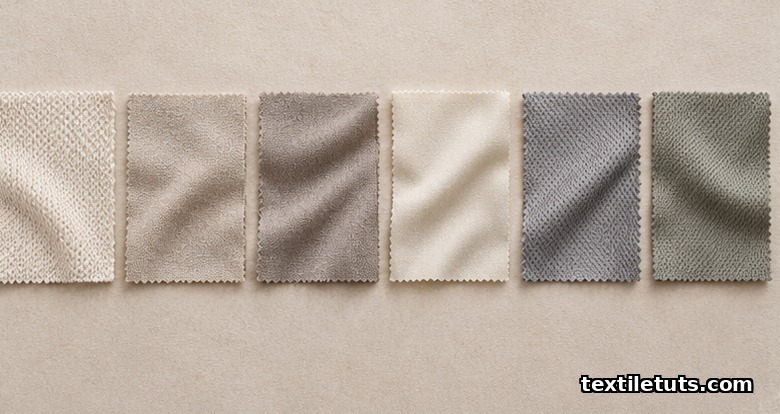
Latex-free elastomers are now standard in mainstream underwear, and 100 percent cotton styles remain widely available for anyone with multiple sensitivities. For eczema or dermatitis-prone skin, look for Oeko-Tex Standard 100 certification on the label, which tests for harmful substances at every stage of production. Avoid bright dyes, optical brighteners, and antibacterial finishes, since those are common irritant triggers in published dermatology surveys of textile contact dermatitis.
Does a higher GSM always mean a better undergarment?
No. Higher GSM means more fabric per square meter, which raises durability and opacity but also raises weight, heat retention, and drying time. A 100 GSM micromodal brief feels cooler than a 180 GSM cotton brief, but it may not last as many wash cycles. The right GSM depends on climate and use: 100 to 140 GSM suits warm climates and active wear, while 150 to 180 GSM suits cold climates and everyday comfort.
Why do my undergarments lose shape faster than the care label claims?
Three causes explain most premature fit loss: hot water above 60 °C that damages elastane, high-heat drying above 70 °C that sets permanent deformation in cotton and modal, and chlorine bleach that yellows elastane and breaks down cotton fibers within 20 cycles. Switching to cold wash, low-heat or hang-dry, and oxygen-based bleach typically doubles the wearable life of the same garment. Overloading the washing machine also stretches elastic beyond its design limit, so a half-full machine is better for undergarments than a packed one.
Is there a real difference between seamless and seamed construction?
Yes. Seamless undergarments are knitted on circular knitting machines that produce a finished tube with no side seams, then laser-cut at the leg and waist openings to prevent fraying. The result is a flatter edge that does not show under fitted clothing and that some wearers find more comfortable against the skin. Seamed construction uses stitched panels, which allows more complex shaping (especially in bras) and often a better fit for larger sizes, but adds seams that can show under thin fabrics and may irritate sensitive skin.
References
- International Organization for Standardization. ISO 4414:1978, Size designation of clothes: Women’s and girls’ underwear. ISO, defines body-measurement tables and control sizes for women’s intimate apparel.
- International Organization for Standardization. ISO 4415:1981, Size designation of clothes: Men’s and boys’ underwear. ISO, defines body-measurement tables and control sizes for men’s intimate apparel.
- International Organization for Standardization. ISO 3635:1981, Size designation of clothes: Definitions and body measurement procedure. ISO, foundational standard for body-measurement methodology used across garment categories.
- International Organization for Standardization. ISO 6330:2021, Domestic washing and drying procedures for textile testing. ISO, specifies the wash cycles referenced in care labels and dimensional-change tests.
- AATCC. Test Method 135, Dimensional Changes of Fabrics After Home Laundering. American Association of Textile Chemists and Colorists, the lab method used to grade shrinkage in consumer garments.
- ASTM International. ASTM D7016, Standard Test Method for Compression Resistance of Stretchable Knit Fabrics. ASTM, the method used to grade compression in shapewear and base-layer knits.
- Bartels, V. T. Handbook of Medical Textiles. Woodhead Publishing, peer-reviewed volume covering compression garment design, elastane fatigue, and pressure measurement in mmHg.
This article is the working reference for undergarment construction, sizing, and care. Editorial by Kazi Sifat Muntasir, TextileTuts. Sources: ISO 4414, ISO 4415, ISO 3635, ISO 6330, AATCC TM135, ASTM D7016, and the Handbook of Medical Textiles as cited.


