
Swimwear Fabric and Construction

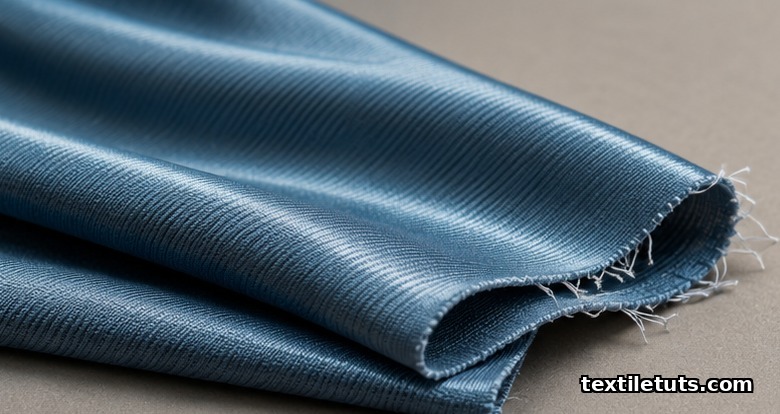
Swimwear fabric is a warp-knit or circular-knit textile made from 80 to 90 percent polyester or polyamide (nylon) blended with 10 to 20 percent elastane (spandex or Lycra), with fabric weights of 150 to 220 GSM and stretch recovery of 95 percent or higher after 80 percent elongation when tested per ASTM D2594 and AATCC TM 162.
The specific fiber blend, knit structure, and seam construction decide whether a swimsuit survives a chlorinated pool, a saltwater beach, and 50 wash cycles without bagging, fading, or losing its shape.
This article breaks down what swimwear fabric is made of, how it is constructed, the standards that measure its performance, and the stitching details that determine whether seams hold up underwater.
Fiber Composition: Polyester, Polyamide, Elastane, and PBT
Commercial swimwear uses one of three core fiber systems, almost always blended with elastane for stretch.
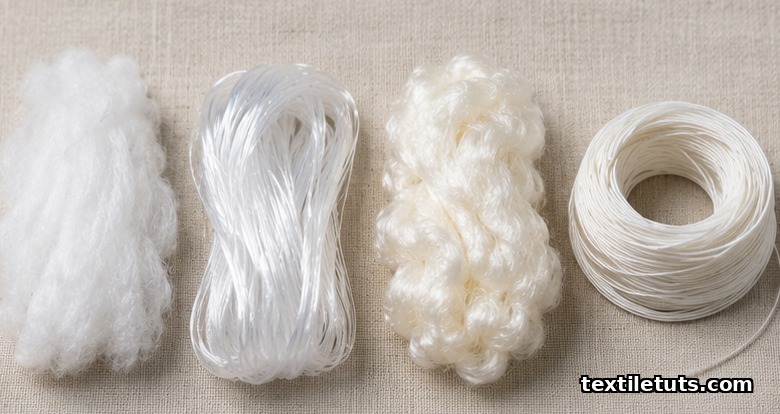
Polyester (PET) plus elastane. Polyester accounts for an estimated 70 to 80 percent of competitive and pool-focused swimwear because it absorbs less chlorine than nylon and resists UV degradation better. A standard blend runs 80 percent polyester and 20 percent elastane, with fabric weights around 170 to 200 GSM. Free chlorine attacks the amide bonds in nylon’s polymer backbone but only weakly affects the ester bonds in polyester, which is why polyester swim trunks keep their color longer in heavily chlorinated pools.
Polyamide (nylon) plus elastane. Nylon 6 or nylon 6,6 dominates fashion and beach swimwear because it accepts disperse dyes more readily, producing deeper blacks, jewel-tone reds, and high-saturation prints. The typical blend is 80 to 85 percent nylon and 15 to 20 percent elastane. Nylon feels softer and smoother against skin, but loses tensile strength faster than polyester in chlorinated water: peer-reviewed research indexed on ScienceDirect has measured 20 to 40 percent strength loss in nylon/spandex knit after extended chlorinated pool exposure.
Polybutylene terephthalate (PBT) plus polyester. PBT is a modified polyester with built-in chlorine resistance. It is used in competition swimwear because it absorbs almost no water, holding its shape through long meets. PBT blends are less common in retail swimwear due to higher cost.
Elastane (spandex or Lycra). Elastane is the stretch engine. Bare elastane fiber stretches 500 to 700 percent before breaking, but the finished swim fabric only stretches 100 to 150 percent because the rigid companion fiber (polyester or nylon) limits total elongation. After 100 stretch cycles to 80 percent elongation, finished swim fabric should recover to within 95 percent of its original length, tested per ASTM D2594.
Knit Construction: Warp Knit vs Circular Weft Knit
Swimwear fabric is almost always knit, not woven, because knit structures provide the multidirectional stretch required for body movement in water.
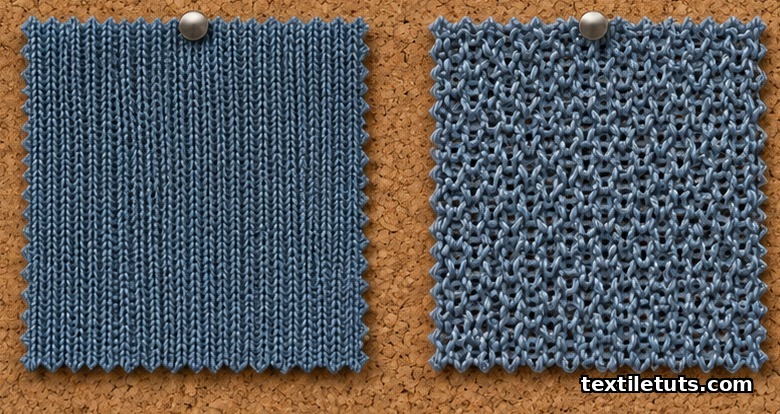
Warp knit (tricot and raschel). Warp knitting produces the smooth, dense, snag-resistant fabric used in competitive swimwear. Tricot machines knit loops vertically along the fabric length; raschel machines knit with multiple guide bars and are used for lace, mesh, and powernet linings. Warp knit swim fabric has high lengthwise stretch with controlled widthwise stretch, and resists runs because a broken loop does not unravel the way it does in a weft knit.
Circular (weft) knit. Circular knitting produces fabric with stretch in all directions and softer drape. Most fashion swimwear, rashguards, and children’s swimwear use circular knit because it costs less and prints more cleanly. The downside: circular knit can ladder (run) if a loop breaks.
Fabric weight. Swimwear GSM ranges from 150 (lightweight fashion cover-ups) to 220 (structured compression suits), with 170 to 190 being the common retail sweet spot. Compression and competition suits lean toward 200+ GSM for muscle hold.
Chlorine, Saltwater, and UV Resistance Standards
Three standard test methods define how swimwear fabric must perform against water and light.
- AATCC TM 162 covers colorfastness to chlorinated pool water. The fabric is exposed to 50 mg/L available chlorine at 27 degrees C for 4 hours, then rated on a 1 to 5 gray scale for color change. Acceptable swimwear scores grade 4 or higher.
- AATCC TM 106 covers colorfastness to seawater. The procedure uses a sodium chloride solution at 30 degrees C for 24 hours and is used primarily for surf and ocean exposure.
- ISO 105-B02 covers colorfastness to artificial light (xenon arc). Swimwear exposed to 20 to 40 hours of accelerated xenon light should not drop more than one grade on the blue wool scale. This is the standard test for sun-exposed fabrics.
Polyester outperforms nylon on AATCC TM 162 by roughly one full grade on the gray scale, which is the technical reason polyester swimwear is recommended for pool use and nylon for beach use.
Mechanical Performance: Stretch, Burst, and Pilling
Beyond color, swimwear must hold its shape and not pill, tear, or shrink.
- ASTM D2594 / ISO 20932-1 cover stretch and recovery of elastic fabrics. The fabric is stretched to 80 percent elongation, held, released, and measured after a recovery period. A 95 percent or higher recovery is the industry-accepted threshold for swimwear.
- ASTM D3786 / D3786M covers bursting strength using a diaphragm pressure tester. Knit swimwear fabric typically bursts above 500 kPa; values below 250 kPa are considered weak.
- ISO 5077 covers dimensional change after washing. After five wash and dry cycles per the care label, swimwear should not shrink more than plus or minus 5 percent in either length or width.
- ISO 12945-2 covers pilling resistance by the Martindale method. A rating of 4 (out of 5) after 2,000 rubs is the typical retail spec for swimwear.
Seam Construction: Thread, Stitch Type, and Elastic Insertion
Fabric is half the garment; the seams are the other half, and swimwear seams face brutal stress from chlorine, salt, UV, and repeated stretching.
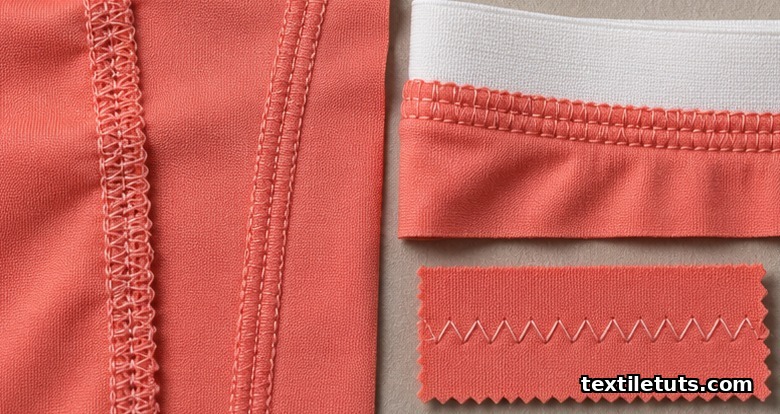
Thread. Sewing thread for swimwear is 100 percent polyester, textured polyester, or nylon, in ticket sizes Tex 27 (lighter) to Tex 40 (heavier). Polyester thread is preferred over cotton because cotton absorbs water, swells, and rots in chlorinated environments. For visible stretch seams, many manufacturers use a core-spun polyester thread with an elastane core.
Stitch types. Standard lockstitch is not stretchy enough for swimwear. The common stitches are:
- 4-thread overlock (serger) trims, sews, and overedges in one pass. It is used for most seam joins in fashion swimwear.
- Flatlock joins two pieces of fabric flat, with seam allowance tucked inside. It is used where the seam sits against the skin (armholes, neckline, leg openings) to prevent chafing.
- Coverstitch is used for elastic hems, especially on waistbands and leg openings.
- Chain stitch is used on high-stress seams because it has a small amount of give.
- Zigzag is the only stretch stitch on a regular home sewing machine and is commonly used for home-sewn swimwear.
Elastic. Swimwear uses rubber or elastane elastic at waistbands, leg openings, and necklines. Widths range from 6 mm (neckline) to 40 mm (waistband). Latex-free options use silicone-coated elastane for chlorine resistance. Sports swimwear often adds silicone gripper strips at hems to prevent ride-up during competition.
Linings and Support Structures
Most structured swimwear includes at least one lining. Power mesh, a warp-knit raschel fabric with 60 to 80 percent nylon and 20 to 40 percent elastane, is the standard lining for bra-cup construction, tummy-control panels, and shelf bras. Power mesh stretches 100 to 150 percent in both directions while providing compression and opacity. Foam cups are typically polyurethane foam laminated between two layers of knit fabric and tested to ISO 14184-1 for formaldehyde (under 75 ppm for adult wear).
Comparing Swimwear Fabric Properties
| Property | Polyester plus Elastane | Nylon plus Elastane | PBT plus Polyester |
|---|---|---|---|
| Typical blend | 80/20 | 80/20 | 50/50 |
| Weight (GSM) | 170 to 200 | 150 to 190 | 180 to 220 |
| Chlorine resistance (AATCC TM 162) | Grade 4 to 5 | Grade 3 | Grade 5 |
| UV resistance (ISO 105-B02) | High | Moderate | High |
| Softness and hand feel | Firm | Soft | Firm |
| Print clarity | Good | Excellent | Moderate |
| Typical use | Pool, competition | Beach, fashion | Competition swimwear |
Frequently Asked Questions
What fabric is best for swimwear?
For pool and competition use, an 80/20 polyester/elastane warp-knit fabric at 170 to 200 GSM offers the best balance of chlorine resistance, UV stability, and stretch recovery. For fashion and beach swimwear, an 80/20 nylon/elastane blend feels softer and prints more vividly, but it loses strength faster in chlorinated water.
Why does swimwear lose elasticity in chlorinated pools?
Free chlorine (HOCl and OCl-) oxidizes the urethane groups in elastane fibers, breaking cross-links and reducing the fiber’s ability to recover after stretching. AATCC TM 162 simulates this with a 50 mg/L chlorine bath; the higher the score on the gray scale (4 or 5), the more resistant the fabric. Polyester protects elastane better than nylon because polyester is less permeable to chlorine.
Is polyester or nylon better for swimwear?
Polyester is better for chlorinated pool water and long-term UV exposure. Nylon is softer, accepts deeper dye shades, and is the preferred choice for fashion and beach swimwear where chlorine exposure is low. Most competitive and training swimwear sold today is polyester-based, while most fashion swimwear sold in retail is nylon-based.
Can you sew swimwear fabric with a regular sewing machine?
Yes, with limitations. Use a ballpoint or stretch needle (size 90/14), polyester or textured polyester thread, and a narrow zigzag (0.5 mm width, 2.0 to 2.5 mm length) for stretch seams. A serger produces more durable seams for production work, but a home machine can produce acceptable results for personal projects when stitch length, tension, and needle are matched to the knit.
How should swimwear fabric be cared for?
Rinse in cool fresh water immediately after pool or ocean use, hand wash with mild detergent at 30 degrees C, do not wring, dry flat away from direct sunlight, and avoid machine drying. Following the care label reduces chlorine absorption and UV-driven fading, and helps the fabric retain its stretch recovery through more wear cycles.
References
- American Association of Textile Chemists and Colorists. AATCC TM 162: Colorfastness to Chlorinated Pool Water. https://www.aatcc.org — accelerated test method for chlorine exposure of swimwear fabrics.
- American Association of Textile Chemists and Colorists. AATCC TM 106: Colorfastness to Sea Water. https://www.aatcc.org — sodium chloride bath test for ocean-use fabrics.
- ASTM International. ASTM D3786/D3786M: Bursting Strength of Textile Fabrics: Diaphragm Pressure Method. https://www.astm.org — bursting strength for knit fabrics.
- ASTM International. ASTM D2594: Stretch Properties of Knitted Fabrics Having Low Modulus. https://www.astm.org — stretch and recovery testing for knit fabrics.
- ISO. ISO 105-B02: Textiles, Tests for Colour Fastness, Part B02: Colour Fastness to Artificial Light (Xenon Arc). https://www.iso.org — the standard light-fastness test for sun-exposed textiles.
- ISO. ISO 20932-1: Textiles, Determination of the Elasticity of Fabrics, Part 1: Strip Tests. https://www.iso.org — stretch and recovery properties of knit fabrics.
- ScienceDirect (host of peer-reviewed textile journals including Textile Research Journal and Fibers and Polymers). https://www.sciencedirect.com — peer-reviewed research on chlorinated water degradation of polyamide and polyester elastane swimwear knits.
This article is the working reference for swimwear fabric and construction. Editorial by Kazi Sifat Muntasir, TextileTuts. Sources: AATCC TM 162, AATCC TM 106, ASTM D3786, ASTM D2594, ISO 105-B02, ISO 20932-1, and a ScienceDirect peer-reviewed study on chlorinated water degradation of polyester and nylon elastane knits, as cited.


