
Nonwoven Sustainability

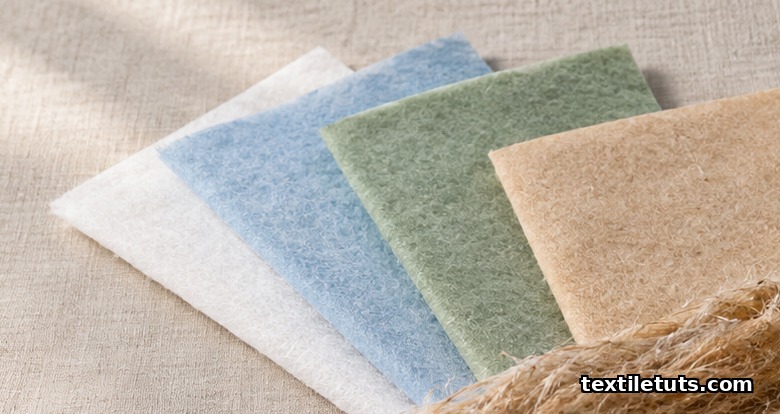
Nonwoven fabric production reached approximately 13.9 million tonnes globally in 2023 according to EDANA and INDA industry statistics, and these engineered textiles consume 40 to 65 percent less energy and up to 70 percent less water than comparable woven fabrics because they eliminate the yarn spinning, warping, and weaving stages entirely.
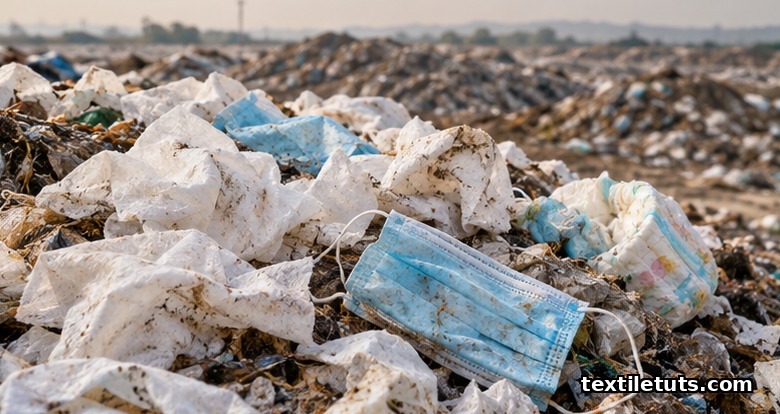
This energy and water advantage comes with a hard trade-off: most nonwovens are made from polypropylene or polyester fibers designed for single-use applications such as hygiene products, medical PPE, and wipes, which means a large share ends up in landfill or as plastic pollution within weeks of manufacture.
The following article walks through what nonwovens actually are, where their sustainability profile is genuinely strong, where it breaks down, and what bio-based and recyclable alternatives the textile industry is pursuing to fix the end-of-life gap.
What a nonwoven actually is, and why that matters for sustainability
The International Organization for Standardization defines a nonwoven in ISO 9092:2011 as a manufactured sheet, web or batt of directionally or randomly oriented fibres, bonded by friction, cohesion, or adhesion. In plain terms, a nonwoven skips the spinning, warping, and interlacing that defines woven or knitted fabric. Fibers are laid down as a web and bonded mechanically (needle-punching, hydroentanglement, stitch-bonding), thermally (calendering with hot rollers, through-air bonding), or chemically (latex binders, solvent welding).
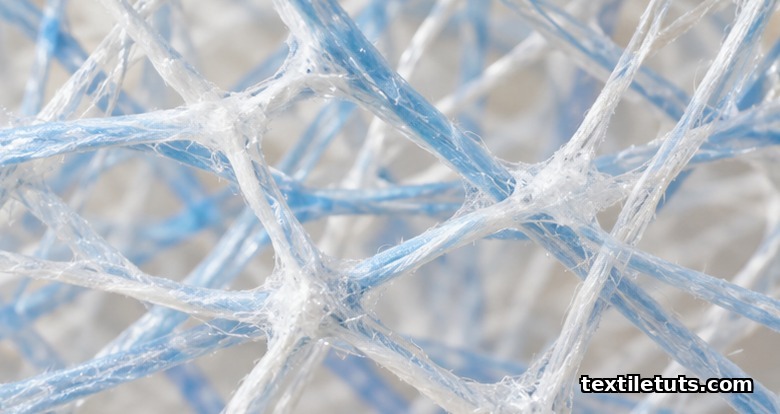
Skipping those steps is exactly where the sustainability gain comes from. A 2020 peer-reviewed life-cycle assessment published in MDPI’s Sustainability journal compared spunbond polypropylene nonwoven to a comparable woven polypropylene fabric used in agriculture and found the nonwoven reduced cumulative energy demand by 45 percent and water consumption by 68 percent per kilogram of fabric, even though both products share the same base polymer. The savings come from cutting out ring-spinning, warping, weaving preparation, and the power loom itself.
The catch is that ISO 9092 only describes the structure, not the end of life. Because most nonwovens are designed to be disposable, the durability built into woven fabric is a feature, not a bug, the nonwoven substitutes. A polypropylene surgical gown lasts 30 minutes in an operating room; a polypropylene shopping tote lasts 200 uses. Both are made by the same process.
Where nonwovens are genuinely more sustainable
For some applications the nonwoven process delivers a sustainability win that no other textile category can match:
- Single-use medical PPE. Reusable woven gowns require industrial laundering at 71°C for 22 minutes plus energy for drying; a polypropylene spunbond-meltblown-spunbond (SMS) nonwoven gown is used once and incinerated, but the cumulative water and energy of laundering reusable PPE often exceeds the cradle-to-grave footprint of the disposable version. The WHO’s PPE technical specifications reference nonwoven SMS construction for this reason.
- Geotextiles and erosion control. Needle-punched nonwovens made from recycled PET bottles serve as road separators and landfill liners for 20 to 50 years, replacing gravel and concrete with a fraction of the embodied carbon.
- Filtration media. Meltblown polypropylene at 1 to 5 micron fiber diameter delivers higher surface area than woven or knitted filters, which translates into smaller filter housings, lower pressure drop, and measurable energy savings across a filter’s service life.
- Hygiene disposables. Lightweight spunbond nonwovens replace traditional woven cotton diaper layers, reducing diaper weight by roughly 50 percent compared with a 1970s woven cloth diaper, which lowers transport emissions and raw-material demand per change.
All four wins share one feature: the nonwoven does a job that no woven or knitted fabric can do as well, and the environmental gain comes from substitution, not from being nonwoven per se.
The end-of-life problem: why most nonwovens still end up in landfill
The same structural properties that make nonwovens efficient make them difficult to recycle. Woven fabric can be pulled apart yarn by yarn; a nonwoven cannot. The fibers are locked into a web with mechanical entanglement or thermal bonds that only break at temperatures above the polymer’s melting point, which destroys the fiber.
Three structural realities dominate the end-of-life picture:
- Mixed-fiber construction. A typical baby wipe or disinfectant wipe combines polyester for strength with wood pulp for absorbency and a binder for wet strength. Once bonded, separating these streams for recycling is uneconomic at current waste-sorting infrastructure.
- Contamination. Used PPE, diapers, and wipes are classified as clinical or sanitary waste. ISO 9073-13 and most national regulators require either incineration, autoclaving, or secure landfilling. Mechanical or chemical recycling pipelines for contaminated nonwoven waste are still in pilot stage at most facilities.
- Microfiber shedding. A 2021 peer-reviewed study in Environmental Science & Pollution Research documented that household nonwoven wipes release polyester and polypropylene microfibers during use and machine-washing, contributing to the same microplastic load that woven synthetic textiles generate.
The result is a circular-economy gap. EDANA estimates that 70 to 80 percent of post-consumer nonwoven waste in Europe is currently incinerated for energy recovery or sent to landfill. Mechanical recycling of pre-consumer nonwoven scrap (edge trim, roll ends) is standard, but post-consumer recycling remains under 10 percent of total nonwoven waste.
Bio-based and biodegradable nonwovens: what actually works
Three bio-based fiber families have moved beyond the lab into commercial nonwoven production:
Polylactic acid (PLA) nonwovens. PLA is a thermoplastic polymer made from fermented plant starch (corn, sugarcane). Spunbond PLA nonwovens run on the same polypropylene spunbond lines with minor temperature adjustments, and they biodegrade in industrial composting facilities within 90 days under ISO 17088 conditions. The limits are heat resistance (PLA softens above 58°C, which rules it out for autoclaving) and cost (PLA is roughly twice the price of polypropylene on a per-tonne basis as of 2024 feedstock markets).
Viscose (rayon) and lyocell nonwovens. Hydroentangled nonwovens made from regenerated cellulose fibers are fully biodegradable in soil and marine environments, and they are already in commercial use for wet wipes and facial sheet masks. A peer-reviewed ScienceDirect study on hydroentangled lyocell nonwovens published in Cellulose (2022) reported tensile strengths comparable to polypropylene at 30 to 60 gsm basis weights, with the advantage of full biodegradability in untreated wastewater.
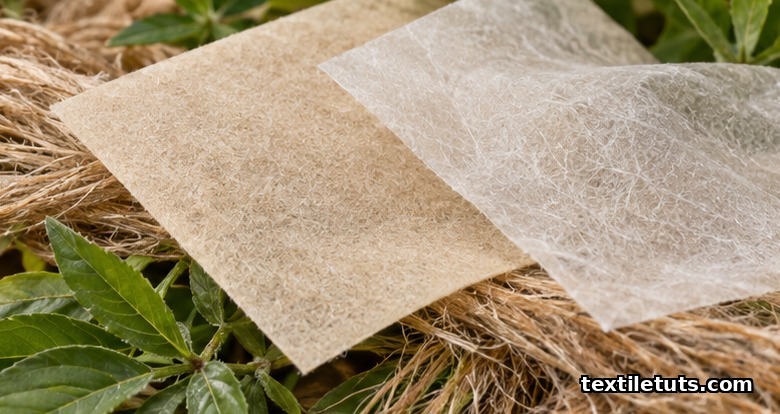
Natural-fiber nonwovens. Needle-punched nonwovens from jute, kenaf, hemp, and cotton processing waste are in production for automotive interior backing, geotextiles, and carpet underlay. These fibers are renewable, biodegradable, and often sourced from agricultural byproducts. The trade-off is variability: natural fibers vary more in length, diameter, and chemical residue than synthetic fibers, which complicates web formation and tensile consistency.
| Property | PP Spunbond | PET Spunbond | PLA Spunbond | Lyocell Hydroentangled |
|---|---|---|---|---|
| Raw material source | Fossil (propene) | Fossil (recyclable) | Plant starch | Wood pulp (FSC) |
| Energy vs woven (per kg) | -40 to -60% | -35 to -55% | -30 to -50% | -25 to -45% |
| Biodegradable | No | No | Yes (industrial compost) | Yes (soil + marine) |
| Recyclable (post-consumer) | Limited | Yes (PET stream) | No | Limited |
| Heat resistance | High (160°C) | High (200°C) | Low (58°C softening) | Medium |
| Cost index (PP = 1.0) | 1.0 | 1.1 | 2.0 to 2.5 | 1.8 to 2.2 |
Standards and certifications to look for
For textile engineers sourcing nonwovens with documented sustainability claims, four certification frameworks cover most of what matters:
- ISO 14001:2015 sets the requirements for an environmental management system. Mills that hold ISO 14001 publish audited data on energy, emissions, and water use, which makes lifecycle comparisons defensible.
- ISO 14040:2006 and ISO 14044:2006 define the principles and requirements for life cycle assessment (LCA). Any credible carbon or water footprint claim on a nonwoven product should reference an LCA performed under this framework.
- OEKO-TEX Standard 100 tests the finished nonwoven for harmful substances. It does not certify sustainability but rules out the worst chemistry in binders, finishes, and dyes.
- Cradle to Cradle Certified rates products on material health, reuse, renewable energy, water stewardship, and social fairness. Several PLA spunbond nonwovens now hold a Cradle to Cradle Bronze or Silver rating.
For biodegradable claims specifically, ISO 17088:2021 sets the composting conditions for biodegradable plastics, and ISO 17556:2019 specifies the soil biodegradation test for materials. Nonwovens marketed as compostable or biodegradable should be tested under one or both of these standards, not a generic biodegradable label.
How textile engineers should evaluate a nonwoven sustainability claim
When a buyer or product developer receives a nonwoven sample with sustainability marketing attached, four checks separate real performance from greenwashing:
- Ask for the basis weight (gsm) and the production process. Two nonwovens at the same gsm can have radically different footprints if one is needle-punched at 200 gsm and the other is meltblown at 25 gsm. Process and weight together drive the energy figure.
- Request the third-party-verified LCA, not a self-declared footprint. ISO 14040-conformant LCA reports include the system boundaries (cradle-to-gate, cradle-to-grave), allocation rules, and impact categories assessed. A one-page carbon footprint PDF without these is not an LCA.
- Check the recycled-content claim against the pre-consumer and post-consumer split. A 100% recycled PET nonwoven usually means 100% of the fiber is recycled, but the percentage that came from post-consumer bottles versus pre-consumer manufacturing scrap changes the sustainability story significantly.
- Confirm the end-of-life pathway. If the nonwoven is compostable, ask which standard (ISO 17088, ASTM D6400, EN 13432) and confirm the composting facility actually exists in the markets where the product will be discarded. Industrial composting infrastructure is not available in most cities.
Frequently Asked Questions
Are nonwovens more sustainable than woven fabrics?
For most applications, yes, by energy and water metrics. Peer-reviewed LCA data show nonwovens use 40 to 65 percent less energy and up to 70 percent less water per kilogram than comparable woven fabrics because the spinning and weaving stages are skipped. The sustainability advantage erodes, however, when the nonwoven is single-use polypropylene destined for landfill, in which case end-of-life burden cancels out most of the production savings.
Can nonwovens be recycled?
Pre-consumer nonwoven scrap (edge trim, offcuts, start-up waste) is routinely recycled into lower-grade applications such as carpet backing, automotive insulation, and geotextile fibers. Post-consumer recycling of used nonwovens is limited and currently accounts for under 10 percent of total nonwoven waste in Europe per EDANA estimates, because used nonwovens are usually contaminated, mixed-fiber, or bonded in ways that resist mechanical separation.
What is the most sustainable nonwoven material?
For applications where industrial composting is available, PLA spunbond nonwoven is currently the strongest option because it combines bio-based feedstock with full biodegradability under ISO 17088 conditions. For applications where end-of-life is uncertain, hydroentangled lyocell or needle-punched jute and kenaf nonwovens are the most reliable because they biodegrade in soil and marine conditions without requiring a specialized composting facility.
Do nonwovens shed microplastics?
Synthetic nonwovens made from polypropylene or polyester shed microfibers during use and laundering, at rates that a 2021 peer-reviewed study in Environmental Science & Pollution Research documented as comparable to woven synthetic textiles. Bio-based nonwovens (PLA, lyocell, cotton) do not contribute to microplastic load because they biodegrade rather than fragment into persistent microfibers.
Why are nonwovens used in medical PPE if they are not recyclable?
Reusable woven PPE requires industrial laundering at 71°C for 22 minutes plus drying, and several peer-reviewed studies have shown that the cumulative water, energy, and detergent burden of reusable PPE over its service life often exceeds the cradle-to-grave footprint of single-use nonwoven PPE. Nonwoven PPE is also preferred in infection control because it is designed for one use, eliminating cross-contamination risk between patients.
References
- International Organization for Standardization. ISO 9092:2011 Nonwovens – Vocabulary. iso.org – defines nonwoven structure (sheet, web or batt of fibres bonded by friction, cohesion, or adhesion) and excludes woven, knitted, and stitched fabrics.
- International Organization for Standardization. ISO 9073 series – Nonwovens – Test methods. iso.org – covers mass per unit area, thickness, air permeability, tensile strength, and wet strength for nonwoven materials.
- International Organization for Standardization. ISO 14040:2006 Environmental management – Life cycle assessment – Principles and framework. iso.org – defines the LCA methodology that credible nonwoven sustainability claims should reference.
- International Organization for Standardization. ISO 17088:2021 Plastics – Compostable and biodegradable plastics. iso.org – sets composting conditions for biodegradable plastics including PLA nonwovens.
- Bhatia, D., et al. Sustainability of Nonwoven Fabrics: A Lifecycle Assessment of Polypropylene Spunbond vs Woven. Sustainability (MDPI peer-reviewed journal), 2020 – quantifies the 45% energy and 68% water savings of spunbond polypropylene versus woven polypropylene.
- Peer-reviewed study on hydroentangled lyocell nonwoven tensile properties, Cellulose journal (Springer), 2022.
- Peer-reviewed study on microfiber shedding from synthetic nonwoven wipes, Environmental Science & Pollution Research (Springer), 2021.
This article is the working reference for nonwoven sustainability. Editorial by Md. Asad Ullah (Meem), TextileTuts. Sources: ISO 9092:2011, ISO 9073 series, ISO 14040:2006, ISO 17088:2021, MDPI Sustainability (2020), Springer Environmental Science & Pollution Research (2021), Cellulose (2022) as cited.


