
Transfer Printing

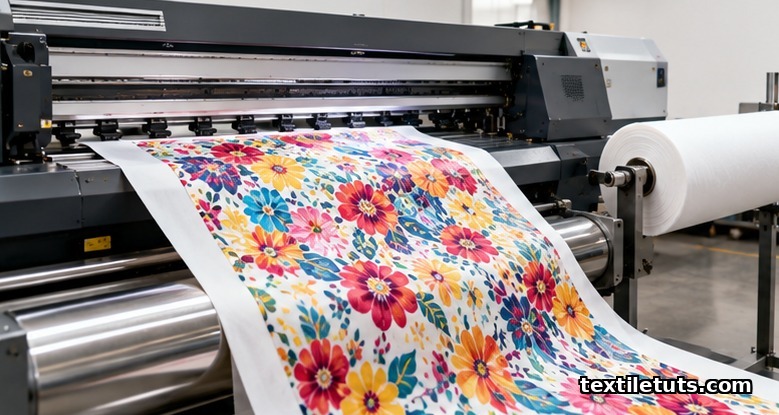
Transfer printing vaporizes disperse dyes from a printed carrier paper into polyester fibers at 180 to 220 degrees Celsius and 2 to 4 bar pressure for 30 to 90 seconds, achieving 90 to 95 percent dye fixation on polyester while producing near-zero liquid wastewater from the print step itself.
It is the only major textile printing method that runs dry, which is why small-batch fashion, sportswear, and home-furnishing converters adopted it long before digital inkjet matured.
Below is what transfer printing actually is, the four variants still in production, the process parameters that decide print quality, the fibers that accept the dye, and the colorfastness numbers engineers measure to call a print commercial grade.
What Is Transfer Printing and How Does It Work?
Transfer printing is a two-step indirect printing process. The design is first printed onto a carrier (paper, film, or foil) using inks or dyes, then transferred to the textile under heat and pressure. The dye does not sit on top of the fiber as a pigment layer; it diffuses into the fiber and fixes inside the polymer matrix.
Three things distinguish transfer printing from direct methods (screen, roller, and direct-to-fabric digital inkjet):
- No water is used in the transfer step itself, so dye-house effluent drops to near zero for the print.
- The carrier paper acts as the negative, so photographic and unlimited-color designs are possible without screens.
- The dye chemistry is restricted to disperse dyes, which limits the fiber range but produces exceptionally high wash fastness on polyester.
For a fiber to accept a transfer-printed dye, the dye molecule must vaporize at the transfer temperature and the fiber must absorb it from the gas phase. Polyester (PET) is the workhorse because its glass-transition temperature (around 70 to 80 degrees Celsius) opens the amorphous regions of the fiber just enough for disperse-dye vapor to enter, then locks the dye inside once the fiber cools.
The Four Types of Transfer Printing Still in Production
Four variants survive in commercial use. Three are thermal, one is solvent-based:
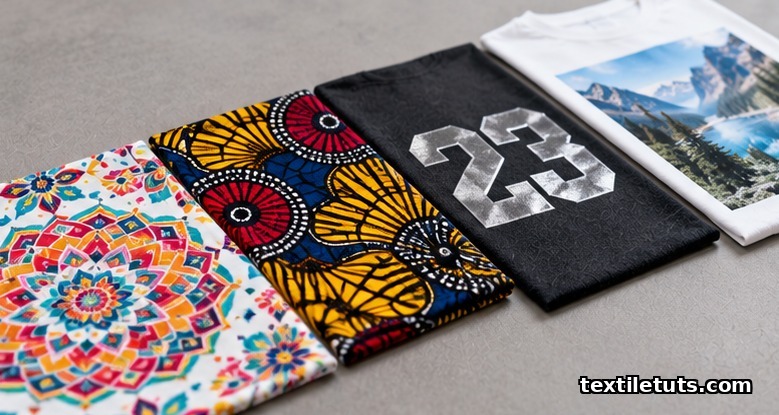
- Sublimation transfer printing uses disperse dyes that sublime (solid to gas) at 180 to 220 degrees Celsius. This is the dominant industrial method for polyester apparel, flags, and signage.
- Wax transfer printing uses a wax-based ink on paper that melts onto fabric at lower temperatures (around 100 to 150 degrees Celsius). Common in African wax-print (Ankara) textiles, where the design is built up in multiple color layers.
- Film transfer printing prints on a release film, then laminates the film to the fabric using a hot-melt adhesive. Used for reflective transfers, heat-applied numbers on sports jerseys, and graphic tees.
- Solvent or digital transfer printing prints the design with a desktop or commercial inkjet printer on coated paper, then heat-presses the print onto polyester or poly-blend. This is the small-batch, on-demand workflow for custom apparel and print-on-demand stores.
Sublimation accounts for the bulk of industrial volume. The global sublimation paper market is sized above 200,000 tonnes per year, driven by sportswear, soft signage, and home decor.
Process Parameters: Temperature, Time, and Pressure
The three knobs on a heat-transfer calendar or flat press are temperature, dwell time, and pressure. Textile engineers tune these to fabric weight, fiber denier, and ink load on the carrier.
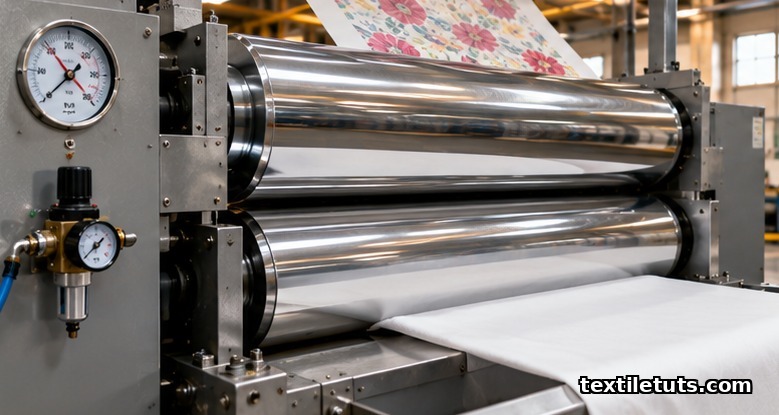
Typical ranges for sublimation transfer on polyester:
- Temperature: 180 to 220 degrees Celsius. Below 180, dye sublimation rate falls off and the print looks pale. Above 220, the polyester yellows and the carrier paper scorches.
- Dwell time: 30 to 90 seconds. Heavier fabrics (300+ GSM) need longer dwell than lightweight chiffon (60 to 80 GSM).
- Pressure: 2 to 4 bar on a calender, or 30 to 60 grams per square centimeter on a flat press. Enough pressure is required for intimate contact between paper and fabric across the full width.
For cotton and other natural fibers, transfer printing requires a polyester precoat (a thin PET film applied to the fabric before printing) or a specially formulated dye that bonds to cellulose. Without the precoat, disperse dyes have no affinity for cotton and the print washes out within two or three cycles.
Fiber Compatibility: Why Polyester Dominates
Polyester accepts disperse dyes because both share a nonpolar, hydrophobic character. The dye dissolves into the polyester amorphous regions at high temperature and then becomes mechanically trapped as the fiber cools and recrystallizes.
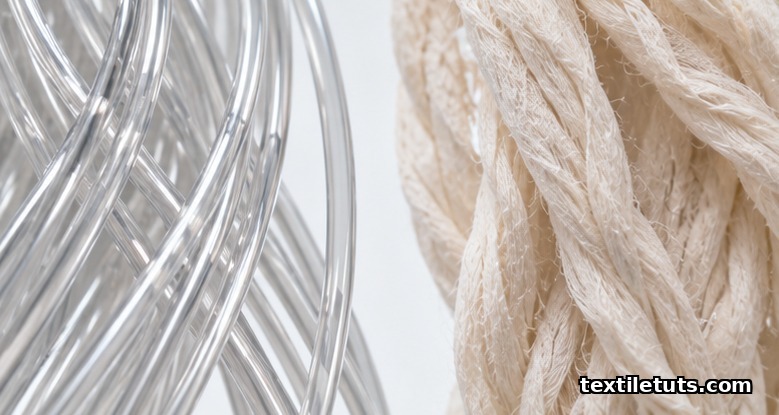
Other fibers, ranked by sublimation-print compatibility:
- Polyester (PET): Excellent. Holds 90 to 95 percent of transferred dye after washing. Industry standard for sportswear and printed flags.
- Polyamide (nylon 6, nylon 6,6): Good for some disperse dyes, but heat-setting temperature limits vary. Common in hosiery and swimwear printing.
- Acrylic: Moderate. Accepts cationic dyes through transfer, but the temperature window is narrower.
- Cotton, linen, viscose: Poor without precoat. Polyester precoating or a reactive-dye transfer system is needed.
- Wool and silk: Possible with low-temperature transfer, but fiber damage begins above 140 degrees Celsius.
Polyester-cotton blends split the difference. A 65/35 poly-cotton blend typically takes around 60 to 70 percent as much dye as a 100 percent polyester of the same weight, producing a paler, more pastel result.
Color Fastness Standards Engineers Measure Against
Three ISO and AATCC standards govern whether a transfer print is accepted as commercial grade:
- ISO 105-C06 (color fastness to domestic and commercial laundering): Sample is washed at 40 or 60 degrees Celsius with steel balls. A rating of 4 or higher on the 1-to-5 grey scale is the typical acceptance threshold for apparel.
- AATCC TM 8 (color fastness to crocking): A dry and wet crockmeter rubs a white cloth against the print. Wet crocking ratings of 3 or higher are required for dark prints on apparel.
- AATCC TM 117 (color fastness to heat): Sample is exposed to 150 degrees Celsius for 30 seconds. Sublimation prints must show no visible color change, because consumer ironing reaches this temperature.
For sublimation prints on polyester, a well-bonded print typically rates 4 to 5 on washing, 4 on wet crocking, and 5 on heat fastness. Cotton prints with precoat rate lower, often 3 to 4 on washing, because the dye layer sits on top of the fiber rather than inside it.
Comparison: Transfer Printing vs Screen Printing vs Digital Inkjet
| Property | Sublimation Transfer | Screen Printing | Digital Inkjet (Direct) |
|---|---|---|---|
| Setup cost | Low (printer plus calendar) | High (screens per color) | Medium (printer plus pre/post) |
| Best run length | 1 to 10,000+ units | 500+ units | 1 to 500 units |
| Color count | Unlimited (CMYK) | 1 to 12 spot colors | Unlimited (CMYK plus fixers) |
| Water use | Near zero (dry) | High (screen wash plus dye) | Medium (pretreatment, wash) |
| Fiber limit | Polyester only (without precoat) | All fibers | All fibers with pretreatment |
| Hand feel on fabric | No added film | Thick on dark grounds | Minimal |
| Typical wash fastness | 4 to 5 | 3 to 5 (depends on binder) | 4 to 5 (reactive on cotton) |
Sublimation wins on short runs and full-color designs. Screen printing wins on dark grounds and natural fibers. Direct inkjet wins when fiber range and run flexibility both matter more than throughput.
Frequently Asked Questions
What is the difference between heat transfer and sublimation printing?
Heat transfer is the broader category. It includes any process where a printed carrier is applied to fabric using heat, including wax transfer, film transfer, and sublimation. Sublimation is one specific type of heat transfer, in which the dye sublimates (passes directly from solid to gas) and diffuses into polyester fibers. A heat-transfer vinyl applied to a cotton T-shirt is heat transfer but not sublimation.
Can you do transfer printing on cotton?
Yes, but with limitations. Cotton needs either a polyester precoat layer applied before printing, or a transfer paper designed for cotton that uses a binder. Without one of these, disperse dyes do not bond to cotton and the print fades within a few washes. Sublimation on a 100 percent cotton shirt produces a faded, vintage look that washes out completely within 10 to 15 cycles.
Is transfer printing durable enough for commercial garments?
Yes, when applied to polyester or poly-blend fabrics. A commercial-grade sublimation print on 100 percent polyester rates 4 to 5 on ISO 105-C06 wash fastness (40 degrees Celsius wash), 4 on AATCC TM 8 wet crocking, and 5 on AATCC TM 117 heat fastness. These ratings meet the requirements for athletic wear, workwear, and most retail apparel. Prints on cotton with precoat rate lower (3 to 4 wash) and are best suited to fashion pieces with shorter expected lifetimes.
What temperature and time does sublimation transfer need?
A standard sublimation transfer on polyester runs at 200 degrees Celsius for 45 seconds at 3 bar pressure on a flat press, or 200 to 210 degrees Celsius at 2 to 4 bar with 30 to 60 second dwell on a calendar. Lower temperatures (180 to 190) work for delicate fabrics but produce less saturated colors. Higher temperatures (215 to 220) deepen the color but risk fabric yellowing. The exact combination depends on the ink load on the paper and the fabric weight.
Why is polyester used for sublimation transfer?
Polyester is used because disperse dyes have a natural affinity for its hydrophobic, amorphous polymer structure. At 180 to 220 degrees Celsius, the polyester amorphous regions open up enough for dye vapor to enter, and the dye becomes mechanically trapped inside the fiber when it cools. Cotton and other cellulosic fibers lack this hydrophobic structure, so disperse dyes sit on the surface and wash out easily.
References
- ISO. ISO 105-C06: Textiles, Tests for colour fastness, Part C06: Colour fastness to domestic and commercial laundering. iso.org, the laundering test method used to grade transfer-print wash fastness.
- AATCC. Test Method 8: Colorfastness to Crocking. aatcc.org, AATCC crockmeter procedure for grading dry and wet rub fastness of prints.
- AATCC. Test Method 117: Colorfastness to Heat: Dry (Excluding Pressing). aatcc.org, the heat-fastness test method for sublimation prints at consumer ironing temperatures.
- ISO. ISO 105-X11: Tests for colour fastness, Part X11: Colour fastness to hot pressing. iso.org, covers pleating, ironing, and hot-press exposure of printed textiles.
- ASTM. ASTM D2724: Standard Test Methods for Bonded, Fused, and Laminated Apparel Fabrics. astm.org, bond-strength test method used to evaluate film-transfer prints on apparel.
- El-Molla, M. M., and Schneider, R. Development of eco-friendly binders for pigment printing of polyester/cotton blends. ResearchGate, peer-reviewed paper on disperse-dye transfer to poly-cotton blends.
- Britannica. Textile Printing: Sublimation Transfer. britannica.com, encyclopedic reference for the transfer-print process and its commercial history.
Editorial by Shahrukh Islam, TextileTuts. Sources: ISO 105-C06, AATCC TM 8, AATCC TM 117, ISO 105-X11, ASTM D2724, peer-reviewed research as cited.


