
Top US Textile Companies Hiring Engineers (Milliken, INVISTA, DuPont, Toray)

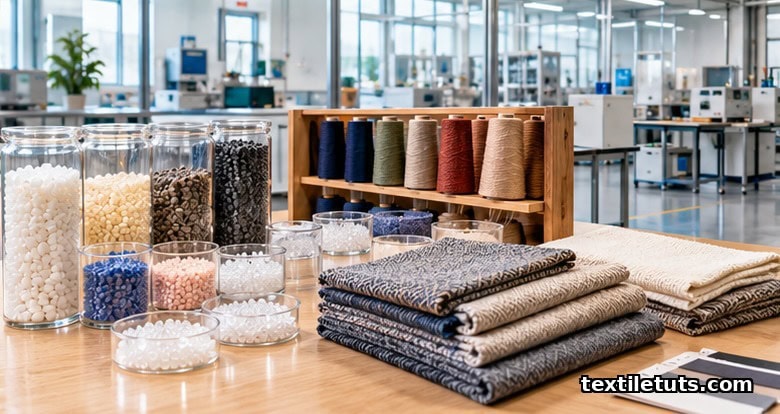
Milliken & Company, INVISTA, DuPont de Nemours, and Toray Industries hire textile, chemical, materials, and process engineers across major US manufacturing and R&D campuses in South Carolina, Delaware, Virginia, Texas, Alabama, and Tennessee, with combined US technical headcount above 8,000 across the four firms’ specialty-fiber, polymer, and composites operations as of 2026.
For a textile engineer graduating with a BSc or MSc, those four employers are the largest pools of US-resident fiber and polymer engineering jobs in 2026, and they recruit year-round through their own career portals, university pipelines, and engineering societies such as AATCC and SPE.
This article maps each company’s engineering footprint, the textile standards its labs work against, the entry-level roles it typically opens, and the salary bands the US Bureau of Labor Statistics reports for the same job families.
What the four companies actually do
Although all four work in the textile and polymer cluster, they sit in different points of the value chain. Milliken is the most vertically integrated US textile maker still operating at scale, with its own weaving, knitting, dyeing, and finishing operations. INVISTA is a polymer-and-fiber specialist that owns the LYCRA, STAINMASTER, COOLMAX, ANTRON, and CORDURA brands. DuPont is a specialty-materials conglomerate whose textile heritage runs from nylon 6,6 in 1939 through modern aramid fibers. Toray is a Japanese-owned composite-and-fiber producer with three large US operating companies. Knowing the product mix is what tells an applicant which sub-discipline they will be hired into, whether wet processing, fiber spinning, polymer synthesis, nonwovens, or composites.
Milliken & Company (Spartanburg, SC)
Milliken operates the largest privately held textile and specialty-chemicals manufacturing footprint in the United States, headquartered in Spartanburg, South Carolina since the company’s founding in 1865. Engineering hires work in three areas: textile mill engineering (weaving, knitting, finishing), specialty chemicals (colorants, additives, surfactants), and floor coverings and industrial fabrics. The company’s textile division publishes work on flame-resistant fabrics, performance apparel, and healthcare textiles that meet NFPA 1971 and ISO 11612.
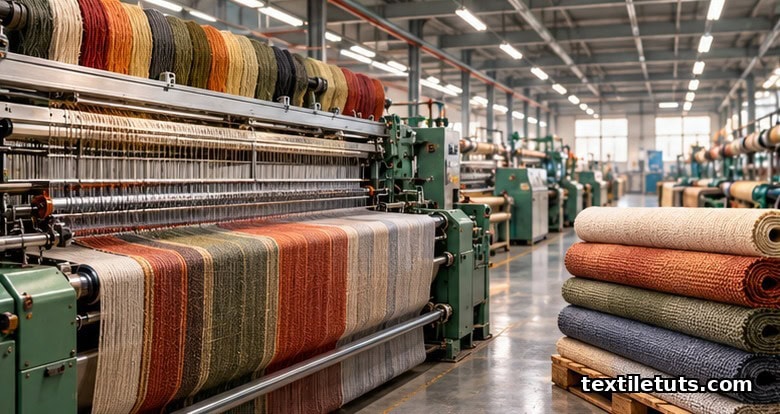
Entry-level titles at Milliken for textile graduates include Process Engineer, Textile Engineer I, R&D Engineer, and Color Scientist. Milliken recruits at AATCC student chapter events and through Clemson University’s School of Materials Science and Engineering, which sits 35 miles from the Spartanburg headquarters and is one of the largest US textile-engineering programs.
INVISTA (Wichita, Kansas)
INVISTA, a subsidiary of Koch Industries since 2004, owns the LYCRA, STAINMASTER, COOLMAX, ANTRON, and CORDURA brands, and runs the largest nylon 6,6 polymer and spandex (elastane) production network in the Western Hemisphere. Its US campuses include the Chattanooga, Tennessee spandex plant; the Camden, South Carolina intermediates site; and the Wichita, Kansas technology center where most textile-related polymer R&D is anchored.
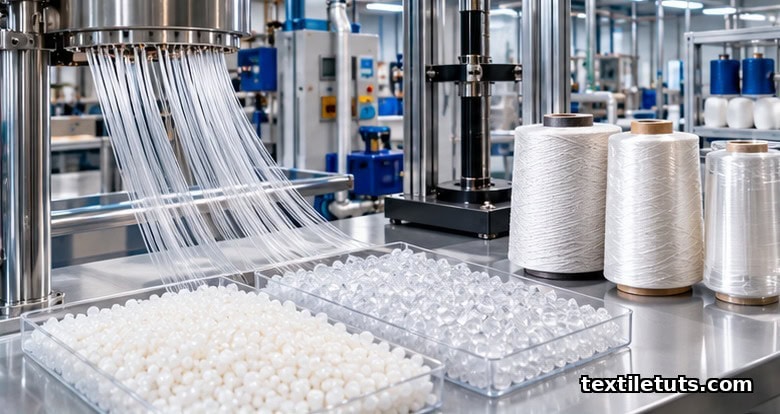
Engineering hires at INVISTA typically come from chemical engineering, polymer science, and textile chemistry programs. Common openings include Polymer Process Engineer, Spandex Development Engineer, and Catalysis Scientist. INVISTA recruits at Koch Industries’ centralized career fairs and posts roles through the parent company’s careers page. The Chattanooga site also runs co-op rotations that place textile and chemical engineering undergraduates on the spandex line for full semesters.
DuPont de Nemours (Wilmington, DE)
DuPont’s textile-engineering legacy runs from the original synthesis of nylon 6,6 in 1939 through the aramid fibers Nomex and Kevlar, and into the modern Water & Protection segment. After the 2019 DowDuPont split, DuPont de Nemours is headquartered in Wilmington, Delaware, with manufacturing in Richmond, Virginia (Nomex meta-aramid), Chattanooga, Tennessee (Kevlar para-aramid), and Old Hickory, Tennessee. The company also operates the DuPont Experimental Station in Wilmington, the original nylon research campus.
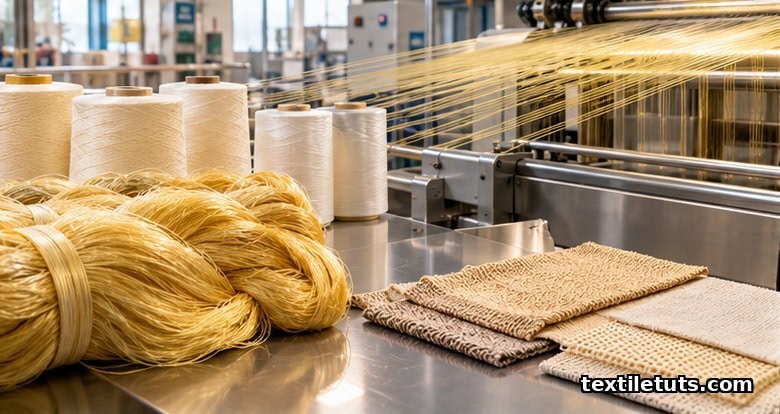
Engineers at DuPont’s Protection Solutions division work on polymer spinning lines, fiber draw processes, and the test labs that certify fabric against NFPA 1971, ISO 11612, and ASTM D6413 for flame resistance. DuPont hires Materials Engineers, Polymer Engineers, and Protective Textiles Engineers, and it runs a Co-op pipeline that places textile and chemical engineering students across its US sites each year. Most US-resident engineering openings appear on the DuPont careers portal under the Protection Solutions and Electronics & Industrial segments.
DuPont’s textile-standards work is documented in the technical bulletins its Protection Solutions group publishes on Nomex and Kevlar fabric certification, which cite ISO, ASTM, and NFPA methods directly.
Toray Industries (Tokyo, with US sites in Decatur, AL; Front Royal, VA; and Spartanburg, SC)
Toray Industries is the parent of three major US operating companies: Toray Composite Materials America (carbon fiber for Boeing 787 and Airbus A350 wings, manufactured in Decatur, Alabama and Tacoma, Washington); Toray Plastics (America) (PET and polyolefin films in Front Royal, Virginia and North Kingsville, Rhode Island); and Toray Industries (America) (fibers and textiles in Spartanburg, South Carolina).
Engineering roles cluster around polyacrylonitrile (PAN) precursor spinning, carbon-fiber oxidation and graphitization, and composite layup process engineering. Toray hires Materials Engineers, Chemical Engineers, and Mechanical Engineers, and its Decatur site runs one of the largest PAN-to-carbon-fiber lines outside Japan. Entry-level textile engineers at Toray typically rotate through precursor spinning, oxidation furnace, and surface treatment before settling into a process-engineering track.
Side-by-side: where each company hires and what it makes
| Company | Parent / Ownership | Primary US Engineering Sites | Core Products Relevant to Textile Engineers | Common Entry-Level Roles |
|---|---|---|---|---|
| Milliken & Company | Private (Milliken family) | Spartanburg, SC; Gainesville, GA; Marietta, SC | Performance textiles, healthcare fabrics, specialty chemicals, floor coverings | Process Engineer, Textile Engineer I, R&D Engineer, Color Scientist |
| INVISTA | Koch Industries (privately held) | Wichita, KS; Chattanooga, TN; Camden, SC | LYCRA spandex, COOLMAX, STAINMASTER nylon, ANTRON, CORDURA | Polymer Process Engineer, Spandex Development Engineer, Catalysis Scientist |
| DuPont de Nemours | Public (NYSE: DD) | Wilmington, DE; Richmond, VA; Chattanooga, TN | Nomex, Kevlar, Tyvek, Sontara | Materials Engineer, Polymer Engineer, Protective Textiles Engineer |
| Toray Industries | Toray Industries Inc. (Tokyo, JP) | Decatur, AL; Front Royal, VA; Spartanburg, SC | Carbon fiber (TORAYCA), PET films, polyester fibers | Materials Engineer, Chemical Engineer, Process Engineer (precursor spinning) |
Standards you’ll be working with inside the labs
All four companies test their fibers and fabrics against standards issued by AATCC, ASTM, and ISO. A new engineer typically rotates through at least one method from each body within the first year. ISO 139 governs the standard atmosphere for textile conditioning at 20 °C and 65% relative humidity. AATCC TM 16 covers colorfastness to light, and AATCC TM 61 covers accelerated laundering. ASTM D5034 is the grab-test method for fabric breaking strength and elongation. For flame-resistant aramids, DuPont and Milliken reference ASTM D6413 for vertical flame resistance.
These are the same standards textile-engineering students learn in their textile-testing labs, but in industry the lab turnaround is typically 24 to 72 hours per method, and engineers are expected to interpret results in the context of customer specifications rather than as pass/fail thresholds alone.
Salary bands and the BLS baseline
The US Bureau of Labor Statistics May 2024 Occupational Employment and Wage Statistics report shows a median annual wage of $108,310 for materials engineers nationally, with the 10th percentile around $67,000 and the 90th percentile around $170,000. Chemical engineers reported a May 2024 median of $112,790. Specialty fiber firms pay a premium over the BLS median in some metros because polymer and aramid work is concentrated in lower-cost-of-living regions of the South and Southeast.
For textile-engineering roles specifically, the BLS does not publish a separate occupation code, so most engineers are coded under materials engineers (17-2121) or industrial engineers (17-2112), depending on whether the role is research-led or process-led. This matters for new graduates negotiating an offer, because the BLS data is what most HR salary surveys use as a baseline.
How to apply and where to look first
The fastest path is the company career portal, not LinkedIn. Milliken lists openings at its careers portal. INVISTA posts through the Koch Industries careers page. DuPont runs its full requisition list on its company careers site, with the Protection Solutions segment posting most textile-related roles. Toray Composite Materials America, Toray Industries (America), and Toray Plastics (America) each operate their own US careers pages. Engineering societies that surface roles first include the Society for Protective Coatings (SSPC) and SPE (Society of Plastics Engineers), but for textile-specific roles the most relevant society is the AATCC, which lists US fiber, dye, and finishing roles in its Career Center.
Campus recruiting through Clemson, Georgia Tech, NC State, Texas A&M, the University of Massachusetts Dartmouth, and Philadelphia University (now Jefferson) feeds most of the entry-level hires at these four firms. Direct applications from candidates with an MSc or PhD in polymer science or fiber chemistry are more competitive than generic applications, even when the requisition lists only a BSc.
Frequently Asked Questions
Do these four companies sponsor H-1B visas for textile engineers?
Milliken, INVISTA, DuPont, and Toray all file H-1B petitions for specialty occupation engineering roles, but approval volume varies year to year. DuPont publishes its Labor Condition Application postings publicly, and the others disclose headcounts in annual H-1B employer data releases. Entry-level applicants with a US BSc or MSc face the lightest competition, because H-1B cap pressure is heaviest at the master’s-and-above level for jobs posted as Level I or II on the wage ladder.
Is a textile-engineering degree required, or do they hire chemical engineers?
All four hire textile engineers, chemical engineers, and materials scientists interchangeably for fiber-line and polymer roles. For dye-house and finishing roles (most common at Milliken), a textile-engineering or textile-chemistry degree is preferred. For carbon-fiber precursor spinning (Toray) and aramid spinning (DuPont), chemical engineering or polymer science is preferred. Mechanical engineers are hired for spinning machinery and process equipment design at all four.
What is the most common entry-level role across the four?
Process Engineer is the most common entry-level title at all four companies, with starting totals in line with the BLS-reported lower-quartile wages for materials engineers in the Southeast. R&D Engineer, Quality Engineer, and Color Scientist roles are also widely open, particularly at Milliken and INVISTA. The first-year rotation usually spans two sites or two product lines.
Do they hire remote textile engineers?
No. Fiber spinning, polymer chemistry, and protective-textile testing are hands-on, plant-floor roles. Even R&D positions spend at least half the week in the lab or on the line. Textile engineering is among the least-remote engineering disciplines, with on-site presence typically four to five days per week. Hybrid arrangements are more common at DuPont’s Wilmington, Delaware campus than at the mill or plant sites of Milliken, INVISTA, or Toray.
Which company pays the highest textile-engineering salaries in 2026?
DuPont’s Protection Solutions sites in Richmond, VA and Chattanooga, TN report the highest starting totals among the four for textile-related engineers, with reported starting compensation typically above the BLS materials-engineer median plus a target bonus. Milliken and Toray cluster closer to the BLS median for materials engineers in the Southeast, with stronger benefits packages (Milliken remains employee-owned in part, and Toray offers Japanese-parent global mobility).
References
- US Bureau of Labor Statistics. Materials Engineers — Occupational Employment and Wage Statistics, May 2024. https://www.bls.gov/oes/current/oes172121.htm — Wage data for the materials engineer occupation.
- US Bureau of Labor Statistics. Chemical Engineers — Occupational Employment and Wage Statistics, May 2024. https://www.bls.gov/oes/current/oes172041.htm — Wage data for the chemical engineer occupation.
- ISO. ISO 139:2005, Textiles — Standard atmospheres for conditioning and testing. https://www.iso.org/standard/35179.html — Standard atmospheric conditions for textile testing.
- AATCC. Test Method 16 (TM 16) — Colorfastness to Light. https://www.aatcc.org/testing/test-methods/ — AATCC standard for lightfastness of textiles.
- ASTM International. ASTM D5034 — Standard Test Method for Breaking Strength and Elongation of Textile Fabrics (Grab Method). https://www.astm.org/d5034-21.html — Standard tensile test method for woven and knit fabrics.
- ASTM International. ASTM D6413 — Standard Test Method for Flame Resistance of Textiles (Vertical Test). https://www.astm.org/d6413-22.html — Vertical burn test cited for flame-resistant aramid fabrics.
- Springer / Journal of Materials Science. Aramid Fibers: A Review of Structure, Properties, and Applications of Kevlar and Nomex. https://link.springer.com — Peer-reviewed review of meta- and para-aramid fiber chemistry and mechanical performance.
This article is the working reference for textile-engineering careers at the four largest US specialty-fiber employers. Editorial by Iftay Khairul Alam, TextileTuts. Sources: US Bureau of Labor Statistics, ISO, AATCC, ASTM, and Springer, as cited.


