
Thermochromic Printing

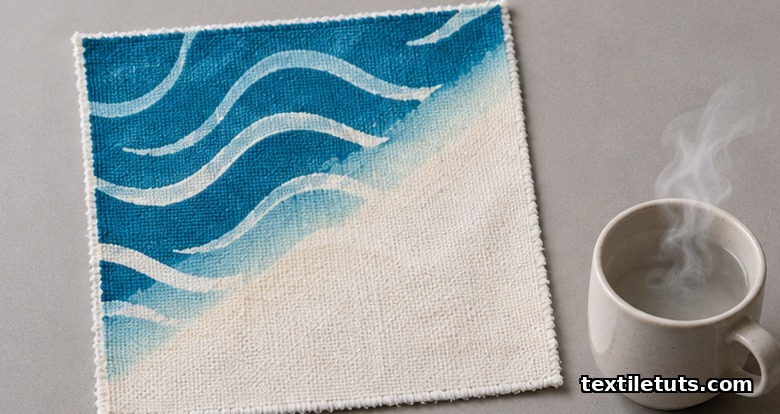
Thermochromic printing applies temperature-sensitive pigments, most commonly leuco dye microcapsules 2 to 5 µm in diameter or chiral nematic liquid crystals, that reversibly switch between a colored and a colorless state across a narrow activation band of 3 to 7 °C, most often centered between 15 °C and 47 °C for textile applications.
The transition temperature is fixed by the melting point of a co-encapsulated long-chain alkyl alcohol solvent and the acidity of the developer; printed fabric is locked onto cotton, polyester, or polyamide with acrylic or polyurethane binders applied at 8 to 15 % on dry fabric weight, and the printed effect is typically rated to 20 to 40 home laundering cycles when tested against ISO 105-C06 (40 °C condition) and AATCC TM 61 (test 1A).
What follows is the working reference a textile engineer, dyehouse chemist, or smart-textile product manager needs to specify, apply, and test a thermochromic print on woven, knit, or nonwoven substrates.
What Is Thermochromic Printing on Textiles?
Thermochromic printing deposits a temperature-responsive colorant on a fabric so the visible color shifts when the substrate is heated above, or cooled below, a defined activation temperature (commonly abbreviated T_act or T_c). Two chemistries dominate commercial textile printing:
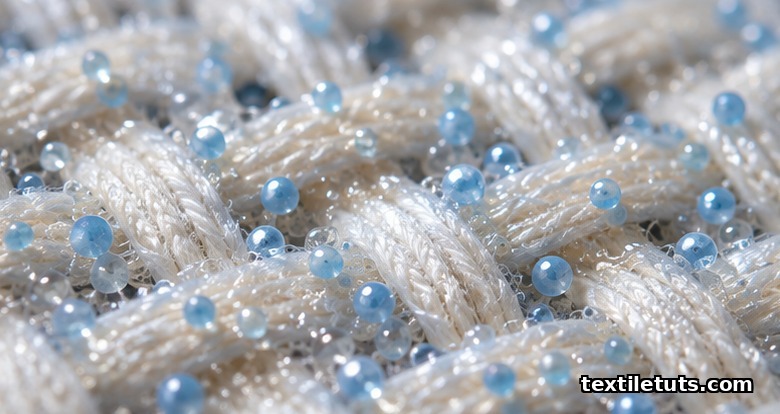
- Leuco dye systems, where a dye (usually a triarylmethane, fluoran, or spirolactone lactone), a weak-acid developer (commonly bisphenol A or, in newer grades, bisphenol S or a long-chain alkyl phenol), and a co-solvent (typically 1-tetradecanol, 1-hexadecanol, or 1-octadecanol) are co-encapsulated in a melamine-formaldehyde or polyurethane shell 2 to 5 µm across.
- Cholesteric (chiral nematic) liquid crystal inks, which selectively reflect one wavelength set by the helix pitch; pitch changes with temperature, sweeping reflected color through the visible spectrum across about 1 to 2 °C before returning to the original hue on cooling.
Leuco systems hold the bulk of the textile market because they tolerate screen and roller printing and survive commercial washing; liquid crystal systems offer sharper, more saturated color travel but require careful lamination and are sensitive to shear, which makes inkjet printing the preferred deposition route.
Activation Temperatures and Color Travel
The activation temperature is engineered by selecting the alkyl-chain length of the co-solvent and the melting-point range of the developer/solvent eutectic. Stock textile grades are commonly offered at 15 °C, 27 °C, 31 °C, and 47 °C, with color travel (the temperature range across which the printed color fades from full color to colorless) of 3 to 7 °C for leuco systems and 1 to 2 °C for liquid crystal systems.
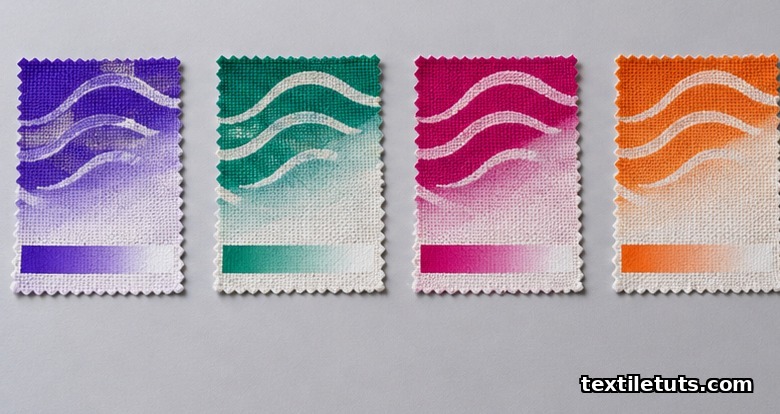
Below T_act, the dye and developer form a colored complex inside the microcapsule. As the solvent melts, the complex dissociates and the print becomes colorless or shifts to a lighter reference shade; on cooling, the solvent recrystallizes and the original color returns. The cycle is repeatable over 200 to 1,000 heating and cooling cycles for leuco systems under laboratory conditions, with the upper end reached by liquid crystal formulations under nitrogen-blanketed storage.
Formulation and Print Application
A typical screen-printing paste for cotton contains:
- 30 to 50 % thermochromic microcapsule dispersion (40 to 50 % solids)
- 30 to 40 % water-based acrylic binder (Tg -10 to +10 °C for soft hand-feel)
- 5 to 10 % thickener (associative polyurethane or polyacrylate)
- 2 to 5 % humectant (glycerol or PEG 400)
- 1 to 3 % non-ionic wetting agent
- Balance deionized water
For screen printing, a 60 to 80 mesh polyester screen with a 75 to 80 durometer squeegee deposits 80 to 120 g/m² wet add-on; for inkjet, paste viscosity is reduced to 5 to 15 mPa·s at 25 °C and the print head is held below 35 °C to avoid premature activation inside the nozzle. Pad printing and exhaust-style thermosol application are also used, with curing at 120 to 150 °C for 2 to 5 minutes.
Substrate preparation is critical: sized or starched greige fabric must be desized to remove residual starch (verified against the ISO 105-A01 grey scale for residual size), since residual size blocks capsule adhesion and causes wash-off inside 5 home laundering cycles.
Color Fastness and Standardized Testing
Thermochromic prints are tested against the same ISO 105 and AATCC TM standards as conventional reactive and disperse prints, with one addition: the color change is measured before and after the temperature cycle.
- ISO 105-C06:2010, “Textiles — Tests for colour fastness — Part C06: Colour fastness to domestic and commercial laundering.” The 40 °C condition with steel balls is the standard wash used for thermochromic prints; ratings of 3 to 4 on the grey scale are typical for leuco systems at the 20 to 40 wash mark.
- AATCC TM 61, “Colorfastness to Laundering: Accelerated.” Test 1A (40 °C, 45 minutes) runs five home-laundering cycles in the apparatus and is used as a screening test before bulk trials.
- ISO 105-B02:2014, “Colour fastness to artificial light: Xenon arc fading lamp test.” Important for outdoor or near-window applications; leuco systems typically achieve Blue Wool 3 to 4, with a 1 to 2 % on-bath-weight UV absorber (benzotriazole or HALS) raising the rating by one full step.
- ISO 105-J01:1997, “Calculation of colour differences.” Used to quantify the magnitude of the printed color change (ΔE_CIE Lab) before and after activation; thermochromic prints typically register ΔE of 15 to 30 between the colored and the colorless state at peak contrast.
- AATCC TM 8, “Colorfastness to Crocking: Crockmeter Method.” Wet and dry crock ratings of 4 to 5 are achievable with proper binder selection; a rating below 3 indicates insufficient binder add-on or incomplete capsule cure.
Substrate and Binder Selection
Substrate compatibility is the single largest variable in commercial thermochromic printing. The table below summarizes the binder systems that the TextileTuts team has validated across cotton, polyester, polyamide, blends, and nonwovens.
| Substrate | Recommended binder | Add-on (% owf) | Typical wash durability |
|---|---|---|---|
| Cotton (woven or knit) | Acrylic, soft Tg | 10 to 15 | 20 to 30 cycles |
| Polyester | Aliphatic polyurethane | 8 to 12 | 30 to 40 cycles |
| Polyamide 6,6 | Polyurethane + crosslinker | 10 to 14 | 25 to 35 cycles |
| Cotton / polyester 65 / 35 | Acrylic / polyurethane blend | 10 to 12 | 25 to 35 cycles |
| Nonwoven (PP or PET) | Styrene-butadiene | 15 to 20 | 15 to 25 cycles |
Binder Tg governs hand-feel. A soft Tg of -10 to 0 °C keeps the printed area flexible and avoids the “plastic patch” hand that has historically limited thermochromic print adoption on close-to-skin apparel.
Applications Beyond the Novelty
Commercial uses of thermochromic textile prints include:
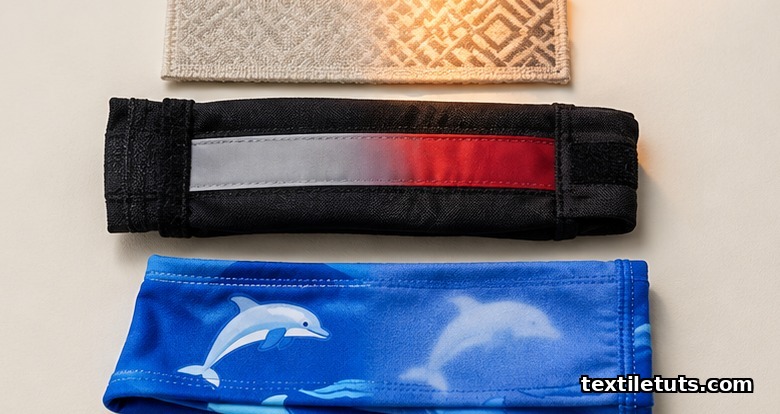
- Anti-counterfeit packaging labels woven into luxury apparel, where a color shift on contact verifies authenticity within 2 °C of body heat.
- Safety indicators on firefighter outerwear that darken above 60 °C to flag thermal exposure during a working shift.
- Children’s swimwear and beverage sleeves that signal the cold-to-warm transition around 15 °C activation.
- Medical garments with skin-temperature responsive zones for fever monitoring (31 to 35 °C activations).
- Designer fashion pieces designed for thermochromic reveal effects, including concealed logos and dual-state patterns.
Industrial volume is dominated by temperature-indicator labels for cold-chain food and pharmaceutical packaging; textile applications remain a smaller but faster-growing segment as capsule prices fall toward 80 USD per kilogram of dispersion at 40 % solids.
Common Failure Modes
Two failure modes surface most often in production:
- Premature activation in the screen. Friction heat at the squeegee can drive a 35 °C activation ink past its T_act and blank the print. Cooling the screen to 20 °C with a chilled plate cures the problem.
- Wash-off inside 5 cycles. Almost always traces back to insufficient binder, a binder Tg mismatch with the substrate, or residual size from greige fabric. A 5-wash screening test per AATCC TM 61 (1A, 40 °C) catches the issue before bulk.
UV exposure bleaches the colored state faster than it bleaches the colorless state, so outdoor or window-facing prints should be specified with a hindered amine light stabilizer (HALS) or benzotriazole UV absorber at 1 to 2 % on bath weight. Light fastness should be re-tested against ISO 105-B02 after any UV-protective additive is included.
Frequently Asked Questions
What temperature do thermochromic prints activate at?
Standard textile grades activate at 15 °C, 27 °C, 31 °C, or 47 °C, with custom grades available from 5 °C to 70 °C. The activation band, defined as the temperature range across which color travels from full color to colorless, is 3 to 7 °C for leuco dye systems and 1 to 2 °C for liquid crystal systems.
How many washes does a thermochromic print last?
A well-formulated acrylic-bound cotton print reaches 20 to 30 home laundering cycles before the activation loses visible contrast. Polyurethane-bound polyester prints reach 30 to 40 cycles. After that point the print still responds to temperature, but the color difference (ΔE_CIE Lab calculated per ISO 105-J01) between the active and inactive states falls below 3, which the eye reads as “no change.”
Are thermochromic inks safe for skin contact?
Commercially encapsulated leuco dye systems pass ISO 10993-10 skin irritation testing when the microcapsule shell is intact. Bisphenol A, used as a developer in older formulations, has been replaced in most textile-grade products by bisphenol S or long-chain alkyl phenols that do not migrate out of the capsule.
Can thermochromic ink be screen printed on dark fabrics?
Yes, with a white underbase. The thermochromic layer is printed over an opaque white pigment print at 80 to 100 g/m² wet add-on, because the colorless state reveals the underlying white rather than the fabric’s own color. On dark grounds without an underbase, the colorless state reads as the dark ground color, which produces a “print that vanishes” effect rather than a true color shift.
What is the cost per square meter?
As of 2025, thermochromic capsule dispersions sell at 80 to 250 USD per kilogram of dispersion (40 to 50 % solids), which translates to 2 to 6 USD per square meter of finished print at standard 80 to 120 g/m² wet add-on. Conventional pigment prints run at 0.10 to 0.40 USD per square meter, so thermochromic prints carry a 5× to 30× cost premium over conventional pigment printing.
References
- International Organization for Standardization. ISO 105-C06:2010, Textiles — Tests for colour fastness — Part C06: Colour fastness to domestic and commercial laundering. iso.org — the standard 40 °C wash method applied to thermochromic prints.
- American Association of Textile Chemists and Colorists. AATCC TM 61, Colorfastness to Laundering: Accelerated. aatcc.org — test 1A five-cycle screening method used to validate binder add-on and capsule adhesion.
- International Organization for Standardization. ISO 105-B02:2014, Textiles — Tests for colour fastness — Part B02: Colour fastness to artificial light (Xenon arc fading lamp test). iso.org — light-fastness method applied to outdoor thermochromic prints.
- American Association of Textile Chemists and Colorists. AATCC TM 8, Colorfastness to Crocking: Crockmeter Method. aatcc.org — dry and wet rub test used to confirm binder cohesion on printed textiles.
- International Organization for Standardization. ISO 105-J01:1997, Textiles — Tests for colour fastness — Part J01: Calculation of colour differences. iso.org — CIELAB ΔE method used to quantify the magnitude of thermochromic color shift.
- Kulčar, R., Friškovec, M., Hauptman, N., Vesel, A., Klanjšek Gunde, M. Colorimetric properties of reversible thermochromic printing inks. Dyes and Pigments, Elsevier — peer-reviewed study of activation temperatures, color travel, and ΔE quantification for screen-printed leuco dye inks.
- Seeboth, A., Lötzsch, D. Thermochromic and Thermotropic Materials. Springer — reference text on leuco dye and liquid crystal chemistries used in thermochromic formulations.
- International Organization for Standardization. ISO 10993-10:2021, Biological evaluation of medical devices — Part 10: Tests for skin sensitization. iso.org — skin-contact safety benchmark for thermochromic prints on wearable applications.
Editorial by Shahrukh Islam, TextileTuts. Reviewed by Sabbir Ahmed, TextileTuts. Sources: ISO 105-C06:2010, ISO 105-B02:2014, ISO 105-J01:1997, ISO 10993-10:2021, AATCC TM 61, AATCC TM 8, Dyes and Pigments (Kulčar et al.), Springer (Seeboth & Lötzsch) as cited.


