
Print Paste Formulation

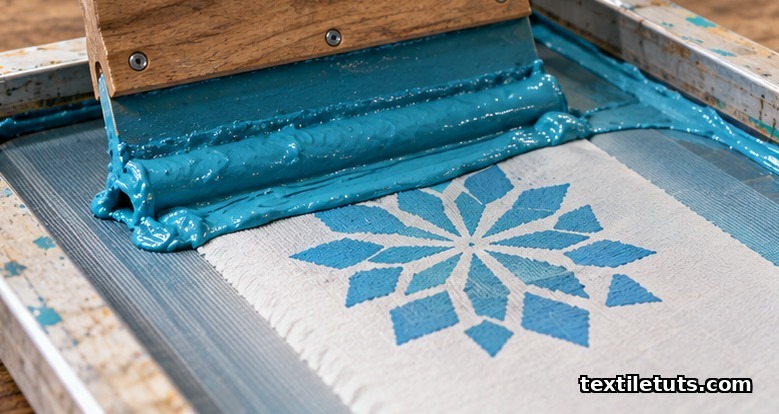
Print paste is a thickened dye or pigment formulation applied to fabric through flat screens, rotary screens, or engraved rollers, and a standard reactive-dye recipe for cotton contains roughly 2 to 6 percent dye, 0.5 to 1.5 percent alginate thickener, 5 to 10 percent urea, 1 to 3 percent sodium bicarbonate, plus water to balance the viscosity to a working range of 1,500 to 4,000 centipoise at 25 degrees Celsius.
The composition changes with the fiber, the dye class, and the printing machine: a cotton-reactive print uses an anionic alginate thickener at pH 9 to 11, while a polyester-disperse print uses a synthetic thickener at pH 5 to 7 with no alkali at all. Get any one of those variables wrong and you bleed color, lose definition, or burn the fabric, so the recipe is not a list of guesses but a controlled formulation with measurable targets.
Below is the working reference the TextileTuts team uses when we set up a print paste in-house: the components, the percentages that actually run on production floors, the viscosity numbers tied to each technique, and the chemistry behind the choices.
What Print Paste Actually Is
A print paste is not a thin dye liquor. It is a viscous fluid engineered to (1) carry a fixed amount of colorant onto a specific zone of fabric, (2) hold that colorant in place without bleeding during the dwell time, and (3) release the dye into the fiber once heat and chemistry kick in during fixation. The viscosity is what allows a screen or roller to deposit a sharp pattern, and the thickener is the polymer that controls flow.
Water is still the biggest ingredient by weight (typically 50 to 80 percent of the mix), but the thickener at 10 to 20 percent of the recipe is what gives the paste its body. A water-thin dye solution would wick across the fabric and blur the design; a paste with the right rheology holds the print line until fixation.
The Five Functional Components of Any Print Paste
Every textile print paste, regardless of dye class or fiber, contains five functional groups. The specific chemicals change, but the roles stay the same.
- Colorant: reactive dye, disperse dye, acid dye, vat dye, or pigment (2 to 8 percent of the recipe by weight).
- Thickener: the polymer that builds viscosity, usually sodium alginate, modified starch, carboxymethyl cellulose (CMC), or a synthetic polyacrylate (10 to 20 percent when dry).
- Solvent / vehicle: demineralized water (balance to 100 percent).
- Humectant / swelling agent: urea at 5 to 10 percent, which holds moisture in the print area during drying so the dye has time to migrate into the fiber.
- Fixation auxiliaries: alkalis (sodium bicarbonate, soda ash), acids (acetic acid, citric acid), oxidizers, reducers, or catalysts specific to the dye class (1 to 10 percent).
Thickener Chemistry: Why Alginate Dominates Reactive Printing
Sodium alginate, extracted from brown seaweed, is the default thickener for reactive printing on cellulose for one specific chemical reason: its backbone is built from mannuronic and guluronic acid units, both of which carry a strong negative charge at printing pH. Reactive dyes are also anionic, so the thickener repels the dye instead of binding it, leaving more free dye available to fix onto the cotton fiber. If you used a non-ionic starch thickener with the same reactive dye, up to 20 to 30 percent of the dye would lock onto the starch and never reach the fiber.
Modified starch and carboxymethyl cellulose work for pigment printing and some discharge prints where dye-thickener interaction is not a problem. Synthetic polyacrylate thickeners (often called “synthetic alginates”) are used in disperse printing on polyester because they resist the reductive and thermal conditions of high-temperature fixation. The choice of thickener, in other words, is a chemistry decision, not a cost decision.
Recipe Table: Working Compositions by Dye Class
The numbers below are the operating windows our team uses for lab-scale and short-run production. They are consistent with the formulation ranges reported in peer-reviewed printing literature for each dye class.
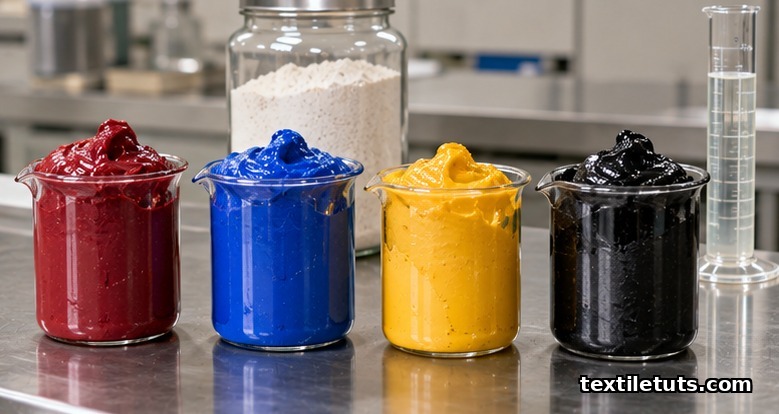
| Component | Reactive on Cotton | Disperse on Polyester | Acid on Silk/Nylon | Pigment on Cotton/Polyester |
|---|---|---|---|---|
| Dye / pigment | 2 to 6 percent | 2 to 5 percent | 2 to 4 percent | 3 to 8 percent |
| Thickener (dry basis) | 1 to 1.5 percent sodium alginate | 1 to 2 percent synthetic polyacrylate | 1 to 1.5 percent CMC or alginate | 1.5 to 3 percent synthetic thickener |
| Urea | 5 to 10 percent | 0 to 2 percent (optional) | 3 to 5 percent | 0 to 3 percent |
| Alkali / acid | 1 to 3 percent NaHCO3 | 0.5 to 1 percent citric acid (pH buffer) | 1 to 2 percent acetic acid | 0.5 to 1 percent ammonia or Na2CO3 |
| Binder (for pigments) | — | — | — | 10 to 20 percent acrylic binder |
| Fixer / catalyst | — | — | 1 to 2 percent tannic acid or syntan | 1 to 2 percent crosslinker |
| Water | Balance to 100 percent | Balance to 100 percent | Balance to 100 percent | Balance to 100 percent |
| Working pH | 9 to 11 | 5 to 7 | 4 to 5.5 | 7 to 9 |
| Working viscosity (25 °C) | 2,000 to 4,000 cP | 1,500 to 3,000 cP | 2,000 to 3,500 cP | 3,000 to 5,000 cP |
Viscosity Targets by Printing Technique
Viscosity is the single most-tested property of a print paste because it directly controls how the paste flows through the screen or roller and how it sits on the cloth. Rotary screen printing on cotton typically runs at 2,500 to 4,000 cP; flat screen printing can go higher (3,500 to 6,000 cP) because the squeegee pressure is higher and the dwell on the fabric is shorter; pigment printing on a knife coater can run as high as 8,000 to 12,000 cP.
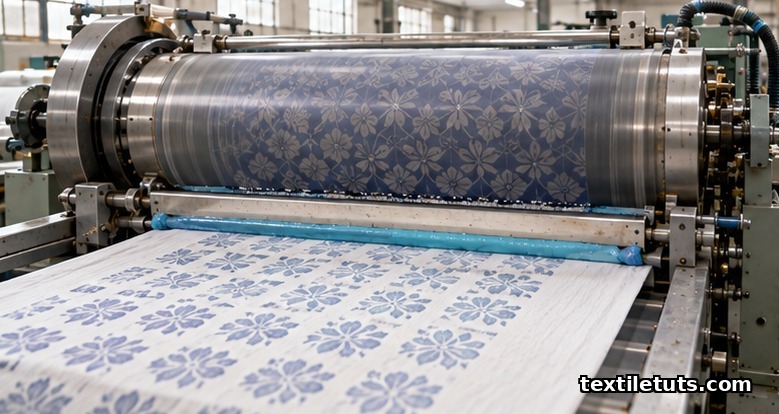
Measure viscosity with a Brookfield rotational viscometer at 25 °C and a spindle speed of 6 rpm, as standardized in ASTM D2066 for printing paste rheology. Track the pH with a calibrated meter before every run, since a shift outside the working window will change viscosity even at the same thickener loading. Reactive pastes thicken noticeably if the alkali dose drifts upward, which is one of the most common defects on the production floor.
Common Defects and How Formulation Prevents Them
Most printing defects trace back to the recipe, not the machine. Here are the four we see most often and the formulation fix for each.
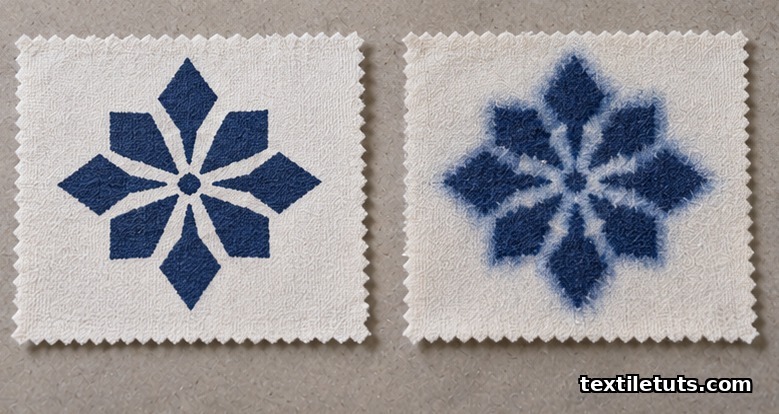
- Bleeding / poor sharpness: viscosity is too low or urea is excessive. Fix by raising thickener loading by 0.2 to 0.5 percent and reducing urea to 5 percent.
- Unfixed dye / poor wash fastness: alkali dose is too low or fixation time is too short. Fix by raising NaHCO3 from 1 to 2.5 percent and extending dwell at 102 °C to 8 minutes.
- Screen clogging: thickener is too high, or paste has aged and lost water. Fix by thinning to the working viscosity range and using fresh paste within 8 hours of mixing.
- Hand stiffening on pigment prints: binder is too high. Fix by dropping the acrylic binder to 10 to 15 percent and adding 0.5 to 1 percent silicone softener to the recipe.
How to Scale a Lab Recipe to Production
A lab recipe that prints a 30 by 30 centimeter swatch cleanly often underperforms on a 50-meter rotary run because evaporation, temperature, and shear rate change. We scale using these three rules. First, multiply the lab quantities by the fabric weight, not by the volume of the screen, because the dose the fiber receives is what matters. Second, keep the thickener-to-water ratio constant; never dilute a paste with water after it is mixed because that breaks the polymer network and drops viscosity nonlinearly. Third, condition the paste to 25 °C before viscosity measurement and before printing, since a paste at 30 °C is 20 to 30 percent less viscous than the same paste at 20 °C, which is enough to ruin edge definition on a hot shop floor.
Frequently Asked Questions
What is the difference between a print paste and a dye liquor?
A dye liquor is a thin solution used to exhaust dye onto fiber in a vat or jet machine, typically under 50 cP. A print paste is a viscous fluid used to deposit dye in a pattern on the fabric surface, typically 1,500 to 6,000 cP, with a thickener that holds the dye in place during drying and fixation.
Can I substitute starch for sodium alginate in a reactive print paste?
No, not without losing color yield. Starch is non-ionic, so reactive dyes bind to it covalently instead of fixing onto cotton, and you can lose 20 to 30 percent of the color depth. Alginate is anionic, which repels the dye and leaves it available to react with the fiber. If alginate is unavailable, a synthetic polyacrylate thickener designed for reactive printing is the second-best option.
How much urea should I use for dark shades on cotton?
Dark reactive shades (5 to 6 percent dye) on cotton need 8 to 10 percent urea to keep the print area moist long enough for full dye migration. Lighter shades (1 to 2 percent dye) work at 3 to 5 percent urea. Going past 10 percent does not improve color yield and raises the chance of dye bleeding at the print edges.
Why does my print paste thicken overnight even though I sealed the container?
Two common causes: water evaporation through a loose lid, and continued reaction between reactive dye and alkali that builds viscosity over time. The fix is to mix only the volume you will use within 8 hours, store the paste in a sealed container at 20 °C, and hold the alkali until just before the print run if the paste will sit for more than 4 hours.
What viscosity should I target for digital pigment printing on cotton?
Digital pigment printing on cotton typically uses a much thinner formulation than screen printing, in the 50 to 200 cP range, because the printhead jets the paste through micro-nozzles. Sodium alginate does not work here; use a low-viscosity synthetic thickener at 0.3 to 0.8 percent plus a 10 to 20 percent acrylic binder for wash fastness.
References
- International Organization for Standardization. ISO 105-B02: Color fastness to artificial light (xenon arc). iso.org — method for evaluating light fastness of printed textiles.
- ASTM International. ASTM D2066: Standard Test Methods for Printing Ink Vehicles and Related Materials. astm.org — viscosity measurement protocol adapted for textile print pastes.
- American Association of Textile Chemists and Colorists. AATCC TM 8: Color Fastness to Crocking. aatcc.org — standard method for testing rub fastness on printed fabrics.
- Wang, L., et al. Rheological Behavior of Sodium Alginate Solutions in Textile Printing. ResearchGate — peer-reviewed study of alginate thickener performance in reactive dye pastes.
- Kumbasar, E. P., & Bide, M. (2020). Dyeing and Printing of Synthetic Fabrics: Print Paste Composition and Fixation. Springer — book chapter covering recipe formulation for polyester and blends.
- MDPI Polymers. Modified Starch and Carboxymethyl Cellulose as Thickeners in Pigment Printing. mdpi.com — comparative study of natural thickeners for pigment print recipes.
- AATCC. AATCC TM 61: Color Fastness to Laundering, Accelerated. aatcc.org — method for evaluating wash fastness on printed textiles.
This article is the working reference for print paste formulation in textile dyeing and printing. Editorial by Shahrukh Islam, TextileTuts. Sources: ISO 105, ASTM D2066, AATCC TM 8 / TM 61, ResearchGate, Springer, and MDPI Polymers as cited.


