
Photochromic Printing

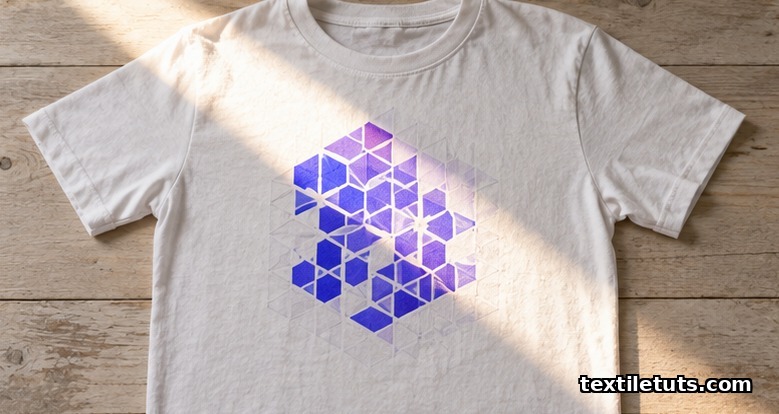
Photochromic printing applies microencapsulated dyes, most commonly spirooxazines and naphthopyrans in 1–5 μm shells, that switch from a colorless to a colored state when exposed to UV light around 365 nm and revert in 30 seconds to several minutes once the UV source is removed. The effect is fully reversible for thermally-reversible (T-type) compounds and is widely used in fashion, security labels, and novelty garments where a hidden pattern only appears in sunlight.
For textile mills, photochromic printing sits between decorative pigment printing and functional finishing: the chemistry is closer to disperse-dye behavior than to conventional pigment chemistry, and the durability is governed almost entirely by the wall of the microcapsule. This article covers the dye classes, the microencapsulation step, the printing methods that work at production scale, the fastness limits, and the test methods that actually predict field performance.
What Photochromic Dyes Are and How They Switch
Photochromic dyes are organic molecules that undergo a reversible photochemical reaction between two isomers with different absorption spectra. In textile printing, only the colorless-to-colored transition matters commercially, so the discussion below focuses on T-type compounds (thermally reversible) rather than P-type (photochemically reversible, common in optical data storage).
The two dominant dye classes for textiles are spirooxazines (peak UV activation around 360–370 nm, colored forms in the blue–violet range) and naphthopyrans, also called chromenes (activation 300–360 nm, broader color palette including yellows, oranges, and reds). Fulgides and diarylethenes are used in research but are less common on fabric because their colored form is thermally stable at room temperature, which removes the visual “reveal” effect consumers expect.
The switching mechanism is a ring-opening reaction. Under UV, the closed spiro carbon-oxygen bond breaks and the molecule flattens into a conjugated merocyanine form that absorbs in the visible region. Removing UV allows thermal relaxation; the activation energy is typically 50–110 kJ/mol, which determines how fast the color fades once the wearer steps indoors. Lower activation energy dyes fade faster (under one minute) but give weaker color depth; higher activation energy dyes give richer colors but take longer to revert.
Microencapsulation: Why the Capsule Matters More Than the Dye
Pure photochromic dyes degrade within minutes when exposed to oxygen, water, and mechanical shear, so they are never applied directly to fabric. The industry standard is to enclose each dye molecule inside a polymeric shell, typically melamine-formaldehyde or polyurethane, with particle sizes controlled between 1 and 10 μm. The capsule wall blocks oxygen diffusion (the main degradation pathway) and holds the dye in a solvent environment that supports the ring-opening reaction.
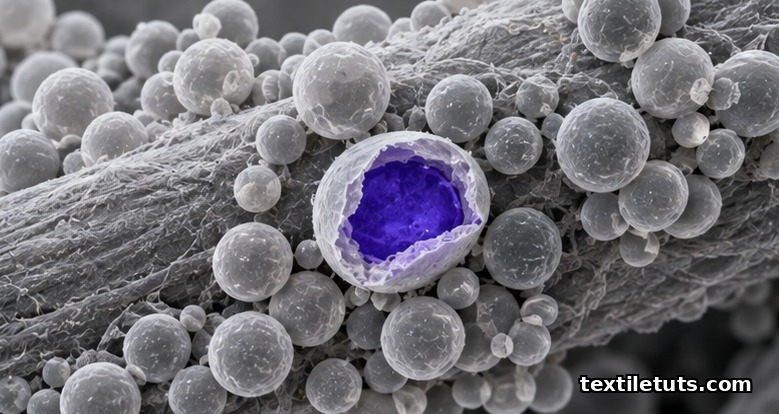
Capsule morphology is the dominant variable in commercial performance. A capsule that is too small (under 1 μm) gives low payload and weak color; one that is too large (over 10 μm) feels gritty on fabric and breaks under flexing. The 1–5 μm range used in most textile-grade photochromic inks is a compromise between color strength and handle.
Wall composition controls durability. Melamine-formaldehyde walls give the best oxygen barrier and the longest fatigue life (typically 50–200 switching cycles before noticeable fading) but require careful post-curing to control free formaldehyde. Polyurethane walls are softer and survive flexing better, but let more oxygen in and shorten cycle life. Gelatin-gum arabic walls are still used in laboratory work because the process is well understood, but they are too permeable for commercial garments.
Printing Methods That Work at Production Scale
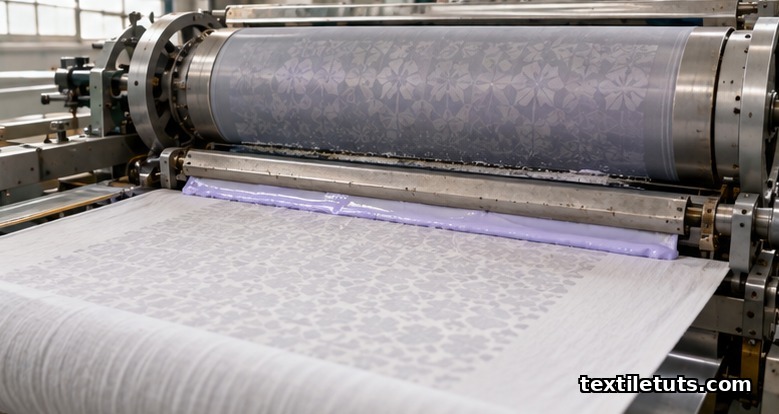
Three printing methods are used in production. Screen printing with a thickener system adjusted for capsule survival is the most common, accounting for the majority of commercial photochromic T-shirts and accessories. Rotary screen printing gives the highest throughput, around 20–40 m/min on cotton knits, and the screen mesh is usually 60–80 mesh to avoid crushing the capsules.
Inkjet printing is the second method and is used for short runs and design customization. The ink vehicle must be water-based with a co-solvent (typically glycerol or ethylene glycol at 10–20%) to prevent nozzle drying, and the capsule loading is held below 15% by weight to keep viscosity under 10 mPa·s. Piezoelectric printheads handle the suspended capsules without damage; thermal printheads tend to crack the capsules and release free dye that immediately degrades.
Roller printing and exhaust application are rarely used because they require long liquor contact times that leach dye out of the capsules. Pigment printing with binder is workable but requires plasticizer-free acrylic binders; common plasticizers like phthalates swell the capsule wall and shorten cycle life.
Fastness: The Honest Limits
Photochromic prints do not perform like conventional pigment prints, and the test numbers reflect that. Wash fastness typically rates 2–3 on the ISO 105-C06 grey scale after 5 home laundering cycles at 40 °C, compared to 4–5 for a standard reactive dye print. Light fastness of the colored form is poor because the dye is, by definition, designed to break down under UV; AATCC TM 16 option 3 typically reports 20–40 hours before the color depth drops by 50%.
Rub fastness is also limited. Dry crocking on AATCC TM 8 typically rates 2–3, wet crocking 1–2, because the capsule wall is the weak point and any flexing or abrasion fractures capsules and releases free dye. Garment makers usually respond by placing the print on low-flex zones (chest panels, hat fronts) rather than cuffs or collars.
Fatigue, the number of UV/dark cycles before the color weakens, is the more useful predictor of real-world life. A well-encapsulated spirooxazine on cotton gives 100–200 visible cycles; a naphthopyran of the same generation gives 50–100. ISO 18909 (imaging materials stability) is sometimes referenced as a framework, though it was written for photographic prints, not textiles.
Color Range and Combination Effects
The visible color produced depends on the dye class. Spirooxazines give blue, purple, and violet. Naphthopyrans span yellow through orange and into red. Combining two or more dye classes in the same print produces a hue that is not the simple sum of the components; the molecules do not interact chemically, but the eye perceives a blended color only because both isomers are present in the colored form.
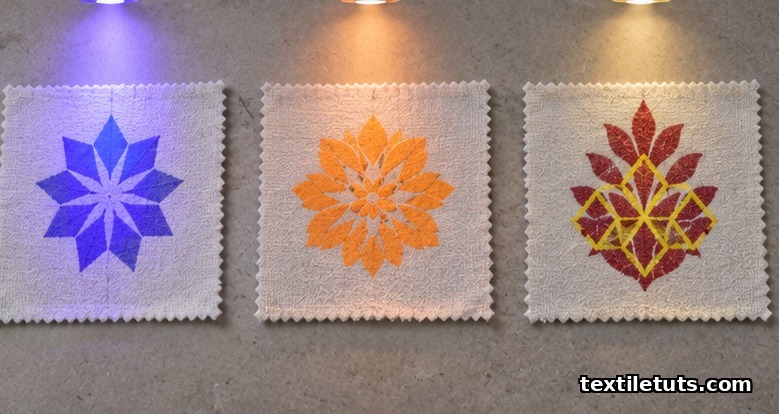
Layering photochromic ink over a conventional pigment print is a common trick. The photochromic layer reveals a pattern only under UV, while the underlying pigment stays visible all the time. This is the basis of most anti-counterfeit textile labels and of the “sun-print” fashion items sold since the late 1990s.
Substrate and Pre-Treatment Considerations
Cotton, polyester, and poly-cotton blends all accept photochromic prints, but the substrate changes the required binder system. Cotton needs an acrylic binder at 8–12% dry add-on to anchor the capsules to the fiber surface. Polyester needs a polyester-compatible binder, often a polyurethane dispersion, because standard acrylic binders do not adhere well to hydrophobic polyester.
Pre-treatment is light. Scouring and bleaching as usual, but no optical brightener. Optical brighteners absorb UV around 350 nm and compete with the photochromic dye for the same photons, cutting the visible color depth by 30–50%. Softeners are also a problem: silicone-based softeners form a film over the print that blocks UV penetration and makes the color change sluggish or invisible.
Photochromic vs Thermochromic vs Hydrochromic Printing
| Property | Photochromic | Thermochromic | Hydrochromic |
|---|---|---|---|
| Trigger | UV light (300–370 nm) | Temperature change | Water contact |
| Common dye class | Spirooxazines, naphthopyrans | Leuco dyes with developer | Acid-base indicators in capsules |
| Typical capsule size | 1–5 μm | 3–10 μm | 5–20 μm |
| Reveal time | 1–30 seconds under UV | 2–10 seconds on heating | 1–5 seconds on wetting |
| Revert time | 30 seconds to several minutes | 30 seconds to several minutes | Drying time of substrate |
| Wash fastness (ISO 105-C06) | 2–3 | 2–3 | 2–3 |
| Main use | Sun-activated patterns, security | Temperature indicators, mood color | Rain-reactive prints, novelty |
| Typical cycle life | 50–200 cycles | 50–500 cycles | 10–50 cycles |
Standards and Test Methods Worth Knowing
There is no ISO or AATCC standard written specifically for photochromic textiles, so buyers and mills typically combine several general standards. ISO 105-C06 covers wash fastness. ISO 105-B02 covers light fastness, though it is a poor fit because the test is run continuously under a xenon arc that destroys the colored form. AATCC TM 16 is the more useful light exposure reference. Crocking uses AATCC TM 8 (dry) and AATCC TM 116 (wet, for printed textiles).
Fatigue testing is not yet standardized, so most mills report cycles-to-half-color under a controlled UV/dark cycle, typically 5 minutes UV at 365 nm and 5 minutes dark at room temperature, until the color depth drops to 50% of the initial value. Reporting this number alongside ISO and AATCC fastness values gives a more honest picture of field life than any single standard.
Frequently Asked Questions
Are photochromic prints safe to wear against skin?
Yes, when the encapsulation is intact. The dye itself is enclosed inside a polymer shell that does not release under normal wear, so skin contact is with the shell and the binder, not the dye. The encapsulated products used by major photochromic-ink suppliers pass ISO 10993-5 cytotoxicity testing when applied at recommended add-on levels.
Can photochromic prints be ironed?
Ironing is the most common cause of premature failure. Capsule walls soften above 110 °C and rupture under the iron pressure, releasing free dye that degrades within minutes. If ironing is required, use a press cloth and keep the iron below 100 °C with steam off. Better, finish the garment before printing and avoid ironing over the print entirely.
Do photochromic prints work under LED light or indoors?
Indoor fluorescent light has very little UV output and will not activate most photochromic dyes. Standard white LEDs emit a small UV component but usually not enough to give a strong color change; sunlight, with its strong UV-A component (around 320–400 nm at ground level), gives the most dramatic effect. “Blacklight” UV-A lamps at 365 nm are the most reliable test source.
How long does a photochromic print last in real wear?
Field life depends more on the number of UV/dark cycles and wash cycles than on calendar time. A cotton T-shirt printed with a quality spirooxazine ink and washed every week or two typically shows 50% color loss after 30–50 wears in sunny climates, or 80–120 wears in mostly-indoor climates. Polyester prints outlast cotton because the smoother fiber surface flexes less.
Can photochromic ink be combined with reactive dyeing?
Yes, and it is the most common commercial combination. Reactive dyeing is done first to fix the base color, then the photochromic ink is printed on top with a binder. The reactive dye and the photochromic dye do not react with each other because the photochromic molecule is locked inside its capsule and is not available for covalent bonding.
References
- ISO. ISO 105-C06:2010 Textiles — Tests for colour fastness — Part C06: Colour fastness to domestic and commercial laundering. iso.org — wash fastness test conditions used for photochromic prints.
- AATCC. AATCC Test Method 16.3: Colorfastness to Light: Xenon-Arc. aatcc.org — accelerated light exposure method.
- AATCC. AATCC Test Method 8: Colorfastness to Crocking: AATCC Crockmeter Method. aatcc.org — dry and wet rub fastness test.
- ScienceDirect / Elsevier. Photochromic materials: preparation, properties and applications. sciencedirect.com — peer-reviewed review of spirooxazine and naphthopyran chemistry.
- MDPI. Microencapsulation of photochromic dyes for textile applications. mdpi.com — open-access paper on capsule wall chemistry and fatigue life.
- Springer. Organic Photochromic and Thermochromic Compounds: Main Types and Applications. springer.com — book chapter on the ring-opening mechanism of spiro compounds.
- ResearchGate. Durability of photochromic prints on cotton and polyester substrates. researchgate.net — peer-reviewed study on wash and light fastness of screen-printed samples.
This article is the working reference for photochromic printing on textiles. Editorial by Shahrukh Islam, TextileTuts. Sources: ISO 105-C06, AATCC TM 16, AATCC TM 8, ScienceDirect, MDPI, Springer, ResearchGate as cited.


