
Textile Engineering Education in the US: Programs, Curriculum, and Certifications

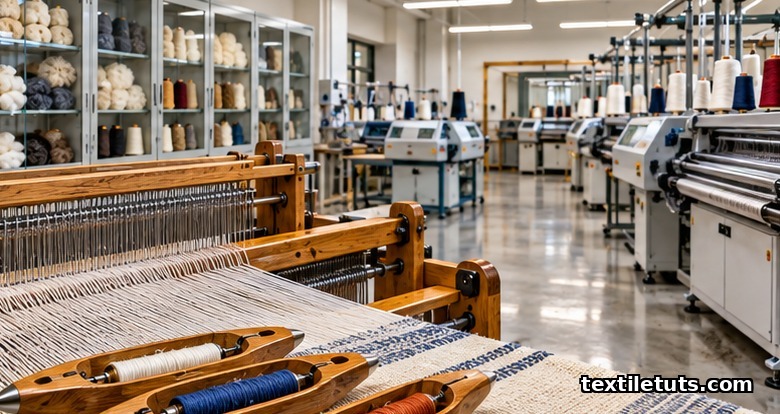
Textile engineering education in the United States is centered on North Carolina State University’s Wilson College of Textiles (founded 1899), the country’s only ABET-accredited BS in Textile Engineering program, with the standard 128-semester-credit curriculum covering polymer chemistry, yarn formation, weaving, knitting, nonwovens, dyeing, finishing, and statistical quality control, and producing graduates qualified for ASTM D13, AATCC, and ISO 17025-aligned testing and process-engineering roles.
US textile-engineering degree pathways are fewer than mechanical or chemical engineering pathways, but they remain the principal source of credentialed engineers for the domestic technical-textile, nonwoven, aerospace-fabric, protective-clothing, and biomedical-textile sectors that the Bureau of Labor Statistics groups under NAICS 313, 314, and 315 (textile mills, textile product mills, and apparel manufacturing).
This guide covers the active US programs that award a textile-engineering or closely related BS, the structure of the standard curriculum, where MS and PhD study fit, and the AATCC, ASTM, and ISO certifications that supplement the degree.
Where Textile Engineering Is Taught in the United States
Textile engineering as a named BS program exists at a small number of US universities. The most established programs are:
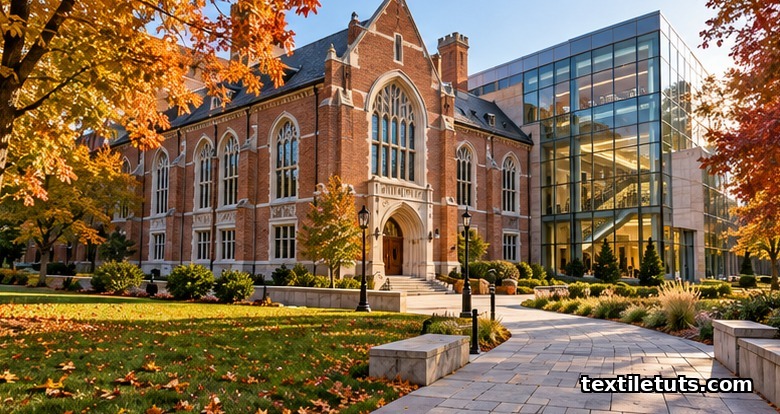
- North Carolina State University (NCSU), Wilson College of Textiles, Raleigh, NC. Founded in 1899 as the School of Textiles and renamed in 2018 following a $28 million gift from Henry and Christine Wilson. Programs include BS Textile Engineering, BS Textile Technology, BS Fashion and Textile Management, plus MS and PhD in Textile Engineering and Textile Chemistry. The BS in Textile Engineering requires 128 semester credits per NCSU’s published academic catalog.
- Georgia Institute of Technology (Georgia Tech), Atlanta, GA. The School of Materials Science and Engineering offers a BS in Materials Science and Engineering (ABET-accredited) with optional polymer- and fiber-related research concentrations, including electrospun nanofibers and structural composites.
- University of California, Davis, Davis, CA. Offers fiber and polymer science through the Department of Design, historically with strong textile chemistry and sustainable-dyeing research.
- Thomas Jefferson University (formerly Philadelphia University), Philadelphia, PA. Offers textile-design and textile-product development degrees following the 2017 merger with Jefferson (now Sidney Kimmel Medical College).
- Fashion Institute of Technology (FIT), SUNY, New York, NY. Offers a BS in Textile Development and Marketing with coursework aligned to ASTM and AATCC testing standards.
NCSU’s Wilson College is the only institution in the United States offering a BS specifically titled Textile Engineering that holds current ABET accreditation; the other institutions offer textile-related BS degrees under different names (Materials Science and Engineering, Design, Textile Development and Marketing).
ABET Accreditation and Program Standards
ABET (the Accreditation Board for Engineering and Engineering Technology) is the recognized US accreditor for engineering programs. ABET’s EAC (Engineering Accreditation Commission) criteria require programs to publish educational objectives, student outcomes, and continuous-improvement data, and to demonstrate that graduates can apply calculus, statistics, probability, and applied science to engineering problems.
For textile-engineering students, ABET accreditation matters because:
- Aerospace, medical-textile, and defense suppliers (Northrop Grumman, Honeywell, DuPont, 3M, Freudenberg) typically require an ABET-accredited BS for quality engineer, process engineer, and R&D engineer positions.
- Direct admission to MS and PhD engineering programs generally requires an ABET-accredited BS.
- ABET criteria mandate at least 30 semester credits of mathematics and basic sciences and at least 45 credits of engineering topics, ensuring the curriculum meets a defined technical baseline.
NCSU’s BS in Textile Engineering and Georgia Tech’s BS in Materials Science and Engineering both hold current ABET-EAC accreditation as of the 2024-2025 review cycle, per the institutions’ published accreditation records.
Standard BS Curriculum (128 Semester Credits)
The standard BS in Textile Engineering follows the ABET 128-semester-credit template. The credit distribution is roughly:
- General education and English (24 credits): composition, humanities, social sciences, US history or equivalent.
- Mathematics and basic science (32 credits): calculus I-III, linear algebra, differential equations, probability and statistics, general chemistry, organic chemistry, calculus-based physics.
- Engineering core (24 credits): statics, dynamics, thermodynamics, electrical circuits, engineering economics, computer programming.
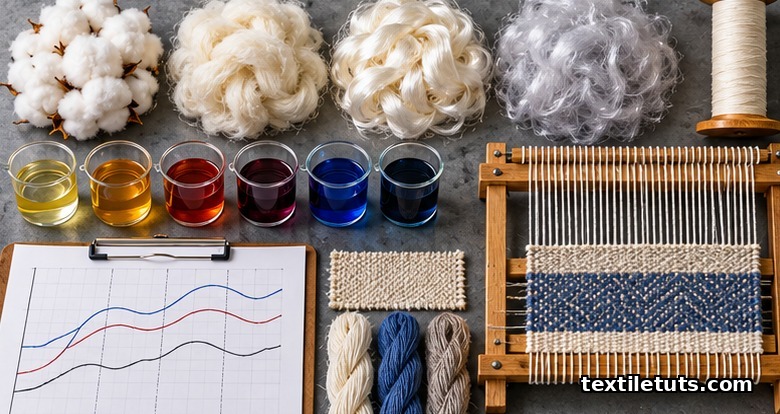
- Textile specialization (40 credits): fiber science, yarn formation, fabric formation (weaving, knitting, nonwovens), textile chemical processing (preparation, dyeing, printing, finishing), textile testing per ASTM and AATCC methods, computer-aided textile design, statistical quality control.
- Capstone and technical electives (8 credits): senior design project, technical electives.
Core textile courses typically include:
- Fiber Science (natural fibers: cotton, wool, silk, flax; synthetic fibers: polyester, nylon, acrylic, polypropylene, aramid)
- Yarn Formation (ring, rotor, air-jet, friction, vortex spinning systems)
- Fabric Formation (weaving: shuttle, rapier, projectile, air-jet, water-jet looms; knitting: weft and warp; braiding; nonwoven: spunbond, meltblown, needle-punched)
- Textile Chemical Processing (preparation/singeing/desizing, scouring, bleaching, dyeing, printing, finishing)
- Textile Testing (ASTM D5034 tensile strength, ASTM D3786 bursting strength, AATCC TM 8 colorfastness to crocking, AATCC TM 61 colorfastness to laundering)
- Statistical Quality Control (control charts, acceptance sampling per ISO 2859, Six Sigma)
Specialized Tracks and Concentrations
Most textile-engineering programs allow students to concentrate their senior electives. Common tracks include:
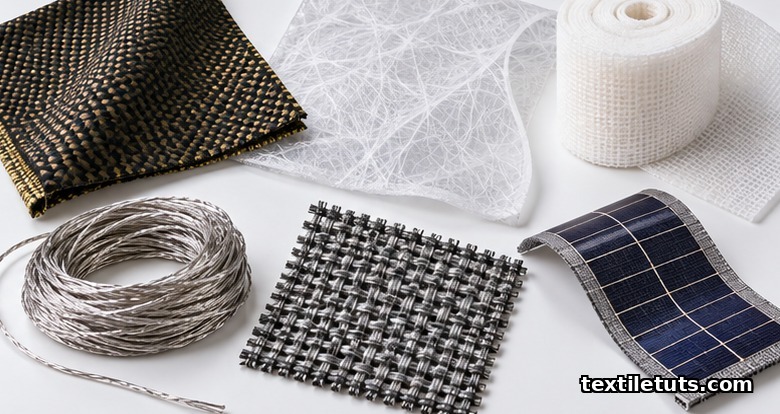
- Technical Textiles: protective fabrics (ballistic, flame-resistant, chemical-resistant), geotextiles (woven and nonwoven separators, filters, reinforcement), medical textiles (implantable scaffolds, wound dressings, surgical gowns), automotive textiles (tire cord, headliner, airbag fabric).
- Polymer and Fiber Science: novel fiber spinning (electrospinning, gel spinning, bicomponent spinning), nanocomposite fibers, biodegradable polymers, fiber-reinforced composites.
- Sustainability: recycled polyester (rPET), low-water reactive dyeing (per ISO 105-C09 wash-fastness validation), bio-based finishes, closed-loop chemical processing.
- Smart Textiles: conductive yarns, wearable sensors, e-textile integration, photovoltaic textiles.
Graduate Programs (MS and PhD)
NCSU’s Wilson College of Textiles offers MS and PhD in Textile Engineering and Textile Chemistry, with research concentrations in fiber and polymer science, textile chemistry, electronics-on-textiles, biomedical textiles, and nonwoven engineering.
Georgia Tech offers MS and PhD through Materials Science and Engineering with fiber and polymer specialization, including active research on carbon nanotubes, electrospun nanofiber membranes, and high-performance fiber composites.
Most other institutions route textile-related MS and PhD research through Materials, Chemical, or Mechanical Engineering departments. Funding typically comes from the National Science Foundation (NSF), the Department of Defense, and industry partnerships (Boeing, Honeywell, ITW, Carlisle).
Comparison of Active US Textile-Related BS Programs
| University | Degree | Credits | ABET | Primary Strength |
|---|---|---|---|---|
| NC State | BS Textile Engineering | 128 semester | Yes (EAC) | Nonwovens, technical textiles |
| Georgia Tech | BS Materials Science & Engineering | 128 semester | Yes (EAC) | Polymer fibers, composites |
| UC Davis | BS Design (Textiles) | 180 quarter | No | Fiber science, sustainability |
| Thomas Jefferson | BS Textile Design | 120 semester | No | Product development |
| FIT (SUNY) | BS Textile Development & Marketing | 120 semester | No | Sourcing, quality, marketing |
Professional Certifications Beyond the Degree
There is no US-issued Professional Textile Engineer license. The certifications that supplement a textile-engineering BS are:
- AATCC Certified Textile Chemist / Colorist: requires passing an AATCC-administered exam covering color science, dye chemistry, colorfastness testing per AATCC test methods, and chemical finishing.
- ISO/IEC 17025 Internal Auditor: for textile testing laboratories operating per the ISO/IEC 17025 general requirements for testing and calibration laboratory competence.
- ASTM Committee D13 participation: ASTM technical committees develop textile standards; active committee membership signals domain expertise to employers.
- Six Sigma Green Belt / Black Belt: quality-engineering certification relevant to textile manufacturing process control (commonly required by aerospace and automotive textile suppliers).
- Textile Institute (UK) Chartered Textile Technologist (CText ATI): internationally accepted credential based in Manchester; requires a recognized degree plus professional experience.
Frequently Asked Questions
How many ABET-accredited textile engineering programs exist in the US?
Only one institution, North Carolina State University’s Wilson College of Textiles, holds current ABET-EAC accreditation for a BS in Textile Engineering. Georgia Tech’s BS in Materials Science and Engineering (with polymer and fiber concentration) is the closest ABET-accredited option. Other textile-related BS degrees at FIT, Thomas Jefferson, and UC Davis operate outside ABET scope but are accredited by their respective regional accreditors.
What is the standard credit-hour requirement for a BS in Textile Engineering?
The standard is 128 semester credit hours, equivalent to four academic years of full-time study. This aligns with the ABET-EAC engineering program template and includes approximately 24 credits of general education, 32 credits of mathematics and basic science, 24 credits of engineering core, 40 credits of textile specialization, and 8 credits of capstone and electives.
Can a textile engineer earn a Professional Engineer (PE) license?
Yes. Textile engineers typically pursue the PE license through the mechanical engineering or materials engineering track in their state, after passing the Fundamentals of Engineering (FE) exam, completing at least 4 years of qualifying post-BS experience under a licensed PE, and passing the Principles and Practice of Engineering (PE) exam. The PE license is required to sign and seal engineering documents for public-sector and infrastructure projects.
What is the difference between AATCC and ASTM textile test methods?
AATCC (American Association of Textile Chemists and Colorists) develops test methods focused on colorfastness, dye chemistry, stain resistance, and chemical finishes (for example, AATCC TM 8 for colorfastness to crocking, TM 61 for colorfastness to laundering, TM 16 for colorfastness to light). ASTM Committee D13 develops broader textile material standards covering physical and mechanical properties (ASTM D5034 for tensile strength, D3786 for bursting strength, D737 for air permeability). Most US textile testing laboratories run both AATCC and ASTM methods, and international trade often references ISO equivalents such as ISO 139 for tensile testing and ISO 105 for colorfastness.
Are online BS degrees in textile engineering available?
Fully online ABET-accredited BS in Textile Engineering programs are not currently offered in the US, because ABET requires hands-on laboratory work that cannot be replicated online. NCSU offers selected online MS and continuing-education courses through its Zeis Textiles Extension program, and FIT offers some BS courses online. Most textile-engineering laboratory coursework must be completed in person.
How much does a textile engineer with a BS earn in the US?
According to the US Bureau of Labor Statistics (May 2023 data), materials engineers (the closest occupational category for textile engineers) earned a median annual wage of approximately $101,000. Entry-level BS graduates in textile engineering typically start between $65,000 and $75,000, while engineers with 5 to 10 years of experience in technical textiles, aerospace, or medical-textile sectors commonly earn $95,000 to $130,000, with senior and management roles exceeding $150,000.
References
- North Carolina State University, Wilson College of Textiles. Academic Catalog: BS in Textile Engineering. https://textiles.ncsu.edu/academics/undergraduate/textile-engineering/ . Source of 128-credit curriculum, program history (founded 1899), and ABET-EAC accreditation.
- ABET, Inc. Accredited Engineering Programs (Search Database). https://www.abet.org/ . Source of accreditation criteria and program listings.
- AATCC (American Association of Textile Chemists and Colorists). AATCC Technical Manual (annual edition). https://www.aatcc.org/tech-manual/ . Source of colorfastness and chemical-finishing test methods.
- ASTM International. Committee D13 on Textiles. https://www.astm.org/standards/d13-textiles.html . Source of physical and mechanical textile test standards.
- ISO/IEC 17025:2017. General requirements for the competence of testing and calibration laboratories. International Organization for Standardization. https://www.iso.org/standard/66912.html . Source of laboratory accreditation framework.
- US Bureau of Labor Statistics. Materials Engineers. Occupational Outlook Handbook. https://www.bls.gov/oes/current/oes172131.htm . Source of median salary and occupational classification data.
- The Textile Institute (Manchester, UK). Professional Qualifications: Chartered Textile Technologist (CText ATI). https://www.textileinstitute.org/ . Source of international credentialing framework.
Editorial by Iftay Khairul Alam, TextileTuts. Sources: NCSU Wilson College of Textiles, ABET, AATCC, ASTM International, ISO/IEC 17025:2017, US Bureau of Labor Statistics, and The Textile Institute as cited.


