
NC State College of Textiles: Complete Guide for US Students

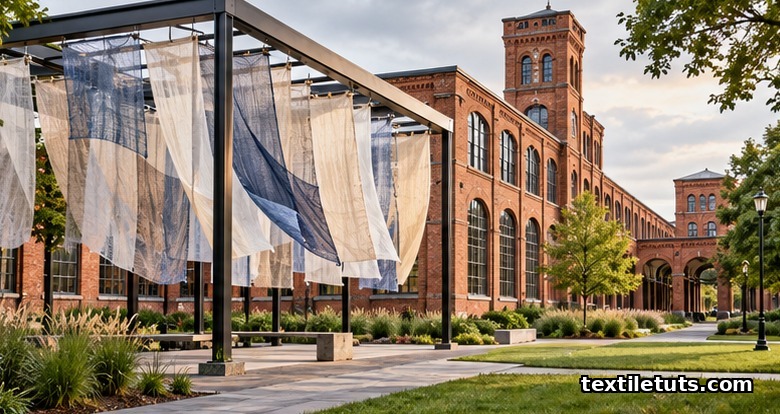
North Carolina State University’s Wilson College of Textiles, founded in 1899 in Raleigh, NC, enrolls roughly 1,000 undergraduate students across five Bachelor of Science programs and offers the only Bachelor of Science in Textile Engineering in the United States that is accredited by the Accreditation Board for Engineering and Technology (ABET, www.abet.org).
This 125-year-old college pairs ABET-accredited engineering rigor with applied textile science, anchoring a US textile research pipeline that runs through the Nonwovens Institute, the Textile Protection and Comfort Center (T-PACC), and the Zeis Textiles Extension service lab.
This guide walks US students through Wilson College’s degree programs, research centers, admission profile, and the career paths its graduates enter, so you can decide whether NC State’s textile program matches the academic and professional track you have in mind.
History and Identity of the Wilson College of Textiles
The Wilson College traces its origin to 1899, when state legislators and Piedmont mill owners recognized that the region’s cotton, hosiery, and worsted factories needed formally trained operators, dyers, and designers. The school opened as a standalone textile school and was integrated into the North Carolina College of Agriculture and Mechanic Arts (the predecessor of NC State University) in 1926. The program was renamed the College of Textiles in 1993 and again the Wilson College of Textiles in 2004 after a naming gift from the A. Earl and Patricia S. Wilson family.
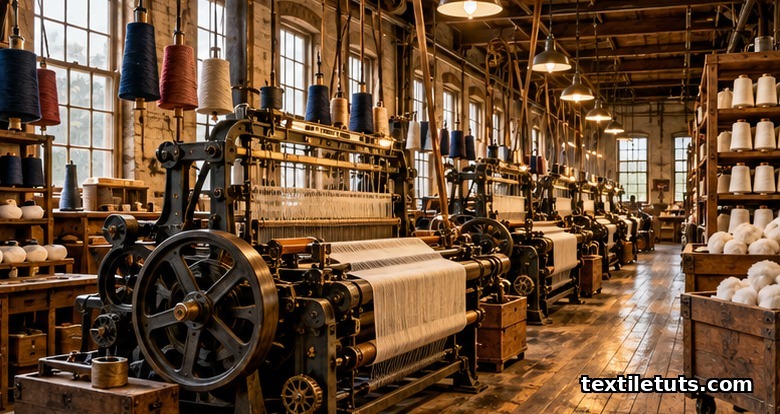
Today the college operates as one of NC State’s twelve academic units and houses six research centers and laboratories, including the Nonwovens Institute (NWI), the Textile Protection and Comfort Center, the Zeis Textiles Extension, and the Yarn Engineering Laboratory. The Department of Textile Engineering, Chemistry, and Science lists 26 tenured and tenure-track faculty, several of whom hold research awards from the Textile Institute and the American Association of Textile Chemists and Colorists (AATCC, www.aatcc.org).
Undergraduate Programs: One ABET Track Plus Four Specialized Degrees
Wilson College offers five Bachelor of Science degrees, one of which carries ABET accreditation. The full undergraduate lineup, as published in the 2024-2025 NC State course catalog, is:

- BS in Textile Engineering (TECS), the only ABET-accredited textile engineering program in the US, with concentrations in Information Systems, Chemical Processing, and Product Engineering.
- BS in Textile Technology (TATM), a supply-chain-and-management degree that covers sourcing, quality systems, and brand operations.
- BS in Textile Chemistry (TC), a chemistry-heavy track qualifying graduates for dye-house chemist roles and pre-medical academic pathways.
- BS in Fashion and Textile Design (FTD), a studio-based program partnered with the College of Design.
- BS in Polymer and Color Chemistry (PCC), shared with the College of Sciences and focused on polymer synthesis and dye chemistry.
The TECS curriculum totals 121 credit hours and includes a senior capstone in which student teams solve real manufacturing problems submitted by partner mills. Required STEM coursework covers calculus through differential equations, two semesters of physics, and a year of organic chemistry.
Graduate Programs and Research Output
At the master’s and doctoral level, Wilson College offers the MS, Master of Textiles (MT), and PhD in Textile Engineering, Textile Technology, and Textile Chemistry, plus a Graduate Certificate in Textile Brand Management delivered jointly with the Poole College of Management. According to the most recent NC State Graduate School enrollment report, the college enrolled more than 200 graduate students in fall 2024, with about 80 pursuing PhD-level research and the remainder in thesis or professional master’s tracks.
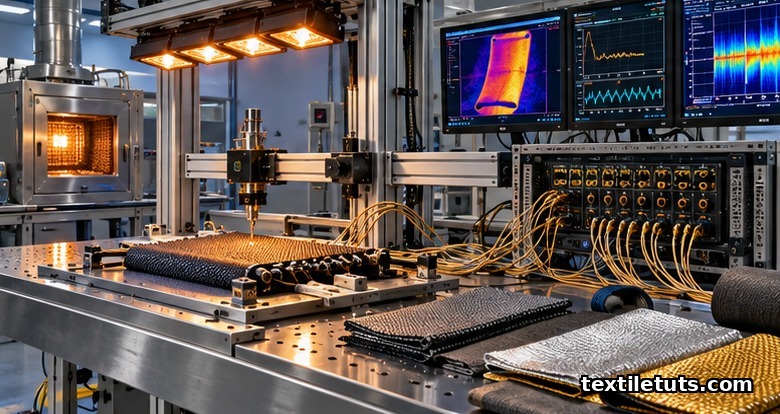
External research funding has averaged $19 million per year over the last five fiscal years, drawn primarily from the US Department of Defense, the National Science Foundation (NSF, www.nsf.gov), and industrial members of the Nonwovens Institute. Major research thrusts include:
- Nonwoven substrates for filtration, hygiene, and wound care at the Nonwovens Institute.
- Thermal, flame, and chemical protection at T-PACC, where the PyroMan and other instrumented mannequins are used to evaluate protective clothing under simulated flash-fire and arc-flash exposures.
- Smart and e-textile development through the ASSIST Center, an NSF Engineering Research Center jointly led by NC State, Penn State, and Cornell (www.assist.ncsu.edu).
Admissions Profile and Cost for US Students
Admission to the BS in Textile Engineering requires a high school background in calculus, chemistry, and physics. For the fall 2023 entering class in Wilson College, the NC State Office of Undergraduate Admissions reports an average unweighted GPA of 3.81, an average SAT of 1352, and an average ACT of 30.
For North Carolina residents, tuition and required fees for the 2024-2025 academic year total $9,178 per year; for out-of-state students the figure is $31,752 before financial aid. The college’s Office of Scholarships and Financial Aid reports that approximately 71% of Wilson undergraduates received institutional, federal, or state aid in 2023-2024, with an average award of $11,400 for need-based recipients.
Career Outcomes and Industry Placement
Wilson College reports that 92% of its 2022-2023 bachelor’s graduates were employed full-time or enrolled in graduate school within six months of graduation, with a median annual salary of $64,800 for first-destination employment. Top employers of Wilson graduates include Unifi (textured yarn), Hanesbrands (knit and apparel), Parkdale Mills (cotton yarn), Burlington Industries (woven fabrics), VF Corporation (branded apparel), and the US Army DEVCOM Soldier Center (protective textiles).
For students targeting research roles, the Nonwovens Institute’s 50+ industry members hire Wilson graduates into research-and-development positions each year, with companies such as 3M, Berry Global, and DuPont recruiting directly through the institute’s internship and co-op pipeline.
Program Comparison Table
| Program | Credit Hours | Core Focus | ABET Status |
|---|---|---|---|
| BS Textile Engineering | 121 | Process engineering, polymer physics, machine design | Yes |
| BS Textile Technology | 120 | Supply chain, quality, brand management | No |
| BS Textile Chemistry | 120 | Dye chemistry, fiber chemistry, color science | No |
| BS Fashion and Textile Design | 122 | Studio design, knit and weave structures | No |
| BS Polymer and Color Chemistry | 120 | Polymer synthesis, dye chemistry | No |
Frequently Asked Questions
Is NC State’s textile program still relevant even though most US apparel manufacturing has moved overseas?
Yes, and the curriculum reflects that reality. Wilson College graduates work primarily in technical textiles, medical textiles, protective wear, supply-chain analytics, and brand management, all of which have grown domestically even as apparel cut-and-sew has consolidated in Asia and Central America. The Nonwovens Institute, founded in 1995, anchors the US nonwoven and filtration supply chain and works with companies that need engineering talent inside the US, not overseas.
What is the typical class size and student-to-faculty ratio at Wilson College?
The student-to-faculty ratio in Wilson College is roughly 14:1 across undergraduate courses, with senior-level lecture classes capped at 35 students and lab sections kept to fewer than 20 so each student gets equipment time. The Department of Textile Engineering, Chemistry, and Science currently lists 26 tenured or tenure-track faculty, of whom about a third hold research awards from the Textile Institute or AATCC.
Can students in non-engineering textile programs still complete paid internships?
Yes. The college runs an industry-sponsored internship program that places undergraduates into paid summer roles, with recent host companies including Patagonia, Nike, Unifi, Elevate Textiles, and the US Army DEVCOM Soldier Center. The NC State Career Development Center reports that a strong majority of those interns received full-time job offers from their host employer before graduation.
What is the difference between Textile Engineering and Textile Technology at NC State?
Textile Engineering is the ABET-accredited, math-and-physics-intensive program that prepares graduates for process and product engineering roles; it requires calculus through differential equations, plus a year of organic chemistry and physics. Textile Technology is the supply-chain-and-management degree, replacing some of those engineering courses with accounting, marketing, and operations management, and is a better fit for students targeting sourcing, brand, or quality roles rather than plant engineering.
Does Wilson College offer a PhD, and how long does it take?
Yes. The PhD is offered in Textile Engineering, Textile Technology, and Textile Chemistry. The median time to PhD degree for recent cohorts has been roughly 5 years for students entering with a bachelor’s degree and 4 years for students entering with a master’s degree, with most graduates moving into tenure-track faculty positions or industry research roles within six months of completion.
References
- NC State University Wilson College of Textiles. Undergraduate Programs Catalog, 2024-2025. https://textiles.ncsu.edu/academics/undergraduate/ — Lists all five BS programs, concentrations, and curriculum requirements.
- Accreditation Board for Engineering and Technology. Program Accreditor Search, NC State Textile Engineering. https://amspub.abet.org/aps/ — Confirms the BS in Textile Engineering as the only ABET-accredited textile engineering degree in the US.
- ASTM International. ASTM F1930 Standard Test Method for Evaluation of Flame-Resistant Clothing for Protection Against Flash Fires. https://www.astm.org/f1930-23.html — Standard supporting the T-PACC mannequin test methodology.
- National Science Foundation Engineering Research Center. ASSIST Center, NC State University. https://assist.ncsu.edu/ — Smart-textile research partnership with Penn State and Cornell.
- NC State Graduate School. Graduate Fact Book, 2024 edition. https://grad.ncsu.edu/about/fact-book/ — Graduate enrollment, time-to-degree, and placement data.
- NC State Office of Undergraduate Admissions. First-Year Profile, Wilson College of Textiles, Fall 2023. https://admissions.ncsu.edu/ — GPA, SAT, and ACT averages for the entering cohort.
- NC State Career Development Center. First-Destination Survey Report, 2022-2023 Graduates. https://careers.ncsu.edu/ — Salary and placement data for Wilson College graduates.
Editorial by Iftay Khairul Alam, TextileTuts. Sources: NC State Wilson College undergraduate catalog 2024-2025, ABET program search, ASTM F1930, NSF ASSIST Center, NC State Graduate School fact book 2024, NC State Office of Undergraduate Admissions first-year profile Fall 2023, NC State Career Development Center first-destination survey 2022-2023.


