
Textile Engineering Career: A Complete Guide

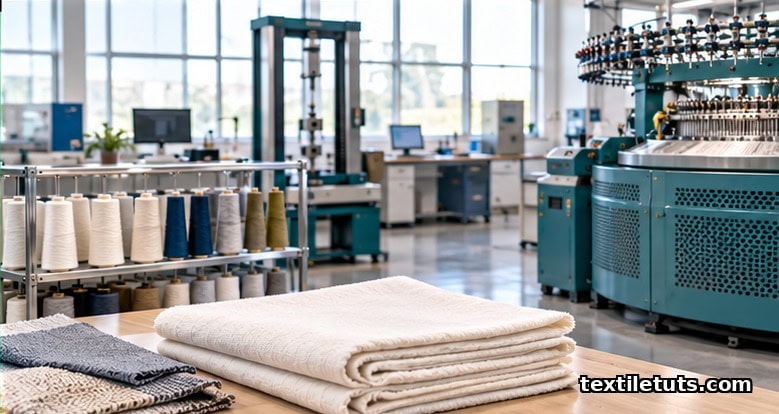
Textile engineering is the applied engineering discipline that designs and produces fibers, yarns, fabrics, and chemical finishes for apparel, automotive, medical, and aerospace end-uses, with the U.S. Bureau of Labor Statistics reporting a May 2024 median annual wage of $108,310 for materials engineers, the closest U.S. occupational classification, across an estimated 27,800 jobs nationwide. The work sits at the intersection of polymer chemistry, materials science, and mechanical engineering, and increasingly intersects with sustainability mandates, technical-textile growth, and circular-economy programs. This guide walks through the degree paths, the specializations, the salary bands, the hiring industries, and the skills that move a textile engineer from a recent graduate to a senior role.
What Textile Engineering Actually Covers
Textile engineering applies engineering principles to every stage of a textile’s life cycle, from polymer extrusion and fiber spinning through yarn formation, fabric construction (weaving, knitting, or nonwoven), wet processing (preparation, dyeing, printing, finishing), and quality assurance. The discipline is broader than the apparel industry. Modern textile engineers work on filtration media for clean rooms, geotextiles for civil engineering, ballistic fabrics for body armor, biocompatible scaffolds for tissue engineering, and reinforcement textiles for composites used in aircraft and wind-turbine blades.
The Textile Institute, the international professional body for the textile industry, defines the field across four pillars: fiber and polymer science, yarn and fabric manufacturing, coloration and finishing, and textile management and quality. Most practicing engineers specialize in one or two of those pillars rather than working across all four. The American Society for Testing and Materials (ASTM) maintains more than 1,200 active textile-specific standards under Committee D13, covering everything from yarn numbering systems (ASTM D1907) to fabric stiffness (ASTM D1388) to abrasion resistance (ASTM D4966, the Martindale method).
Educational Pathways and Degree Requirements
A bachelor’s degree in textile engineering, textile chemistry, or materials engineering with a textile concentration is the standard entry credential. The Accreditation Board for Engineering and Technology (ABET) accredits textile programs in the United States, including the B.S. in Polymer and Color Chemistry at North Carolina State University and the B.S. in Textile Engineering at the Georgia Institute of Technology. In South Asia, the Bangladesh University of Textiles (BUTEX), the National Institute of Textile Engineering and Research (NITER), and India’s DKTE Society’s Textile and Engineering Institute are well-known entry points.
Curriculum typically spans four years and covers thermodynamics, organic chemistry, polymer science, statistics, fiber physics, fabric formation, coloration chemistry, and quality-control methods. Laboratory coursework is heavy. A typical program logs 400 to 600 contact hours in spinning, weaving, knitting, and dyeing labs by graduation, according to curriculum surveys published in the Journal of Textile Science & Engineering.
Graduate study is optional but increasingly common for technical-textile roles. A Master of Science or Master of Engineering adds two years and opens senior-research positions at universities, national labs, and corporate R&D centers. Doctoral study (Ph.D.) is required for university-faculty careers and for principal-investigator roles in industry research groups.
Core Specializations in Textile Engineering
Specialization typically begins in the final two years of undergraduate study and continues on the job. The five most common specializations are:
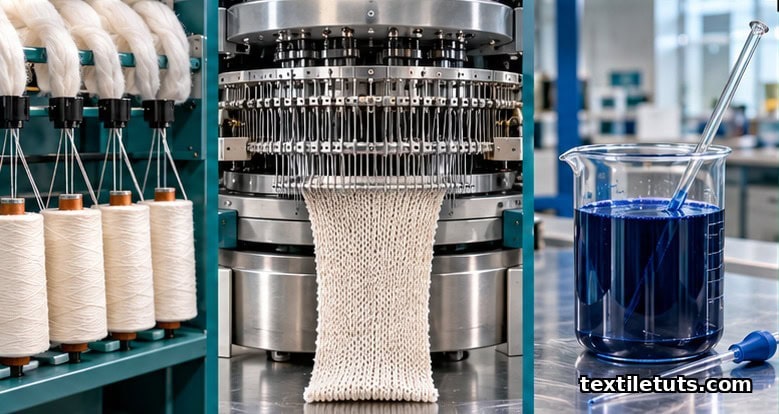
- Fiber and polymer science. Extrusion of synthetic fibers, polymer characterization, and development of novel fiber chemistries for performance applications. Often overlaps with materials engineering and plastics engineering.
- Yarn manufacturing (spinning). Ring, rotor, air-jet, and vortex spinning systems, plus twist, count, and quality control. Engineers in this area work in yarn mills and spinning-machinery companies.
- Fabric manufacturing (weaving, knitting, nonwovens). Machine setup, fabric structure design, and process optimization. Knitted and woven fabric engineers often work in technical-textile units.
- Coloration and finishing. Reactive, disperse, acid, and vat dyeing; pigment printing; chemical finishing for wrinkle resistance, water repellency, and flame retardancy. Color-fastness testing against ISO 105 and AATCC Test Method 61 (laundering) is core work.
- Quality assurance and testing. Physical and chemical testing in accredited labs. Accredited test labs (Testex, SGS, Intertek, TÜV) are major employers of QA-focused textile engineers.
Engineering credentials matter less than demonstrated competence within a given pillar. A hiring manager at a knit-fabric mill typically weighs experience with circular knitting machines and fabric-defect analysis more heavily than a generic textile-engineering degree.
Salary Expectations and Job Outlook
The U.S. Bureau of Labor Statistics (BLS) does not publish a separate occupational code for “textile engineer.” The closest matching category is materials engineers (SOC 17-2131), which had a May 2024 median annual wage of $108,310 and an employment level of 27,800 jobs. The 10th-percentile wage was $66,810 and the 90th-percentile wage was $170,470, indicating a wide spread driven by industry and seniority.
O*NET, the U.S. Department of Labor’s occupational database, classifies materials engineers alongside chemists, chemical engineers, and industrial engineers, with a typical entry requirement of a bachelor’s degree and a 2024 median wage of $108,310 reported in cross-referenced BLS data. The BLS projects 2 percent employment growth for materials engineers from 2023 to 2033, slower than the 4 percent average for all occupations, but this average masks strong demand in technical textiles and a contraction in legacy apparel-mill roles.
Outside the United States, salary data varies widely. A 2023 survey by the Textile Institute indicated senior textile engineers in the United Kingdom and Western Europe typically earn the equivalent of $70,000 to $110,000, while senior engineers in Bangladesh, India, Vietnam, and Pakistan typically earn $12,000 to $40,000 in local purchasing-power-parity terms, with significant variation by factory and buyer. Apparel-manufacturing hubs such as Bangladesh, Vietnam, and Ethiopia tend to offer lower base wages but faster promotion trajectories for engineers with five-plus years of experience.
Industries That Hire Textile Engineers
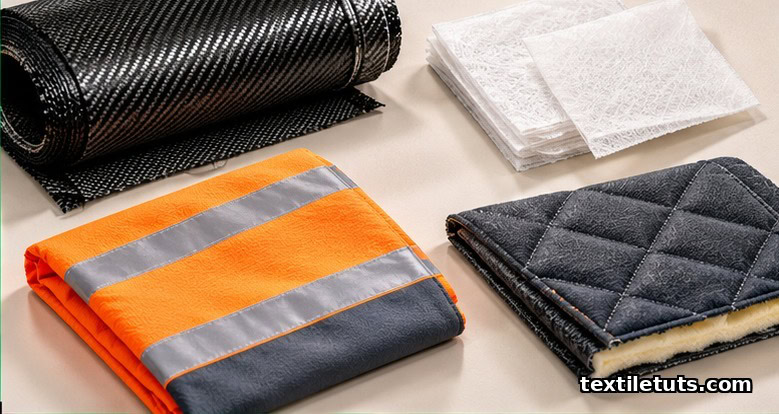
Textile engineers are needed across a wider range of industries than most students realize at the start of their degree. Major hiring sectors include:
| Industry | Typical entry-level role | Common specialization |
|---|---|---|
| Apparel and fashion manufacturing | Production engineer, IE engineer | Sewing, fabric sourcing, QA |
| Technical textiles (filtration, geotextiles, protective wear) | R&D engineer | Fiber science, fabric engineering |
| Automotive textiles (seating, airbags, carpet) | Process engineer | Nonwoven, knitting |
| Medical textiles (implants, wound care, PPE) | Validation engineer | Polymer chemistry, biocompatibility |
| Dye and chemical manufacturing | Application chemist | Coloration chemistry |
| Testing and certification labs (SGS, Intertek, TÜV, Testex) | Lab engineer | QA, ISO 17025 testing |
| Research institutes (NC State, Manchester, IIT Delhi, BUTEX) | Research engineer | Ph.D.-required R&D |
The global technical-textile market was valued at approximately $220 billion in 2023 and is forecast to reach $350 billion by 2030, according to a 2024 MDPI review article on technical-textile market trends. This growth is concentrated in medical textiles, protective wear, and composites, which is shifting the center of gravity of the discipline away from commodity apparel toward higher-margin engineered fabrics.
Skills That Make a Textile Engineer Employable
Employers consistently rank the same five skill areas when surveying textile-engineering job postings, based on data aggregated from O*NET task ratings and major job boards:
- Statistical process control. Six Sigma, control charts, and design-of-experiments are expected in any QA-focused role. Most textile mills run lean or six-sigma programs on knitting, weaving, and dyeing lines.
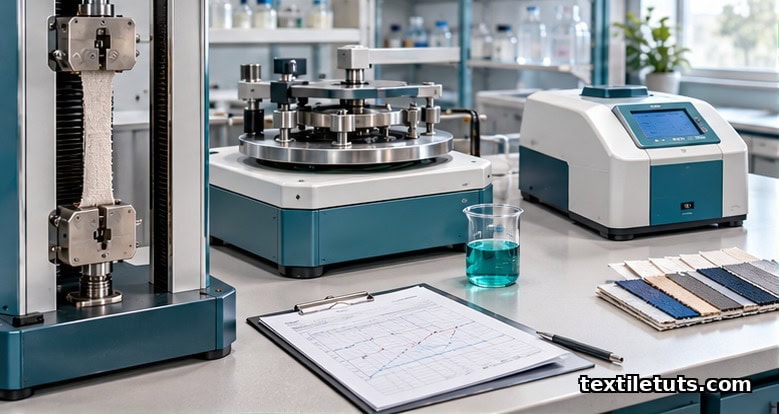
- Fiber and fabric testing. Hands-on skill with tensile testers (Instron, Tinius Olsen), abrasion testers (Martindale, Wyzenbeek), and color measurement (spectrophotometers per AATCC Evaluation Procedure 7) is a frequent requirement.
- Sustainability and circular-economy knowledge. Buyers now require engineers to track water, energy, and chemical use at the process level. Familiarity with the Higg Index, bluesign, OEKO-TEX, and the EU’s upcoming digital product passport is increasingly valuable.
- Materials characterization. SEM, DSC, TGA, FTIR, and rheometry are the standard tools for fiber and polymer labs. Competence in sample prep and interpretation is required for any R&D role.
- Communication and documentation. Textile engineers write technical specifications, buyer-facing test reports, and standard operating procedures. A typical job posting lists “strong written communication” as a hard requirement.
For students still in school, internships at a yarn mill, dye house, or testing lab are the single highest-return use of a summer. Hiring managers consistently rank internship experience ahead of GPA when filling entry-level production-engineer roles, according to recurring Textile Institute employer surveys.
How to Start a Textile Engineering Career
A first job after graduation usually comes through a campus-placement program (in South Asia) or a recruiting relationship with a target company (in the United States and Europe). Production-engineer trainee programs at composite garment factories, spinning mills, and dye houses are the most common entry points, and they typically run 6 to 12 months with rotations across departments.
Career paths branch from the production floor in two main directions: vertical (toward operations management, plant leadership, or corporate technical management) and horizontal (toward R&D, technical sales, or lab work). Engineers who want to move into technical-textile R&D usually take a Master of Science within five years of starting work. Engineers who want to move into plant management typically pursue a Master of Business Administration (MBA) after five to seven years of line experience.
Professional credentials are not legally required in the textile industry (textile engineering is not a licensed profession in most jurisdictions), but two voluntary credentials add credibility: the Chartered Textile Designer (CText FTI) and the Chartered Colourist (CCol FTI) designations from the Textile Institute, and the Certified Six Sigma Green Belt / Black Belt for engineers moving into QA leadership.
Frequently Asked Questions
Is textile engineering a good career in 2026?
Textile engineering remains a viable career in 2026, with strongest demand in technical textiles, sustainable processing, and laboratory testing. Apparel-mill production roles are growing slowly in mature markets and faster in manufacturing hubs, while R&D roles in medical, automotive, and protective textiles are growing faster than the engineering average, according to BLS occupational data and the 2024 MDPI technical-textile market review.
What is the highest-paying job in textile engineering?
The highest-paying textile-engineering roles are senior R&D positions in technical textiles and senior technical-management roles in large apparel manufacturers. BLS data for materials engineers shows a 90th-percentile wage of $170,470 as of May 2024, with the upper band concentrated in aerospace composites, medical-device textiles, and corporate-level technical leadership at multinational apparel firms.
Do textile engineers only work in fashion and clothing?
No. Textile engineers work in filtration, geotechnical engineering, aerospace composites, automotive interiors, medical devices, defense, and sportswear. The technical-textile segment accounted for roughly 28 percent of global textile trade by value in 2023, and the share has been rising year over year.
Is a textile engineering degree hard?
A textile-engineering degree is moderately difficult and requires strong aptitude in chemistry, physics, and mathematics. Coursework in organic chemistry, polymer science, and statistical process control is heavier than in many engineering programs, and laboratory time is substantial. Students who struggle with chemistry often find the coloration and finishing courses especially demanding.
Which country is best for textile-engineering careers?
No single country is objectively best, and the answer depends on priorities. Bangladesh, Vietnam, and India offer the largest concentration of entry-level production-engineer roles. The United States, Germany, and the United Kingdom offer higher base wages and stronger technical-textile R&D ecosystems. Many engineers build careers across two or three countries, which is common in a globalized industry.
References
- U.S. Bureau of Labor Statistics. Occupational Employment and Wages, May 2024: 17-2131 Materials Engineers. https://www.bls.gov/oes/current/oes172131.htm — Official wage and employment data for the closest U.S. occupational classification.
- U.S. Bureau of Labor Statistics. Occupational Outlook Handbook: Materials Engineers. https://www.bls.gov/ooh/architecture-and-engineering/materials-engineers.htm — Job outlook, entry requirements, and similar occupations.
- O*NET Online. 17-2131.00 Materials Engineers. https://www.onetonline.org/link/summary/17-2131.00 — Task ratings, skills, and credential data from the U.S. Department of Labor.
- ASTM International. ASTM D4850 Standard Terminology Relating to Fabric. https://www.astm.org/d4850-12.html — Canonical ASTM fabric terminology standard under Committee D13 on textiles.
- International Organization for Standardization. ISO 105-B02:2014 Textiles — Tests for Colour Fastness — Part B02: Colour Fastness to Artificial Light. https://www.iso.org/standard/65226.html — Core ISO color-fastness standard referenced throughout coloration engineering.
- Textile Institute. Professional Qualifications and Membership Pathways. https://www.textileinstitute.org/ — Chartered Textile Designer and Chartered Colourist credentials referenced in this article.
- NC State University, Wilson College of Textiles. Polymer and Color Chemistry Program. https://textiles.ncsu.edu/department/pcc/ — ABET-accredited textile program used as a reference for U.S. curriculum structure.
- Mishra, R. Technical Textile Market Trends: A 2024 Review. MDPI Textiles, 2024. https://www.mdpi.com/journal/textiles — Open-access review used for the technical-textile market size cited in this article.
This article is the working reference for textile-engineering career planning. Editorial by Iftay Khairul Alam, TextileTuts. Sources: U.S. Bureau of Labor Statistics (May 2024 wage data), O*NET (U.S. Department of Labor), ASTM International, ISO, the Textile Institute, NC State Wilson College of Textiles, and MDPI Textiles as cited above.


