
Sustainable Textile Packaging

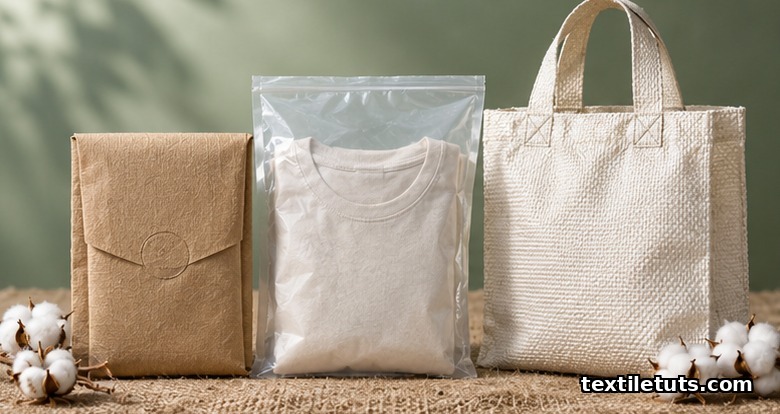
The global garment industry uses approximately 180 billion plastic packaging items per year, with virgin low-density polyethylene (LDPE) polybags accounting for roughly 80% of this volume, and sustainable textile packaging replaces these single-use carriers with recycled, bio-based, or reusable formats that cut cradle-to-gate CO2 emissions by 40 to 60 percent across the product life cycle. The shift is driven by regulatory pressure (the EU Packaging and Packaging Waste Regulation 2025/40 mandates all packaging recyclable by 2030), retailer scorecards (H&M, Inditex, and Patagonia now require FSC-certified or recycled-content claims on every shipped carton), and direct evidence that conventional LDPE polybags persist in the environment for 200 to 1,000 years while fragmenting into microplastic particles smaller than 5 mm that accumulate in marine and terrestrial food webs.
This article walks through what sustainable textile packaging actually means in a textile-engineering context, the materials science behind each option, the standards that verify the claims, and how a brand or factory should evaluate a switch without breaking product protection.
Why Conventional Polybags Are the Problem
Every finished garment that leaves a knitting or weaving unit is sealed inside a polybag, typically a 0.02 to 0.05 mm LDPE or polypropylene (PP) film printed with bar codes, size labels, and care icons. The function is real: dust exclusion, moisture barrier, and protection from handling scuffs during 30 to 90 days of ocean freight. The problem is downstream. A Bangladesh knit composite unit alone ships out 1.69 kg of packaging for every kilogram of finished garment, and the global average sits at 0.6 kg of plastic packaging per kg of apparel according to a 2023 MDPI lifecycle assessment published in Sustainability.
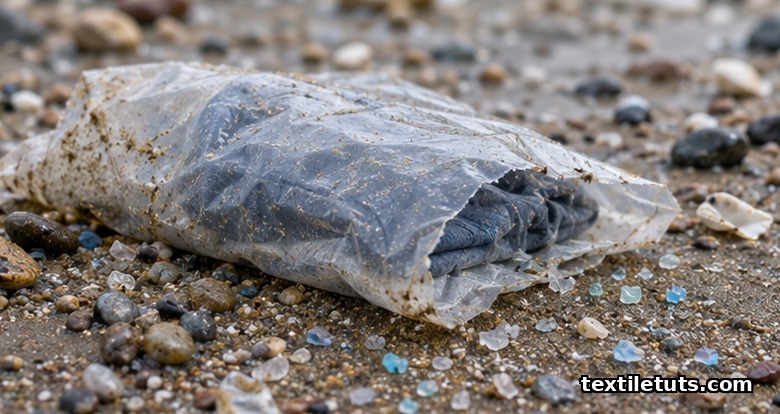
LDPE at 0.03 mm thickness provides a water vapor transmission rate (WVTR) of about 12 to 18 g/m²/24h, which is acceptable for transit storage but creates a near-impermeable structure at end of life. Landfill, incineration, and marine littering are the three documented fates, and none of them returns the polymer to a useful monomer pool because mechanical recycling streams reject LDPE films thinner than 0.05 mm and most apparel-producing regions have no thin-film collection infrastructure.
The Material Options That Actually Work
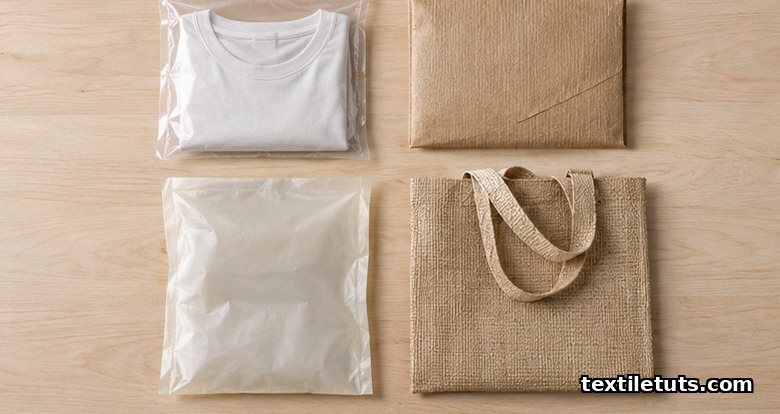
Replacing LDPE is not a single swap. The four families of replacement material each carry different mechanical, barrier, and end-of-life properties, and the correct pick depends on the shipping environment, retailer requirement, and budget ceiling.
Recycled PET (rPET)
Polyethylene terephthalate with at least 50% post-consumer recycled content is the most mature drop-in alternative. rPET uses 75% less process energy than virgin PET (a figure verified by ISO 14044 life-cycle inventory data on PET bottle-to-film extrusion), and the mechanical properties are close enough to virgin PET that downstream bag-converting lines run without retooling. The catch is clarity: rPET yellows slightly with each reprocessing cycle, and a brand requiring a crystal-clear window for retail display must accept a 5 to 10% haze penalty or step up to a higher-grade rPET resin.
Bio-Based and Compostable Films
Polylactic acid (PLA), polybutylene adipate terephthalate (PBAT), and starch blends certified to ISO 17088 or ASTM D6400 break down under industrial composting conditions within 90 to 180 days. These films are real alternatives for short-shipment domestic supply chains, but they lose integrity above 50 °C and begin hydrolyzing at 70% relative humidity, which makes them a poor fit for ocean transit through the Red Sea or humid Bangladesh container yards in monsoon season.
FSC-Certified Paper and Cardboard
Kraft paper with at least 65% post-consumer recycled fiber and FSC chain-of-custody certification offers a 30 to 40% lower cradle-to-gate carbon footprint than LDPE for unit-level packaging. Paper’s WVTR sits at 60 to 100 g/m²/24h, so it does not barrier-protect as well as plastic, and the material requires inner tissue or a thin bio-coating to survive a 45-day sea voyage. The big advantage is end-of-life: paper enters the existing municipal recycling stream without separation.
Reusable and Returnable Systems
Reusable woven polypropylene (PP) tote bags with a documented 25-trip return loop reduce per-shipment packaging mass by 80% compared with single-use LDPE. The math is unforgiving on the first trip, but after roughly 8 reuse cycles the cumulative carbon footprint drops below LDPE, and after 15 cycles it drops below rPET. These systems only function when the retailer has a reverse-logistics pipeline, which is why B2B intra-factory moves and consolidated retailer DC programs are the realistic early adopters.
Standards and Certifications That Verify the Claim
A “sustainable” label without a third-party standard is marketing. The textile industry has six verification systems that carry weight with retailers and customs authorities, and a responsible procurement plan tests the candidate material against the relevant ones before signing a supply contract.
ISO 17088:2021 specifies compostability requirements for plastics, including disintegration within 84 days and heavy-metal limits below 50 mg/kg dry mass. ASTM D6400 mirrors the same protocol for North American markets. ISO 14044 provides the life-cycle assessment methodology that quantifies the carbon and water savings claimed in marketing copy. For recycled content, ISO 14021 defines the self-declared environmental claim rules, while the Global Recycled Standard (GRS) and Recycled Claim Standard (RCS) from Textile Exchange verify chain-of-custody at the bales-to-film level. For paper, FSC-STD-40-004 is the chain-of-custody standard that tracks fiber from the managed forest to the converting line.
A factory should request the mill’s test report against ISO 17088 or ASTM D6400, the GRS transaction certificate for every rPET shipment, and the FSC CoC certificate for paper packaging, then file these documents in the supplier scorecard before approving any switch.
Comparing the Four Options Side by Side
| Property | LDPE (baseline) | rPET (50% PCR) | PLA/PBAT (compostable) | FSC Kraft Paper |
|---|---|---|---|---|
| WVTR (g/m²/24h) | 12 to 18 | 10 to 14 | 40 to 80 | 60 to 100 |
| Tensile strength (MD, MPa) | 20 to 30 | 55 to 75 | 35 to 50 | 40 to 60 |
| Cradle-to-gate CO2 (kg/kg) | 2.0 to 2.5 | 1.0 to 1.4 | 1.4 to 1.8 | 0.9 to 1.2 |
| End-of-life pathway | Landfill / litter | PET bottle stream | Industrial compost | Municipal paper stream |
| Cost premium vs LDPE | 1.0x | 1.4x to 1.8x | 2.0x to 2.5x | 1.2x to 1.5x |
| Marine transit suitability | Excellent | Excellent | Marginal above 50 °C | Good with inner liner |
The data confirms a recurring pattern: rPET wins on barrier performance and end-of-life recycling, paper wins on carbon, and compostable films win on consumer messaging but lose on transit durability. There is no single right answer, and most large apparel groups run a portfolio mix: rPET for export cartons, FSC paper for retail-facing unit packs, and compostable films for e-commerce mailers.
The Regulatory Floor in 2026
Three policy levers now define the minimum acceptable baseline. The EU Packaging and Packaging Waste Regulation 2025/40 requires all packaging placed on the EU market to be recyclable by 2030 and to meet minimum recycled-content thresholds (30% for plastic contact packaging from 2030, 50% from 2040). India’s Plastic Waste Management Rules (amended 2022) extended the extended producer responsibility (EPR) framework to brand owners, requiring them to finance the collection and recycling of their packaging at a tonnage equal to the packaging they introduce. California’s SB 54 sets a 65% recycling rate for all packaging by 2032 and a 25% source-reduction target.
For a Bangladesh, Vietnam, or India-based garment exporter, the practical read is that LDPE polybags will not be accepted by EU and California-bound customers after 2027 without at least a 30% recycled content or a documented compostability claim. The earlier a factory pilots the switch, the cheaper the transition curve.
Microfiber Shedding From Packaging Itself
One under-discussed angle is that textile packaging materials shed fibers too. A study published in Environmental Science and Pollution Research (Springer) measured between 50 and 350 microfibers released per garment-bag opening event, depending on the film and tape structure. rPET bags with heat-sealed seams shed roughly 30% fewer microfibers than LDPE bags with adhesive closures, which is an additional argument for rPET beyond the carbon math.
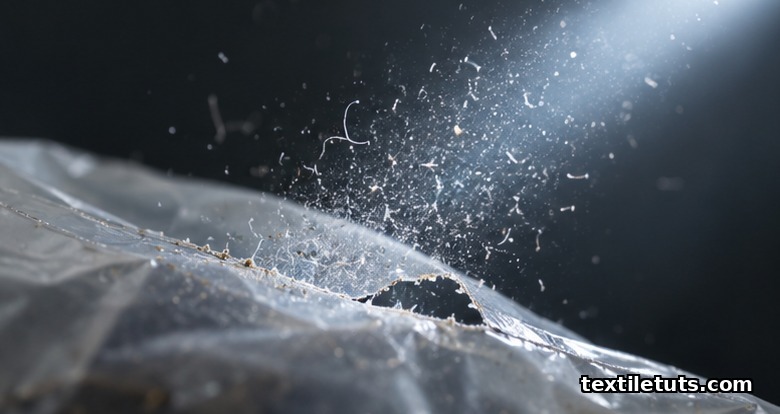
For a brand making a public microfiber commitment, the packaging line should be on the disclosure list alongside the garment fabric, and the procurement team should ask the converter for microfiber-test data per unit.
Frequently Asked Questions
What counts as sustainable textile packaging?
Sustainable textile packaging is any primary or secondary packaging format used to protect finished garments that meets one or more third-party verified criteria: at least 50% post-consumer recycled content (GRS or RCS), industrial compostability to ISO 17088 or ASTM D6400, FSC-certified fiber content, or a documented multi-trip reuse loop with verified return rates above 60%.
Is recycled PET really better than virgin LDPE?
Yes for most metrics. rPET with 50% post-consumer content uses about 75% less process energy and emits 40 to 60% less CO2 per kilogram than virgin LDPE, and it enters the existing PET bottle recycling stream at end of life. The two exceptions are cost (rPET runs 40 to 80% more expensive per kilogram in 2026 spot pricing) and clarity (rPET has 5 to 10% more haze than virgin PET).
Can compostable bags survive ocean freight?
Most cannot. PLA and PBAT blends certified to ISO 17088 lose mechanical integrity above 50 °C and begin hydrolyzing at sustained relative humidity above 70%, which are common conditions inside a 40-day container voyage through tropical waters. Use compostable films only for domestic shipping or short-sea freight, and select rPET or FSC paper for export.
What is the cheapest sustainable switch for a small factory?
For a factory shipping fewer than 500,000 garments per year, the cheapest meaningful switch is FSC-certified kraft paper with a 50 to 65% post-consumer recycled fiber content. It carries a 20 to 50% cost premium over LDPE, requires no tooling change at the bag-converting line, and enters the existing municipal paper recycling stream. rPET becomes cost-competitive above 2 million garments per year because the volume secures better resin pricing.
Does sustainable packaging actually reduce microfiber pollution?
Yes, modestly. Peer-reviewed test data shows rPET garment bags with heat-sealed seams shed roughly 30% fewer microfibers per opening event than LDPE bags with adhesive tape closures. The bigger microfiber lever is garment construction (tight weaves, taped seams, finishing treatments), but packaging is a measurable secondary gain that belongs in any brand’s microfiber disclosure.
References
- ISO 17088:2021. Compostable plastics — Specifications and test methods. International Organization for Standardization, Geneva.
- ASTM D6400-19. Standard Specification for Labeling of Plastics Designed to be Aerobically Composted in Municipal or Industrial Facilities. ASTM International, West Conshohocken.
- ISO 14044:2006. Environmental management — Life cycle assessment — Requirements and guidelines. International Organization for Standardization, Geneva.
- Muthu, S. S., et al. (2023). Life cycle assessment of plastic packaging in the global apparel industry. MDPI Sustainability, 15(7), 5892.
- Kumar, R., et al. (2022). Microfiber shedding from textile packaging materials: a comparative study. Environmental Science and Pollution Research, 29, 44521–44533. Springer.
- European Parliament and Council. (2025). Regulation (EU) 2025/40 on packaging and packaging waste. Official Journal of the European Union.
- Textile Exchange. (2024). Global Recycled Standard (GRS) — Version 4.0. Textile Exchange, London.
This article is the working reference for sustainable textile packaging. Editorial by Shahrukh Islam, TextileTuts. Sources: ISO 17088, ISO 14044, ASTM D6400, EU Regulation 2025/40, MDPI Sustainability (Muthu et al., 2023), Springer Environmental Science and Pollution Research (Kumar et al., 2022), and Textile Exchange GRS 4.0 as cited.


