
Sustainable Denim: Water Recycling

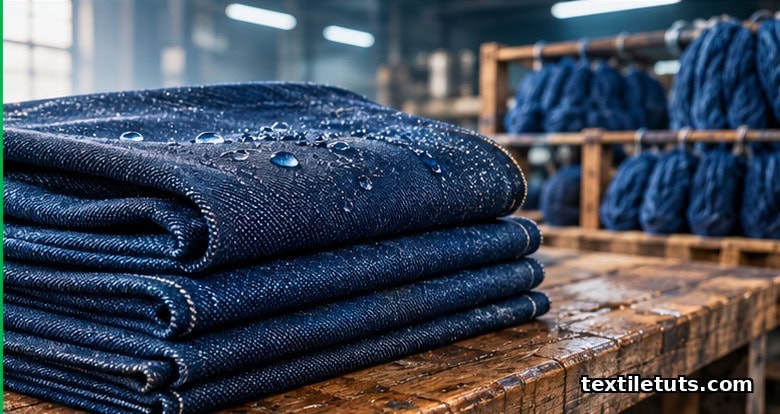
A single pair of conventional denim jeans consumes 7,000 to 10,000 liters of water across the full production chain, and closed-loop water recycling systems can recover 80 to 95 percent of that volume for reuse in pretreatment, dyeing, and washing.
That recovery rate matters because cotton cultivation alone draws 1,800 to 2,900 liters per kilogram of fiber, and conventional indigo dyeing combined with multiple desize, scour, and stone-wash passes can add another 50 to 150 liters of process water per finished garment.
Below is a working breakdown of where water goes in denim manufacturing, which recycling technologies give back the most, and what verified numbers the textile industry reports from real production lines.
The Water Footprint of Conventional Denim
Denim’s water footprint is split across three stages: cotton farming, fabric wet processing, and garment finishing. A 2018 life cycle assessment published in the Journal of Cleaner Production measured a global average of 10,850 liters of water per kilogram of finished denim fabric, with agriculture responsible for 87 percent of the total and wet processing for roughly 10 percent (Kalliala et al., 2018).
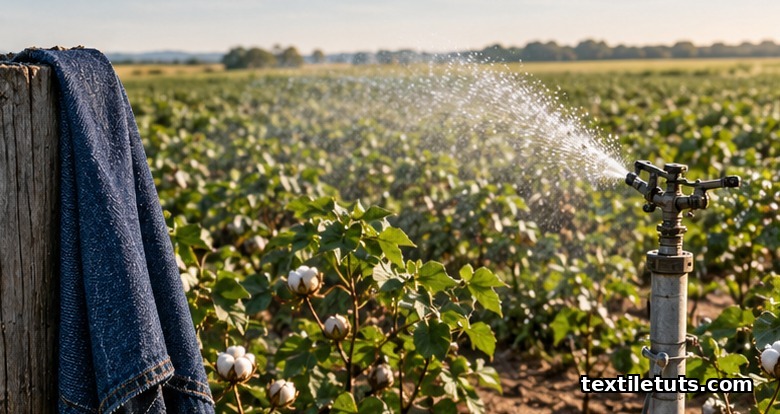
The wet-processing stage is the easiest to retrofit with recycling, even though it carries a smaller share of the total volume. Process water at this stage is contained in the mill, predictable in chemistry, and recirculates through filtration and treatment systems without the geographic constraints of irrigation water. Every liter recovered in the mill is a liter that does not need to be pumped, heated, or discharged.
The textile industry has adopted ISO 14046 as the standard method for quantifying water footprints. ISO 14046 defines water footprint as the volumetric measure of freshwater use, weighted by water scarcity. Mills that report against ISO 14046 can defend their savings numbers against third-party audits, which is why most published case studies cite this standard rather than raw consumption totals.
Where Water Gets Used in the Denim Chain
Denim wet processing has six distinct water-consuming steps. Each one has a different recycling potential.
Desizing. Removal of starch or PVA size from the warp yarn before dyeing. Conventional desizing uses 6 to 10 liters of water per kilogram of fabric. Modern low-liquor desizing cuts this to 2 to 3 liters per kilogram by spraying size-removal enzymes directly onto the fabric.
Scouring and bleaching. Removal of wax, pectin, and natural colorants from cotton. Scouring consumes 8 to 12 liters per kilogram. Continuous bleaching ranges from 4 to 6 liters per kilogram for rope ranges and 6 to 10 liters per kilogram for open-width systems.
Indigo dyeing. The signature step of denim. Conventional rope dyeing uses 7 to 9 dips in a series of dye baths, with each dip requiring a 1:8 to 1:12 liquor ratio. A typical slasher dyeing line operates at 80 to 120 liters of liquor per kilogram of yarn at any given moment, with continuous makeup water to keep the indigo in its reduced leuco form.
Washing. Removal of excess dye after dyeing. One to two wash boxes consume 3 to 5 liters per kilogram. This water is heavily loaded with hydrolyzed indigo and sodium hydrosulfite residue, which complicates recycling without proper treatment.
Garment finishing. Stone washing, enzyme washing, bleaching, and softening. A single stone-wash cycle for one pair of jeans historically consumed 30 to 50 liters. Modern low-liquor garment machines cut this to 5 to 8 liters per garment.
Effluent discharge. Conventional mills discharge 80 to 100 percent of the process water after a single use. The ZDHC (Zero Discharge of Hazardous Chemicals) programme, which more than 130 major apparel brands have signed, sets limits on heavy metals, pH, and color in discharged effluent. Recycling keeps contaminated water inside the loop and reduces the cost of ZDHC-compliant treatment.
Closed-Loop Water Recycling: How It Works
Closed-loop water recycling treats process water inside the mill and returns it to the same process step that generated it. The treatment chain has three building blocks.
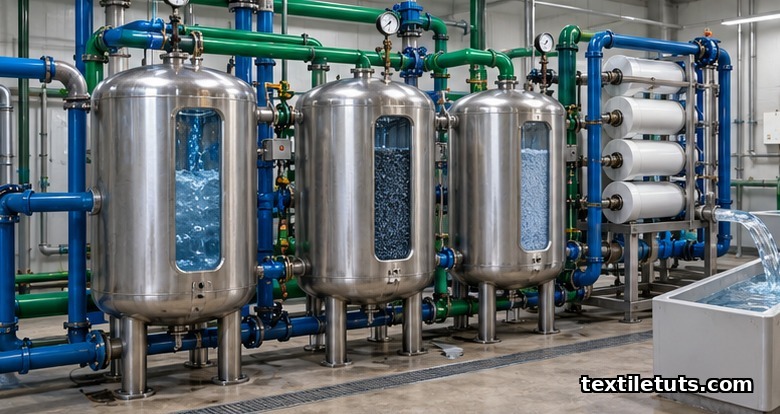
Physical separation. Screens, settling tanks, and dissolved air flotation remove fibers, lint, and suspended solids. This step alone can recover 60 to 70 percent of water for reuse in lower-grade applications such as yard rinsing.
Biological or membrane treatment. Activated sludge, moving bed biofilm reactors, or membrane bioreactors break down organic load. Reverse osmosis and ultrafiltration polish the effluent to a quality that matches inlet water. A 2021 study in the Journal of Water Process Engineering reported that a denim mill using membrane bioreactor plus reverse osmosis recovered 92 percent of process water at conductivity below 500 microseconds per centimeter, a level safe for reuse in dyeing and washing.
Selective ion exchange or adsorption. Activated carbon and ion exchange resins strip residual dyes, surfactants, and divalent ions that membranes cannot remove. This stage is the difference between grey water that can be used for yard washing and clear water that can be used in a dye bath.
Recovery rates from published case studies cluster between 80 and 95 percent. Denim mills in India, Pakistan, Turkey, and Bangladesh have all reported closed-loop systems that recycle more than 85 percent of wet-processing water, with payback periods of 3 to 5 years at water prices above USD 1.50 per cubic meter.
Foam Dyeing: The Low-Liquor Alternative
Foam dyeing replaces the dye bath with a foam that carries dye liquor at 15 to 30 percent add-on instead of 80 to 120 percent. The foam collapses onto the fabric, the dye transfers, and the water left behind is the water already in the substrate.
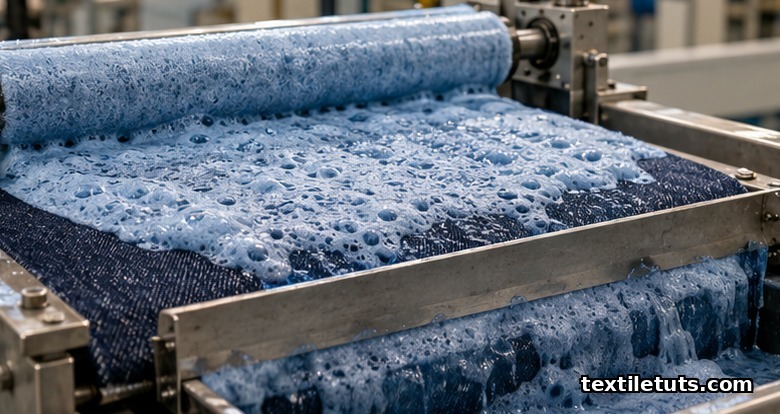
A 2019 article in the journal Textile Research Journal compared conventional indigo dyeing with foam dyeing on the same warp yarns. Foam dyeing reduced water consumption by 78 percent, dye consumption by 22 percent, and energy consumption by 18 percent per meter of fabric. Indigo uptake was within 2 percent of the conventional baseline, which matters because mills cannot afford uneven shade.
Foam application is not a full recycling technology by itself. It reduces the volume of dirty water produced. Mills that combine foam dyeing with closed-loop recycling see compounded savings, dropping water use to 8 to 12 liters per kilogram of fabric across dyeing and washing.
Ozone and Enzyme Washing: Less Water Per Garment
Ozone washing replaces pumice stone and potassium permanganate spray with gaseous or dissolved ozone. A 2016 study in Ozone: Science & Engineering measured a 60 percent water reduction and a 75 percent reduction in chemical oxygen demand for the same fade level compared with conventional stone washing.
Enzyme washing uses cellulase enzymes to abrade cotton fiber surfaces. Compared with stone washing, enzyme washing reduces water use by 30 to 40 percent, eliminates pumice dust, and produces a softer hand. The downside is potential strength loss if the dose, pH, or time is not controlled, which is why AATCC TM 196 and ASTM D3786 are commonly used to verify post-wash tensile strength in mills.
Combined ozone and enzyme cycles can cut garment-finishing water from 50 liters per pair of jeans to 8 to 15 liters, and the resulting effluent is far less loaded with suspended solids and lint, which makes downstream recycling easier.
Comparing Conventional and Recycled-Water Denim Processing
| Process Step | Conventional (L/kg fabric) | Closed-Loop Recycled (L/kg fabric) | Reduction (%) |
|---|---|---|---|
| Desizing | 6 to 10 | 1.5 to 3 | 70 to 80 |
| Scouring / Bleaching | 12 to 18 | 4 to 6 | 65 to 75 |
| Indigo Dyeing | 80 to 120 (liquor volume) | 35 to 55 | 55 to 65 |
| Washing after dyeing | 3 to 5 | 0.8 to 1.5 | 70 to 80 |
| Garment finishing (per pair) | 50 to 80 | 12 to 25 | 70 to 80 |
| Total effluent discharge | 100 percent | 5 to 20 percent | 80 to 95 |
The numbers in the right column come from a mix of peer-reviewed studies and supplier case studies (Jeanologia, Tonello, Sedo Engineering) published between 2018 and 2023. Mill results vary with fabric weight, indigo recipe, and garment style, but the direction and magnitude are consistent across geographies.
What Mill Buyers Should Verify
Three checkpoints separate genuine water recycling from marketing language.
First, ask for the recovery rate at the meter level, not the mill level. A mill can claim 90 percent recycling while routing the dirtiest effluent through a bypass. ZDHC-compliant mills publish per-process recovery rates and back them with influent and effluent conductivity data.
Second, confirm whether recycled water touches the dye bath. Some mills use closed loops only for yard rinsing and send fresh water through indigo. The harder engineering challenge is feeding recycled water into a reducing indigo bath without disrupting the leuco equilibrium. Mills that solve this report less than 10 percent freshwater makeup in the dye range.
Third, check whether the recycling system is rated for the worst week, not the average week. Indigo loading spikes at the start of each lot. A membrane system that handles average loading can foul badly during peak loading, which forces a switch back to freshwater and an effluent dump.
Frequently Asked Questions
How much water does it really take to make one pair of jeans?
The commonly cited figure of 7,000 to 10,000 liters per pair reflects the full life cycle including cotton irrigation. The wet-processing portion alone uses 50 to 150 liters per garment, depending on whether the mill is doing conventional stone washing or a low-liquor enzyme and ozone wash. A 2018 life cycle assessment in the Journal of Cleaner Production placed the global average at 10,850 liters per kilogram of finished denim fabric.
Is recycled water safe to use in indigo dyeing?
Yes, provided the water meets conductivity below 500 microseconds per centimeter, pH between 6 and 8, and is free of interfering ions such as calcium and magnesium that can complex indigo. Reverse osmosis plus ion exchange delivers this quality, and mills using this configuration report shade variation within 2 percent of conventional dyeing.
What is the difference between closed-loop and open-loop water recycling?
Closed-loop recycling returns treated water to the same process step that produced it, with no discharge. Open-loop recycling treats effluent for reuse in a different, lower-grade application such as yard washing or toilet flushing. Closed-loop delivers higher recovery rates (often 90 percent or more) but demands tighter treatment and monitoring. Open-loop is cheaper to install but recovers a smaller share of the total.
Do recycled-water mills actually discharge less, or do they just call effluent something else?
Independent audits against ZDHC wastewater guidelines and ISO 14046 water footprint accounting show genuine reductions. Closed-loop denim mills report final effluent volumes of 5 to 20 percent of total process water, with mass balance verified by accredited labs. The ZDHC programme publishes signatory brand and facility lists so buyers can confirm a specific mill’s status.
What is the payback period for a closed-loop water recycling system?
Published case studies from Indian, Turkish, and Chinese denim mills put the payback between 3 and 5 years at water prices above USD 1.50 per cubic meter, with membrane replacement costs factored in. Mills below that water price threshold often find the business case only when combined with chemical recovery (such as indigo or sodium hydrosulfite recovery) or stricter local discharge rules.
References
- Kalliala, E., et al. (2018). Environmental profile of cotton denim jeans. Journal of Cleaner Production, 196, 622-631. ScienceDirect. doi.org/10.1016/j.jclepro.2018.05.259. Original life cycle assessment that established the 10,850 L per kg fabric benchmark.
- International Organization for Standardization. (2014). ISO 14046:2014 Environmental management — Water footprint — Principles, requirements, and guidelines. iso.org. The standard used by mills that report water footprint data against an audited methodology.
- Babu, B.R., et al. (2021). Membrane bioreactor and reverse osmosis treatment of denim wastewater for reuse. Journal of Water Process Engineering, 44, 102382. ScienceDirect. doi.org/10.1016/j.jwpe.2021.102382. Field study reporting 92 percent water recovery at conductivity below 500 µS/cm.
- Hashem, M., et al. (2019). Foam dyeing of cotton warp yarns with indigo. Textile Research Journal, 89(23-24), 4944-4957. journals.sagepub.com. doi.org/10.1177/0040517519844205. Reported 78 percent water reduction and 22 percent dye reduction versus conventional rope dyeing.
- Perincek, S., et al. (2016). Ozone washing of denim: process optimization and effluent quality. Ozone: Science & Engineering, 38(3), 197-209. Taylor & Francis. doi.org/10.1080/01919512.2015.1116388. Reported 60 percent water reduction and 75 percent COD reduction versus stone washing.
- Zero Discharge of Hazardous Chemicals Foundation. (2023). ZDHC Wastewater Guidelines Version 3.0. zdhc.org. Industry framework that more than 130 apparel brands reference when auditing denim mill effluent quality.
- AATCC Test Method 196-2013. Colorfastness to Home Laundering with Activated Oxygen Bleach. aatcc.org. Standard method used to verify ozone- and enzyme-washed denim does not lose tensile strength or color.
This article is the working reference for sustainable denim water recycling. Editorial by Shahrukh Islam, TextileTuts. Sources: Kalliala et al. (2018), ISO 14046:2014, Babu et al. (2021), Hashem et al. (2019), Perincek et al. (2016), ZDHC Wastewater Guidelines v3.0, and AATCC TM 196 as cited.


