
Stone Wash: Pumice Stone Process

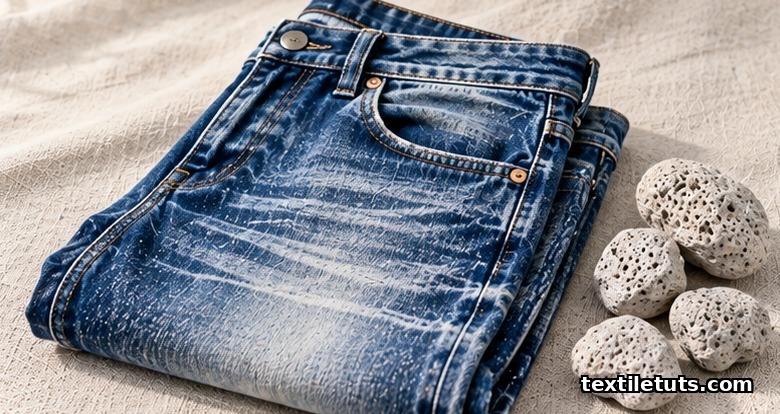
Stone washing with pumice stones tumbles denim garments in an industrial drum at 30 to 60 °C for 30 to 90 minutes with a stone-to-fabric mass ratio of 0.5:1 to 3:1, abrading indigo dye from raised seams and high points to produce the high-contrast, pre-worn appearance characteristic of washed denim jeans.
The abrasion comes from the porous volcanic rock physically scouring surface fibers, removing unbound indigo and exposing the white yarn core beneath. This guide walks through the pumice stone process, the parameters that control the final look, enzyme-assisted variants, environmental trade-offs, and the standard test methods used to grade the result.
What Stone Washing Does to Denim
Stone washing is a mechanical finishing process that accelerates the worn appearance raw denim would otherwise accumulate over months of wear. The mechanism is straightforward: pumice stones are heavier than fabric, so when both are tumbled together in a wet industrial drum, the stones repeatedly strike the fabric surface. Each strike scuffs surface fibers and dislodges dye particles, especially from raised areas like seams, pocket edges, and the ridges of the weave where indigo sits loosely on the yarn surface.
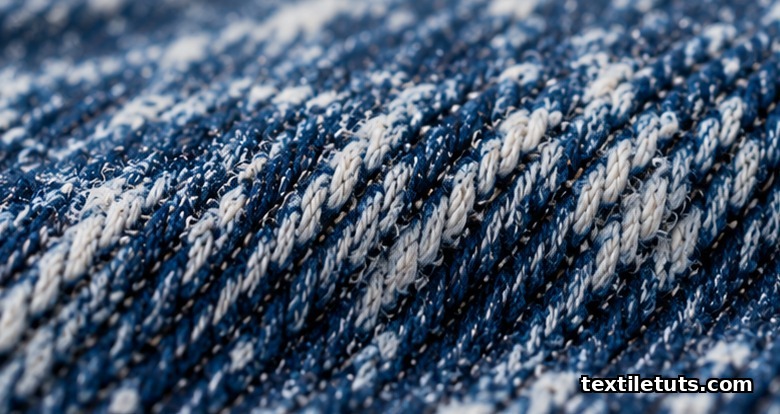
Indigo dye is uniquely suited to this treatment because of how it binds to cotton. Unlike reactive dyes that form covalent bonds with cellulose, indigo sits as pigment aggregates on the fiber surface held only by hydrogen bonding and mechanical adhesion. When the pumice scuffs these aggregates away, the underlying white cotton core becomes visible, producing the high-contrast fades that define stone-washed denim.
The degree of contrast depends on how much dye is removed and how evenly the abrasion is distributed. Short cycles with few stones produce subtle whiskering on seams. Longer cycles with more aggressive stones produce uniform fading across the entire panel, sometimes down to the weft.
Pumice Stone Properties and Selection
Pumice is a volcanic rock formed when gas-rich lava cools rapidly, leaving a frothy, highly porous structure. The porosity is what makes pumice effective in textile finishing: it is lightweight, but the rough vesicular surface provides the abrasive action needed to remove dye. Textile-grade pumice sits at 0.4 to 0.9 g/cm³, light enough to be lifted and dropped by the drum but heavy enough, once soaked, to scour the fabric.
Stone selection is governed by four properties:
- Size: Stones between 2 cm and 5 cm in diameter are typical. Smaller stones (1 to 2 cm) produce fine, even abrasion but generate more dust and pass through the drain. Larger stones (5 to 10 cm) cause heavier localized abrasion and visible seam damage.
- Hardness: Pumice rates 5 to 6 on the Mohs scale, hard enough to abrade cotton fiber but soft enough not to cut it. Stones from different volcanic sources vary, and finishing houses often blend batches to control the look.
- Porosity: Higher porosity means more voids per unit volume, which traps air and water. Stones must be pre-soaked before the wash cycle; dry stones float and rarely contact the fabric.
- Shape: Rounded stones produce more uniform fading. Angular stones create pronounced streaks and surface patterning.
Reusable stones lose effectiveness over repeated cycles as their abrasive surfaces round off. Most facilities retire stones after 3 to 5 wash cycles, depending on cycle length and fabric weight.
Stone Wash Process Step by Step
A typical industrial stone wash follows a fixed sequence:
- Desizing: The garment is first washed with amylase enzyme or hot water (60 to 90 °C) to remove the sizing starch applied during weaving. Incomplete desizing leaves stiff patches that resist dye removal and produce uneven fades.
- Pre-soaking stones: Pumice is loaded into the machine and soaked for 10 to 15 minutes to displace trapped air so the stones sink and contact the fabric.
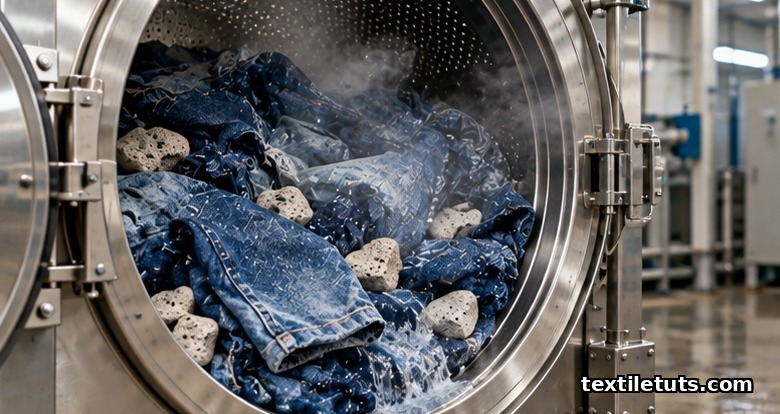
- Stone wash cycle: Garments and stones are tumbled together at 30 to 60 °C, pH 6 to 7, for 30 to 90 minutes depending on the desired contrast level.
- Rinse: Multiple rinse cycles with clean water remove suspended dye, loose fibers, and stone dust.
- Stone removal: Stones are caught in a trap or filtered out. Many machines use perforated drums that retain stones while garments pass through.
- Softening: Cationic or silicone softeners are applied to restore hand feel lost during mechanical abrasion.
- Drying and finishing: Tumble drying at 70 to 80 °C, then pressing and inspection.
Process Parameters and Their Effects
Four variables control the final look: time, temperature, liquor ratio, and stone-to-garment ratio.
Time controls cumulative abrasion. A 30-minute cycle produces subtle contrast; 90 minutes produces heavy, uniform fading. Most production runs target 45 to 60 minutes.
Temperature affects dye release rate. Higher temperatures (50 to 60 °C) loosen indigo aggregates faster and shorten cycle time, but they also accelerate dye redeposition onto white pockets and linings. Most finishers hold the bath at 35 to 45 °C.
Liquor ratio (mass of water to mass of garment) typically runs 6:1 to 10:1 in industrial drum machines. Lower ratios intensify mechanical action because the fabric is more compressed.
Stone-to-garment ratio is the master variable. Ratios of 0.5:1 produce light abrasion; 1:1 is standard; 2:1 to 3:1 produces aggressive, high-contrast finishes. Ratios above 3:1 cause excessive fabric damage and seam tearing.
Enzyme-Assisted Stone Washing (Bio-Stoning)
Cellulase enzymes are often combined with pumice to reduce the volume of stone required. Cellulase hydrolyzes cellulose chains on the fiber surface, loosening the dye-fibril bonds so the indigo releases more readily. The combination, often called bio-stoning, achieves the same visual contrast with 30 to 50 percent less pumice.
The trade-off is enzyme cost and process control. Cellulase works at pH 4.5 to 5.5 and 45 to 55 °C, which is more restrictive than pure stone washing. Overdosing causes tensile-strength loss that fails the relevant grab tests. Bio-stoning also tends to produce a more uniform, less streaky look than pumice alone, which some brands want and others avoid.
Environmental Impact
Conventional stone washing is water- and energy-intensive. A typical 50 kg denim load consumes 1,500 to 3,000 L of water across the desize, wash, and rinse steps, and the rinse effluent carries suspended pumice grit, loose indigo, and short cotton fibers. Settled sludge from a denim laundry can run 5 to 15 g per garment.
Pumice itself is chemically inert and non-toxic, but the volume of solid waste is significant. Some facilities crush spent pumice for use in construction aggregate; others landfill it. The shift toward bio-stoning and laser fading has been driven primarily by these waste volumes and by tightening effluent limits on suspended solids in major denim-producing regions.
Comparison: Stone Wash vs Enzyme Wash vs Laser Fading
| Property | Stone Wash | Enzyme Wash | Laser Fading |
|---|---|---|---|
| Mechanism | Mechanical abrasion by pumice | Cellulase hydrolysis of surface fiber | Localised sublimation by CO₂ laser |
| Water use per kg fabric | 30 to 60 L | 25 to 50 L | Under 5 L |
| Solid waste | High (spent pumice sludge) | Moderate | Minimal |
| Visual character | High-contrast, irregular streaks | Smoother, more uniform fade | Patterned, repeatable |
| Cycle time | 30 to 90 min | 45 to 90 min | Seconds per panel |
| Tensile-strength loss | 5 to 15 % | 3 to 8 % | Under 2 % |
Quality Control: Standards Used to Grade the Result
Finished denim is graded against textile standards that quantify the look and the durability:
- ISO 6330 specifies domestic washing procedures for textile testing; most denim brands reference one of its cycles as the care-label benchmark.
- AATCC TM 88C evaluates smoothness appearance after multiple home launderings and is used to confirm the worn look survives consumer washing.
- AATCC TM 135 measures dimensional change after home laundering, used to ensure the garment will still fit after the consumer’s own wash cycles.
- AATCC TM 8 measures colorfastness to crocking, important for indigo-rich denim.
- ASTM D5034 measures grab tensile strength and is used to verify that the stone wash has not compromised the fabric’s mechanical integrity.
- ASTM D1729 governs instrumental color determination under standard illuminants, used to grade the resulting shade against the brand’s reference swatch.
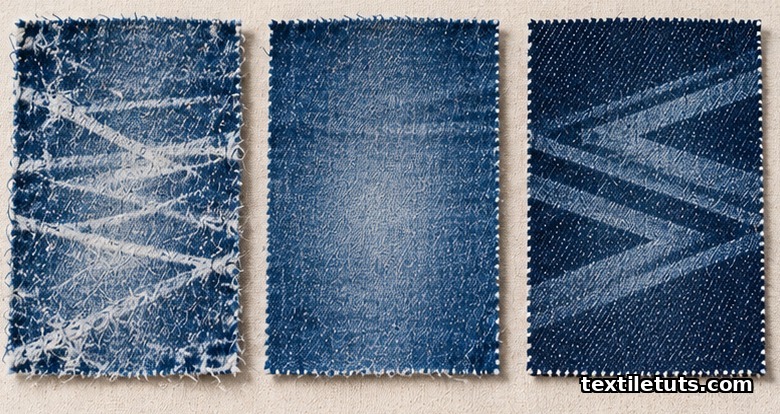
Most denim mills run pre-production trials with stepwise increases in stone ratio, then grade against the brand’s reference swatch under standardized lighting.
Frequently Asked Questions
What pumice stone size gives the most natural-looking fade?
Stones between 2 cm and 4 cm in diameter produce the most natural-looking fade on a 10 to 14 oz denim. Stones smaller than 1 cm pass through the drain before they can abrade; stones larger than 5 cm create localized damage and visible streaks rather than even contrast.
Can stone washing damage denim seams?
Yes, especially at stone-to-garment ratios above 2:1 and cycle times above 90 minutes. The most common failure is broken chain-stitch hem threads and torn pocket lining edges. Production samples should be inspected for seam slippage per ASTM D434 before bulk release.
Is stone-washed denim weaker than raw denim?
Stone-washed denim typically loses 5 to 15 percent of its grab tensile strength (ASTM D5034) compared with the unwashed control, depending on stone ratio and cycle length. The loss comes from fiber scuffing at high points; warp yarns on the face show more strength loss than weft yarns because they carry the abrasion.
How is bio-stoning different from a full enzyme wash?
Bio-stoning uses cellulase together with pumice, combining mechanical and biochemical action. A full enzyme wash uses cellulase alone, with no pumice in the drum. Pure enzyme washes produce a smoother, more uniform look but lack the streaky, high-contrast character that pumice imparts.
Why does new stone-washed denim still bleed indigo?
Stone washing removes the loose surface indigo but does not fix the remaining dye. Indigo remains a surface-bound pigment, so crocking (AATCC TM 8) and wash-fastness tests still show some transfer. This is why new stone-washed jeans should be washed separately for the first three to five cycles.
References
- International Organization for Standardization. ISO 6330: Textiles — Domestic washing and drying procedures for textile testing. Defines the wash cycles used as the benchmark for denim care labels.
- American Association of Textile Chemists and Colorists. AATCC TM 88C: Smoothness Appearance of Fabrics After Repeated Home Laundering. Used to confirm the worn appearance survives consumer laundering.
- American Association of Textile Chemists and Colorists. AATCC TM 135: Dimensional Changes of Fabrics After Home Laundering. Standard method for shrinkage measurement after wash cycles.
- American Association of Textile Chemists and Colorists. AATCC TM 8: Colorfastness to Crocking: AATCC Crockmeter Method. Used to grade indigo transfer on denim.
- ASTM International. ASTM D5034: Standard Test Method for Breaking Strength and Elongation of Textile Fabrics (Grab Test). Quantifies tensile-strength loss after stone wash.
- ASTM International. ASTM D1729: Standard Practice for Gloss and Color Determination on Metal and Other Surfaces. Reference for instrumental color evaluation under standard illuminants.
- ASTM International. ASTM D434: Standard Test Method for Resistance to Slippage of Yarns in Woven Fabrics Using a Standard Seam. Reference for seam-slippage inspection of stone-washed garments.
Editorial by Shahrukh Islam, TextileTuts. Sources: ISO 6330, AATCC TM 88C, AATCC TM 135, AATCC TM 8, ASTM D5034, ASTM D1729, ASTM D434 as cited.


