
Acid Wash Denim: Process and Risk

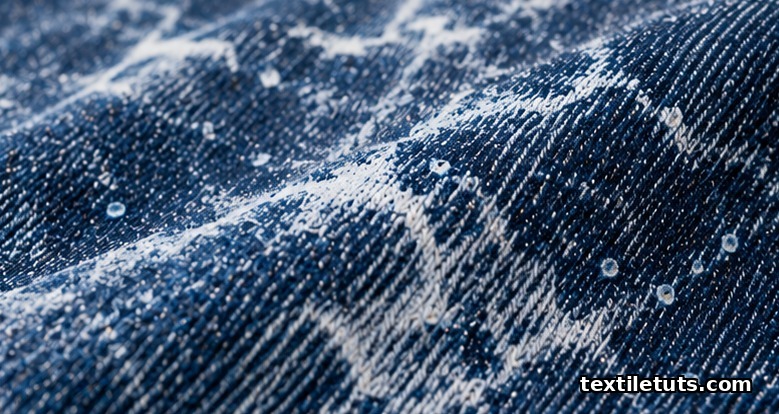
Acid wash denim uses pumice stones impregnated with potassium permanganate (typically 2 to 5 percent w/v KMnO4) sprayed onto indigo-dyed cotton twill, which locally oxidizes the indigo dye and produces the high-contrast, frosted pattern associated with 1980s jeans in a 20 to 60 minute wet cycle.
The finish is one of the most chemically aggressive treatments still used in denim manufacturing, and it creates real occupational, environmental, and product-quality risks that brand owners and laundry engineers must manage. This article explains how the acid wash process works, what chemical and physical hazards it introduces, and how responsible mills reduce those risks while preserving the aesthetic that made the finish famous.
You will learn the step-by-step chemistry, the four major hazard categories, the tests used to verify a compliant finish, and the alternative technologies (laser, ozone, enzyme) that can reproduce the look with a much smaller risk footprint.
What Acid Wash Denim Actually Is
Despite the name, acid wash denim is not an acid treatment at all. The term is a 1980s marketing label for a process in which a strong oxidizing agent (almost always potassium permanganate, sometimes sodium hypochlorite) is delivered to the surface of a finished indigo garment via absorbent pumice stone. Where the oxidizer touches the dye, indigo (C16H10N2O2) is converted to isatin and other colorless breakdown products, leaving a sharp white mark against the original deep blue.
Three names appear in trade literature for the same general finish:
- Acid wash, the consumer label, originating with the Guess and Calvin Klein jeans launched around 1981 to 1983.
- Stone wash with permanganate spray, the technical name in factory process sheets.
- PP spray or pumice-potassium permanganate (PP) wash, the short form used by washing-floor engineers.
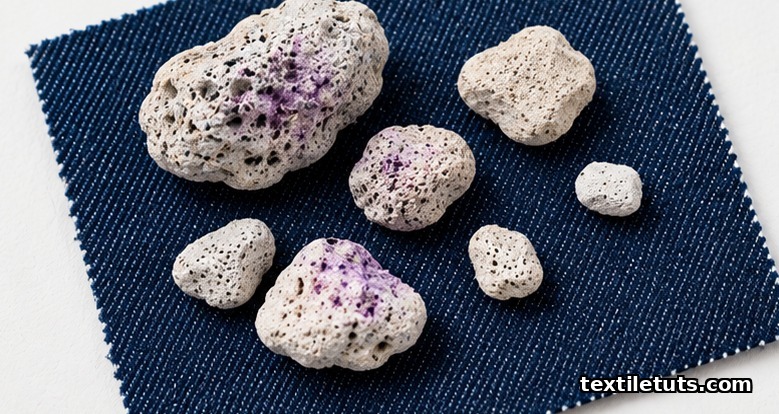
The pattern, ranging from scattered speckles to dense marbled panels, is controlled by pumice size (typically 1 to 4 cm stones), contact time, and the local concentration of KMnO4 on each stone. The process was the first denim finish to apply a deliberate chemical oxidizer at the garment stage rather than at the yarn-dye stage, and that is why it raised safety questions that conventional stone washing never did.
Step-by-Step Process on a Typical Denim Wash Line
A standard acid wash line uses front-loading industrial drum machines rated 50 to 400 kg of garment per load. The unit operations below are taken from peer-reviewed reviews of denim finishing and from AATCC-recommended laundering practice.
- Pre-scour and de-size. Garments are desized at 60 to 70 °C for 10 to 20 minutes with amylase enzyme and a non-ionic surfactant to remove starch and processing oils. AATCC TM135 and ISO 6330 provide the underlying wash-procedure reference points for this step.
- Stone preparation. Pumice stones are pre-soaked in a 2 to 5 percent w/v potassium permanganate solution for 5 to 15 minutes. Stones are drained just enough to remain wet but not dripping.
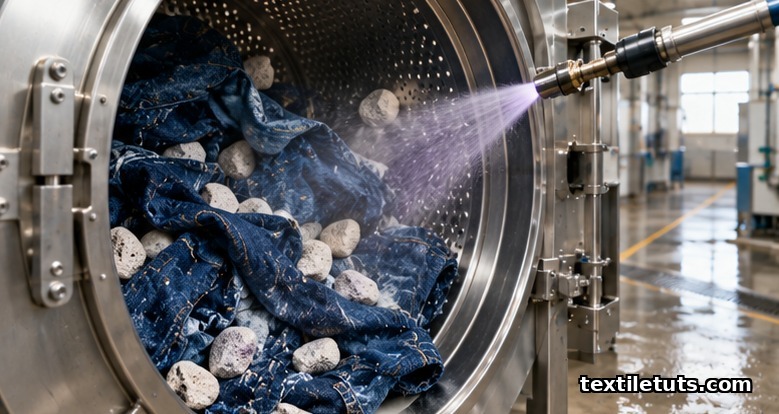
- Spray application. The wet pumice is either sprayed onto the garments inside the drum (most common for batch machines) or garments are briefly tumbled with the stones before being hung on racks for spray application. Spray KMnO4 concentrations range from 50 to 200 g/L.
- Oxidation dwell. Garments sit for 5 to 30 minutes. Manganate (MnO4, deep purple) converts to manganese dioxide (MnO2, brown) as it oxidizes indigo. The visible purple stain on the fabric is the reaction in progress.
- Rinse and neutralization. Garments are rinsed in cold water, then passed through a reducing bath (typically 2 to 5 g/L sodium metabisulfite or hydrogen peroxide) for 10 to 20 minutes to remove residual manganese dioxide brown staining.
- Softening and drying. Cationic or silicone softeners are applied at 40 °C, garments are hydro-extracted and tumble-dried at 60 to 80 °C, then pressed and packaged.
Total cycle time runs 90 to 180 minutes per load. Process water consumption is high, usually 50 to 80 L per kg of garment, before any effluent treatment.
The Four Major Risk Categories
Acid wash is unusual among denim finishes because the same chemical that creates the look also creates the hazard. Treating them as separate issues misses how they interact.
1. Occupational health risk to wash-floor workers
Potassium permanganate is a strong oxidizer classified under GHS as H272 (may intensify fire) and H302 (harmful if swallowed), with H314 reserved for concentrated solutions that cause severe skin burns and eye damage. Workers handling dry KMnO4 crystals, wet pumice, or freshly sprayed garments face three exposure routes:
- Dermal from splashes or contact with damp purple-stained fabric; concentrated solutions cause chemical burns within minutes.
- Respiratory from airborne dust when KMnO4 is mixed or from manganese dioxide aerosol generated during the oxidation reaction.
- Chronic inhalation of manganese compounds, which the U.S. National Institute for Occupational Safety and Health (NIOSH) links to manganism, a neurological syndrome with motor and cognitive symptoms similar to Parkinson disease, at airborne Mn exposures above the 1 mg/m3 REL ceiling.
Wash floors handling permanganate should provide chemical-resistant gloves (nitrile or neoprene, not latex), splash goggles, local exhaust ventilation at the spray station, and either N95 or P100 respirators for any operator who must enter the drum during or immediately after spray application. The WHO/IPCS manganese document and OSHA’s manganese standard (29 CFR 1910.1000) are the regulatory anchors for these controls.
2. Effluent and environmental risk
Discharge from an acid wash line carries three regulated parameters at concentrations that frequently exceed receiving-water limits:
- Total manganese, typically 5 to 50 mg/L in untreated spent liquor against a 2 mg/L common effluent limit in South Asian and EU jurisdictions.
- Chemical oxygen demand (COD), often 1500 to 4000 mg/L because the oxidizer loads the liquor with organic dye breakdown products and residual indigo.
- pH drift, acidic at the oxidation stage (pH 2 to 4) and alkaline at the neutralization stage (pH 9 to 11), which complicates biological treatment.
Manganese removal is the hardest part. Lime precipitation (raising pH above 9 with Ca(OH)2 to precipitate Mn(OH)2) is the most common pathway, but textile wastewaters also contain chelating agents from softeners that hold manganese in solution and push removal efficiency below 60 percent. The ZDHC (Zero Discharge of Hazardous Chemicals) Foundation’s wastewater guidelines and the EU’s Best Available Techniques (BAT) Reference Document for textiles (2014) both flag manganese and COD as priority control parameters.
3. Product-quality risk to the garment
Over-oxidation is irreversible. A garment exposed too long to permanganate loses tensile strength in the affected zones because cellulose is also oxidized, not just indigo. Typical outcomes include:
- Tensile strength loss of 15 to 35 percent in the most heavily sprayed areas compared with un-treated denim.
- Yellowing over time, caused by residual manganese dioxide that re-oxidizes in storage.
- Pinhole formation where stones repeatedly impact the same spot, especially on lightweight 6 to 8 oz fabrics.
ASTM D5034 (tensile strength) and AATCC TM61 (colorfastness to laundering) are the two tests most buyers request on acid-washed shipments to catch over-processing before shipping.
4. Consumer-facing risk
Residual manganese on a worn garment is not a meaningful dermal hazard because manganese dioxide is poorly absorbed through intact skin. The relevant consumer risk is migration of un-fixed dye and residual chemicals during the first few home laundries. OEKO-TEX Standard 100 limits extractable manganese and a long list of other metals on textiles that contact skin, and most responsible mills will only ship acid-washed stock that passes OEKO-TEX Annex 4 limits for baby or direct-skin classes, depending on the buyer’s intended market.
How Mills Reduce Acid Wash Risk Without Losing the Look
The four controls below are the most common substitutions that mill engineers describe in published process audits. They are ranked by how widely they are adopted, not by aesthetic fidelity.
- Replace KMnO4 with sodium hypochlorite (NaOCl) at 5 to 10 g/L on the stones. The contrast is softer and the manganese hazard disappears, but tensile strength loss actually rises because hypochlorite attacks cellulose more aggressively. Net risk reduction is environmental, not mechanical.
- Reduce KMnO4 concentration to 1 to 2 percent w/v and extend dwell time to 60 minutes. The pattern is less stark, but worker exposure and effluent load drop by roughly half.
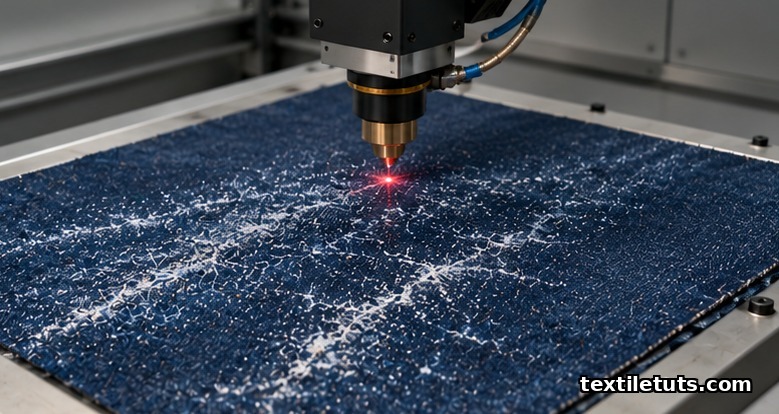
- Switch to laser engraving for the high-contrast pattern, then follow with a light enzyme wash. This eliminates chemical oxidizer use entirely. MDPI and Springer reviews of sustainable denim finishing from 2022 to 2024 describe laser + enzyme combinations that visually approximate an acid wash with a fraction of the water and chemical load.
- Switch to ozone bleaching in a closed washer. Ozone gas dissolved in water oxidizes indigo in a similar way to permanganate, but the input chemical is air and electricity, and there is no manganese-bearing effluent. Worker risk shifts to respiratory exposure to ozone, which is manageable with proper gas-phase controls.
Buyers should ask suppliers which of the four controls a given lot was processed under, and request a copy of the mill’s chemical inventory and effluent monitoring data. A mill that cannot answer that question within a working day is a mill to avoid.
Testing Checklist Before You Approve an Acid-Wash Lot
If a brand is sourcing acid-washed denim for the first time, the following five tests are the minimum evidence to collect from the mill. Each one maps directly to a risk category above.
- ISO 6330 or AATCC TM135 wash-procedure record, to confirm the pre-scour cycle used and the temperature ceiling reached.
- ASTM D5034 tensile test, on both the most and least sprayed areas, to bound the strength loss from over-oxidation.
- AATCC TM61 colorfastness to laundering, after 5 home-wash cycles, to check for dye migration and yellowing.
- OEKO-TEX Standard 100 extractables screen, including manganese, formaldehyde, and pH, on the finished garment.
- Mill effluent data for total manganese, COD, and pH on at least three consecutive batches. ZDHC wastewater limits are the practical benchmark.
Frequently Asked Questions
Is acid wash denim actually washed with acid?
No. The name is historical. Modern acid wash uses potassium permanganate, which is an oxidizer and not an acid. The finish pH is acidic only because potassium permanganate solutions are mildly acidic in water.
Why did acid wash denim disappear from mainstream fashion after the 1980s?
Three reasons drove the decline: tightening chemical-safety rules on permanganate handling, buyer concerns about tensile-strength loss on over-processed fabric, and the rise of cleaner rinse-wash aesthetics in the 1990s. The look returned in small bursts from 2010 onward, often produced with laser or ozone techniques that consumers still call acid wash.
Is acid-washed denim safe to wear?
Yes, after the mill has completed neutralization and rinsing. OEKO-TEX Standard 100 compliant acid-washed denim has extractable manganese and other metals below the limits set for direct-skin contact. The risk that matters is to the workers who made the garment, not to the wearer.
Can acid wash be done at home?
No, not safely. Potassium permanganate is a strong oxidizer that requires controlled dosing, proper ventilation, and chemical-resistant personal protective equipment. Hobby attempts also produce inconsistent and often over-processed results. A home wearer who wants the look should buy it from a compliant mill, not make it.
What is the most sustainable way to get an acid-wash look in 2026?
Laser engraving followed by a light enzyme or ozone wash is the most sustainable mainstream route. It uses a fraction of the water, no permanganate, and generates far less effluent. Expect a slightly different pattern scale than classic 1980s acid wash, with cleaner edges and less manganese-dioxide brown staining.
References
- ISO. ISO 6330:2021 Textiles — Domestic washing and drying procedures for textile testing. iso.org — defines the wash cycles used as reference points for denim finishing trials.
- AATCC. Test Method 135: Dimensional Changes of Fabrics after Home Laundering. aatcc.org — American standard for wash-procedure reporting on finished garments.
- ASTM. ASTM D5034 Standard Test Method for Breaking Strength and Elongation of Textile Fabrics (Grab Test). astm.org — used to bound tensile loss from over-oxidation in acid-washed denim.
- NIOSH. Criteria for a Recommended Standard: Occupational Exposure to Manganese. cdc.gov/niosh — sets the 1 mg/m3 REL ceiling and describes manganism risk for wash-floor workers.
- MDPI / Sustainability journal. Sustainable Finishing of Denim: Laser, Ozone and Enzyme Alternatives. mdpi.com — peer-reviewed review of finish technologies that can replace potassium permanganate spray.
- ZDHC Foundation. Wastewater Guidelines for the Textile and Apparel Industry. zdhc.org — practical benchmark for manganese, COD, and pH in mill effluent.
- OEKO-TEX. Standard 100, Annex 4: Limit Values for有害物质. oeko-tex.com — limits on extractable manganese and related metals on direct-skin textiles.
This article is the working reference for acid wash denim process and risk. Editorial by Shahrukh Islam, TextileTuts. Sources: ISO 6330:2021, AATCC TM135, ASTM D5034, NIOSH manganese criteria document, MDPI Sustainability review, ZDHC wastewater guidelines, OEKO-TEX Standard 100 as cited.


