
Spunlace (Hydroentangled) Nonwoven

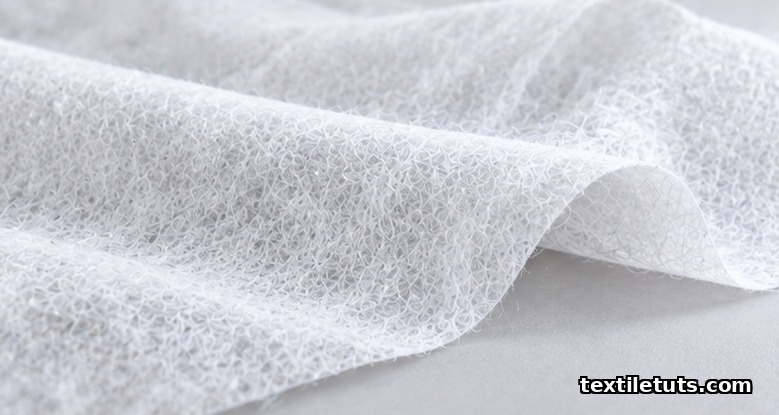
Spunlace (hydroentangled) nonwoven fabric is a binder-free textile formed by entangling loose fiber webs with continuous high-pressure water jets (typically 50-250 bar, with column velocities reaching 200-300 m/s), producing a cloth that retains 60-80% of the tensile strength of a woven fabric at equal basis weight while remaining lint-free and highly absorbent.
This single bonding step, no chemical binder, no thermal fusion, no needle punching, is what defines the spunlace process and explains its dominance in wipes, medical drapes, and absorbent hygiene products.
What follows is a working reference for textile engineers, students, and converters: the physics of the water jet, the fibers that survive it, the properties it produces, the standards used to measure it, and how spunlace compares to spunbond, meltblown, and needlepunch nonwovens.
What Is Spunlace (Hydroentangled) Nonwoven?
A spunlace nonwoven is a fabric made entirely by mechanical entanglement. A carded or wet-laid web of loose staple fibers passes under banks of fine nozzles, each emitting a column of water at pressures between 50 and 250 bar. When those columns strike the web, the fibers migrate, twist, and lock around each other the same way warp and weft yarns interlace in a woven cloth. No binder resin, no thermal point-bonding, no needle punching is involved.
The technology emerged in the 1950s and 1960s in research laboratories at DuPont and Chicopee, and the commercial name “spunlace” was trademarked in the 1970s. EDANA (the European Disposables and Nonwovens Association) prefers the more descriptive term “hydroentangled,” while INDA (the North American counterpart) uses “spunlace.” Both refer to the same process and the same fabric class, and both fall under the same ISO 9073 test-method family.
How the Hydroentanglement Process Works
Hydroentanglement is a three-step mechanical process: web formation, jet entanglement, and drying. Each step determines a different property of the finished cloth.
1. Web formation. Staple fibers, typically 1.2-4.0 dtex and 25-60 mm long, are opened, carded, and laid into a uniform web. Two common formats exist:
- Parallel-laid (carded): fibers are oriented in the machine direction, giving the fabric high machine-direction (MD) tensile and lower cross-direction (CD) tensile. The anisotropy ratio commonly runs 1.5:1 to 3:1.
- Random-laid (airlaid or spunlaid): fibers are deposited in a turbulent airstream, producing near-isotropic properties with an MD:CD ratio of 1:1 to 1.5:1.
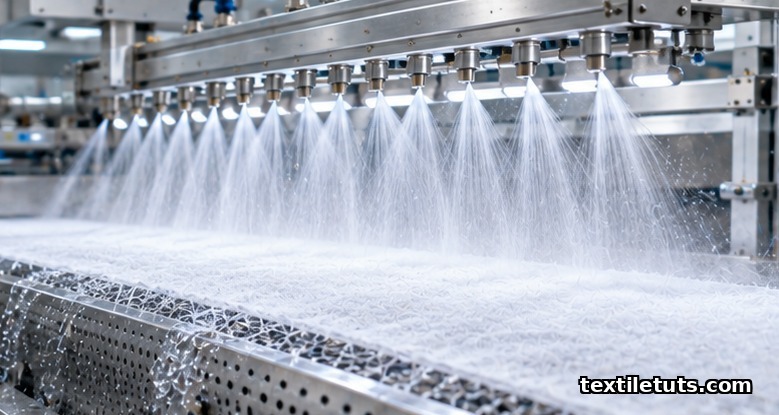
2. Jet entanglement. The web passes under a series of injectors (strip widths 20-60 mm) fitted with capillary arrays of 80-150 µm orifices at 0.5-1.0 mm pitch. Water pressure climbs through the line in stages:
- Pre-entanglement: 30-60 bar, consolidates the web and prevents fiber loss at the edges.
- Main entanglement: 80-180 bar, drives the bulk of fiber interlocking.
- Finishing jets: 150-250 bar, sets surface smoothness, pattern definition, and hydroapertured holes.
Under those pressures, water leaving an orifice reaches a column velocity of 200-300 m/s. The kinetic energy of that column does the bonding work. Energy input, measured as specific energy in kJ/kg of fabric, typically falls between 20 and 80 kJ/kg for wipes-grade fabrics and can exceed 200 kJ/kg for heavy-duty industrial cloths.
3. Drying and finishing. The wet web passes through a through-air dryer or a set of heated cylinders, removing the residual moisture. Optional post-treatments include calendaring for surface smoothness, hydroaperturing to create patterned holes, printing, and antimicrobial finishes.
Fiber Selection and Why It Matters
Spunlace tolerates almost any staple fiber that survives high-velocity water without breakage. The dominant choices by volume are:
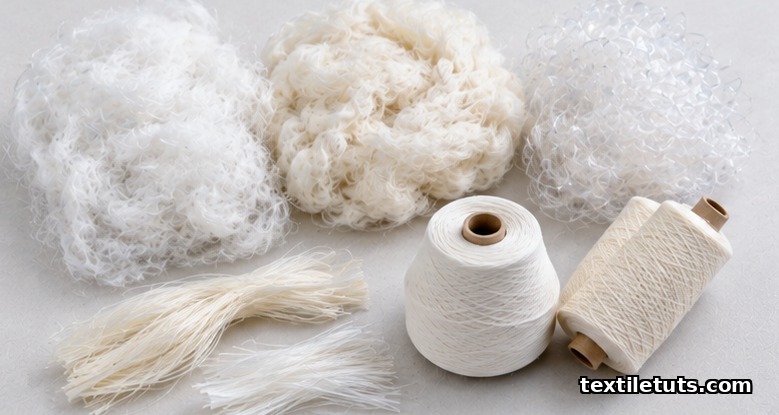
- Polyester (PET): 25-70% of most wipe recipes. Contributes wet strength, dimensional stability, and low lint. Common 1.2-2.5 dtex, 38-51 mm.
- Viscose (rayon): 20-60%. Adds absorbency (water retention 800-1,200%) and softness. The workhorse of personal-care wipes.
- Cotton: Specialty use, valued for low irritation and natural-fiber claims. Higher cost and a shorter supply chain outside major cotton-producing regions.
- Polypropylene (PP) and polyethylene (PE): Used in bicomponent (PE/PET, PP/PET) sheath-core fibers that soften under thermal calendering and add surface bonding.
- Lyocell and other regenerated cellulosics: Niche use, premium positioning, closed-loop solvent processing.
Fiber length must be long enough to bridge entanglements without being washed out. Fibers shorter than 25 mm get stripped from the web by the jet; fibers longer than 60 mm are hard to card uniformly. The practical sweet spot is 38-51 mm.
Key Physical Properties of Spunlace Nonwoven
The values below are typical for a 50 g/m² wipe-grade fabric made of 60% viscose and 40% polyester, tested under ISO 9073 methods:
- Basis weight: 20-150 g/m² (standard range); industrial grades up to 400 g/m².
- Tensile strength (MD): 25-80 N/5 cm (ISO 9073-3).
- Tensile strength (CD): 12-40 N/5 cm (ISO 9073-3).
- Elongation at break: 30-80% MD, 60-120% CD (ISO 9073-3).
- Liquid absorption capacity: 600-1,200% of dry weight (ISO 9073-6).
- Liquid absorption time: 1.5-4.0 seconds (ISO 9073-6).
- Thickness: 0.25-1.20 mm at 5 kPa (ISO 9073-2).
- Linting (ISO 9073-10): typically less than 50 particles/m² for premium grades; sub-10 for cleanroom wipes.
These ranges explain why spunlace dominates wipes and absorbent hygiene: it absorbs fast, holds a lot, does not shed, and does not contain a binder that could irritate skin or contaminate a process.
Comparison With Other Nonwoven Bonding Methods
| Property | Spunlace (hydroentangled) | Spunbond (PP/PET) | Meltblown (PP) | Needlepunch |
|---|---|---|---|---|
| Bonding mechanism | Water jet entanglement | Continuous filament + thermal point-bond | Fine filament + self-bonding | Barbed needles |
| Typical basis weight (g/m²) | 20-150 | 10-200 | 10-100 | 80-1,000 |
| MD tensile at 50 g/m² (N/5 cm) | 25-80 | 40-90 | 10-30 | 30-80 |
| Absorption capacity (%) | 600-1,200 | less than 50 | 100-400 | 300-800 |
| Linting | Very low | Low | Moderate | Moderate-high |
| Softness / drape | High | Moderate | Low | Low |
| Typical end-use | Wipes, drapes, hygiene | Hygiene topsheet, packaging | Filtration, sorbents | Geotextiles, automotive |
Spunlace is the most binder-free and most absorbent of the four. Spunbond wins on line speed and cost for lightweight applications. Meltblown wins on filtration surface area. Needlepunch wins on heavy basis weight and dimensional stability. Each process is optimized for a different problem, and they are often combined (SMS, SMMS, and spunlace/meltblown laminates) where one process alone cannot deliver the required property set.
Common Applications
Wet wipes and personal care. Baby wipes, facial cleansing wipes, makeup remover wipes, and flushable wipes. Spunlace’s combination of softness, absorbency, and lint-free surface is unmatched in this segment.
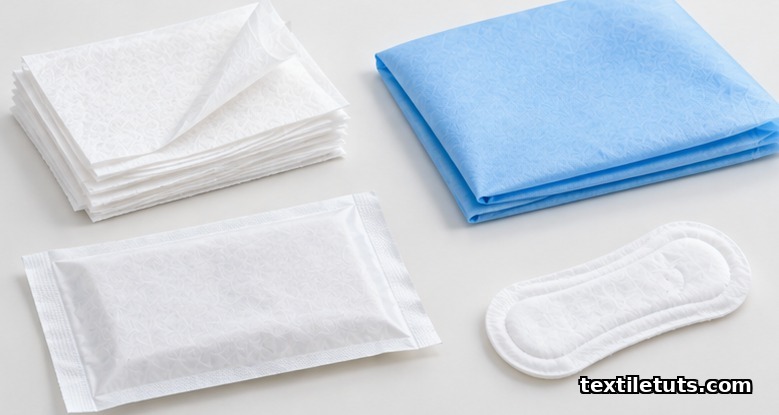
Medical and surgical. Surgical drapes, gowns, wound dressings, and patient cleaning cloths. ISO 13485-grade spunlace is a major segment; autoclave-stable versions exist for sterile packs.
Industrial and cleanroom. Wipers for semiconductor and pharmaceutical cleanrooms; oil and chemical absorbent pads.
Filtration. Pre-filtration and support layers in HVAC and liquid filter cartridges. Spunlace is often combined with meltblown (SMS: spunbond-meltblown-spunbond, or SMMS) where high surface area plus wet strength are both required.
Leather substrate. Synthetic leather backing for PU and PVC coated substrates is one of the highest tonnage spunlace end-uses, particularly in Asian manufacturing hubs.
Home and hygiene disposables. Kitchen wipes, floor cleaning cloths, dust cloths, and absorbent hygiene product components (top sheet, acquisition layer, and back sheet substrate).
Standards and Testing Methods
Spunlace properties are governed by a small set of international standards:
- ISO 9073 series: the umbrella test-method standard for all nonwovens, covering mass per unit area (9073-1), thickness (9073-2), tensile strength and elongation (9073-3), tear resistance (9073-4), liquid absorption (9073-6), wet tensile (9073-11), and dry particle shedding (9073-10).
- ASTM D1117: standard guide for evaluating nonwoven fabrics; broadly aligned with ISO 9073 but uses U.S. customary units.
- AATCC TM130 and TM151: soil release and staining tests, used to back wipe performance claims.
- EDANA/INDA GD4 flushability assessment: industry test battery that evaluates whether a wipe clears sewer systems; it is not a biodegradability claim.
- ISO 13485: quality management system standard for medical-grade spunlace used in drapes, gowns, and wound dressings.
For medical claims such as low lint, biocompatibility, and barrier performance, additional testing per ISO 10993 (biological evaluation of medical devices) and ASTM F1670/F1671 (synthetic blood and viral penetration) is common.
Frequently Asked Questions
What is the difference between spunlace and hydroentangled nonwoven?
There is no difference between the two terms. “Spunlace” is the trade name used in North America and originates from DuPont and Chicopee work in the 1970s, while “hydroentangled” is the descriptive term preferred by EDANA in Europe. Both describe the same water-jet bonding process and the same fabric class, and the same ISO 9073 test methods apply.
Why is spunlace more absorbent than spunbond?
Spunbond is made from continuous filaments that are thermally point-bonded, leaving a hydrophobic polymer-rich surface with limited pore volume. Spunlace uses short staple fibers (often including viscose, which has a water retention of 800-1,200%) and the bonding water creates a three-dimensional pore structure that can hold many times its own weight in liquid. Typical spunlace absorbs 600-1,200% of its dry weight, while a standard PP spunbond absorbs less than 50%.
Is spunlace nonwoven biodegradable or compostable?
It depends on the fiber. Spunlace made from 100% viscose, cotton, or lyocell is biodegradable under industrial composting conditions tested against EN 13432 and ASTM D6400, although binder additions and post-treatments can extend the breakdown time. Polyester- or polypropylene-containing spunlace is not biodegradable and should not be marketed as such. Flushability is a separate claim, governed by the INDA/EDANA GD4 assessment, which evaluates whether a wipe clears sewer systems rather than whether it breaks down in a septic tank.
Can spunlace be sterilized?
Yes. Standard methods include autoclaving at 121 °C and 15 psi for 15-30 minutes (steam sterilization), gamma irradiation at 25-50 kGy, and ethylene oxide (EtO) gas. Polyester-rich spunlace tolerates all three; viscose-rich spunlace yellows slightly under gamma but retains strength. The choice depends on the downstream medical device classification and the relevant ISO 11135 (EtO) or ISO 11137 (gamma) standard.
What is the typical production speed of a spunlace line?
Modern spunlace lines run at 100-400 m/min depending on basis weight and product mix. A 200 m/min line producing 50 g/m² wipe fabric has a throughput of roughly 600 kg/h per meter of working width. For comparison, spunbond lines routinely exceed 600 m/min, which is part of why spunbond remains cheaper for the lightest applications where absorbency and softness are not critical.
References
- ISO. ISO 9073-1:2023, Nonwovens – Test methods – Part 1: Determination of mass per unit area. International Organization for Standardization. Basis-weight test method for nonwovens.
- ISO. ISO 9073-3:2023, Nonwovens – Test methods – Part 3: Determination of tensile strength and elongation. International Organization for Standardization. Dry and wet tensile test method.
- ISO. ISO 9073-6:2023, Nonwovens – Test methods – Part 6: Absorption. International Organization for Standardization. Liquid absorption capacity and absorption time.
- ASTM. ASTM D1117-22, Standard Guide for Evaluating Nonwoven Fabrics. ASTM International. Umbrella U.S. standard for nonwoven property evaluation.
- EDANA and INDA. GD4 Flushability Assessment Test Methods. European Disposables and Nonwovens Association / INDA. Industry test battery for wipe flushability claims.
- ISO. ISO 13485:2016, Medical devices – Quality management systems – Requirements for regulatory purposes. International Organization for Standardization. Quality system standard for medical-grade spunlace.
- ISO. ISO 9073-10:2003, Nonwovens – Test methods – Part 10: Dry particulate matter generation. International Organization for Standardization. Standard test method for nonwoven linting.
Editorial by Md. Asad Ullah (Meem), TextileTuts. Sources: ISO 9073 series, ASTM D1117, EDANA/INDA GD4, ISO 13485 as cited.


