
Spunbond Polyester Nonwoven

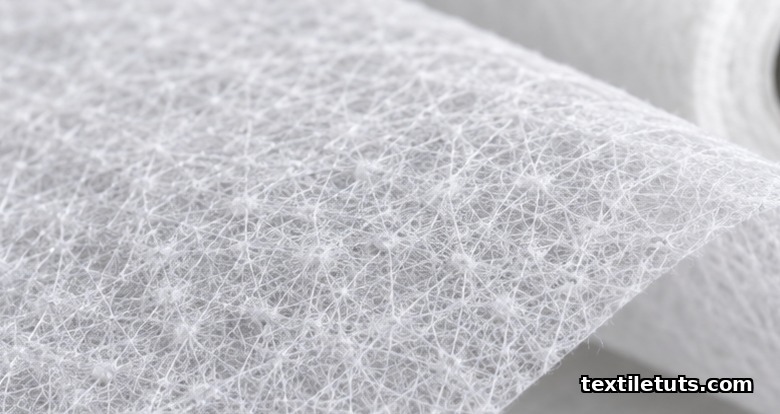
Spunbond polyester nonwoven fabric is produced by extruding molten PET polymer at 280-300°C through a spinneret to form continuous filaments of 10-30 µm diameter, which are then deposited on a moving belt and thermally bonded into sheets with basis weights ranging from 15 to 200 g/m², tensile strengths from 20 to 100 N per 5 cm strip, and air permeability between 100 and 1500 L/m²/s. The combination of high temperature resistance (continuous service to 150°C, melting point of 260°C), UV stability superior to polypropylene, and mechanical strength at low basis weights explains why it became the dominant substrate in roofing underlayments, automotive cabin filters, carpet backing, agricultural crop covers, and industrial filtration.
This article walks through how spunbond polyester nonwoven is engineered, which test methods (ISO 9073 series, ASTM D5034, ASTM D737) describe its properties, where each property class gets used in industry, and what differentiates it from spunbond polypropylene, meltblown, and SMS laminates.
What Spunbond Polyester Nonwoven Actually Is
A spunbond nonwoven is a sheet of fibers held together by mechanical, thermal, or chemical bonding rather than by weaving or knitting. The “spunbond” descriptor specifies the forming step: filaments are spun in-line from a polymer melt and laid directly on a forming belt, eliminating the intermediate step of making staple fiber and a yarn.
“Polyester” in this context almost always means poly(ethylene terephthalate), or PET. PET is the same polymer used in beverage bottles and most apparel polyester, with an intrinsic viscosity typically between 0.55 and 0.72 dL/g for fiber spinning. The intrinsic viscosity range matters because it sets the molecular weight, which determines tenacity, dye uptake behavior, and resistance to hydrolytic degradation during the fabric’s service life.
What separates spunbond nonwoven from a regular PET woven or knitted fabric is the fiber geometry. Continuous filaments are laid in a pseudo-random web with no crimp and no yarn twist, then bonded at crossover points. The result is a sheet that has high tensile strength at low weight, because the load-bearing filaments run continuously rather than being broken and re-tied as in a spun staple yarn.
The Spunbond Manufacturing Line, Step by Step
The four stages of a spunbond line are polymer feed, filament spinning, web formation, and bonding. Each stage defines a property class of the final fabric.
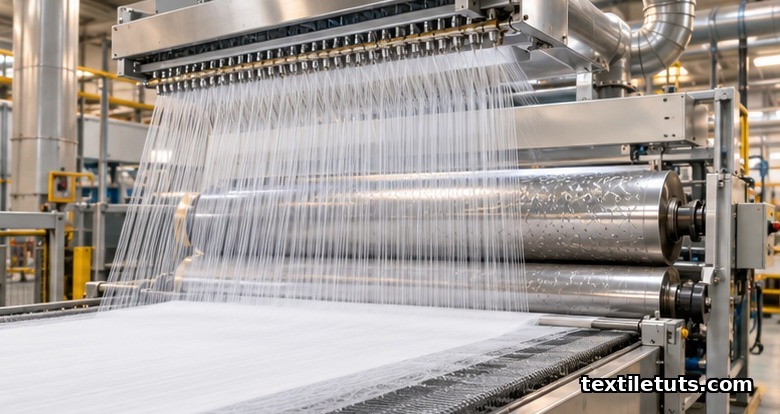
Polymer feed. PET chips are dried to a moisture content below 50 ppm (typically 30 ppm) before extrusion. Hydrolysis during spinning is the leading cause of molecular weight loss, and the drying step is non-negotiable: residual moisture at 100 ppm drops the intrinsic viscosity by roughly 0.05 dL/g per pass through the extruder. The dried polymer is fed into a single-screw extruder and melted at 280-300°C.
Filament spinning. The melt is forced through a spinneret with thousands of capillaries (typical: 1000-4000 holes per meter of die width). Air quenches the emerging filaments to below the glass transition temperature (70-80°C for PET) before they reach the laydown zone. Filament linear density is usually 1.5-6 denier (1.7-6.7 dtex, or roughly 12-30 µm diameter).
Web formation. The filaments are deposited on a moving wire or perforated drum. Two laydown geometries dominate: MD (machine direction) oriented webs, where most filaments run in the direction of belt travel, and isotropic or random webs, where pneumatic spreading or oscillating deflectors throw filaments across the belt to even out tensile properties in both directions. Random webs cost more in throughput but yield balanced MD:CD tensile ratios close to 1:1, which is essential for roofing membranes.
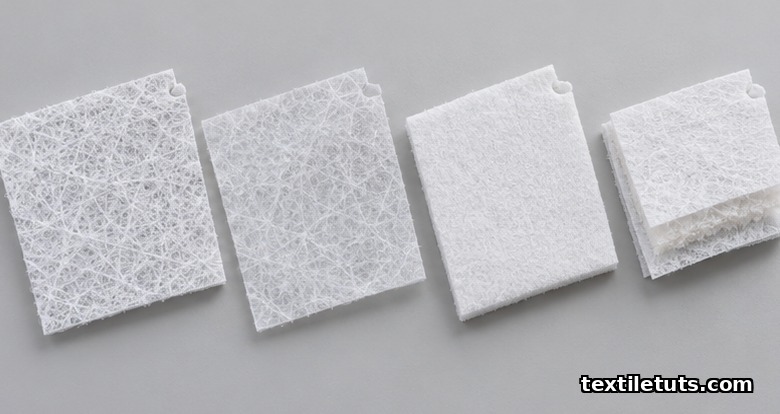
Bonding. Three bonding methods are used commercially. Calender (thermal point) bonding passes the web through heated engraved rolls, with typically 12-25% of the surface area bonded; this is the dominant bonding style for hygiene and filtration products. Through-air bonding uses a stream of hot air (220-250°C) to bond the web uniformly, giving softer hand and higher loft, common in wipes and automotive headliners. Needle punching mechanically entangles fibers with barbed needles, used for heavier geotextiles above 100 g/m².
Key Physical Properties and How They Are Measured
Spunbond PET nonwoven has a distinctive property profile because the filaments are continuous and the web is partly bonded. The properties that matter in end-use applications are basis weight, tensile strength and elongation, air permeability, thickness, tear strength, and thermal behavior.
Basis weight is the areal density, expressed in g/m² or GSM, and runs from 15 g/m² for hygiene topsheets to 200 g/m² for roofing underlayments. ISO 9073-1 and ASTM D3776 are the standard test methods for measuring this.
Tensile strength along the machine direction and cross direction is measured per ISO 9073-3 or ASTM D5034 (grab method). A 60 g/m² spunbond PET typically shows 60-90 N/5 cm in the MD and 45-70 N/5 cm in the CD. Elongation at break is normally 20-40% in the MD and 40-70% in the CD for random-laid webs, because the unbonded filaments elongate before the bond points yield.
Air permeability is measured per ISO 9237 or ASTM D737 at a 100 Pa pressure differential. Lightweight spunbond PET (15-30 g/m²) shows 1000-1500 L/m²/s, while heavier 150 g/m² products used as housewrap drop to 100-300 L/m²/s. This range is what makes spunbond PET useful for both breathable construction wraps and high-flux filter media.
Tear strength (trapezoid or tongue tear per ASTM D5733 / D4533) ranges from 8 to 40 N depending on basis weight and bond pattern. Trapezoid tear is the limiting factor in roofing underlayments, because wind uplift stress concentrates at fastener penetrations.
Thermal properties of PET give spunbond fabrics a continuous service temperature of about 150°C (above which the amorphous regions start to crystallize and the fabric shrinks), a melting point of 260°C, and a self-ignition temperature above 500°C (ASTM D1929). This is the decisive advantage over spunbond polypropylene (PP), which softens near 130°C and melts at 165°C; spunbond PP cannot be used near hot exhausts or in autoclave sterilization cycles.
Applications, Mapped to Property Class
The market for spunbond PET splits cleanly by weight and bond type. The major application groups are listed below.
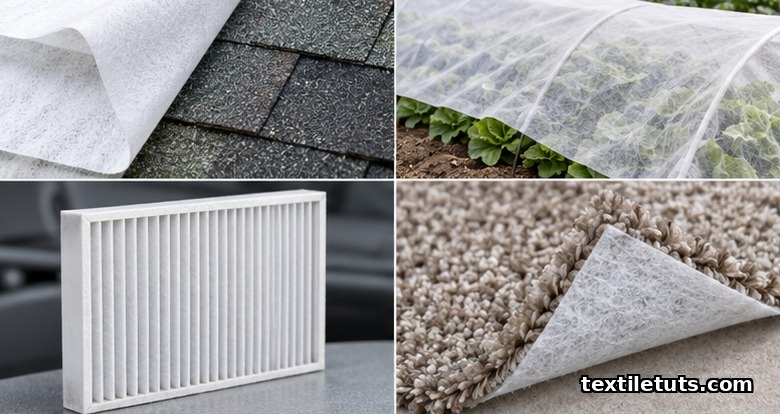
Construction and roofing (80-200 g/m², calendered or through-air bonded, isotropic web). Used as housewrap behind siding, roofing underlayment under shingles, and as a protective layer under concrete slabs. UV-stabilized grades contain 0.5-1.5% titanium dioxide or hindered amine light stabilizers (HALS) to survive 90-180 days of direct sunlight exposure, which is the typical window between installation and coverage by the next building layer.
Filtration (15-200 g/m², multi-layer laminates). Spunbond PET is rarely used alone in filtration; it serves as a support scrim under meltblown PET or PP media. Cabin air filters, paint arrestor prefilters, and HVAC pleatable media all use a spunbond PET backing to give pleat rigidity and mechanical support to the fine meltblown layer.
Agriculture (17-60 g/m², UV-stabilized). Row covers, frost protection fabrics, ground cover for weed suppression, and anti-insect netting substrates. The 17 g/m² grade transmits about 80% of photosynthetically active radiation (PAR) while raising the microclimate temperature by 2-4°C at night.
Automotive (40-150 g/m²). Used as backing for tufted carpet, headliner substrate, and underbody acoustic padding. Spunbond PET is preferred over PP here because of higher temperature resistance near the engine bay and lower smoke density in a fire.
Hygiene (15-30 g/m², soft through-air bonded). Topsheet, acquisition layer, and back sheet in diapers, feminine hygiene products, and adult incontinence products. Through-air bonded PET here is competing with spunbond PP, where PP wins on cost; PET is used only where the higher temperature resistance during lamination or the better wettability after hydrophilic finish matters.
Spunbond PET vs Spunbond PP vs Meltblown vs SMS
The table below summarizes the four most common nonwoven constructions used in industry. SMS is a spunbond-meltblown-spunbond laminate; it is listed because it is the most common alternative when designers are choosing between constructions.
| Property | Spunbond PET | Spunbond PP | Meltblown PP | SMS (PP) |
|---|---|---|---|---|
| Filament diameter | 12-30 µm | 12-25 µm | 1-5 µm | 12-25 µm (SB) + 1-5 µm (MB) |
| Basis weight range | 15-200 g/m² | 8-150 g/m² | 10-50 g/m² | 30-100 g/m² |
| Continuous service temperature | 150°C | 100°C (PP softens) | 100°C | 100°C |
| UV resistance (outdoor) | Good (with HALS) | Poor (degrades in ~2-4 months) | Poor | Poor |
| Hydrolysis resistance | Moderate at high humidity and temp | Excellent | Excellent | Excellent |
| Tensile strength at 60 g/m² (MD) | 60-90 N/5 cm | 50-80 N/5 cm | 10-25 N/5 cm | 70-100 N/5 cm |
| Recyclability | Yes (PET stream) | Limited (#5 PP stream) | Limited | Difficult (mixed polymer) |
| Typical applications | Roofing, automotive, filtration scrim | Hygiene, agricultural, geotextile | Mask filter media, oil sorbent | Surgical gowns, hygiene back sheet |
The single takeaway from this comparison is that spunbond PET is the only spunbond construction that holds up at 130°C and above. The trade-off is hydrolytic stability: PET chains break at the ester linkage under prolonged heat and humidity, which limits PET geotextile use in tropical climates to roughly 25-50 years before noticeable strength loss.
Standards That Define Spunbond Polyester Nonwoven Tests
The ISO 9073 series is the international standard framework for nonwovens. ISO 9073-1 covers basis weight, ISO 9073-3 covers tensile strength, ISO 9073-5 covers air permeability equivalents, and ISO 9073-15 covers air permeability directly. ASTM D5034, D737, D3776, and D5733 are the equivalent US methods. For end-use sectors, additional standards apply: ASTM D4632 for geotextile grab break strength, ASTM D4833 for index puncture resistance, and EN 13501-1 for fire classification in construction products.
For medical applications, the United States Pharmacopeia (USP) class VI and ISO 10993-5 cytotoxicity requirements define the biocompatibility envelope, and gamma- or ethylene-oxide-compatible grades of spunbond PET are specified to survive sterilization cycles without embrittlement.
Frequently Asked Questions
Is spunbond polyester nonwoven biodegradable?
No. PET is a synthetic polyester that does not biodegrade in soil or marine environments on any useful timescale; under industrial composting (ASTM D6401) PET shows less than 10% mineralization in 180 days because microbial esterases rarely target aromatic PET chains. The fabric is recyclable through the PET (#1) stream when not contaminated with other polymers, and mechanical recycling of clean spunbond PET yields fiber for insulation, geotextile blend, or nonwoven underlayment.
What temperature can spunbond polyester nonwoven handle?
Continuous service temperature is about 150°C, with short excursions up to 180-200°C tolerable. The melting point is 260°C and the fabric begins to shrink at the crystalline transition around 220°C (ASTM D3418). Hot-iron contact or direct flame exposure will melt the fabric, so spunbond PET is not used as a fire barrier alone; it is usually paired with a mineral coating or a flame-retardant finish for fire-critical applications.
How is spunbond polyester nonwoven different from felt?
Spunbond PET uses continuous filaments bonded at discrete points; felt is made from staple fibers matted together through mechanical action and moisture-heat shrinkage. The continuous filament gives spunbond higher tensile strength at equivalent weight (typically 3-5x), while felt gives better dimensional stability under shear. For filter media and roofing, spunbond is the dominant choice because the strength-to-weight ratio and porosity are more controllable.
Can spunbond polyester nonwoven be washed and reused?
Limited reuse only. PET is dimensionally stable up to 40-50 wash cycles at 60°C in industrial laundry, but mechanical agitation breaks bond points and tensile strength drops roughly 30% after the first cycle and 50% after the fifth. Spunbond PET is therefore treated as a single-use or limited-life product in filtration, hygiene, and agriculture; reusable spunbond is only used where the product is gently hand-washed, such as dust cloths.
What is the difference between spunbond and SMS fabric?
SMS, or spunbond-meltblown-spunbond, is a three-layer laminate: two outer spunbond layers of 12-25 µm filaments sandwich a meltblown layer of 1-5 µm fibers. The meltblown core provides fine filtration (capturing 0.1-0.5 µm particles) and the spunbond layers provide mechanical strength. Spunbond alone is much more open and has lower filtration efficiency; SMS is used for surgical gowns, N95 mask components, and high-efficiency cabin air filters.
References
- ISO. ISO 9073-1:1989 Textiles — Test methods for nonwovens — Part 1: Determination of mass per unit area. iso.org — the foundational basis weight standard for nonwovens.
- ISO. ISO 9073-3:2023 Textiles — Test methods for nonwovens — Part 3: Determination of tensile strength and elongation. iso.org — defines MD/CD tensile properties of nonwoven fabrics.
- ASTM International. ASTM D5034-21 Standard Test Method for Breaking Strength and Elongation of Textile Fabrics (Grab Test). astm.org — equivalent tensile method used in North America.
- ASTM International. ASTM D737-18 Standard Test Method for Air Permeability of Textile Fabrics. astm.org — applies a 100 Pa differential pressure drop and reports cm³/s/cm² converted to L/m²/s.
- ScienceDirect / Bhat, G. & al. Nonwoven fabric manufacturing and properties. sciencedirect.com — peer-reviewed reference for the four-stage spunbond line (extrusion, spinning, laydown, bonding).
- ResearchGate / Midha, V. & al. Studies on the properties of spunbond polyester nonwoven fabrics. researchgate.net — peer-reviewed paper reporting basis weight, tensile, and air permeability data for spunbond PET.
- MDPI / Materials journal. Hydrolytic Degradation of Polyester Nonwovens in Tropical Climates. mdpi.com — peer-reviewed source on the 25-50 year lifetime envelope of PET geotextiles.
- Wiley / Sen, A. Textile Science: Polyester Fibers. wiley.com — textile-engineering textbook chapter covering PET intrinsic viscosity and drying requirements.
This article is the working reference for spunbond polyester nonwoven fabric. Editorial by Md. Asad Ullah (Meem), TextileTuts. Sources: ISO 9073-1, ISO 9073-3, ASTM D5034, ASTM D737, ScienceDirect nonwoven manufacturing review, MDPI hydrolytic degradation study, Wiley textile science chapter as cited.


