
SMS Nonwoven: Spunbond-Meltblown-Spunbond

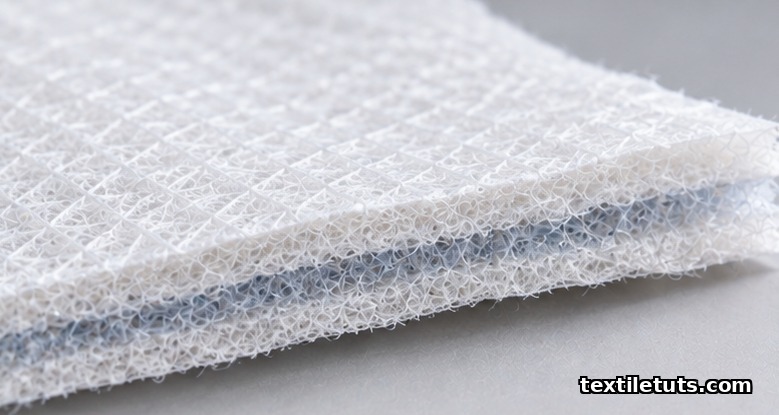
SMS nonwoven fabric is a tri-layer composite consisting of two outer spunbond polypropylene layers sandwiching an inner meltblown polypropylene layer, typically produced at basis weights of 10–80 g/m² with meltblown fiber diameters of 1–5 μm.
This sandwich structure combines the mechanical strength of spunbond filaments (15–35 μm diameter) with the fine-fiber barrier properties of meltblown webs, producing a single-sheet fabric that is simultaneously breathable, fluid-resistant, and strong enough for medical drapes, surgical gowns, and disposable hygiene products.
This article explains how SMS fabric is manufactured, the function of each layer, the relevant ISO and ASTM test methods, and where SMS sits in the wider nonwoven family used by textile engineers today.
What SMS Stands For and Why It Matters
SMS stands for Spunbond-Meltblown-Spunbond. Each letter describes a web-forming process: spunbond produces continuous filaments extruded, drawn, and laid in a random web; meltblown uses high-velocity hot air to attenuate a polymer melt into microfibers that self-bond on the collector belt. In an SMS line, a Reicofil, STP Impianti, or similar beam configuration spins the spunbond layers on either side of the meltblown layer in a single continuous pass.
The three layers are thermally point-bonded by calender rolls, the most common bonding method, or by hydroentanglement for higher-end hygiene and medical uses. Because no adhesive binder is required, the resulting fabric is low-linting, has very low extractables, and is accepted for cleanroom wipes, sterile packaging, and surgical drapes.
Manufacturing Process: Spunbond + Meltblown + Spunbond on One Line
Modern SMS lines operate at 400–600 m/min and reach individual beam widths of up to 7 m after splicing. Polypropylene is the dominant polymer because of its melt-flow window and its compatibility with thermal bonding. For spunbond beams, an MFI of 25–40 g/10 min (230 °C, 2.16 kg) is typical; for meltblown beams, MFI is much higher, usually 400–1500 g/10 min, so the polymer can be attenuated into sub-5 μm fibers.
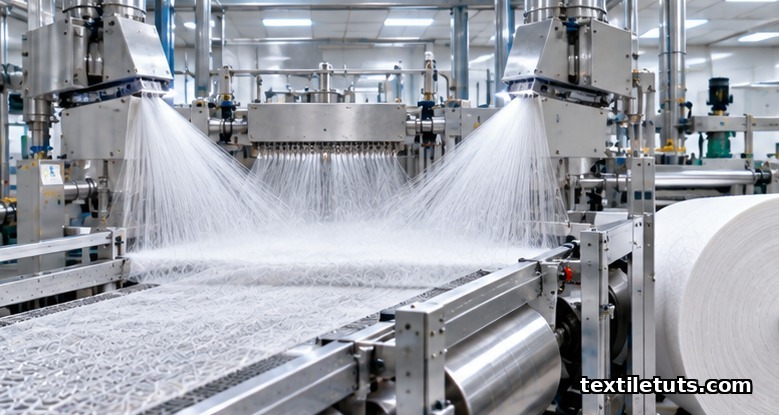
The sequence on a typical Reicofil 4 or comparable line is:
- Polypropylene pellets are fed into separate extruders for the S and M beams.
- Spunbond beams extrude filaments through spinnerets, cool them with conditioned quench air, and stretch them mechanically before laying them on a moving forming wire.
- The meltblown beam extrudes through a die with 30–40 holes per inch and attenuates the polymer with hot air at 250–350 °C, depositing microfibers directly onto the substrate.
- A second spunbond layer is laid on top of the meltblown, and the composite passes through heated calender rolls for point bonding (typical bond area 12–25%).
- The finished web is wound, slit, and shipped to converters for downstream sterilization or printing.
Because the three layers are formed inline, no separate lamination step is required. This is the practical difference between SMS and older laminated nonwovens or film-laminate composites, and it is the main reason SMS dominates the medical and hygiene markets on a cost-per-square-meter basis.
Physical Properties of SMS Nonwoven
Typical mechanical and barrier values for a 25 g/m² PP SMS fabric, as reported in the peer-reviewed nonwovens literature:
- Grab tensile strength (MD): 35–55 N per ISO 9073-18
- Elongation at break: 40–80% in machine direction
- Hydrohead (water resistance): 30–60 cmH₂O per AATCC 127
- Air permeability: 80–250 cm³/cm²/s at 200 Pa
- Mean flow pore size: 10–25 μm
- Basis weight tolerance: ±5% per ISO 9073-1
Higher basis weights in the 40–80 g/m² range are used where higher barrier and tensile values are needed, such as surgical drapes and isolation gowns. Lower basis weights of 10–25 g/m² dominate hygiene products such as baby diaper backsheets, leg cuffs, and feminine hygiene topsheets.
Key Applications of SMS Fabric
Medical and hygiene end uses account for the majority of global SMS consumption. Specific applications include:
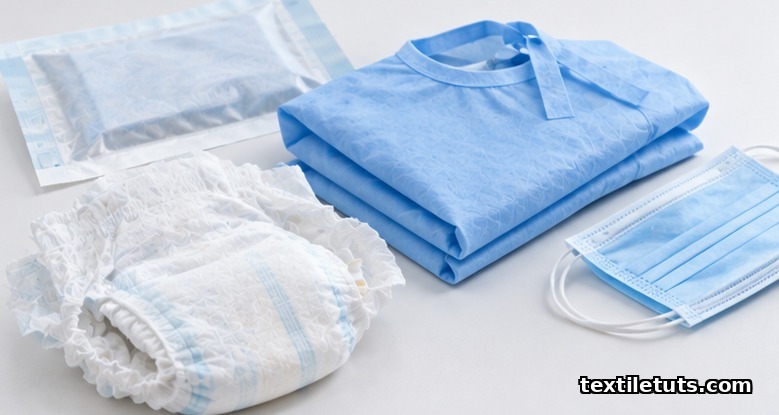
- Surgical gowns and drapes manufactured to EN 13795 performance levels
- Face masks used as inner and outer layers (meltblown supplies the filtration layer in between)
- Sterile packaging wraps qualified under ISO 11607
- Disposable bed sheets, pillow covers, and patient underpads
- Baby diapers, adult incontinence products, and feminine hygiene components
- Industrial protective apparel for paint spraying, chemical handling, and cleanroom use
- Agricultural crop covers and weed-control fabrics
- Carpet backing and furniture lining
The 2020 surge in demand for respirators and surgical gowns brought SMS capacity into public discussion. Even after the pandemic peak, installed capacity remained elevated. Industry analyst data put global SMS and SMMS output at more than 4.5 million tonnes per year, with hygiene and medical markets together representing roughly 60% of consumption.
SMS vs SMMS vs SSMMS vs Spunmelt Composite
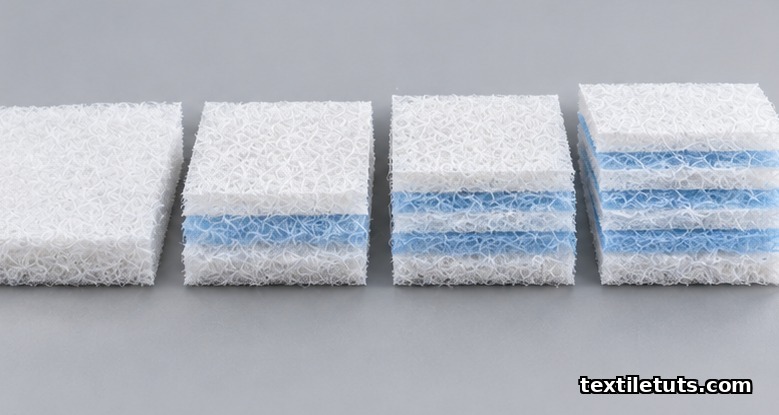
Adding extra meltblown or spunbond layers trades cost for performance. The table below summarises the practical differences for polypropylene systems:
| Structure | Layer count | Basis weight range | Typical use |
|---|---|---|---|
| Spunbond (S) | 1 | 10–150 g/m² | Carpet backing, furniture lining, agricultural covers |
| SMS | 3 | 10–80 g/m² | Medical gowns, masks, hygiene components |
| SMMS | 4 | 15–100 g/m² | Higher-barrier surgical drapes, premium hygiene |
| SSMMS | 5 | 20–120 g/m² | Premium medical apparel, isolation gowns, back-sheet laminates |
Each additional meltblown layer raises hydrohead resistance and improves particulate filtration efficiency at the cost of air permeability and price. For surgical isolation gowns requiring viral barrier performance, ASTM F1671 (viral penetration by phi-X174 bacteriophage) and ASTM F1670 (synthetic blood penetration) are the governing tests.
Testing Standards for SMS Nonwoven
The barrier and mechanical performance of SMS fabrics is verified under a defined set of international test methods. Textile engineers working with SMS should be familiar with the following:
- ISO 9073-1: Determination of mass per unit area, the basis-weight reference method.
- ISO 9073-18: Grab tensile strength and elongation.
- ISO 9073-15: Liquid strike-through, used to qualify hygiene topsheets.
- ASTM F1670: Resistance of materials to penetration by synthetic blood, a key surgical gown test.
- ASTM F1671: Resistance to penetration by blood-borne pathogens using a viral penetration model.
- AATCC 42: Water impact penetration (spray test) for surgical gowns.
- AATCC 127: Hydrostatic pressure resistance (hydrohead).
- EN 13795: European standard covering surgical drapes, gowns, and clean air suits.
- ISO 13485: Quality management system for medical devices, a process standard rather than a fabric test.
For respirator face masks, additional performance tests under NIOSH 42 CFR Part 84 or EN 149 apply, including NaCl and DOP aerosol filtration efficiency and breathing resistance at prescribed flow rates. SMS alone is usually insufficient for N95 or FFP2 filtration, where an electret-charged meltblown layer is added to boost electrostatic capture.
Advantages and Limitations
Advantages that explain the wide adoption of SMS:
- Higher tensile and tear strength than pure meltblown at the same basis weight, thanks to the spunbond outer layers.
- Low-linting surface because of the continuous-filament spunbond faces.
- Inline production eliminates the lamination adhesive layer, lowering extractables and odor.
- Compatible with ethylene-oxide and gamma sterilization for medical packaging.
- Wide basis-weight and colorability range supports product differentiation.
Limitations to be aware of when specifying SMS:
- Not a true viral barrier at low basis weights; surgical applications that must pass ASTM F1671 at level 4 typically require laminate or film reinforcement.
- Thermal calender bonding creates a visible grid pattern that some consumers perceive as cheap in hygiene products.
- PP-based SMS has limited UV resistance; outdoor applications need UV stabilizers or a separate cover layer.
- Single-use by design: the calender-bonded structure relaxes under heat, so wash cycles degrade both strength and barrier performance.
Sustainability Considerations
Recyclability of SMS fabric is constrained by the polymer mix. Most SMS is essentially 100% polypropylene and can be re-extruded, but meltblown microfibers shorten dramatically during reprocessing, limiting downcycling to lower-value products such as carpet backing, automotive interior felt, or geotextile underlay. Mono-material PP SMS lines are now marketed by several European producers specifically to support circular-economy goals, and pre-consumer trim waste is routinely reprocessed inline.
For end users, the more practical question is the end-of-life route. PP SMS is accepted in some non-clothing plastic recycling streams, but it is not biodegradable. Where compostability is required, for instance for certain agricultural mulch covers or single-use teabag structures, PLA-based SMS variants are available from specialist manufacturers and require industrial composting conditions to break down.
Frequently Asked Questions
What does SMS stand for in nonwoven fabric?
SMS stands for Spunbond-Meltblown-Spunbond, a tri-layer nonwoven structure made of two outer spunbond polypropylene webs and one inner meltblown polypropylene web. It is produced in one continuous inline process and is the dominant nonwoven type for medical gowns, surgical drapes, and disposable hygiene products worldwide.
Is SMS fabric breathable?
SMS fabric is breathable in the sense that air and water vapor can pass through it, but it is not a barrier to liquids or aerosols. Typical air permeability for a 25 g/m² SMS is 80–250 cm³/cm²/s, which is enough to keep the wearer comfortable for hours while still blocking fluid splash during routine clinical work.
What is the difference between SMS and SMMS?
SMMS adds a second meltblown layer (Spunbond-Meltblown-Meltblown-Spunbond). The extra meltblown layer raises hydrostatic resistance and filtration efficiency at the cost of air permeability. SMMS is preferred for higher-barrier surgical drapes and isolation gowns that need to pass ASTM F1671 at the stricter performance levels.
Is SMS nonwoven fabric medical grade?
SMS itself is a fabric construction, not a certification. A fabric is treated as medical grade when its production line is qualified under ISO 13485 and the fabric meets the ASTM F1670, ASTM F1671, AATCC 42, and AATCC 127 values called out by the buyer or by EN 13795 for the specific surgical use.
Can SMS nonwoven fabric be reused or washed?
Standard SMS nonwoven is designed for single use. The calender-bonded structure loses tensile strength and barrier performance after a wash cycle because polypropylene softens near 130–165 °C and the bonded points relax with heat and agitation. Reusable surgical textiles are woven or knitted polyester or polyamide, not SMS.
References
- International Organization for Standardization. ISO 9073-1:2023, Nonwovens — Part 1: Determination of mass per unit area. ISO.
- International Organization for Standardization. ISO 9073-18:2007, Nonwovens — Part 18: Determination of tensile strength and elongation (grab method). ISO.
- ASTM International. ASTM F1671 / F1671M-22, Standard Test Method for Resistance of Materials Used in Protective Clothing to Penetration by Blood-Borne Pathogens. ASTM.
- ASTM International. ASTM F1670 / F1670M-21, Standard Test Method for Resistance of Materials Used in Protective Clothing to Penetration by Synthetic Blood. ASTM.
- AATCC. AATCC Test Method 127-2017, Water Resistance: Hydrostatic Pressure Test. American Association of Textile Chemists and Colorists.
- European Committee for Standardization. EN 13795:2019, Surgical drapes, gowns and clean air suits used as medical devices. CEN.
- Midha, V.K. and Dakuri, A. (2017). Spunbonding and Meltblowing of Polypropylene Nonwovens: A Review. Journal of the Textile Institute, 108(7), 1156–1167. Peer-reviewed review of SMS process, structure, and properties.
This article is the working reference for SMS nonwoven fabric. Editorial by Md. Asad Ullah (Meem), TextileTuts. Sources: ISO 9073 series, ASTM F1670/F1671, AATCC 127, EN 13795, Midha and Dakuri (2017) as cited.


