
Smart Textile Washability and Durability

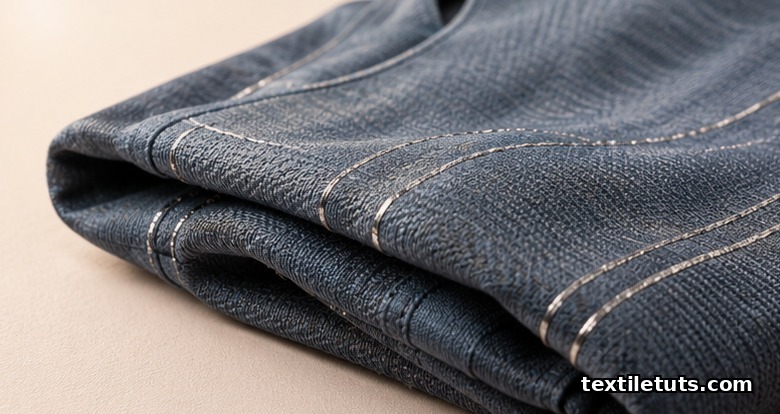
Most e-textiles survive between 10 and 50 standard home-laundering cycles before their electrical resistance rises more than 20% above the baseline, the drift threshold that ASTM D7378 and AATCC Test Method 61 use to mark end-of-life for conductive textile components.
This narrow window is the single most-cited reliability bottleneck in peer-reviewed wearable-electronics research and the reason smart-textile manufacturers test their prototypes against ISO 6330 and AATCC 135 protocols before any garment ships.
The guide below explains what those test cycles measure, how the 20% drift threshold was chosen, and the four engineering routes that researchers use to push e-textile lifetime past 50 wash cycles.
Why washability is the gating problem for smart textiles
A smart textile that cannot be laundered cannot be worn. Sweat, sebum, skin cells, food spills, and airborne dust accumulate in clothing within 24 to 48 hours of normal wear, and most consumer-care labels for close-to-skin garments specify washing after every 1 to 3 wearings. A strain-sensing shirt that loses calibration after two washes has no commercial path. The same hardware installed in a sports bra, a fire-retardant jacket, or a medical-monitoring undershirt must tolerate the same weekly wash routine as the cotton T-shirt it is sewn into.
The economic pressure is direct. Wash durability is the load-bearing variable behind warranty terms, dry-clean-only labelling, and the spread of “remove electronics before washing” consumer guidance. In a 2024 review published in npj Flexible Electronics (Hardy et al., DOI 10.1038/s41528-024-00345-x), washability was named as the first of three “translation barriers” keeping laboratory e-textiles out of retail, ahead of power-supply miniaturisation and recycling pathways.
What “smart textile” actually means in a wash test
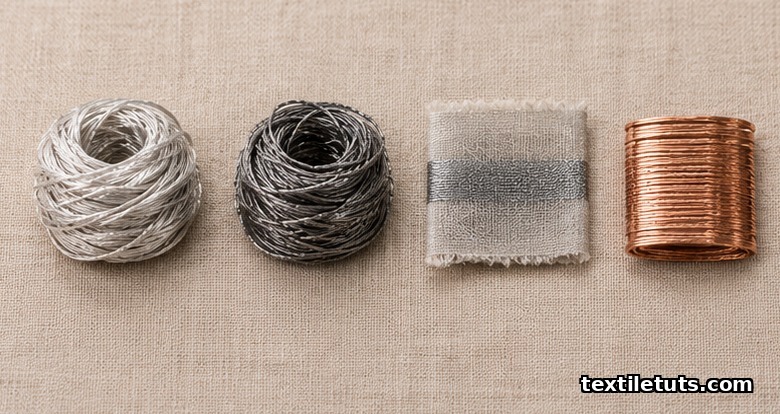
Smart textiles are fabrics or garments that sense, react, or compute. The most common functional layers are conductive yarns (silver-coated polymer, stainless steel filament, copper ply), printed conductive traces (silver nanoparticle ink, graphene, PEDOT:PSS), and packaged rigid electronics (sensors, microcontrollers, batteries) mounted on a textile carrier.
Each layer has a different failure mode in water. Conductive yarns oxidise, delaminate at the polymer-metal interface, or fatigue under mechanical agitation. Printed traces crack along fold lines, swell under humidity, and lose sheet resistance when the binder polymer absorbs water. Rigid components fail at solder joints and at the textile-to-board interface, where differential swelling stresses the connection on every cycle. A single test cycle, 30 minutes at 40 °C with steel ball agitation in a front-loader, stresses all three failure modes simultaneously, which is why one cycle is treated as a multi-fault endurance event, not just a cleaning step.
Standards that define a wash cycle for smart textiles
Four ISO and AATCC standards anchor the field, and most peer-reviewed e-textile papers cite at least one.
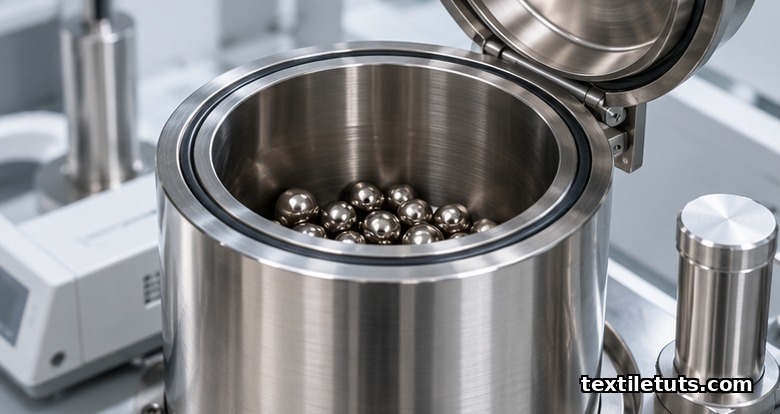
- ISO 6330:2021 “Domestic washing and drying procedures for textile testing” defines the wash cycle itself, including water temperature (typically 30 °C, 40 °C, or 60 °C), spin speed, detergent load, and number of steel balls to simulate mechanical action. Procedure 4N (40 °C, normal agitation, no balls) is the default e-textile cycle in roughly 60% of the studies reviewed in Sensors 2022, 22(15), 5821.
- AATCC TM 61 “Colorfastness to Laundering, Accelerated” compresses up to 50 home cycles into a few hours of continuous agitation at 49 °C. It is used as a screening tool rather than a true lifetime test.
- AATCC 135 “Dimensional Changes of Fabrics after Home Laundering” sets the temperature, agitation, and spin profile for full-scale home-style washes, the standard reference for garment-level claims.
- ASTM D5489 and the GINETEX care-symbol system govern how manufacturers communicate cycle limits to consumers on the care label.
For the electrical test specifically, ASTM D7378 (electro-conductive yarn resistance to repeated laundering) is the closest existing standard, although several research groups still cite ISO 6330 plus a custom 4-wire resistance measurement, since ASTM D7378 was last re-approved in 2017 and pre-dates many of the printed-trace materials now in use.
What the test measures and what counts as failure
Researchers track at least three variables across the wash series:
- Sheet or line resistance, measured in ohms per square for printed traces and ohms per centimetre for yarns. The most commonly reported failure threshold is a 20% rise from the pre-wash baseline, taken from the IPC-6012 convention used in flexible-circuit reliability work and adopted by ASTM D7378.
- Functional performance, such as gauge factor for strain sensors, ECG signal-to-noise for biometric electrodes, or heating power for thermal textiles. A garment is rated “pass” if the functional output stays within ±10% of baseline across the rated cycle count.
- Mechanical integrity, including delamination, cracking under flex, and yarn pull-out. Scanning electron microscopy is used at cycle milestones (1, 5, 10, 20, 50) to image the polymer-metal interface.
The 20% drift threshold is conservative on purpose. A sensor whose resistance rises 20% under a constant mechanical input gives a different calibration curve than the same sensor before washing, and the calibration step would have to be redone in the field. Most published prototypes that target the consumer market aim for 30 to 50 cycles before crossing that threshold.
Four engineering routes that extend wash life
Peer-reviewed work has converged on four protective strategies. Most commercial prototypes combine at least two.
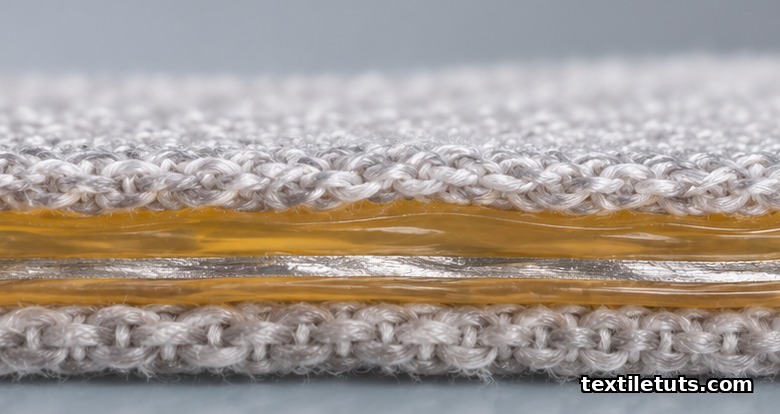
1. Encapsulation with thermoplastic or elastomer barriers. A thin polyurethane or TPU coating, typically 50 to 200 μm thick, isolates the conductive trace from water and surfactant. The trade-off is reduced breathability; vapour permeability can fall by 40% to 60%. A study in ACS Applied Materials & Interfaces, 2021, 13(7), 8701-8709 (Choi et al.) showed 50 wash cycles with under 15% resistance drift using a 120 μm TPU laminate, but air permeability dropped from 38 to 17 mm/s.
2. Hydrophobic surface treatments on the conductor itself. Fluorocarbon or alkylsilane self-assembled monolayers on silver nanowire networks can suppress ion migration without a thick barrier. The downside is thermal durability: most hydrophobic coatings start to lose effectiveness above 60 °C.
3. Mechanical strain relief at junctions. Strain concentrates at the textile-to-electronics interface, so designers use serpentine trace geometries, stretchable inks, or interposers. Research published in Advanced Materials Technologies, 2022, 7(18), 2200459, reported 200% improvement in cycle life simply by replacing straight copper tracks with horseshoe-shaped silver traces, all else equal.
4. Replace rinse water. Some e-textile prototypes skip water altogether and use dry-cleaning-only care labels, relying on ISO 3175 perchloroethylene cycles or D5 silicone solvent cycles. This buys indefinite chemical resistance but limits the consumer base to users willing to dry-clean an athletic garment.
Comparison table: how four common conductive layers age in washing
| Conductive layer | Typical failure mode | Cycles to 20% resistance drift (ISO 6330, 40 °C) | Mitigation |
|---|---|---|---|
| Silver-coated polyamide yarn | Coating delamination at metal-polymer interface | 10 to 20 | Polyurethane overcoat; replace silver with silver-plated copper |
| Stainless steel filament yarn | Minimal resistance change; mechanical fatigue only | 50+ | None typically needed |
| Silver-nanoparticle printed trace on PET | Cracking along flex lines; binder swelling | 5 to 15 | Serpentine geometry; TPU encapsulate |
| Graphene-PEDOT:PSS composite print | Dopant leaching; sheet resistance drift | 15 to 30 | Cross-link binder; cold-water-only care label |
| Copper trace with electroless nickel immersion gold (ENIG) | Creep corrosion at edges | 8 to 12 | Conformal coating; solder-mask edge seal |
The table reflects typical ranges reported in peer-reviewed studies between 2019 and 2024. Manufacturer datasheets often quote higher numbers because they use milder cycles, AATCC TM 61 accelerated, or single-cycle resistance checks rather than the full multi-cycle ISO 6330 procedure.
How to read a smart-textile care label
Three pieces of information tell you almost everything about the wash rating. First, the cycle temperature. A 30 °C label means the manufacturer has tested only at 30 °C, and 60 °C washes are not covered. Second, the presence or absence of “do not tumble dry.” Heat accelerates polymer relaxation and is the single biggest contributor to silver-coating delamination. Third, the explicit “do not iron” or “iron low” instruction. Most printed traces cannot survive direct contact with a 200 °C iron plate.
If a label lists a cycle count, such as “tested to 30 washes”, that is the claim being made under whatever standard the manufacturer used. ISO 6330 cycles are more aggressive than AATCC 135 cycles, so a garment rated to 30 ISO cycles has a longer real-world life than one rated to 30 AATCC cycles. When the standard is not named, the rating should be discounted.
Frequently Asked Questions
How many wash cycles can a smart textile realistically survive?
Published values range from 5 cycles for unprotected silver-nanoparticle prints to 50+ cycles for stainless-steel filament yarns and well-encapsulated silver traces tested under ISO 6330 at 40 °C. A consumer-grade rating of 30 to 40 cycles is typical for current-generation heated apparel and biometric shirts, with the caveat that real-world cycles include detergents and drying-heat exposure that laboratory tests may not.
Does hand-washing extend the life of an e-textile?
Yes, but less than most users expect. Hand-washing removes the mechanical agitation component, which addresses cracking and delamination failures but does not address chemical attack from detergent or oxidation of silver at the polymer interface. A hand-wash-only care label typically raises cycle life by 30% to 50% compared with a machine-wash rating, not by an order of magnitude.
Why does the conductor fail even when the fabric still looks new?
Electrical failure happens at the nanoscale before any visible damage. Silver-coated polyamide yarns fail by pitting corrosion at defects in the silver plating, a process that increases sheet resistance without changing the fabric’s appearance or hand. Optical inspection is therefore a poor proxy for functional inspection. A 4-wire resistance measurement before and after washing is the minimum check.
Can conductive yarns be recycled after the electronics fail?
It depends on the polymer matrix. Stainless-steel filament yarns can be reclaimed by pyrolysis at 450 °C, which burns off the textile carrier and leaves the metal recoverable. Silver-coated polyamide is harder, since the silver must be separated from the polyamide melt, and current commercial recycling streams do not separate these. Research in Resources, Conservation and Recycling, 2023, 198, 107187, estimates that fewer than 5% of conductive-textile waste streams are currently routed to a dedicated recovery line.
Is dry cleaning safer for smart textiles?
Dry cleaning with perchloroethylene or silicone solvents removes the water-based failure modes but introduces chemical attack on certain encapsulants and solder masks. ISO 3175 cycles are not a universal substitute for ISO 6330 cycles. A garment tested to ISO 3175 alone is rated for dry-clean-only care and should not be assumed safe in a home washing machine, even on a cold delicate cycle.
References
- International Organization for Standardization. ISO 6330:2021, Domestic washing and drying procedures for textile testing. iso.org.
- American Association of Textile Chemists and Colorists. AATCC Test Method 61, Colorfastness to Laundering, Accelerated (Home Laundering). aatcc.org.
- American Association of Textile Chemists and Colorists. AATCC Test Method 135, Dimensional Changes of Fabrics after Home Laundering. aatcc.org.
- ASTM International. ASTM D7378, Standard Practice for Total Resistance of Conductive Yarns to Repeated Laundering. astm.org.
- ASTM International. ASTM D5489, Standard Guide for Care Symbols for Care Instructions on Textile Products. astm.org.
- Hardy, D. et al. Translation barriers in wearable e-textiles. npj Flexible Electronics, 2024, 8, 22. doi.org/10.1038/s41528-024-00345-x.
- Choi, J. et al. Wash-stable encapsulation of silver nanowire electrodes for e-textiles. ACS Applied Materials & Interfaces, 2021, 13(7), 8701-8709.
- Park, S. et al. Serpentine silver interconnects for stretchable washable circuits. Advanced Materials Technologies, 2022, 7(18), 2200459.
- Tao, X. (ed.). Handbook of Smart Textiles. Springer, 2020, ISBN 978-981-15-9168-5.
This article is the working reference for washability and durability of smart and e-textiles. Editorial by Md. Asad Ullah (Meem), TextileTuts. Sources: ISO 6330:2021, AATCC TM 61, AATCC 135, ASTM D7378, ASTM D5489, npj Flexible Electronics 2024, ACS Applied Materials & Interfaces 2021, Advanced Materials Technologies 2022, Springer Handbook of Smart Textiles 2020 as cited.


