
Smart Textile Applications in Sports

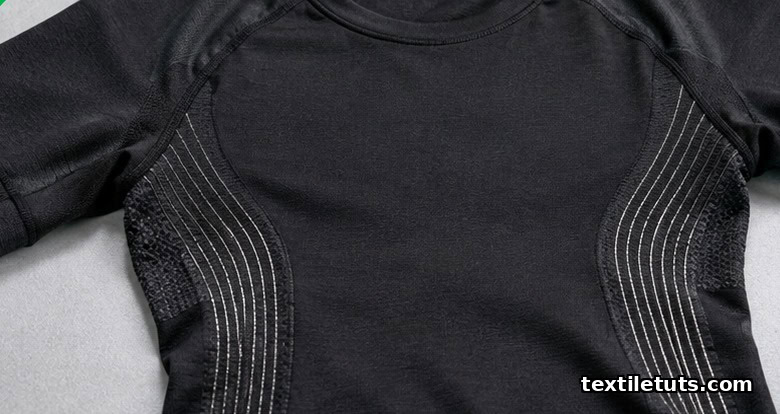
Smart textile applications in sports use woven or knitted garments with embedded conductive yarns, polymer sensors, and microelectronics to capture electrocardiogram (ECG), respiration, surface electromyography (sEMG), skin temperature, and sweat electrolyte data in real time during training and competition, with peer-reviewed systems now reporting ±2 to ±5 bpm heart-rate accuracy, 50 to 200 Hz EMG sampling rates, and 30 to 80 wash cycles before clinically meaningful signal loss.
These fabrics turn the jersey, short, sock, or headband itself into a wearable laboratory, replacing the chest strap, adhesive electrode, and skin patch that have been standard issue in pro sports for two decades.
This article explains the technology behind sports smart textiles, the categories of garments now in the locker room or on the market, and what textile engineers, athletes, and product developers should know about wash durability, sensor accuracy, and the standards now governing the field.
What Counts as a Smart Textile in Sports?
Textile researchers define a smart textile as any fabric that can sense a stimulus from the body or environment, react to it, or both. In sports, sensing dominates. The garment captures a physiological or biomechanical signal (heart electrical activity, muscle activation, sweat chemistry, impact force), converts it to data, and transmits it wirelessly to a coach’s tablet or a runner’s watch.
Smart textiles differ from ordinary wearable electronics in one important way. A wearable device is strapped on, such as a chest-strap heart-rate monitor or a wristwatch. A smart textile is the textile itself. The sensor is knit or woven into a polyester, nylon, or elastane structure that survives bending, stretching, perspiration, and 30 to 80 home laundry cycles without losing signal quality. The peer-reviewed review by Stoppa and Chiolerio in Sensors (MDPI, 2014) groups these systems into three classes: passive smart textiles, which only sense; active smart textiles, which sense and react (for instance, a heating element that switches on when skin temperature drops); and ultra-smart textiles, which integrate a textile-based processor or memory element.
Most products on the sports market today fall in the passive class. Active heating and cooling garments are the most common reactive category. No commercially available garment yet qualifies as ultra-smart, but research prototypes with textile-based logic gates have been demonstrated in academic labs.
How Sports Smart Textiles Capture Body Signals
Four sensor architectures cover almost every product a textile engineer will encounter in the gym bag, the physio’s office, or the pro locker room.
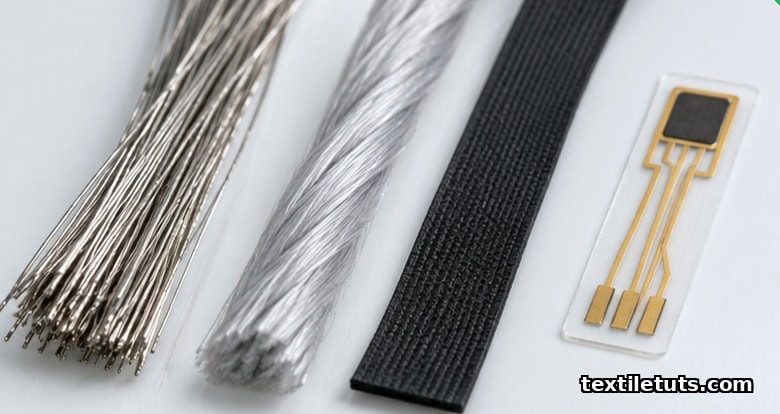
Conductive yarn electrodes. Stainless steel, silver-coated nylon, or carbon-loaded polymer filaments are knit or woven into a structure that sits against the skin. Two or more electrodes pick up the differential voltage of cardiac electrical activity (ECG) or the depolarization of muscle fibers (sEMG). A peer-reviewed study by Patel and colleagues in Journal of NeuroEngineering and Rehabilitation (Springer, 2010) reported that textile ECG electrodes achieve 92 to 97 percent concordance with standard adhesive Ag/AgCl electrodes during treadmill walking and stair climbing.
Resistive and piezoresistive sensors. Stretching a knit fabric with embedded conductive filaments changes its electrical resistance. Smart shorts, shirts, and socks measure joint angle, breathing volume, or foot-strike pressure this way. Piezoelectric polymers such as PVDF generate a voltage when compressed, which is how impact-sensing garments detect a concussion-grade hit to a helmet liner or a hard tackle on a shoulder pad.
Electrochemical sweat sensors. A printed or screen-coated microelectrode in a sweatband or chest patch measures sodium, potassium, lactate, or pH. Sodium concentration in sweat ranges from roughly 10 to 100 mmol/L during exercise and is a real-time marker of dehydration risk. The fully integrated wearable sweat sensor arrays described by Gao and colleagues in Nature (2016) demonstrated simultaneous sodium, potassium, lactate, and glucose tracking on a flexible patch worn during cycling and running.
Optical fibers and thermistors. Plastic optical fiber sewn into a shirt bends with the body, attenuating light in proportion to strain. NTC thermistors woven into a compression layer measure skin temperature at multiple sites, useful for heat-stroke monitoring in endurance events and for quantifying thermal strain in hot-climate training camps.
Where Smart Textiles Are Already in the Locker Room
Smart textiles have moved from laboratory curiosity to training-room standard in several sports.
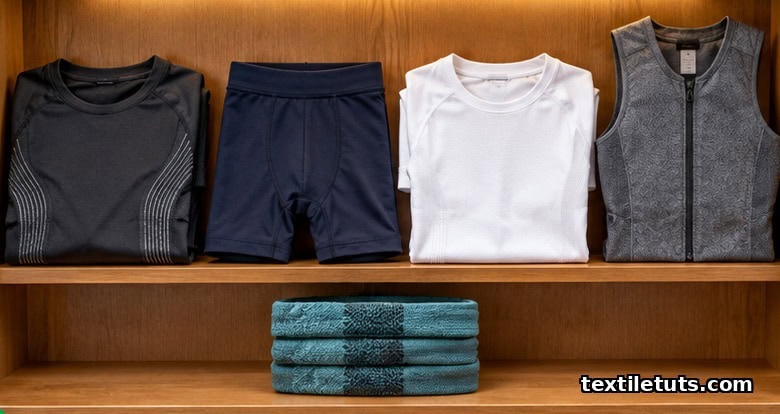
- Heart-rate and ECG shirts. Compression-base-layer tops with two integrated electrodes around the lower chest broadcast HR, HRV, and single-lead ECG to a watch or phone. Used by amateur cyclists, rowers, and professional football clubs for post-training recovery monitoring.
- sEMG compression sleeves. Knee, calf, and thigh sleeves with 4 to 16 channels of textile sEMG give physical therapists a measure of muscle activation timing during rehab, useful after ACL reconstruction.
- Heated base layers. Resistive heating wires or printed carbon traces, powered by a 5 V to 7.4 V battery pack, deliver 30 to 50 W per garment. Skiing, motorcycling, and outdoor stadium use are the strongest markets.
- Cooling vests. Phase-change material (PCM) microcapsules or small circulation tubes keep core temperature down in endurance events. PCM vests hold a cooling effect for 45 to 90 minutes once activated.
- Sweat-sensing patches. Single-use or reusable sweat patches worn on the arm or back give coaches electrolyte-loss data without a blood draw.
- Impact-sensing fabrics. Helmet liners, shoulder pads, and shin guards with piezoelectric foams log the magnitude, location, and frequency of blows. Increasingly mandated in youth American football and amateur boxing.
Smart Textile vs. Strap-on Wearable: Accuracy and Practical Differences
For an athlete choosing between a smart textile garment and a strap-on sensor, the table below summarizes the practical differences reported in peer-reviewed studies and from consumer-grade product testing.
| Property | Smart Textile Garment | Strap-on Wearable |
|---|---|---|
| Heart-rate accuracy (steady state) | ±2 to ±5 bpm | ±1 to ±3 bpm (chest strap) |
| ECG signal availability | Yes (single lead) | Yes (chest strap, single lead) |
| sEMG channel count | 4 to 16 channels typical | 1 to 4 channels (adhesive) |
| Sweat electrolyte data | Yes (Na+, K+, lactate, pH) | No (or with add-on sensor) |
| Wash cycles before failure | 30 to 80 (lab tested) | Wipe-down only |
| Comfort during 90+ min activity | High (no hot spots) | Moderate (chest strap slip) |
| Unit cost (consumer) | USD 120 to 400 | USD 40 to 150 |
Washability and Durability: The Hidden Engineering Problem
The single largest engineering barrier for smart sports textiles is laundry. Conductive yarns corrode, polymer sensors delaminate, and connector pads oxidize. Most published academic studies report 30 to 50 wash cycles before signal quality drops below clinically useful levels, far short of the 100+ cycles expected of a normal athletic base layer.
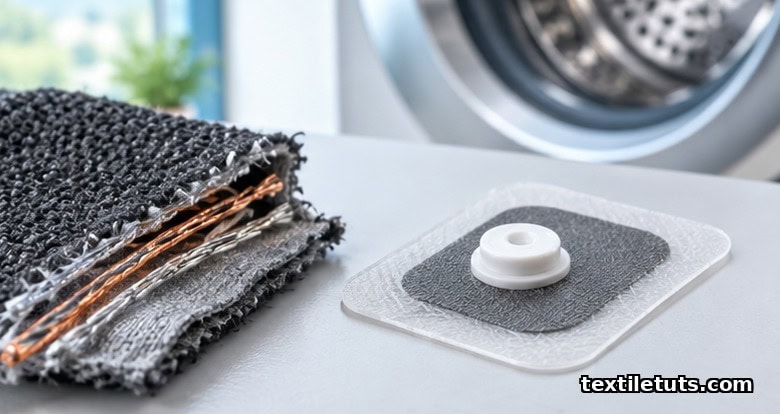
Textile engineers address this in three ways. Encapsulation coats the conductive elements with a thin polymer barrier (TPU, silicone) that survives mechanical agitation. Connector design moves the metal snap away from the wet zone, so corrosion happens at a replaceable part rather than at the textile-electrode interface. Material selection swaps pure silver coatings, which tarnish in chloride-rich sweat, for silver-silver-chloride hybrids that survive sweat and detergent pH swings.
Standard test methods for evaluating these garments are still borrowed from conventional apparel. ASTM D4966 (Martindale abrasion) is the most cited test in smart-textile durability papers, even though it was originally written for woven upholstery and apparel fabrics. AATCC TM135 (dimensional change after home laundering) is the dominant reference for wash-cycle trials. Conditioning follows ASTM D1776. The textile-engineering community is still waiting for purpose-built standards; the Woodhead/Elsevier textbook Wearable Electronics and Photonics (Tao, ed., 2005) catalogs the field’s gap here.
Safety, Privacy, and the Anxiety Question
Athletes worry, with reason, about the privacy of their biometric data. A heart-rate variability trace can reveal overtraining, illness, or pregnancy. GPS position logs can reveal a runner’s home address. Most consumer smart-textile brands now anonymize data at the device, encrypt transmission, and give the user a clear delete path in the app. Coaches and clubs that aggregate data should have written data-retention policies in place. Without them, the data is a liability under GDPR, CCPA, and similar privacy statutes.
The second anxiety is electrical safety. A sweat-soaked shirt with a 3.7 V to 7.4 V battery pack and a connector fault can, in worst-case lab scenarios, deliver a small DC shock. Smart-textile products sold in major markets must meet IEC 62133 (battery safety) and a regional EMC standard before retail, but textile-specific safety standards for sports garments are still maturing.
Frequently Asked Questions
Q: How accurate are smart textile heart-rate monitors compared with chest straps?
In published validation studies, textile-electrode ECG shirts deliver ±2 to ±5 bpm accuracy during steady-state cycling and running, against the ±1 to ±3 bpm of a Polar or Garmin chest strap. Under high motion (sprints, contact sport), the gap widens because textile electrodes pick up motion artifact from fabric sliding against skin. For HRV analysis at rest, the two technologies are essentially equivalent.
Q: Can smart textile garments be machine washed?
Most peer-reviewed garments tolerate 30 to 50 home wash cycles before electrode impedance drifts above the clinical threshold; some textile-electrode prototypes now reach 80 cycles with proper encapsulation. Manufacturer guidance typically requires a delicate cold cycle at ≤30 °C, no fabric softener, and air drying. Hand washing extends life further. A removable electronics pod keeps the conductive textile washable on its own.
Q: Do smart textiles in sports really improve athletic performance?
Smart textiles do not make athletes faster directly, but they shorten the feedback loop between training and adjustment. A runner who sees real-time lactate trends, a cyclist with continuous power-and-HR data, and a rehab patient with daily sEMG activation patterns can tune training load faster than with periodic lab tests alone. Peer-reviewed studies report small to moderate performance gains (1 to 4 percent) in trained athletes using continuous biometric feedback over an 8 to 12 week block.
Q: What happens to smart textile sensors after their useful life?
This is the field’s open sustainability problem. Conductive yarns mix silver, stainless steel, and carbon with polyester or nylon, which complicates mechanical recycling. Most consumer products end up in textile shredding streams where the metals are lost. Research labs are testing bio-based conductive polymers and separable connector designs, but a true closed-loop recycling path for smart textiles does not yet exist at scale.
Q: Are there ISO or ASTM standards specific to smart sports textiles?
No purpose-built ISO or ASTM standard for smart sports textiles exists yet, although related work is in development under ISO/TC 38 (textiles) and ASTM Committee F23 (protective clothing). Until dedicated standards arrive, peer-reviewed studies cite existing methods for conditioning (ASTM D1776), dimensional change after washing (AATCC TM135), and abrasion (ASTM D4966), then add custom protocols for signal retention after repeated laundering.
References
- Stoppa, M., Chiolerio, A. (2014). Wearable Electronics and Smart Textiles: The New Revolution. Sensors, 14(7), 11957–11992. https://www.mdpi.com/1424-8220/14/7/11957 — peer-reviewed review covering textile-based sensors, conductive materials, and integration methods.
- Patel, S., Park, H., Bonato, P., Chan, L., Rodgers, M. (2010). A review of wearable sensors and systems with application in rehabilitation. Journal of NeuroEngineering and Rehabilitation, 7, 21. https://jneuroengrehab.biomedcentral.com/articles/10.1186/1743-0003-7-21 — peer-reviewed comparison of wearable sensor architectures for sports and rehabilitation.
- Gao, W., Emaminejad, S., Nyein, H.Y.Y., Chiu, S., Davies, L., Kim, H., Matsuhisa, N., Pflug, S., Svensson, M., Tybrandt, K., Wang, B., Zhao, Y., Soh, H.T., Someya, S., Rogers, J.A., Javey, A. (2016). Fully integrated wearable sensor arrays for multiplexed in situ perspiration analysis. Nature, 529(7587), 509–514. https://www.nature.com/articles/nature16521 — peer-reviewed sweat-sensor arrays for sodium, potassium, lactate, and glucose in athletes.
- Tao, X. (ed.) (2005). Wearable Electronics and Photonics. Woodhead Publishing (Elsevier). https://www.sciencedirect.com/book/9781855737965 — textbook chapter on conductive yarns, textile electrodes, and integrated electronics for sports and medical garments.
- Van Langenhove, L. (ed.) (2007). Smart Textiles for Medicine and Healthcare: Materials, Systems and Applications. Woodhead Publishing (Elsevier). https://www.sciencedirect.com/book/9781845690274 — peer-reviewed book covering reactive textile systems, biocompatibility, and durability of smart garments.
- ASTM D4966-22. Standard Test Method for Abrasion Resistance of Textile Fabrics (Martindale Abrasion Test Method). ASTM International. https://www.astm.org/d4966-22.html — consensus standard for abrasion testing of smart-textile fabrics.
- AATCC TM135-2018. Dimensional Changes of Fabrics after Home Laundering. American Association of Textile Chemists and Colorists. https://www.aatcc.org/testing/methods/ — consensus standard for wash-cycle durability trials on smart garments.
This article is the working reference for smart textile applications in sports. Editorial by Md. Asad Ullah (Meem), TextileTuts. Sources: Stoppa & Chiolerio (Sensors, MDPI, 2014); Patel et al. (J NeuroEng Rehabil, Springer/BMC, 2010); Gao et al. (Nature, 2016); Tao (Woodhead/Elsevier, 2005); Van Langenhove (Woodhead/Elsevier, 2007); ASTM D4966-22; AATCC TM135-2018, as cited.


