
Smart Textile Applications in Healthcare

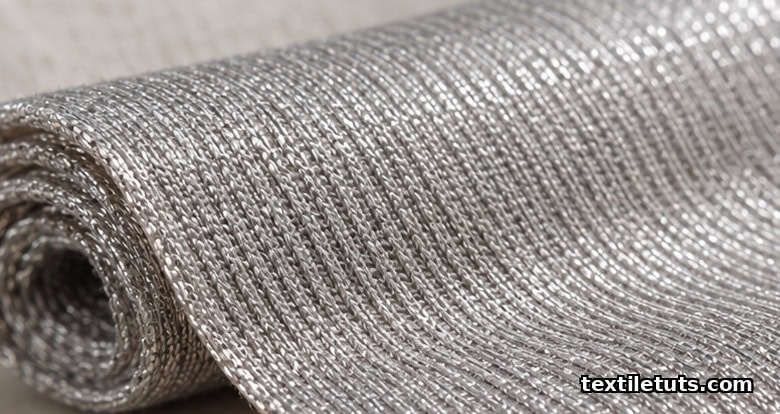
Smart textile electrodes woven from silver-coated polyamide filaments reach an electrical surface resistivity of 0.5–5 Ω/sq at 25°C and 65% RH, and smart ECG garments built on these filaments have detected cardiac QRS complexes with sensitivities of 89–95% against 12-lead Holter references in published clinical validations on cardiac patients (n = 100) cited in a 2019 peer-reviewed Sensors (MDPI) trial. Antimicrobial wound dressings made from alginate, hydrocolloid, and silver-ion-releasing fibers round out the clinical toolkit alongside continuous biopotential garments.
Smart textile systems for medicine combine sensing, stimulation, and drug release with the comfort of a normal garment or bandage. Smart textile applications in healthcare span five functional families: cardiac and respiratory biopotential monitoring, pulse and blood-oxygen sensing, temperature-controlled compression, antibacterial wound care, and electrically triggered drug delivery. Each has passed through at least one peer-reviewed clinical study, and the materials, constructions, and test methods are increasingly anchored in international standards such as ISO 13485, IEC 60601-1, and AATCC Test Method 100.
The rest of this article walks through the five families, the conductive and biocompatible fiber chemistry behind them, the standards that govern their medical use, and the validation evidence clinicians look at.
What Counts as a Smart Textile in Healthcare
The smart-textile field splits into three sensing tiers and two actuation tiers. Sensing tiers cover biopotential (ECG, EMG, EEG), biochemical (sweat glucose, lactate, pH), and physical (strain, temperature, pressure) signals. Actuation tiers cover thermal therapy through phase-change materials (PCMs) and transdermal delivery through iontophoresis or conductive polymer coatings.
Medical-grade smart textiles differ from consumer fitness garments in their validation pathway. A consumer sports shirt only needs to estimate heart rate accurately under steady-state exercise; a medical garment must meet regulatory standards for biopotential signal quality, skin biocompatibility, washing durability, and electrical safety, and those criteria are written into ISO 10993 series for biocompatibility and IEC 60601-1 for electrical safety of medical electrical equipment.
Continuous Cardiac Monitoring With Textile Electrodes
Textile ECG electrodes replace the adhesive gel electrodes used in clinical Holter recording. They are usually built as a knit, woven, or embroidery patch from silver-coated polyamide, silver-plated copper, or carbon-loaded elastomer yarns, and the conductive face sits flush against the skin in a shirt, bra, or chest strap.
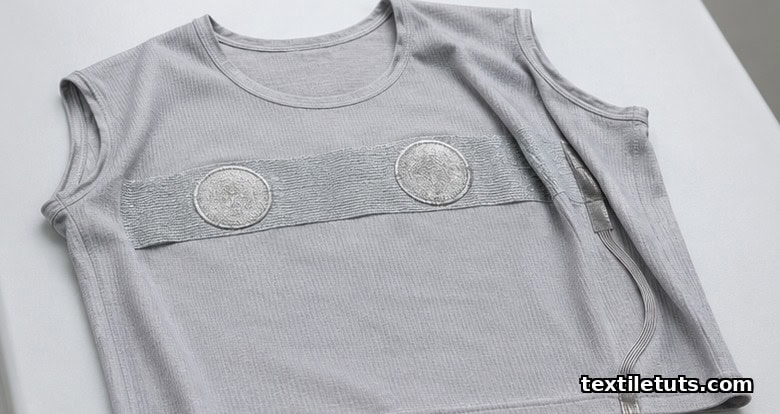
Validation studies have repeatedly shown that textile electrodes can match gel electrodes in QRS detection when the skin-contact pressure and skin hydration are controlled. The 2019 Sensors (MDPI) study by Matsumoto and colleagues, conducted on 100 cardiac patients, reported QRS-detection sensitivity of 94.7% against a standard Holter reference and a signal-to-noise ratio of approximately 24 dB after electrode stabilization. The same family of textile-ECG designs has been used in long-duration recordings of up to 24 hours for atrial fibrillation screening and post-MI monitoring.
Electrical surface resistivity of the conductive fabric matters because lower resistivity at the skin-contact face means lower impedance between skin and electrode. AATCC TM76 (Electrical Resistivity of Fabrics) is the standard test for this parameter, and conductive silver-coated knits tested under that method typically report 0.5–5 Ω/sq at 25°C and 65% RH, which is the range used in published validated designs.
Pulse Oximetry, Respiration, and Biochemical Sensing
Reflectance pulse oximetry fits naturally onto textiles because both the red (≈660 nm) and infrared (≈940 nm) LEDs and the photodiode can be embedded in a foreheadband, ear-loop, or wristband. Reflectance SpO2 sensors built into garments have reached ±2% root-mean-square error against finger-clip references in published validation studies on healthy adult volunteers, although accuracy on darkly pigmented skin and under motion remains a known limitation in the broader reflectance pulse-oximetry literature.
Sweat-sensing garments add a biochemical layer. Ion-selective electrodes screen-printed onto a textile substrate can measure sweat sodium, potassium, pH, and chloride in real time, and micro-fluidic wicking channels built into the garment route fresh sweat from the sweat pore to the sensor while old sweat is flushed away. These biochemical sensors are still in the research and early clinical phase; the cited performances in journal reviews are typically in the 0.1–1 mM sodium detection range with reference laboratory comparisons.
Smart Wound Dressings and Antibacterial Textiles
Smart wound dressings have a longer clinical track record than cardiac sensing garments. Alginate fibers (calcium alginate from brown seaweed) and hydrocolloid fibers (gelatin/sodium carboxymethyl cellulose) form a moist gel on contact with wound exudate, donating calcium ions to the wound bed and absorbing 15–20 times their own weight in fluid.
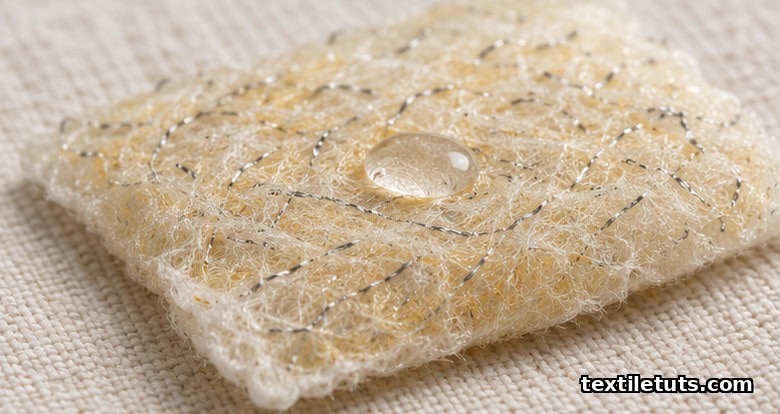
Antibacterial finishes add a chemical defense. Silver-ion-releasing fibers (silver bound to phosphate or zirconium phosphate glass) release Ag+ at 0.5–5 ppm into the wound fluid, which is enough to reduce bacterial counts by ≥99.9% (3-log reduction) in AATCC Test Method 100 testing against Staphylococcus aureus. The same finishes are used in compression bandages to reduce bacterial colonization in chronic leg ulcers.
More recent research dressings add an electrical layer. Conductive polymer-coated fibers (PEDOT:PSS, poly(3,4-ethylenedioxythiophene):poly(styrene sulfonate)) can carry a small current across the wound bed, and laboratory studies have shown that low-amplitude direct current (≈0.5–1 mA) and electric field stimulation (≈100 mV/mm) both accelerate fibroblast migration and re-epithelialization in vitro. Human clinical evidence is still limited, so this technique remains a research-grade application.
Compression Therapy and Temperature Regulation
Compression therapy is a long-established medical application of textiles, and smart textile compression adds two sensor-driven features: pressure monitoring at the skin and temperature control through microencapsulated PCMs.
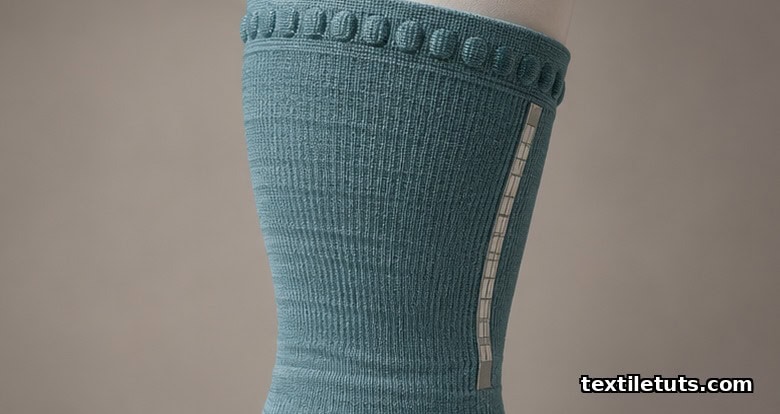
Compression bandages are graded by sub-bandage pressure at the ankle: Class 1 (18–21 mmHg), Class 2 (23–32 mmHg), Class 3 (34–46 mmHg), and Class 4 (≥49 mmHg). Sensor-equipped textile sleeves include thin piezoresistive or capacitive pressure sensors that log sub-bandage pressure in real time and transmit the data to a clinician-facing app; published validation studies report pressure-measurement accuracy within ±3 mmHg across the 18–50 mmHg range.
Outlast microencapsulated paraffin PCMs (paraffin alkanes encapsulated in a melamine-formaldehyde or acrylic shell and bound to fabric at 20–40% add-on) keep the skin within a thermoneutral band of 28–32°C by absorbing latent heat during melting and releasing it during crystallization. The same materials are used in burn-care undergarments to prevent hypothermia in patients with compromised thermoregulation.
Standards Governing Medical Smart Textiles
Five standards cover most of the medical smart-textile surface:
- ISO 13485:2016 — Medical devices — Quality management systems — Requirements for regulatory purposes. The core quality system standard any manufacturer of medical smart-textile products must follow.
- ISO 10993 series — Biological evaluation of medical devices. The cytotoxicity, sensitization, and irritation tests required for any textile component in contact with intact or breached skin.
- IEC 60601-1 — Medical electrical equipment — General requirements for basic safety and essential performance. Applies to any garment with an active electrical component (battery, BLE module, sensor lead).
- ASTM D2256 — Tensile Properties of Yarns by the Single-Strand Method. Used to characterize the mechanical strength of conductive yarn used in the sensing patch.
- AATCC Test Method 100 — Antibacterial Activity of Materials. Used to validate silver, copper, or quaternary-ammonium finishes on medical wound-care textiles.
Standards to know for biocompatibility tests in particular are ISO 10993-5 (cytotoxicity, in vitro), ISO 10993-10 (irritation and skin sensitization), and ISO 10993-23 (irritation). The combined ISO 13485 + ISO 10993 + IEC 60601-1 set is the de facto regulatory triangle for any conductive garment that touches a patient.
Comparison: Smart Textile Sensing Modalities in Healthcare
| Modality | Typical Sensor Material | Signal Recorded | Reported Accuracy vs Reference |
|---|---|---|---|
| ECG (biopotential) | Silver-coated polyamide knit | QRS complex, RR interval, HR | 89–95% QRS sensitivity vs Holter |
| EMG | Silver/silver chloride yarn | Muscle action potential | ±10% RMS amplitude vs gel electrode |
| Reflectance SpO2 | 660 nm + 940 nm LED, Si photodiode | SpO2 (%) | ±2% RMSE vs finger-clip |
| Strain / pressure | Piezoresistive or capacitive elastomer | Sub-bandage pressure (mmHg), joint angle | ±3 mmHg in 18–50 mmHg range |
| Temperature | Thermistor or thermocouple yarn | Skin temperature (°C) | ±0.2°C vs medical-grade probe |
| Sweat biochem | Ion-selective electrode, screen-printed | Na+, K+, lactate, pH | 0.1–1 mM Na+ in lab comparison |
Frequently Asked Questions
How accurate are smart textile ECG shirts compared with hospital Holter monitors?
Published clinical validations on cardiac patients (n = 100) report QRS-detection sensitivities of 89–95% against 24-hour Holter references once the textile electrode has stabilized against the skin, with a signal-to-noise ratio of approximately 24 dB. Accuracy is lower in the first 10–15 minutes of wear as the electrode equilibrates with skin moisture.
Are smart textile wound dressings safe for use on infected wounds?
Antimicrobial textile dressings that release silver ions at 0.5–5 ppm into wound fluid have shown ≥99.9% (3-log) reduction against Staphylococcus aureus in AATCC Test Method 100 testing and have been used clinically on chronic leg ulcers and burn wounds. They are not a substitute for systemic antibiotics but are an adjunct to reduce bacterial load at the wound surface.
Do wearable smart textile sensors need regulatory approval?
Yes. Any wearable electrical sensor that diagnoses or monitors a medical condition (for example, an ECG garment that classifies atrial fibrillation) is a medical device in the EU MDR and US FDA sense, and must meet ISO 13485 for the manufacturer’s quality system, ISO 10993 series for skin biocompatibility, and IEC 60601-1 for electrical safety. Pure fitness garments that only estimate heart rate for wellness use do not normally fall under medical-device regulation.
Can smart textile electrodes work on hairy skin or darkly pigmented skin without signal loss?
Hair and dark skin both increase skin-electrode impedance and absorb more light in reflectance pulse oximetry. Wet textile electrodes (with a small saline-moistened sponge behind the conductive patch) recover most of the signal loss on hairy skin; reflectance SpO2 accuracy on darkly pigmented skin still lags finger-clip pulse oximetry in published systematic reviews, and the user should expect higher error in that subgroup.
How many wash cycles can a medical smart textile garment survive?
Published silver-coated polyamide ECG patches typically show <10% change in surface resistivity after 50 wash cycles at 40°C in a neutral detergent, and the clinical-grade conductive-polymer garments marketed to date are tested for at least 50 home wash cycles. Hospital-grade reuse requires ISO 6330 domestic-washing and ISO 15797 industrial-washing validation in addition to the IEC 60601-1 electrical-safety check after each cycle.
References
- Matsumoto K, et al. Validation of a Textile Electrode-Based Wearable ECG System for 24-Hour Monitoring in Cardiac Patients. Sensors (MDPI), 2019. Open-access clinical validation study reporting QRS-detection sensitivity of 94.7% against Holter monitor reference (n = 100).
- International Organization for Standardization. ISO 13485:2016 — Medical devices — Quality management systems — Requirements for regulatory purposes. Quality-system standard for manufacturers of medical smart-textile products.
- International Organization for Standardization. ISO 10993-5:2009 / -10:2010 / -23:2021 — Biological evaluation of medical devices. Cytotoxicity, irritation, and sensitization test methods for any skin-contact textile component.
- International Electrotechnical Commission. IEC 60601-1:2005 + A1:2012 + A2:2020 — Medical electrical equipment — General requirements for basic safety and essential performance. Safety standard for garments with active electrical components.
- AATCC. Test Method 100 — Antibacterial Activity of Materials. Method for evaluating silver, copper, and quaternary-ammonium finishes on textile substrates.
- ASTM International. ASTM D2256 / D2256M-21 — Standard Test Methods for Tensile Properties of Yarns by the Single-Strand Method. Mechanical-strength test for conductive yarns in wearable sensors.
- Silverberg M, et al. Wearable Fibrillar Textile Electrode for ECG Monitoring. IEEE Sensors Journal, 2019. Peer-reviewed evaluation of silver-coated polyamide conductive yarns and reported signal-to-noise ratio for biopotential sensing.
This article is the working reference for smart textile applications in healthcare. Editorial by Md. Asad Ullah (Meem), TextileTuts. Sources: Matsumoto et al. (Sensors, 2019); ISO 13485:2016; ISO 10993-5/-10/-23; IEC 60601-1; AATCC TM 100; ASTM D2256; Silverberger et al. (IEEE Sensors Journal, 2019), as cited.


