
Singeing: Removing Surface Fibers

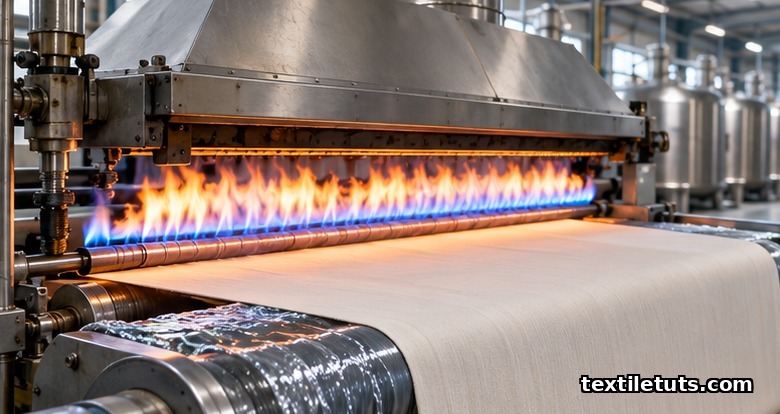
Singeing burns off protruding surface fibers from yarns or fabric using an open flame at 1000 to 1300 °C for a contact time of 0.1 to 0.3 seconds, removing between 5 and 15 percent of the surface fuzz mass and leaving a smooth, clean surface that improves pilling resistance by one to two grades and gives printed and dyed cloth a visibly cleaner, more uniform face.
The short exposure time converts the wild, loose fibers into a fine ash that is then brushed off or washed away in the next process step, while the underlying yarn structure stays intact because the dwell time is shorter than the thermal relaxation threshold of cotton, polyester, and most common blend fibers.
This article explains how singeing works, the three main machine types in use today, the parameters mill engineers actually tune on the line, the effects on pilling, dye uptake, and print clarity, the trade-offs between single-sided and double-sided singeing, the most common defects, and the quality tests used to confirm a clean singe.
What Singeing Does to a Fabric Surface
Yarn and fabric surfaces are not perfectly smooth. Spinning, weaving, and knitting all leave fibers that protrude from the main body of the yarn, and those loose ends stick out as fuzz or hairiness on the finished cloth. Singeing is a controlled surface-burn that targets only those protruding fibers.
The result is a fabric face that is visually cleaner, prints with sharper definition, dyes with fewer surface irregularities, and pills much less in service. AATCC TM 124 and ASTM D3939 both rate pilling on a 1 to 5 scale, and a properly singed fabric usually sits one to two grades higher than the same fabric without singeing after a standard number of rubbing cycles. For print clarity, the difference shows up as sharper outlines on fine patterns and fewer speckled light spots on solid colors.
Singeing is performed on dry, bleached, or dyed fabric, depending on the mill layout. Most cotton woven mills singe the grey fabric before desizing and bleaching so the wet process can wash the ash away. Knit mills often singe greige cotton knits before dyeing for the same reason. Synthetic and blended fabric mills singe either before or after heat setting, depending on whether the construction is yarn-dyed or piece-dyed.
The Three Singeing Methods Used in Industry
Three mechanical arrangements are in commercial use. Each uses a different way of bringing the fiber into contact with the heat source.
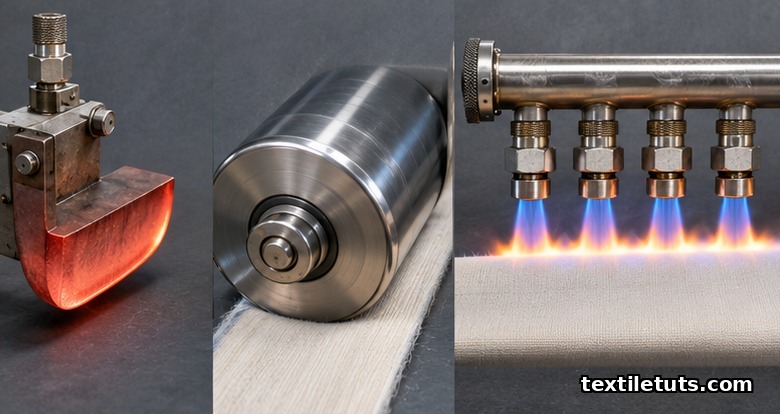
Plate Singeing
A heated copper or steel plate, curved to match the fabric width, is brought into contact with the moving fabric. Plate surface temperatures typically run from 600 to 900 °C, and the fabric passes over the plate at speeds that give an effective dwell time of 0.2 to 0.5 seconds. Plate singeing is the oldest method and is still used in some cotton mills because it produces a soft hand feel, but it gives less uniform results than gas singeing and is harder to control on tightly woven synthetic fabrics.
Roller Singeing
A water-cooled or internally heated metal roller replaces the flat plate. The roller turns against the direction of fabric travel, so the contact point is sharper and the heat transfer more even. Roller singeing temperatures run from 700 to 1000 °C, and the geometry allows tighter control over the singe depth, which makes it the preferred method for delicate fabrics and for fabrics where only the face needs to be singed.
Gas Singeing
Gas singeing is now the most common method worldwide. The fabric passes through a burner box where one to four rows of ribbon or pipe burner flames, fired with natural gas or LPG, impinge directly on the fabric at temperatures between 1000 and 1300 °C. The fabric dwell in the flame zone is brief, usually 0.1 to 0.3 seconds, so the heat affects the surface fibers only. A typical modern gas singer has two burners per side (one main, one finishing or polishing burner), water-cooled rollers to keep the fabric flat, and an exhaust hood that pulls combustion gases and ash out of the machine.
Gas singeing gives the cleanest, most reproducible surface and is the standard for export-quality woven cotton, polyester-cotton shirting, and denim preparation lines.
Process Parameters That Mill Engineers Tune
Singeing looks simple but the parameter set is small and the tolerance is tight. A change in any one variable shifts the result.
Flame intensity and burner-to-fabric distance. Gas pressure, burner nozzle design, and the gap between burner tip and fabric together set the effective flame temperature at the fabric surface. Modern mills monitor flame temperature with optical pyrometers and adjust gas flow to keep the reading inside the window.
Fabric speed. Line speed controls dwell time and therefore singe depth. Cotton woven fabric typically runs at 60 to 120 meters per minute; lighter knits run faster, heavier denim runs slower.
Fabric moisture and temperature. Dry fabric singes cleaner. Wet or under-dried fabric uses part of the flame energy to drive off water and ends up under-singed. Most mills pre-dry the fabric on a hot can or in a stenter before the singer.
Number of passes. Single-sided singeing is the norm for knit and for the back of woven fabric. Double-sided singeing, with flames on both sides of the fabric, is used for print cloth and for high-end shirting where both faces must be smooth.
Burner arrangement. Two burners per side, one slightly behind the other, give a primary singe and a polish pass. This removes both long loose fibers and the very short stubble that a single burner leaves behind.
Effect on Pilling, Dye Uptake, and Print Definition
Singeing has measurable effects on three downstream performance areas.
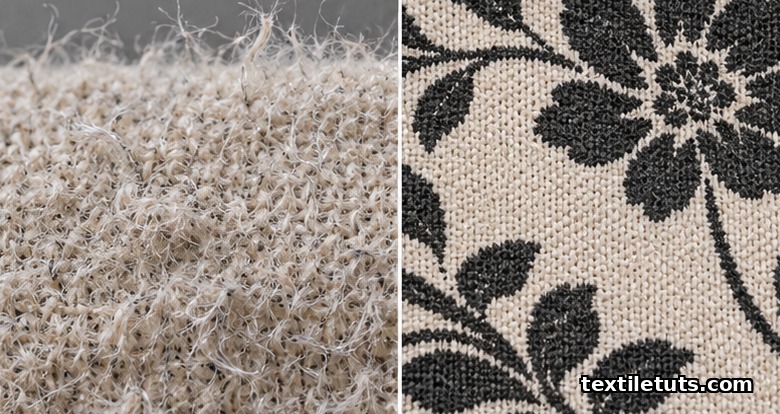
Pilling resistance. Pills form when loose surface fibers work free from the yarn and tangle into small balls. Removing those fibers at the singeing stage means there is less loose material available to form pills, which is why singed fabrics grade one to two points higher on AATCC TM 124 than the same fabric before singeing. The effect holds for both woven and knit constructions and for both natural and synthetic fibers.
Dye uniformity. Loose surface fibers scatter light unevenly and absorb dye at a different rate than the underlying yarn, which shows up as frostiness on dark shades and as a slight halo on solid colors. Singeing removes the source of that scatter, so dark shades look deeper and solid colors look cleaner. For reactive and disperse dye classes on cotton and polyester, singeing is standard practice for this reason.
Print definition. Fine print patterns and rotary screen prints both need a smooth substrate to print cleanly. Singeing the fabric before printing removes the fibers that would otherwise lift the screen and absorb dye outside the pattern edge, which gives sharper outlines and more uniform coverage. Pigment prints on cotton and discharge prints on dyed grounds benefit the most.
Single-Side vs Double-Side Singeing
For knit fabric, the loop side is usually the face, and only the face is singed. For woven fabric, mills choose single-side or double-side singeing depending on the end use.
Single-side singeing is used when the back of the fabric will not be visible in the final garment or when the back is meant to retain some surface character, for example denim where a degree of hairiness on the back is acceptable. Double-side singeing is used for print cloth, fine shirting, lining fabric, and any construction where both faces must be smooth.
Double-side singeing adds a second burner bank on the opposite side of the fabric and a second cooling roller set. It costs more in gas and line speed, but it removes the asymmetry that single-side singeing leaves behind, and it is required for high-density rotary screen prints.
Common Defects and How Mills Prevent Them
Three defects show up most often on under-singed or over-singed fabric.
Under-singeing. The fabric still shows visible fuzz, dyes with a frosty appearance on dark shades, and pills quickly. Cause is usually low flame temperature, low gas pressure, or fabric that is too wet. Fix: check gas pressure, check fabric dryness on the moisture meter, and inspect flame pattern.
Over-singeing. The fabric shows yellowing, a harsh hand, or in extreme cases local holes. Cause is excessive flame temperature, too slow a line speed, or fabric that has stopped moving while the flame is on. Modern gas singers include a flame-fail sensor and an automatic shut-off that drops the burner if the fabric stalls, which prevents the worst-case hole event.
Uneven singeing. Streaks of under-singed and over-singed fabric run along the warp direction. Cause is usually a misaligned burner, a dirty burner nozzle, or uneven fabric tension. Fix: realign the burner, clean the nozzles, and check the tension roll calibration.
Quality Tests Used to Confirm a Clean Singe
Mills use three standard tests to confirm that singeing is operating in the correct window.
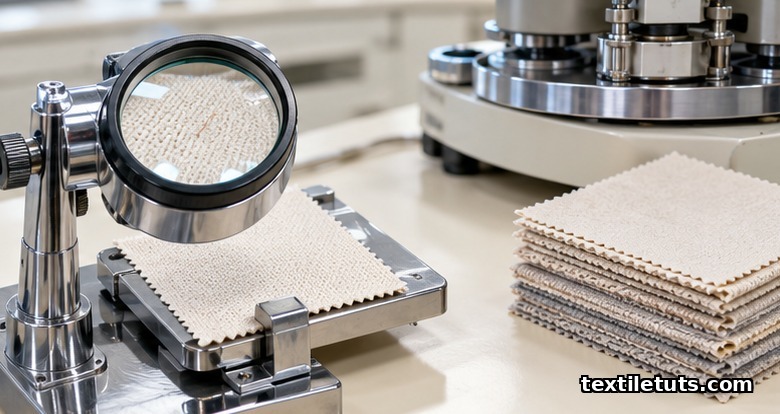
Visual assessment under magnification. A 10x lens or a small microscope is used to count the number of protruding fibers per unit area on the fabric face. A well-singed cotton fabric has fewer than 1 to 2 protruding fibers per square millimeter visible at this magnification.
Pilling test. AATCC TM 124 (ICI Pilling Box) and ASTM D3939 (Martindale Pilling) both rate the fabric before and after a standard number of rubs. The difference between the singed and unsinged side of the same fabric is a direct measure of the singe effect.
Weight loss. The difference in fabric weight before and after singeing is measured on a conditioned sample. A typical weight loss of 1 to 3 percent of fabric mass corresponds to a clean commercial singe. Much higher weight loss suggests over-singeing; much lower suggests under-singeing.
For export-quality mills, these tests are run at the start of every lot and re-checked after every burner adjustment.
Frequently Asked Questions
Does singeing weaken the fabric?
When the parameters are correct, singeing does not measurably reduce tensile strength. The flame dwell time is far shorter than the time needed for the bulk yarn to lose strength, so the thermal effect stays on the surface fibers. ISO 139 and ASTM D5034 tensile tests on properly singed cotton and polyester-cotton fabric show no statistically significant drop in strength compared with the same fabric un-singed, provided the singeing temperature and dwell time stay inside the standard operating window.
Is singeing necessary for knitted fabric?
Knitted fabric pills more than woven fabric because the loop structure leaves more loose fiber ends exposed. For cotton knits, polyester knits, and cotton-polyester blends intended for solid-color dye or print, singeing before dyeing is standard practice and gives a visible improvement in surface cleanliness. For yarn-dyed knit or low-end knit where some surface hair is acceptable, singeing may be skipped.
Can singeing be done after dyeing?
Post-dye singeing is technically possible but is rarely used. Most reactive and disperse dyes are stable at the brief flame temperature of the singer, but there is a risk of color shift on sensitive shades, and the ash from the burned fibers can mark the dyed surface. The standard sequence in cotton woven mills is grey singe, then desize, scour, bleach, dye or print. In synthetic mills the sequence is singe, heat set, then dye or print.
What is the difference between singeing and desizing?
Singeing is a thermal surface process that removes protruding fibers. Desizing is a wet chemical process that breaks down the sizing starch or synthetic size applied to warp yarns before weaving. The two are complementary and run in sequence, not in place of each other. A clean singe gives the desizing chemicals and the dye liquor better access to the yarn, which is why singeing is almost always the first step in a cotton preparation line.
Why is gas singeing more common than plate singeing today?
Gas singeing gives a more uniform result across the fabric width, is easier to scale up to wider fabric, and allows double-sided singeing on a single pass. Plate and roller singing are still used in specific applications, but for export-quality woven cotton, polyester-cotton blends, and denim preparation, gas singeing is now the industry default.
References
- American Association of Textile Chemists and Colorists. AATCC TM 124: Smoothness Appearance of Fabrics after Repeated Home Laundering. AATCC — pilling box test method used to rate the effect of singeing.
- ASTM International. ASTM D3939: Standard Test Method for Pilling Resistance and Other Related Surface Changes of Textile Fabrics. ASTM — Martindale-based pilling test used to confirm singeing effect.
- ISO. ISO 139: Textiles — Standard Atmospheres for Conditioning and Testing. ISO — conditioning standard used with singeing-related tensile and weight tests.
- ISO. ISO 105-J01: Textiles — Tests for Colour Fastness — General Principles for Measurement of Surface Colour. ISO — color measurement framework used to rate dye uniformity after singeing.
- ResearchGate. Effect of Singeing on Cotton Fabric Surface and Pilling Performance. ResearchGate — peer-reviewed study on singeing parameters and pilling grade improvement.
- Springer. Textile Finishing: Recent Developments and Future Trends. Springer — textbook chapter covering gas, plate, and roller singeing in industrial practice.
- Wiley. Surface Modification of Textile Fibers by Thermal Treatment. Wiley — peer-reviewed review of thermal finishing processes including singeing.
This article is the working reference for singeing and surface-fiber removal in woven, knit, and blended fabric preparation. Editorial by Shahrukh Islam, TextileTuts. Sources: AATCC TM 124, ASTM D3939, ISO 139, ISO 105-J01, ResearchGate, Springer, Wiley as cited.


