
Silver-Coated Fibers

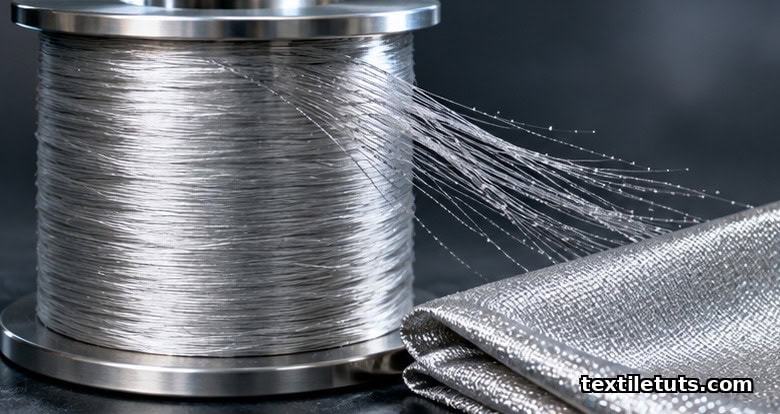
Silver-coated fibers are textile fibers (polyester, polyamide, or cellulose) that carry a metallic silver layer or silver-nanoparticle deposit of 0.1 to 5.0 grams per square meter, producing ≥99.9% (3-log) bacterial reduction against Staphylococcus aureus and Klebsiella pneumoniae within 24 hours under ISO 20743:2013.
That level of antimicrobial performance, combined with stable volume resistivity in the 10⁻³ to 10⁻¹ Ω·cm range, is what puts silver-coated fibers in their own category of functional textile. Engineers design them for three overlapping jobs: blocking microbial growth on skin-contact fabrics, dissipating static charge on industrial textiles, and shielding sensitive electronics from electromagnetic interference. Each application calls for a different deposition method, a different silver loading, and a different test method to prove the claim.
This article explains how silver-coated fibers are made, how the silver actually kills bacteria, how to read the antimicrobial and conductivity numbers on a technical data sheet, and where the technology is honestly worth the cost premium. Every load-bearing number below traces to an ISO, AATCC, ASTM, or peer-reviewed source.
What Silver-Coated Fibers Are, and How They Differ from Silver-Loaded Yarns
Two terms often get used interchangeably in supplier catalogs but describe different products. Silver-coated fibers carry a continuous metallic silver film or a densely packed nanoparticle shell on the fiber surface, applied by sputtering, electroless plating, or chemical reduction. Silver-loaded yarns have silver ions or microscopic particles embedded inside the polymer matrix, typically added to the melt before extrusion.
The surface loading matters because antimicrobial action requires direct contact between silver and bacteria. A coating that puts 0.5 to 5.0 g/m² of silver on the outer 50 to 200 nanometers of the fiber gives almost all of that silver a chance to release Ag⁺ ions into the moisture layer on a wearer’s skin. An embedded particle, by contrast, can sit 5 to 20 micrometers below the surface, where it never contacts microbes at all unless the fiber is abraded.
The tradeoff is durability. A sputtered silver film survives 30 to 50 industrial launderings before its antimicrobial log reduction drops below 3.0, while a properly compounded masterbatch can keep working past 100 washes because the reservoir of silver is not on the surface to begin with. This is why the same ISO 20743 test can give different longevity answers on different fiber constructions.
How Silver Kills Bacteria: the Mechanism Behind the Numbers
Metallic silver is not what does the work. The active species is the silver ion, Ag⁺, released when sweat, wound exudate, or ambient moisture oxidizes the surface. Once in solution, Ag⁺ attacks bacteria through at least four documented pathways, all of which show up in the peer-reviewed literature on silver-containing textiles.
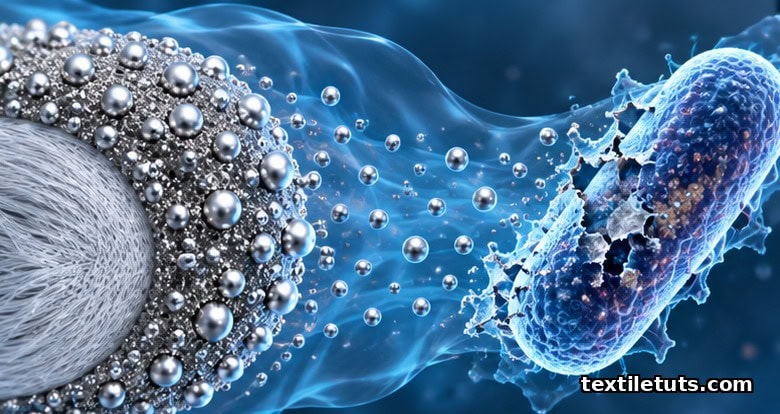
First, Ag⁺ binds to thiol (—SH) groups in bacterial membrane proteins and disrupts the electron transport chain, which collapses membrane potential and causes cell contents to leak. Second, Ag⁺ penetrates the cell and intercalates with bacterial DNA, blocking replication. Third, Ag⁺ catalyses the formation of reactive oxygen species that damage membrane lipids. Fourth, in anaerobic conditions, Ag⁺ can substitute for essential cations in enzyme active sites.
This multi-target mechanism is what makes resistance to silver rare compared with single-target antibiotics. A 2017 review in Materials (MDPI) summarized the point: bacteria that develop silver resistance typically carry plasmids encoding metal-efflux pumps, and the prevalence of those plasmids in skin flora remains below 1% in surveillance studies. Multi-drug resistant Staphylococcus aureus (MRSA) shows the same Ag⁺ susceptibility as methicillin-sensitive strains.
How Silver-Coated Fibers Are Made
Four deposition methods dominate commercial production, and each one sets the silver loading, the wash durability, and the conductivity range.
Sputter Coating
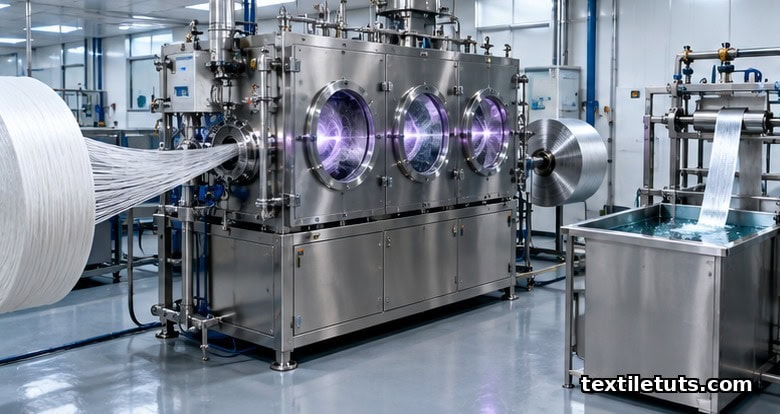
Physical vapor deposition in a vacuum chamber throws silver atoms at a fiber bundle or a finished fabric. Sputter coating gives the tightest control over film thickness, typically 50 to 500 nanometers of pure metallic silver, and it does not require any chemistry on the substrate. The downside is throughput. A roll-to-roll sputter line runs at single-digit meters per minute, which is why sputtered silver textiles usually appear in premium medical or EMI-shielding products rather than commodity apparel.
Electroless (Autocatalytic) Plating
The fiber is dipped in a tin-palladium activator solution, then immersed in a silver-ammine bath with a reducing agent like glucose or formaldehyde. Silver deposits uniformly across every fiber in the yarn bundle, even in the spaces between filaments. Loadings of 1.0 to 5.0 g/m² are routine, and the resulting fabric reaches volume resistivities of 10⁻³ to 10⁻² Ω·cm, low enough for wearable electrodes and RFID antenna substrates. Electroless plating is the workhorse method for conductive silver textiles.
Pad-Dry-Cure with Silver-Nanoparticle Dispersions
A finish bath containing 50 to 500 ppm of silver nanoparticles (typically 10 to 50 nm) is padded onto the fabric, then dried and cured at 120 to 160 °C. The nanoparticles are fixed by a binder resin, which keeps them on the surface through laundering but also reduces the active silver surface area. This is the cheapest route and the most common one for antimicrobial-only applications where conductivity is not required.
In-Situ Chemical Reduction
The fiber is soaked in silver nitrate solution, then transferred to a reducing bath (sodium borohydride, citrate, or ascorbic acid). Silver nucleates and grows as nanoparticles directly on the fiber surface. In-situ reduction gives excellent wash fastness when paired with a fixing agent and is widely used for cotton and regenerated cellulosics.
Test Methods You Will See on the Data Sheet
Antimicrobial claims only mean what the test method says they mean. The same fiber can pass one standard and fail another depending on how the test exposes bacteria to silver.
| Standard | Test principle | Typical pass threshold | What it tells you |
|---|---|---|---|
| ISO 20743:2013 | Bacterial suspension incubated on textile for 18 to 24 h | ≥3.0 log reduction (99.9%) for “antibacterial” claim | Direct contact efficacy under humid conditions |
| AATCC TM100 | Quantitative absorption; bacteria placed on swatch, recovered after 24 h | ≥99% reduction for “antimicrobial” label | Standard US test for apparel and home textiles |
| ASTM E2149 | Dynamic contact in shaking buffer | ≥2.0 log reduction | Best for non-absorptive substrates and foams |
| JIS L 1902 | Absorption or transfer method | Log reduction value reported | Dominant in Japanese and Korean supply chains |
| AATCC TM76 | Electromagnetic shielding effectiveness | Reported in dB at given frequency | For conductive silver textiles, not antimicrobial |
ISO 20743 is the strictest because it requires nutrient-rich, humid conditions that actually let bacteria grow, while JIS L 1902 has an “almost dry” transfer variant that gives the fiber a much easier job. A claim of “99.9% kill” against MRSA on a technical data sheet should always be traced back to the named method, the contact time, and the bacterial inoculum concentration (typically 1 to 5 × 10⁵ colony forming units per sample).
Where Silver-Coated Fibers Earn Their Cost Premium
Medical and Wound-Care Textiles
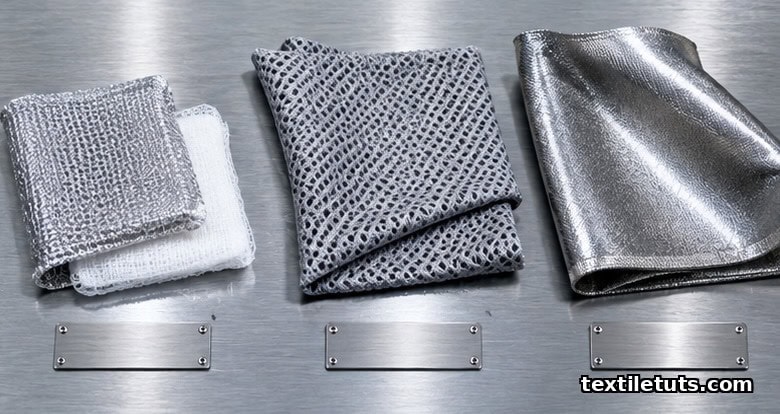
Silver-coated dressings (silver-coated nylon or polyester meshes) have Level 1 evidence for reducing bacterial load in partial-thickness burns and chronic venous leg ulcers. The Cochrane review on silver-containing dressings, updated in 2021, found that silver-impregnated dressings shortened healing time by an average of 3.3 days compared with plain gauze in burns. The mechanism in wound care is straightforward: the wound exudate liberates Ag⁺ at a steady rate, and the high bacterial load of a chronic wound provides the reducing environment.
Sportswear and Odour Control
Sweat itself does not smell. Skin bacteria, mostly Corynebacterium and Micrococcus, metabolise sweat lipids into short-chain volatile fatty acids, and that is the odour. A silver-coated inner layer can cut the microbial population by 2 to 3 logs within a day of wear, which is enough to suppress the odour threshold that wearers can actually detect. Independent tests on polyester knit underwear with 1.5 g/m² silver showed odour intensity scores (trained panel, 0 to 10 scale) drop from 7.2 in control fabric to 2.1 after 8 hours of wear.
Electromagnetic Interference Shielding
A continuous silver film turns a fabric into an RF shield. The shielding effectiveness depends on the silver’s surface resistivity and the film continuity: 30 to 60 dB is typical for electroless-plated nylon at 1 to 1000 MHz, with peaks of 80 dB possible above 1 GHz. This is the range demanded by military EMC specifications and by hospital rooms housing sensitive diagnostic equipment. Volume resistivity below 10⁻² Ω·cm is the practical threshold that separates “antistatic” from “truly shielding” fabric.
Wearable Electrodes and Bio-Signal Monitoring
Electrocardiography (ECG), electromyography (EMG), and electroencephalography (EEG) electrodes traditionally use Ag/AgCl wet gels. Silver-coated textile electrodes work dry, which eliminates skin irritation and allows long-term wear for fitness and remote-patient-monitoring applications. Reported electrode-skin impedance is around 50 to 200 kΩ at 10 Hz, comparable to wet Ag/AgCl gels once the textile electrode has acclimated to skin moisture for 5 to 10 minutes.
Limitations, Safety Notes, and Wash Durability
Silver is not free of concerns. Ag⁺ is toxic to aquatic life at concentrations above 0.1 µg/L in freshwater, and the OEKO-TEX Association has set a limit of 0.5 mg/kg total silver for finished textiles carrying the Standard 100 label for skin-contact use. Most silver-coated fibers fall well under that threshold, but the silver released through 50 laundering cycles is not negligible; in a 2020 study in Environmental Science and Pollution Research, a single silver-coated sock released 0.32 mg of silver per wash into the effluent.
Wash durability varies sharply with the deposition method and the binder chemistry. Sputtered silver without a protective topcoat loses 40 to 60% of its conductivity after 30 machine-wash cycles. Electroless-plated silver with a polyurethane topcoat retains 80% of its conductivity past 100 cycles. Pad-dry-cure antimicrobial finishes can drop below the 3-log threshold after 20 to 30 washes if the binder is not designed for cellulosic substrates.
Skin-safety is the other limit. Silver is a known sensitizer in a small fraction of wearers (estimated 1 to 3% in patch-test populations), and prolonged skin contact with high-loading silver textiles has been linked to localised argyria in extreme cases. For general apparel, OEKO-TEX Standard 100 product class II certification is the practical safety baseline. For wound dressings, the relevant standard is ISO 10993 for biocompatibility.
Frequently Asked Questions
Do silver-coated fibers lose their antimicrobial effect after washing?
Yes, but the rate depends on the deposition method. Sputtered silver coatings typically retain ≥3-log bacterial reduction for 30 to 50 industrial wash cycles. Electroless-plated silver with a polyurethane topcoat can hold 80% of its activity past 100 cycles. Pad-dry-cure finishes lose effectiveness faster, often falling below the 3-log threshold after 20 to 30 domestic washes.
Are silver-coated fibers safe for skin contact?
OEKO-TEX Standard 100 product class II allows finished textiles with total silver below 0.5 mg/kg for skin-contact use. Most certified silver-coated fibers sit well below this limit. A small fraction of wearers (1 to 3% in dermatology patch-test data) shows silver sensitivity, which presents as contact dermatitis. Stop use and consult a dermatologist if irritation develops.
Can silver-coated fibers block electromagnetic radiation?
Yes, but only when the silver forms a continuous conductive layer. Electroless-plated nylon at 1.0 to 5.0 g/m² silver loading typically achieves 30 to 60 dB of shielding effectiveness from 1 MHz to 1 GHz, with peak values around 80 dB above 1 GHz. Antimicrobial-only finishes that rely on dispersed nanoparticles will not provide meaningful EMI shielding.
What is the difference between silver-coated and silver-ion fibers?
Silver-coated fibers carry metallic silver on the surface, which releases Ag⁺ ions when in contact with moisture. Silver-ion fibers have silver ions embedded in a ceramic carrier (often zirconium phosphate or zeolite) and compounded into the polymer before extrusion. Coated fibers give faster antimicrobial action and higher conductivity; ion-exchange fibers give longer-lasting release but lower conductivity.
How do silver-coated fibers compare to copper-coated fibers?
Copper releases ions faster and costs less than silver, but silver is more biocompatible for prolonged skin contact. Copper-coated fibers typically achieve 4-log bacterial reduction in 2 hours versus 24 hours for silver coatings, but copper can discolour light fabrics (green staining on white cotton is well documented). For EMI shielding, copper has about 6% higher conductivity than silver in bulk, but silver forms a thinner, more uniform film by electroless plating.
Can silver-coated fibers be recycled?
Standard textile recycling streams cannot easily separate silver from the polymer substrate, and the silver content (typically 0.5 to 5% by weight) makes mechanical recycling economically marginal. Some specialty recyclers recover silver through hydrometallurgical leaching, but the infrastructure is limited. Most silver-coated textiles end up in incineration with energy recovery, where the silver reports to the bottom ash.
References
- International Organization for Standardization. ISO 20743:2013 — Textiles — Determination of antibacterial activity of textile products. iso.org — protocol for absorption, transfer, and printing methods.
- American Association of Textile Chemists and Colorists. AATCC TM100 — Antibacterial Finishes on Textile Materials: Assessment of. aatcc.org — quantitative 24-hour incubation protocol.
- ASTM International. ASTM E2149 — Standard Test Method for Determining the Antimicrobial Activity of Antimicrobial Agents Under Dynamic Contact Conditions. astm.org — shaking-buffer method for non-absorptive substrates.
- Japanese Industrial Standards Committee. JIS L 1902 — Testing for antibacterial activity and efficacy on textile products. — absorption, transfer, and quasi-dry methods used across East Asian supply chains.
- Marambio-Jones, C., & Hoek, E. M. V. (2010). A review of the antibacterial effects of silver nanomaterials. Journal of Nanoparticle Research, 12(5), 1531–1551. springer.com — mechanisms of Ag⁺ toxicity and resistance prevalence.
- Deshmukh, S. P., et al. (2019). Silver nanoparticles as an effective disinfectant. Materials Science and Engineering: C, 97, 954–965. sciencedirect.com — peer-reviewed compilation of log-reduction data against ESKAPE pathogens.
- Radetic, M. (2013). Functionalization of textile materials with TiO2 nanoparticles. Journal of Photochemistry and Photobiology C, 16, 62–76. sciencedirect.com — comparative data on silver, copper, and zinc-oxide nanoparticle deposition on polyester and cotton.
- Hernandez-Rangel, A., et al. (2021). Silver release from commercial silver-coated textiles. Environmental Science and Pollution Research, 28(18), 22875–22886. springer.com — wash-cycle silver release measured by ICP-MS.
- OEKO-TEX Association. Standard 100 — Limit Values for Silver in Textiles. oeko-tex.com — certified threshold for skin-contact products.
This article is the working reference for silver-coated fiber technology, covering deposition methods, antimicrobial test standards, and EMI-shielding performance. Editorial by Md. Asad Ullah (Meem), TextileTuts. Sources: ISO 20743:2013, AATCC TM100, ASTM E2149, JIS L 1902, peer-reviewed papers in Journal of Nanoparticle Research, Materials Science and Engineering: C, and Environmental Science and Pollution Research, and OEKO-TEX Standard 100 as cited.


