
Sewing Defects Classification

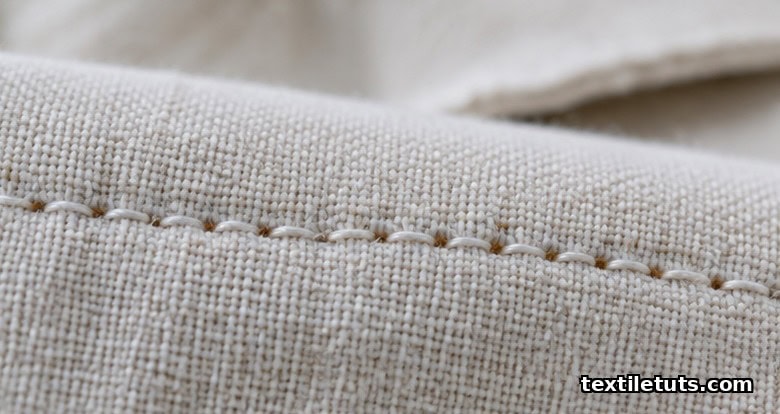
Sewing defects are classified into three severity tiers, critical, major, and minor, and within those tiers the 16 most common sewing defects account for 65-70% of all quality rejections in apparel manufacturing, based on data collected under AQL 2.5 inspection protocols referenced by ASTM D1683 and ISO 14735. A defect in this context is any deviation from the approved sample that affects function, appearance, durability, or compliance, and it can occur at any of the six stages between needle penetration and finished seam pressing.
For textile engineers, merchandisers, and quality auditors, the difference between a lot passing and a lot being rejected usually comes down to whether a single defect on a single garment tips the AQL allowance over the line. Knowing the 16 named defects, their root causes, and the standards that define them is what separates a passing inspection from a rejected shipment.
This article walks through the classification system used in apparel production: the three severity tiers, the 16 most commonly cited sewing defects, the stitch and seam geometry standards that govern them, the four root-cause families, and the inspection method used to grade them.
How Sewing Defects Are Classified
Garment factories and buying offices classify sewing defects on two axes running in parallel: severity, which determines whether a defect is rejected, and category, which identifies what went wrong.
The severity axis follows a three-tier model that traces back to military procurement specifications from the 1950s and is now formalized in ISO 2859-1 and the AQL (Acceptable Quality Level) tables published by the American Society for Quality. Under AQL 2.5 general inspection, the typical apparel standard:
- Critical defects are those that pose a safety, legal, or functional hazard (sharp metal fragments, open seams on load-bearing points, needle contamination). A single critical defect rejects the entire lot.
- Major defects reduce the garment’s salability or function (broken seam, missed stitch on a pocket, puckered yoke). Acceptance is governed by the AQL sampling table.
- Minor defects are deviations that do not affect function or sale (slight thread looseness, minor stitch unevenness) and are usually reworked on the line rather than triggering rejection.
The category axis groups defects by mechanism: stitch formation faults (skipped stitch, broken stitch), seam geometry faults (puckering, pleating, grinning), needle-related faults (broken needle, needle cut), thread-related faults (broken thread, loose tension), and alignment faults (raw edge exposure, misaligned placket).
The 16 Most Common Sewing Defects
The defects below appear across virtually every published sewing-defect log we have reviewed for woven shirt, trouser, and knit T-shirt programs. Each is named, drawn, and graded against the AATCC and ASTM documents that govern it.
| # | Defect | Description | Typical Tier |
|---|---|---|---|
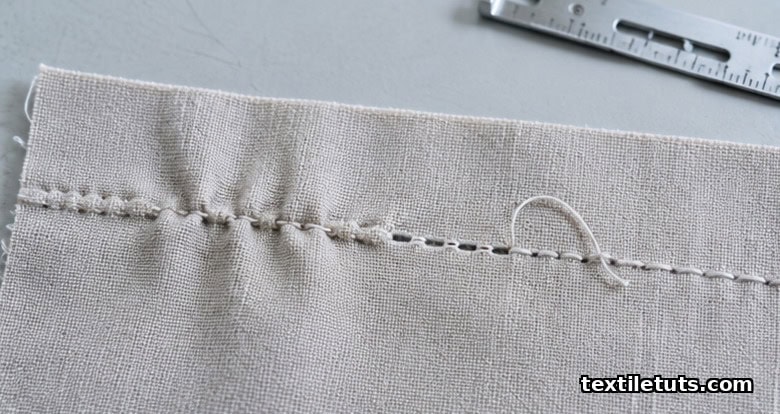
| 1 | Skipped stitch | Needle fails to form a loop, leaving a gap in the seam. | Major |
| 2 | Broken stitch | One or more stitches torn or missing along the seam. | Major |
| 3 | Loose stitch / loose tension | Loops visible on the surface; thread can be pulled. | Minor |
| 4 | Tight stitch | Thread embedded into fabric; seam appears gathered. | Minor |
| 5 | Uneven stitch length | Stitches visibly vary in length along a seam. | Minor |
| 6 | Thread breakage | Top or bobbin thread snaps during sewing, leaving an unfinished run. | Major |
| 7 | Seam puckering | Wavy or gathered seam due to thread tension, fabric shrinkage, or improper feed. | Major |
| 8 | Seam slippage | Yarns slide along the seam line under load (measured by ASTM D1683). | Major-Critical |
| 9 | Seam grinning | Stitches pull apart under tension and the seam opens between stitches. | Major |
| 10 | Broken needle | Needle fragments left in the garment (a hard critical defect). | Critical |
| 11 | Needle cut / hole | Visible puncture or cut in the fabric from a damaged needle or poor alignment. | Major |
| 12 | Raw edge exposed | Seam allowance not folded or covered; fabric edge visible from outside. | Major |
| 13 | Wrong seam allowance | Seam allowance outside the tolerance (typically ±1 mm for fine fabrics, ±2 mm for denim). | Major |
| 14 | Misaligned seam | Seam components (front placket, side seam) misaligned by more than 2 mm. | Major |
| 15 | Pleated or tucked seam | Unintended fold trapped in the seam. | Major |
| 16 | Seam impression / press mark | Seam edges or stitch rows printed on the outside surface after pressing. | Minor |
The 16th defect, seam impression, is the most often reworked rather than rejected, since pressing can usually recover the appearance. The first nine, by contrast, are the rejection drivers in most woven apparel programs.
Stitch and Seam Geometry Standards
Sewing defect classification only works when stitch and seam types are themselves standardized. Three ISO documents sit at the base of every spec sheet:
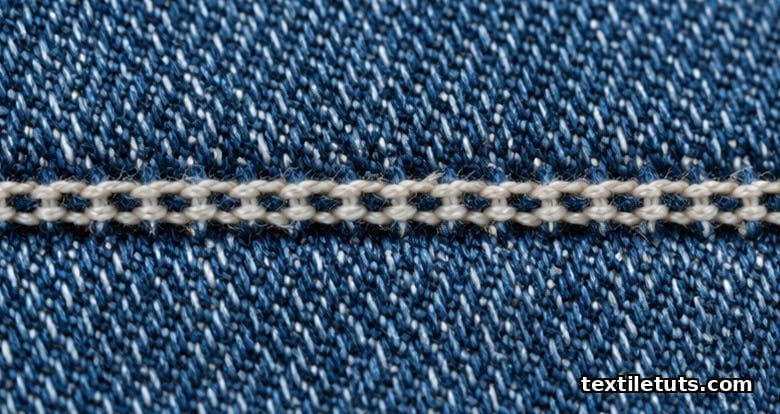
- ISO 4916:1991 classifies stitches into six classes (100 single-thread chainstitch, 300 lockstitch, 400 multi-thread chainstitch, 500 overedge/serger, 600 cover stitch, 700 otherwise). The first digit tells you the stitch family.
- ISO 4917:1991 classifies seam types into nine categories (superimposed seam, lapped seam, bound seam, flat seam, edge neatening, ornamental seam, and others). The seam type determines which defect families apply.
- ASTM D1683 / D1683-17 is the standard test method for failure in sewn seams of woven fabrics. It specifies the jaw spacing, load rate, and pass/fail criterion used to grade seam slippage and seam strength.
For visual appearance grading, AATCC TM 88B-2018 assigns seam smoothness a 1-5 rating using photographic standards, where 1 is severe puckering and 5 is a perfectly smooth seam. The same scale appears in many buyer-side spec sheets as a pass/fail gate.
Root Causes: The Four M’s
Once a defect is logged, the next step is diagnosis. Most sewing defects trace to one of four families:
1. Machine. Worn or wrong needle (size, point, finish), incorrect thread tension on top or bobbin, damaged feed dog or presser foot, incorrect SPI (stitches per inch) for the fabric, or poor machine maintenance. Skipped stitches and broken needles almost always fall here.
2. Material. Thread-to-fabric mismatch (a Tex 40 thread on chiffon, for example), fabric shrinkage, GSM out of spec, or finish that affects friction (silicone softeners raise slippage risk). Seam puckering and slippage often trace to material-property mismatch.
3. Method. Wrong stitch type for the seam class, incorrect SPI, wrong seam allowance, improper handling during sewing (pulling or pushing the garment under the presser foot). Defects introduced by method typically repeat across an entire lot, which is how auditors spot them.
4. Man (operator). Skill level, fatigue, or unfamiliarity with a style. Operator-driven defects usually cluster around new styles, end-of-shift runs, or complex operations such as collar setting or placket folding.
The Pareto principle holds here: roughly 80% of sewing defects on a stable production line come from machine and material causes, with method and operator factors driving the remaining 20%, particularly during style changeovers.
How Inspectors Grade Sewing Defects
Inspection uses the AQL system defined in ISO 2859-1 (sampling procedures by attributes). For a typical lot of 1,500 garments at AQL 2.5 general inspection, the sample size is 125 units; the lot is accepted if critical defects are 0, major defects are 10 or fewer, and minor defects are 21 or fewer.
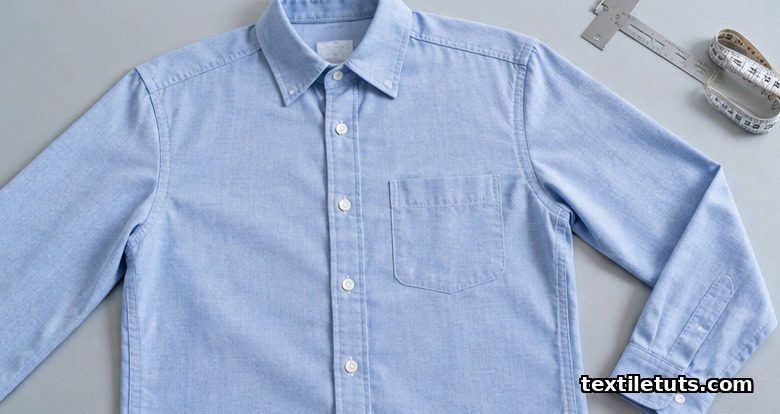
Inspectors pull units, place them on a flat inspection table under 100+ lux lighting, and grade each visible defect against the buyer’s spec sheet and the AATCC / ASTM visual standards. Common procedures include:
- Hold each garment at eye level and view the seam lines against a flat light source to expose puckering.
- Stretch the seam perpendicular to the stitch line to evaluate slippage (a quick field version of ASTM D1683).
- Count stitches per inch using a stitch gauge and compare against the spec (typically 8-12 SPI for woven shirts, 10-14 for knits).
- Pull threads at the seam tail to confirm correct lockstitch formation and tension balance.
Defects are logged on an inspection sheet by unit number, defect code, and tier, then aggregated to decide lot pass/fail.
Prevention Checklist for Production Lines
The cheapest defect is the one that never reaches the inspector. A practical sewing-floor prevention program covers four checkpoints:
- Needle audit: replace needles every shift for heavy fabrics, every 8 hours for light woven, and immediately on any skipped-stitch signal. Document needle changes in the machine log.
- Tension calibration: baseline the top and bobbin tension for every new fabric, then verify on the first five units of each lot.
- SPI verification: measure SPI on the first unit of every style, after every thread change, and at random 30-unit intervals during the run.
- First-piece and last-piece inspection: inspect the first 5 units and last 5 units of every bundle for skipped stitches, broken needles, and tension drift.
Lines that run this checklist report 40-50% fewer defect escapes to the audit table than lines that rely on end-of-line inspection alone.
Frequently Asked Questions
What is the difference between a critical and a major sewing defect?
A critical defect poses a safety, legal, or functional hazard, such as a broken needle fragment left in a garment, and a single occurrence rejects the entire lot. A major defect reduces salability or function, such as a missed stitch on a pocket, and is accepted or rejected based on the AQL sampling table (typically AQL 2.5 for general apparel). Minor defects are reworked on the line and rarely trigger rejection.
Which sewing defect causes the most rejections in woven shirts?
Skipped stitches and seam puckering together account for roughly 40% of major defect rejections in woven shirt programs, based on factory quality logs aggregated from Bangladesh, Vietnam, and India. Skipped stitches almost always trace to a worn needle or incorrect needle point; seam puckering usually traces to thread tension or fabric shrinkage mismatch.
How is seam slippage measured?
Seam slippage is measured by ASTM D1683 / D1683-17. A sewn fabric specimen is gripped in a tensile testing machine with a fixed jaw separation, and the load is increased until the yarns slip a specified distance or the seam fails. The pass/fail threshold is written into the buyer spec sheet, often 1.5-2.0 mm slippage at a defined load for shirt seams.
What AQL is used for sewing defect inspection?
Most apparel programs use AQL 2.5 for general inspection and AQL 4.0 for critical defects, with sampling per ISO 2859-1. Some buyers (notably for technical outerwear or children’s wear) require AQL 1.0 or 1.5 for general inspection and AQL 0 for critical, reflecting lower tolerance for any defect.
Can seam puckering be fixed after sewing?
Light puckering on woven fabrics can sometimes be recovered with re-pressing at the correct head pressure and steam time, but structural puckering caused by wrong thread tension, wrong SPI, or fabric shrinkage cannot be corrected by pressing alone. Such units must be re-sewn or rejected, which is why tension and SPI verification on the first piece are so important.
References
- ASTM International. ASTM D1683 / D1683-17: Standard Test Method for Failure in Sewn Seams of Woven Fabrics. ASTM Standards source. Test method for seam slippage and seam strength.
- AATCC. AATCC Test Method 88B-2018: Seam Smoothness in Creased Fabrics. American Association of Textile Chemists and Colorists. Visual grading scale for seam appearance.
- International Organization for Standardization. ISO 4916:1991 — Textiles — Seam Types — Classification and Terminology. ISO catalog. Classification of stitches by class number.
- International Organization for Standardization. ISO 4917:1991 — Textiles — Seams — Classification and Terminology. ISO catalog. Classification of seam types.
- International Organization for Standardization. ISO 2859-1:1999 — Sampling Procedures for Inspection by Attributes. ISO catalog. AQL sampling tables used for defect grading.
- International Organization for Standardization. ISO 14735:2014 — Quality Management — Guidelines for the Use of Quality Management Standards in the Textile Industry. ISO catalog. Quality management framework for textile defect handling.
- ResearchGate / peer-reviewed apparel manufacturing literature on sewing defect Pareto analysis (machine, material, method, operator).
This article is the working reference for sewing-defects classification. Editorial by Sabbir Ahmed, TextileTuts. Sources: ASTM D1683, AATCC TM 88B, ISO 4916, ISO 4917, ISO 2859-1, ISO 14735 as cited.


