
Scuba Fabric: Knit Structure and Use

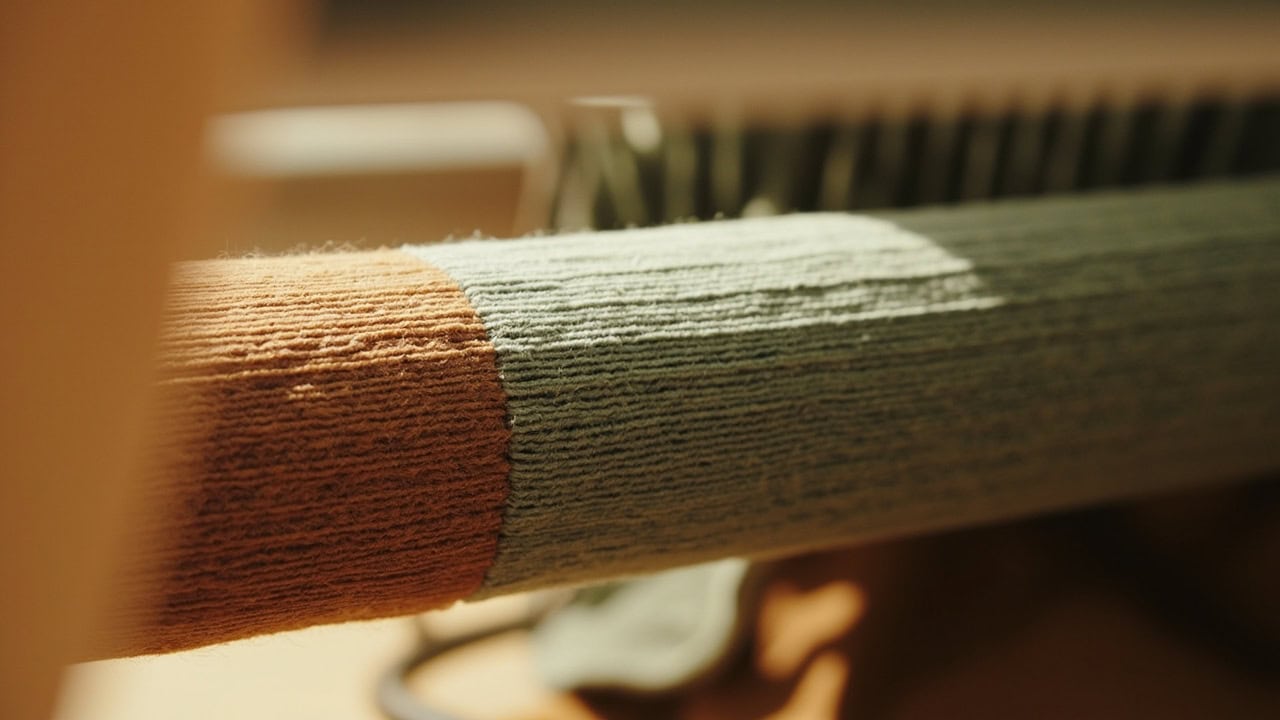
Scuba fabric is a double-knit textile, typically 92 to 95 percent polyester with 5 to 8 percent spandex, that weighs 200 to 300 GSM and stretches up to 30 percent on the crosswise grain before recovering to within 5 percent of its original dimensions.
This dense, smooth knit earned its name from neoprene scuba-diving suits because of its thick, slightly spongy hand feel, even though the fiber content shares nothing in common with wetsuit neoprene foam.
Below, the article walks through what scuba fabric is, how it is knit, why it behaves the way it does, and where textile engineers and home sewists use it most successfully.
What Scuba Fabric Is and How It Got Its Name
Scuba fabric is a modern double-knit construction that became commercially popular in apparel around 2008 to 2010 when designers started using it for structured dresses, peplum tops, and full circle skirts that needed body without the bulk of neoprene. The name is borrowed from scuba-diving wetsuits, whose outer shells are also smooth and dense, but the comparison is only about hand feel, not polymer chemistry.
Where neoprene is a closed-cell foam laminated between two fabric faces, scuba knit is a single layer of looped yarns. The loops themselves trap air inside the structure, which is what gives scuba fabric its spongy, slightly compressive touch. Most mills offer scuba knits in the 200 to 300 GSM range, with 240 to 280 GSM being the sweet spot for dress-weight garments that need shape without weight.
Fiber Composition and Yarn Construction
The standard scuba knit is built from two yarn systems: a polyester filament for body and a spandex filament for recovery. Polyester content usually sits between 92 and 95 percent, and spandex between 5 and 8 percent, with 95/5 being the most common ratio for apparel-grade scuba and 92/8 reserved for compression-style applications. The polyester is almost always a textured continuous filament, drawn and false-twist textured to introduce bulk before knitting, which is what creates the soft loft in the finished cloth.
Spandex, also called elastane on European labels and in ISO standards, is almost always a 20 to 40 denier filament that is plated on the back of every stitch. Plating means two yarns are fed to the same needle but one sits on the face and one sits on the back; here the polyester forms the visible face and the spandex is hidden on the inside. This plating geometry is what allows scuba knit to recover from stretch without the spandex showing through on the surface as a sheen.
Double-Knit Structure and Stitch Density
Scuba is a true double knit, which means it is produced on a circular knitting machine with two needle beds that knit two interlocked layers of loops simultaneously. The two layers are joined stitch-by-stitch during knitting, not glued or laminated later, which is why scuba fabric does not delaminate the way bonded neoprene does. The interlock stitches visible on both faces give the fabric its characteristic fine rib appearance on the cut edge.
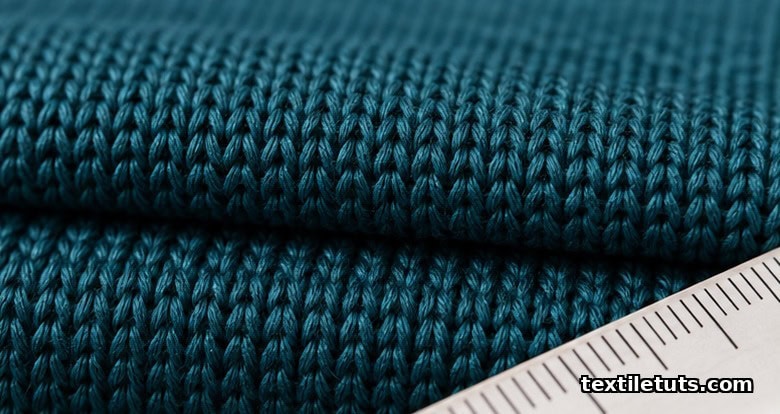
Typical stitch counts for a 260 GSM scuba sit at 18 to 22 courses per centimeter and 12 to 14 wales per centimeter, using the vocabulary of ISO 8388 for knit types and the counting practice of ASTM D3887 for knitted fabrics. The course count is usually higher than the wale count, which means the fabric has more horizontal stretch resistance than vertical. That anisotropy is why a scuba skirt holds its shape across the hips (where the fabric is cut on the crosswise grain) and drapes more easily down the body when cut on the lengthwise grain.
Physical Properties Relevant to Designers
The properties that matter most when specifying scuba knit for a garment are stretch and recovery, thickness, drape, and air permeability. AATCC TM135 dimensional-change testing typically shows less than 3 percent shrinkage after five home-laundering cycles when the fabric is washed cool and dried flat, which is unusual stability for a knit and one of the reasons scuba replaced ponte di Roma in many structured-skirt applications.
Air permeability, measured under ASTM D737 at a pressure differential of 125 Pa, is consistently below 100 cubic feet per minute per square foot for scuba knit in the 240 to 280 GSM range. That low permeability is what makes scuba feel warm to wear and is why it is rarely chosen for high-sweat applications. Thickness measured under ISO 5084 at 1 kPa pressure typically runs 0.9 to 1.4 millimeters, depending on the spandex percentage and finishing treatment.
Common End Uses
Scuba knit shows up in three main product categories: structured womenswear, dancewear and costume, and soft-furnishing covers. In womenswear, designers use it for peplum tops, full circle and A-line skirts, bodycon dresses, and blazers that need a soft shoulder without traditional canvas interfacing. In dancewear and costume, the fabric’s ability to hold sculptural shape under stage lighting, combined with stretch for movement, makes it a workhorse for fantasy and superhero costumes.
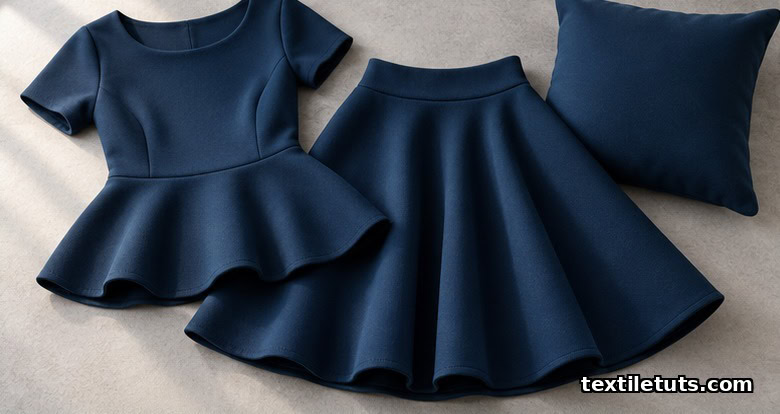
In home textiles, scuba is increasingly used for removable cushion covers and stretch slipcovers for upholstered furniture. The same loop structure that gives it body also allows it to stretch around a cushion form and recover cleanly. Industrial uses are limited because the polyester face is not engineered for abrasion beyond light domestic cycles.
Scuba vs Neoprene vs Ponte di Roma
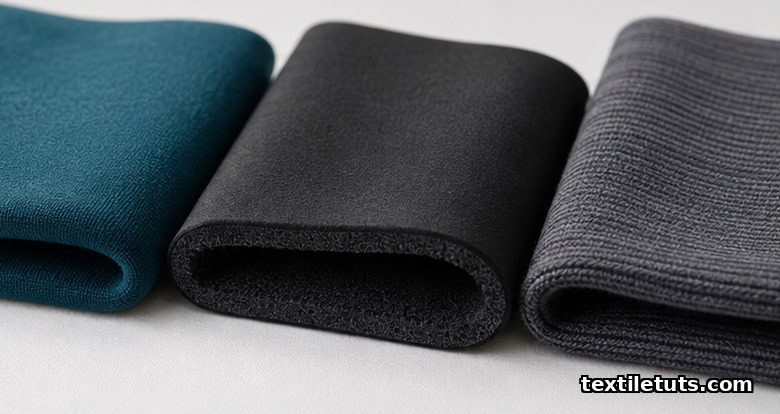
The three fabrics are often confused because they all look smooth and thick. The table below lays out the core differences a textile engineer or buyer needs to know.
| Property | Scuba knit | Neoprene (wetsuit) | Ponte di Roma |
|---|---|---|---|
| Construction | Double-knit polyester and spandex | Closed-cell foam, laminated between two fabric faces | Double-knit, often polyester, rayon, spandex |
| Typical weight | 200 to 300 GSM | 1,500 to 5,000 GSM | 250 to 350 GSM |
| Thickness | 0.9 to 1.4 mm | 3 to 7 mm | 1.0 to 1.6 mm |
| Air permeability | Low (under 100 cfm/ft²) | Near zero | Moderate (200 to 400 cfm/ft²) |
| Stretch and recovery | High, recovers within 5 percent | Low, foam-dependent | Moderate, recovers within 8 percent |
| Washability | Machine washable cool | Spot clean only | Machine washable cool |
The takeaway: scuba and ponte di Roma are both knits you can put through a domestic washing machine, while neoprene is a foam laminate and behaves very differently. For most apparel purposes, scuba is a thinner, more structured version of ponte.
Sewing and Care Notes
Scuba sews on a standard home machine with a ballpoint or stretch needle in the 70 to 80 size range. A walking foot helps prevent the spandex back from being stretched out of registration with the polyester face during feed. Use a polyester thread, set stitch length at 2.5 to 3.0 millimeters, and lower presser foot pressure if your machine allows it.
For care, wash inside out in cool water (30 °C or below) and either line dry flat or tumble dry low. Heat above 60 °C for extended cycles will degrade the spandex, and once spandex is heat-damaged it does not recover. Press with a cool iron using a pressing cloth, or skip pressing entirely because the polyester face holds memory and rarely needs it.
Frequently Asked Questions
Is scuba fabric the same as neoprene?
No. Scuba fabric is a double-knit polyester and spandex cloth; neoprene is a closed-cell synthetic rubber foam laminated between two thin fabric layers. Scuba weighs 200 to 300 GSM and is machine washable cool, while neoprene foam laminate weighs 1,500 to 5,000 GSM and is spot-clean only.
Does scuba fabric breathe?
Poorly. Air permeability under ASTM D737 typically measures below 100 cubic feet per minute per square foot, which is too low for high-sweat activities. Scuba is best for cool-weather, structured garments rather than athletic wear.
Can a home sewing machine handle scuba fabric?
Yes, with a ballpoint or stretch needle in the 70 to 80 size range, polyester thread, and a stretch or walking foot to keep the spandex backing in registration. Stitch length around 2.5 to 3.0 millimeters works well, and a serger is not necessary for seams that will not be under high stress.
Will scuba knit pill or run at the seam?
Pilling is rare on a continuous-filament polyester face, but cut edges can curl because of the two interlocked needle beds. Finishing the seam with a coverstitch, twin needle, or simple zigzag prevents both edge curl and any run-line at the seam.
How should scuba fabric be stored long-term?
Folded flat in a cool, dry closet away from direct sunlight. Hanging structured scuba garments on thin wire hangers can cause permanent shoulder dimples where the spandex relaxes around the hanger shape.
References
- ASTM International. ASTM D3887: Standard Practice for Determining Number of Stitches Per Unit Length in Knitted Fabrics. ASTM International, West Conshohocken, PA.
- ASTM International. ASTM D737: Standard Test Method for Air Permeability of Textile Fabrics. ASTM International, West Conshohocken, PA.
- AATCC. AATCC TM135: Dimensional Changes of Fabrics After Home Laundering. American Association of Textile Chemists and Colorists, Research Triangle Park, NC.
- International Organization for Standardization. ISO 8388:1998 Knitted Fabrics — Types — Vocabulary. ISO, Geneva.
- International Organization for Standardization. ISO 5084:1996 Textiles — Determination of Thickness of Textiles and Textile Products. ISO, Geneva.
- Spencer, D.J. Knitting Technology: A Comprehensive Handbook and Practical Guide. Woodhead Publishing, Cambridge, 2001.
This article is the working reference for scuba fabric’s knit structure, properties, and applications. Editorial by Iftay Khairul Alam, TextileTuts. Sources: ASTM D3887, ASTM D737, AATCC TM135, ISO 8388, ISO 5084, and Spencer 2001 as cited.


