
Reactive Printing Process

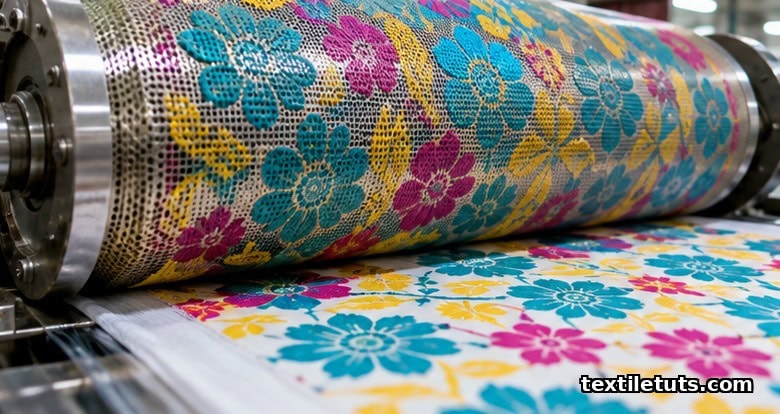
Reactive printing fixes reactive dyes onto cellulose fibers by forming a covalent bond between a vinyl sulphone or chlorotriazine reactive group and the hydroxyl oxygen of cellulose, with saturated steam fixation at 100-102 °C for 10-15 minutes producing wash-fastness ratings of 4-5 on the ISO 105-C06 grey scale after a 95 °C soap-off wash. The reaction never reaches 100 % efficiency because a fraction of the dye hydrolyzes in the alkaline print paste, so 20-30 % of the applied colorant washes off as unfixed hydrolysate during the subsequent rinse sequence.
This guide walks through the dye-fiber chemistry, the five-stage print line, the parameters that control shade and fastness, and the QC tests textile engineers run on every production lot.
What Reactive Printing Is, Chemically
Reactive dyes were first commercialized by Imperial Chemical Industries (ICI) in 1956 under the Procion brand, and the underlying chemistry is what separates reactive printing from every other textile coloration method. A reactive dye molecule carries a chromophore (the light-absorbing part that produces color) attached to a reactive group that contains a leaving atom, usually chlorine on a heterocyclic ring or a sulphate ester on a vinyl sulphone precursor. When the dye encounters the hydroxyl (–OH) groups on cellulose in alkaline conditions, the leaving group departs and the dye forms a stable covalent bond to the fiber. Because the dye is now chemically part of the fiber rather than held inside it by physical forces, the printed textile keeps its color through repeated laundering at temperatures that would strip a direct dye or break a pigment-binder film.
Three reactive groups still dominate cellulose printing: dichlorotriazine (DCT, the original Procion MX chemistry), monochlorotriazine (MCT, the Procion H and later Sumifix-class hybrids), and vinyl sulphone (VS, sold under names such as Remazol). DCT dyes are highly reactive and can be fixed at room temperature with alkali, which made them the first choice for cold-batch printing, but they hydrolyze quickly in the print paste and give shorter shelf life. MCT and VS dyes trade some reactivity for better print-paste stability and are now the workhorses of modern rotary-screen reactive printing.
Step-by-Step Process
Reactive printing is a five-stage sequence on the print line: fabric preparation, paste preparation, print, fix, wash off. Each stage has tolerances that the printer has to hit to get a reproducible shade.
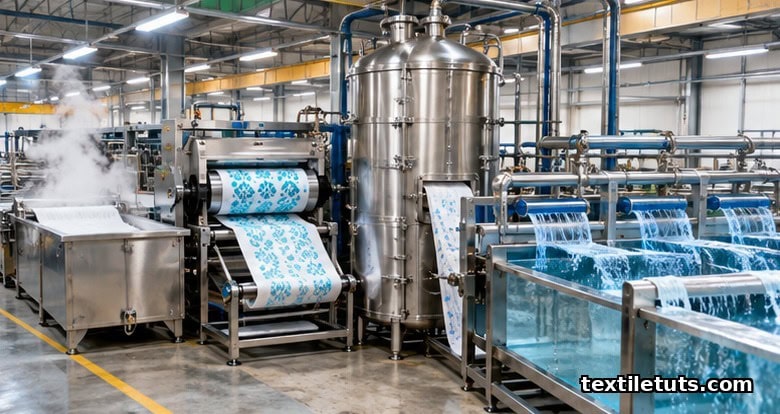
1. Fabric Preparation
Cellulose fabrics arrive from the knitting or weaving floor contaminated with knitting oils, sizing agents, and natural impurities like pectin and wax. Scouring with sodium hydroxide (typically 4-8 g/L NaOH at 95-100 °C for 30-60 minutes) removes these, and hydrogen peroxide bleaching at the same temperature brings the substrate to a uniform white. Mercerizing with 22-25 % NaOH at ambient temperature is added when the printer wants a deeper, more lustrous shade, because mercerization opens the cellulose structure and exposes more hydroxyl groups for the dye-fiber reaction. Properly prepared fabric leaves the preparation range with a wicking height of at least 8 cm in 30 seconds and a residual sizing of less than 1 %.
2. Print Paste Preparation
The print paste is a viscous sodium alginate thickener (typically 2-3 % w/w stock, viscosity around 8000-12000 mPa·s at 25 °C) carrying the reactive dye, a weak alkali, urea, and a small amount of antifoam. Sodium alginate is used instead of starch because alginate does not react with the reactive dye and washes off cleanly after fixation; starch would react and leave a stiff hand on the printed fabric. The alkali is usually sodium bicarbonate (5-20 g/L) or a mix of sodium bicarbonate and sodium carbonate (soda ash); the combination drives the printed fabric to a pH of 10.5-11.0 in the steamer, which is the window where the reactive group is mobile enough to attack cellulose. Urea at 50-200 g/L acts as a humectant and as a swelling agent that breaks hydrogen bonds in cellulose, opening sites for the dye to enter. A typical print paste recipe is shown below.
| Component | Concentration | Function |
|---|---|---|
| Reactive dye | 10-50 g/L | Color |
| Sodium alginate thickener | 20-30 g/L (stock) | Viscosity, paste body |
| Urea | 50-200 g/L | Humectant, fiber swelling |
| Sodium bicarbonate | 5-20 g/L | Alkali source for fixation |
| Soda ash (Na2CO3) | 0-10 g/L | Alkali booster |
| Resist salt / Ludigol | 5-10 g/L | Anti-reduction agent |
| Water | Balance | Solvent |
3. Printing
Reactive printing is applied by rotary screen, flat screen, or digital inkjet. Rotary-screen printing remains the highest-volume method: a nickel rotary screen with a pattern of open mesh areas passes the print paste through onto a moving fabric carried on a back-grey blanket. Typical mesh counts are 60-125 mesh for apparel prints, with thicker deposits at lower mesh counts. Digital inkjet is the fastest-growing segment and is most competitive on short runs; print heads fire picoliter drops of the same reactive ink chemistry, and the alkali and urea are either pre-applied to the fabric as a precoat or built into the ink.
4. Steam Fixation
Drying the printed fabric alone is not enough to fix reactive dyes. The print must pass through a steamer where saturated steam at 100-102 °C holds the fabric for 8-15 minutes (most cotton printers run 10 minutes as the default). The combination of heat, moisture, and alkali inside the fiber lets the reactive group displace its leaving atom and bond to cellulose; the dwell time is the key parameter that links color yield to fixation percentage. If the steamer runs too cold or too short, the dye fixes incompletely and washes off; if it runs too hot or too long, the dye hydrolyzes in the fiber before it can react, and the shade loses yield.
5. Wash-Off
Wash-off is the most chemical-intensive step in reactive printing, and it is where most of the environmental load is generated. The print goes through a sequence of: cold rinse to drop the thickener, hot rinse at 80-95 °C to drop the unfixed dye and the urea hydrolysis products, soap-off at the boil (95-100 °C) with a non-ionic detergent (1-2 g/L) for 10-15 minutes to remove any dye that has physically adsorbed onto the fiber surface, and a final cold rinse. A typical wash-off line has 6-10 chambers and uses 30-80 L of water per kilogram of fabric, with the first rinses carrying the bulk of the color and the final rinses clean enough to recycle. Soap-off at the boil is the step that delivers the ISO 105 wash-fastness rating of 4-5; skip it or shorten it and the rating drops to 3 or below.
Reactive Printing vs Pigment Printing
Both reactive and pigment printing are widely used for cellulose apparel, but they work on different chemical principles.
| Property | Reactive Printing | Pigment Printing |
|---|---|---|
| Bond to fiber | Covalent (dye-fiber) | Mechanical (binder film) |
| Wet fastness | Excellent (4-5 on ISO 105-C06) | Moderate (3-4) |
| Light fastness | Good (4-6 depending on chromophore) | Excellent (6-8) |
| Hand feel | Soft (no binder film) | Slightly stiff (binder film) |
| Process water | High (30-80 L/kg for wash-off) | Minimal (no wash-off needed) |
| Energy | High (steamer + dryer + wash line) | Low (cure at 150 °C for 3-5 min) |
| Color gamut | Wide (fluorescent bright shades possible) | Limited (mixing required for many shades) |
| Effluent load | High color, high salt | Low color, low salt |
Reactive printing wins on hand feel and on the brilliant shades that fashion printers need for cotton knitwear and shirting. Pigment printing wins on simplicity, water savings, and light fastness for outdoor or home-furnishing applications.
Common Defects and How Engineers Test For Them
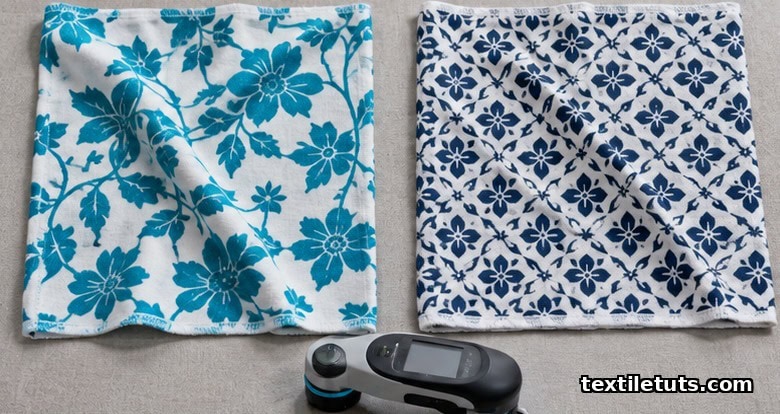
The most common reactive-print defect is shade variation across the fabric, usually caused by uneven print paste viscosity, an inconsistent steamer temperature profile, or uneven alkalinity across the fabric width. A simple check is to cut a 30 × 30 cm swatch from each of the selvedge, center, and opposite selvedge, and measure color on a spectrophotometer; the dE* (CIELAB color difference) between selvedge and center should be below 1.0 for an acceptable print.
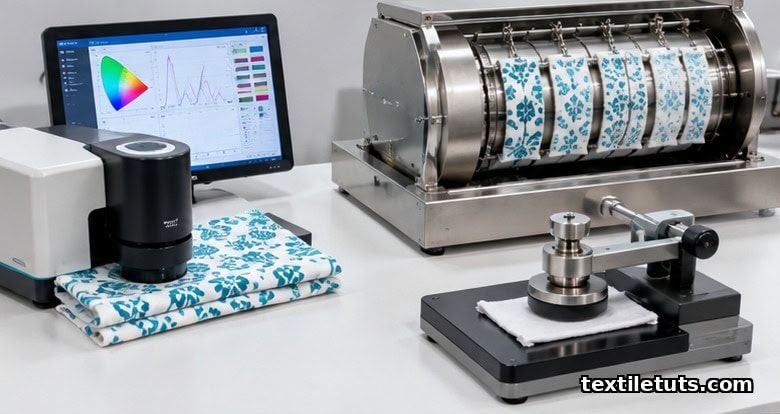
Poor wash fastness shows up as a stain on the adjacent white during the first wash. AATCC TM 61 (one accelerated cycle simulates five home launderings) is the standard QC test that mills run on every new style. Crocking (color transfer by rubbing) is tested per AATCC TM 8, and a wet crock rating below 3 means the print has not been properly soaped off and will bleed in use. Light fastness per ISO 105-B02 is tested on weather-exposed apparel; reactive prints on cotton typically rate 4-6, with blues and turquoises on the lower end and yellows on the upper end.
Sustainability Considerations
Reactive printing’s main environmental footprint is in the wash-off wastewater: the unfixed hydrolysed dye (typically 20-30 % of the dye that enters the print line) gives the effluent a strong color that resists conventional biological treatment. Modern mills address this through reactive-dye recovery systems, where the first hot rinse is captured, the dye is precipitated or adsorbed onto a reusable substrate, and the water is reused in the next wash line. Salt load from the alkaline print paste (NaOH and Na2CO3) is also significant and is increasingly recovered through membrane filtration. A newer direction is pad-batch reactive printing, where the print is fixed at room temperature over 12-24 hours of batching, eliminating the steamer and reducing energy use.
Frequently Asked Questions
What fabrics can reactive printing be used on?
Reactive printing is formulated for cellulose fibers: cotton, linen, viscose (rayon), modal, lyocell, and bamboo. The reactive dye needs the hydroxyl (–OH) group on cellulose to form its covalent bond. Protein fibers such as wool and silk carry a different reactive group and need acid-reactive dyes; synthetic fibers such as polyester need disperse dyes. Blends of cotton with polyester are usually printed with a combined reactive + disperse recipe, or are reactive-printed and then dispersion-dyed in a separate step.
Why is steaming required in reactive printing?
The dye-fiber covalent bond only forms under heat, moisture, and alkali together. Drying the printed fabric removes the water and stops the reaction. Steam at 100-102 °C supplies heat, holds the fabric at 100 % relative humidity (so the alkali and urea stay mobile inside the fiber), and gives the reactive group enough kinetic energy to displace the chlorine or sulphate leaving group. Without steam fixation, color yield drops to a small fraction of nominal and most of the dye washes off.
How is reactive printing different from pigment printing?
Reactive printing forms a covalent chemical bond between the dye and the cellulose fiber, so the printed textile is soft, has high wash fastness, and uses the fabric’s own surface as the dye anchor. Pigment printing sits a layer of pigment particles on top of the fabric and holds them with a clear polymer binder film; the print is fast to light but is stiffer to the touch, can crack on flexing, and uses a lot less water because no wash-off step is required. Reactive is the default for cotton apparel; pigment is the default for home furnishings and outdoor prints.
What causes poor wash fastness in reactive prints?
The two main causes are incomplete fixation and incomplete wash-off. Incomplete fixation happens when the steamer runs too cold, the dwell time is too short, or the alkali is too low to reach the pH 10.5-11.0 window inside the fiber; the dye then hydrolyzes (reacts with water instead of cellulose) and washes off in the first wash. Incomplete wash-off happens when the soap-off at the boil is too short or too cool, and loosely adsorbed dye remains on the fiber surface; this dye transfers onto adjacent white fabric under the friction of a wash cycle. AATCC TM 61 cycles will flag both causes quickly.
What is the role of soda ash in reactive printing?
Soda ash (sodium carbonate, Na2CO3) is the alkali source in the print paste. It raises the pH of the paste to about 10.5-11.0, which is the range where the reactive group on the dye molecule becomes active enough to displace its leaving group and form the dye-fiber bond. Sodium bicarbonate (baking soda, NaHCO3) is often paired with soda ash because bicarbonate releases CO2 slowly in the steamer, so the pH rises gradually during fixation; this gives more uniform fixation across the printed area than a single-shot alkali would.
References
- International Organization for Standardization. ISO 105-C06:2010, Textiles — Tests for colour fastness — Part C06: Colour fastness to domestic and commercial laundering. https://www.iso.org/standard/51019.html — color-fastness test method that simulates five home launderings.
- International Organization for Standardization. ISO 105-B02, Textiles — Tests for colour fastness — Part B02: Colour fastness to artificial light (xenon arc). https://www.iso.org/standard/44507.html — light-fastness test method (rated on a 1-8 blue-wool scale).
- American Association of Textile Chemists and Colorists. AATCC TM 61, Colorfastness to Laundering: Accelerated. https://www.aatcc.org — accelerated wash test for reactive-printed cotton.
- American Association of Textile Chemists and Colorists. AATCC TM 8, Colorfastness to Crocking: AATCC Crockmeter Method. https://www.aatcc.org — dry and wet crocking test for printed textiles.
- Burkinshaw, S. M. (2016). Physico-chemical aspects of textile coloration. Chichester: Wiley. — textbook reference for reactive-dye chemistry and cellulose fixation mechanisms.
- Shore, J. (2002). Colorants and auxiliaries: organic chemistry and application properties. Bradford: Society of Dyers and Colourists. — two-volume reference on reactive-dye chemistry, including Procion-class history and effluent chemistry.
This article is the working reference for the reactive printing process. Editorial by Shahrukh Islam, TextileTuts. Sources: ISO 105-C06, ISO 105-B02, AATCC TM 61, AATCC TM 8, Burkinshaw (Wiley), Shore (SDC) as cited.


