
Raising and Brushing

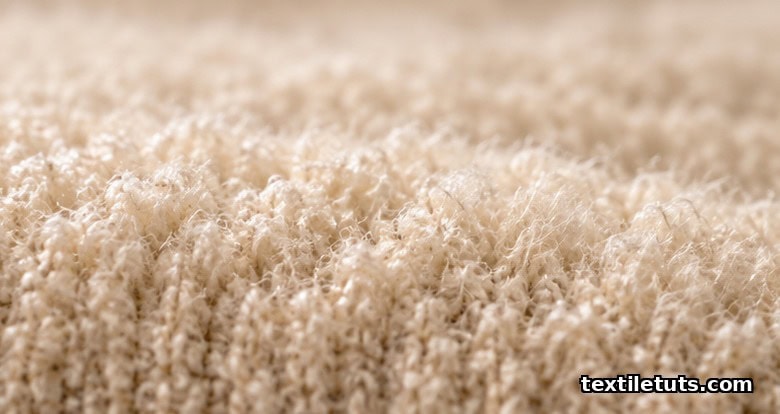
Raising is a mechanical finishing process that pulls individual fiber ends to the surface of woven or knitted fabric using card wire raising rollers rotating at 600-1200 rpm, increasing fabric thickness by 25-40% and producing the soft, insulating pile characteristic of flannel, fleece, and velvet. The action works through differential roller-to-fabric speed (typically 1.5:1 to 3:1), with bent needle-point wires catching and lifting fiber loops from yarn surfaces without cutting them. Brushing performs the same fiber-lift action but with softer nylon or horsehair brushes instead of card wire, producing a shorter, more uniform nap on fabrics that need surface softening without full pile development.
This guide covers how raising machines work, the difference between raising and brushing, the process parameters that control pile quality, the fabrics most often raised, and the quality control tests that confirm a uniform finish.
What Raising Does to Fabric
Raising (also called “napping” in the United States) is a dry mechanical finishing step that pulls loose fiber ends out of spun yarn and stands them up on the fabric surface, forming a layer of protruding fibers called “pile” or “nap.” The raised fiber layer traps still air inside the fabric, which is why raised textiles feel warmer than their unraised counterparts and why a 200 GSM cotton flannel insulates more effectively than a 200 GSM cotton poplin of the same weight.
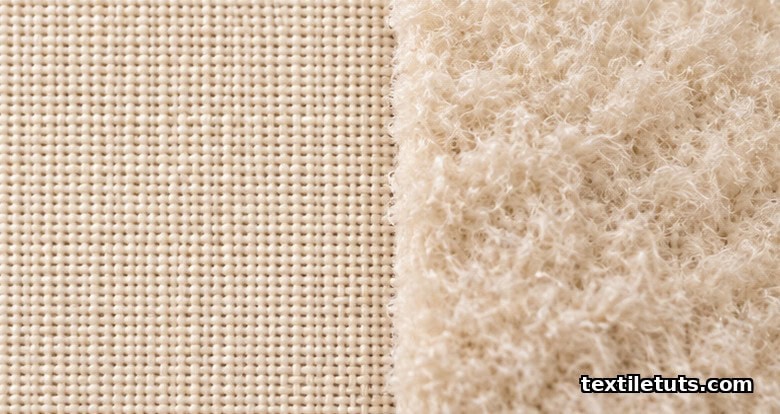
The fiber lift is selective: only loose, mobile fiber ends get caught by the raising wires. Long-staple fibers (e.g., 28-32 mm cotton, 60-80 mm wool) raise better than short-staple fibers because more fiber length is available above the yarn surface for the wires to engage. Tightly twisted yarns resist raising because fewer fiber ends protrude, which is why raised flannel is almost always made from softly twisted weft yarns in a plain or twill weave rather than from tightly twisted warp-faced constructions.
Raising is partially recoverable. If a raised fabric is washed aggressively and the pile lies flat, steam finishing or a re-raising pass can restore much of the original loft, which is one reason raised flannel bedding is often described as “getting better with age” rather than wearing out quickly.
How Card Wire Raising Machines Work
Industrial raising machines consist of a long frame holding 24 to 36 cylindrical rollers, each covered in card wire (steel wire bent into J-shaped needle points and inserted into a rubber or fabric backing). The rollers alternate directions and rotate against the fabric as it passes over them, with each roller set at a specific wrap angle and contact pressure.
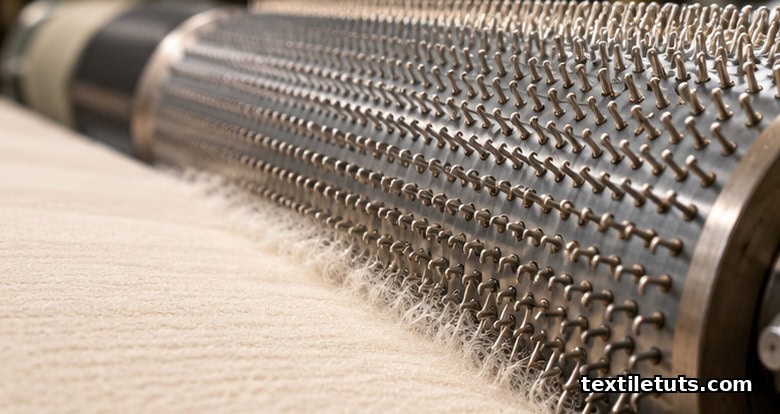
The action that lifts fibers is differential speed. Each raising roller’s surface speed is set between 1.5 and 3 times the fabric’s linear speed, which causes the bent wire points to scrape along the yarn surface and catch individual fiber loops. The fabric is typically passed through the machine 2 to 6 times, with each pass adding a small amount of pile until the target surface density is reached.
Roller wire specification matters as much as roller speed. Standard raising wires have points oriented at a 45-degree angle to the fabric, with 70 to 110 points per square centimeter depending on fabric type. Finer wires (more points per cm²) lift shorter fibers and produce a denser pile; coarser wires lift longer fibers and produce a more pronounced nap. Roller wire life typically runs 3 to 6 months of continuous production before point wear reduces raising efficiency.
Direction of raise is also selectable. Warp-direction raising aligns fiber ends along the warp (lengthwise), giving a smoother, more uniform surface; weft-direction raising aligns fiber ends across the fabric and produces a softer, more brushed appearance. Most flannel and fleece finishing lines run both directions sequentially, starting with weft to lift the bulk of the fiber and finishing with warp to align and clean the surface.
Brushing: A Gentler Companion Process
Brushing uses the same differential-speed principle as raising but replaces card wire rollers with softer natural or synthetic brushes (horsehair, goat hair, or nylon filament brushes in the 0.2-0.4 mm diameter range). Because the brush filaments are flexible rather than rigid, brushing lifts shorter fiber ends and aligns surface fibers without producing the pronounced pile that card wire does.
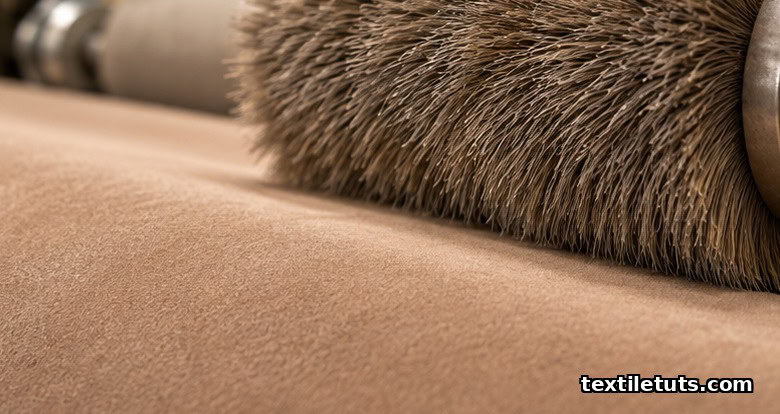
Brushing is used as a standalone finish on fabrics that need a clean, soft surface without full nap development: peach-skin finishes on polyester shirting, sueded surfaces on microfiber polyester, and the suede-like finish on microsuede apparel fabrics. It is also used as a post-raising step to align raised fibers in one direction and remove loose fly (detached short fibers that would otherwise shed from the finished fabric).
In peach-skin finishing of polyester microfiber, for example, the fabric is first raised lightly with fine card wire and then brushed 2 to 3 times with horsehair rollers to produce the soft, sueded hand that defines the peach-skin category. Without the second brushing pass, the surface tends to feel hairy rather than smooth.
Effects on Fabric Properties
Raising changes measurable fabric properties in characteristic ways. The most direct change is thickness: thickness measurements on raised cotton flannel typically show 25-40% greater thickness than the same fabric before raising, depending on the number of passes and roller aggressiveness.
Thermal resistance increases proportionally. Tests on raised cotton flannel show 20-35% higher clo values than unraised controls of the same construction, which is the measurable reason raised flannel bedding feels warmer. Air permeability also increases by 15-30% because the lifted fibers open up the inter-yarn spaces, which is why raised fabrics are rarely used as windproof outer layers despite being warm.
Tensile strength drops modestly. Each raising pass removes a small amount of surface fiber and slightly abrades the yarn, reducing warp and weft tensile strength by 5-15% across a full raising cycle. For most apparel end uses this is acceptable, but raised fabrics specified for workwear or technical applications are usually constructed with 5-10% extra yarn strength margin to compensate.
Pilling behavior also changes. Raising initially reduces pilling because loose, pilling-prone short fibers are physically removed during the process. Over time and washing cycles, raised fabrics can pill on the raised surface itself rather than on the base fabric, which is why AATCC TM 124 smoothness appearance grading and ISO 12945-2 pilling box testing are standard quality control checks for raised flannel and fleece.
Process Parameters That Control Pile Quality
Four parameters dominate pile quality: roller speed differential, roller wire specification, fabric tension, and number of passes. Increasing the differential (faster rollers relative to fabric) raises the aggression of fiber lift, with differentials above 3:1 typically reserved for heavy wool overcoating where a pronounced nap is desired.
Fabric tension during raising is set between 5 and 15 kg per meter of fabric width for cotton flannel, with higher tensions used when a flatter, more aligned pile is needed and lower tensions used when maximum loft is the goal. Excessive tension can flatten the pile before it fully develops, while insufficient tension allows the fabric to bag between rollers and produce uneven lift.
Moisture content matters for some substrates. Wet raising (8-15% fabric moisture) is used on wool to plasticize the fibers and produce a softer, denser pile than dry raising. Cotton and synthetic fleece are almost always dry-raised because water in those substrates tends to mat rather than soften the fiber.
Quality control checks during production include visual inspection for streakiness or roller marks, hand-feel grading against a reference sample, and periodic measurement of fabric thickness and weight to confirm the raising is producing the target pile density. ISO 7211-6 governs mass-per-unit-area measurement, and most production lines run AATCC TM 124 smoothness grading at least once per lot.
Raising vs Brushing: A Quick Comparison
| Property | Raising | Brushing |
|---|---|---|
| Tooling | Card wire rollers (rigid steel points) | Horsehair or nylon filament brushes |
| Fiber length lifted | Long (2-5 mm protrusions) | Short (less than 1 mm protrusions) |
| Pile height after finishing | 0.5-3 mm | Less than 0.3 mm |
| Fabric thickness increase | 25-40% | 5-10% |
| Thermal resistance gain | 20-35% | 5-10% |
| Typical end uses | Flannel, fleece, melton, overcoating | Peach-skin shirting, sueded synthetics, surface cleaning |
| Standard post-process QC | AATCC TM 124, ISO 12945-2 | AATCC TM 124, hand-feel grading |
Frequently Asked Questions
What is the difference between raising and napping?
None, in practice. “Raising” and “napping” refer to the same mechanical process of pulling fiber ends to the fabric surface. “Raising” is the more common term in European and Asian textile literature, while “napping” is more common in the United States. The machinery, the wire specification, and the resulting pile are identical regardless of which term is used.
Can all fabrics be raised?
No. Raising works best on fabrics with loosely twisted yarns and sufficient fiber length to lift above the yarn surface. Tightly twisted yarns, filament yarns, and very short-staple fibers raise poorly or not at all. Cotton flannel, wool melton, polyester fleece, and wool-synthetic blends are the most common raised substrates; filament polyester taffeta or tightly twisted cotton poplin cannot be meaningfully raised.
Does raising damage fabric?
Raising removes a small amount of surface fiber (typically 1-3% of fabric weight per full raising cycle) and reduces tensile strength by 5-15%. For apparel end uses this is acceptable, but raised fabrics specified for workwear, technical textiles, or load-bearing applications are typically engineered with extra yarn strength margin to compensate. Excessive raising pressure or too many passes can produce visible fiber damage and uneven pile, which is why production lines run sample checks every 500-1000 meters.
How do you restore pile on a flattened raised fabric?
Steam and gentle brushing are the standard restoration methods. Hold a garment steamer 10-15 cm from the fabric surface for 30-60 seconds, then brush gently with a soft garment brush in the original pile direction. For fabrics with more substantial pile loss, a single light pass through an industrial raising machine can restore much of the original loft, though this is only practical at the mill level rather than at home.
Why does raised flannel shed when new?
Shedding on new raised flannel comes from loose fly (short, detached fibers) that were lifted but not fully anchored during the raising process. The fly is not part of the permanent pile. One to three wash cycles typically remove most of it. AATCC TM 124 smoothness grading specifically evaluates raised fabrics after multiple wash cycles to confirm that what remains after the fly is shed is the durable pile, not loose fiber.
References
- Cotton Incorporated. Cotton Technical Bulletin: Mechanical Finishing of Cotton Fabrics. cottoninc.com — reference for raised cotton flannel processing and wire specification guidance.
- AATCC. Test Method 124-2018: Smoothness Appearance of Fabrics After Repeated Home Laundering. aatcc.org — standard smoothness grading method for raised and brushed fabrics.
- ISO. ISO 12945-2:2020, Textiles, Determination of Fabric Propensity to Surface Pilling, Fuzzing, or Matting, Part 2: Modified Martindale Method. iso.org — pilling-resistance test method used for quality control on raised flannel and fleece.
- ISO. ISO 7211-6:1984, Textiles, Woven Fabrics, Construction, Methods of Analysis, Part 6: Determination of Mass per Unit Area. iso.org — basis-weight measurement for confirming raised fabric yield.
- The Textile Institute. Woven Fabric Finishing (Textile Institute Series). textileinstitute.org — reference text on raising machinery, card wire specification, and process parameters for wool and cotton substrates.
- Woolmark. Wool Processing Technical Manual: Raising and Decating. wool.com — wool-specific raising parameters including wet raising moisture content and differential speed ranges.
This article is the working reference for raising and brushing in textile finishing. Editorial by Shahrukh Islam, TextileTuts. Sources: Cotton Incorporated, AATCC TM 124, ISO 12945-2, ISO 7211-6, The Textile Institute, and Woolmark as cited.


