
Quality Lab Setup

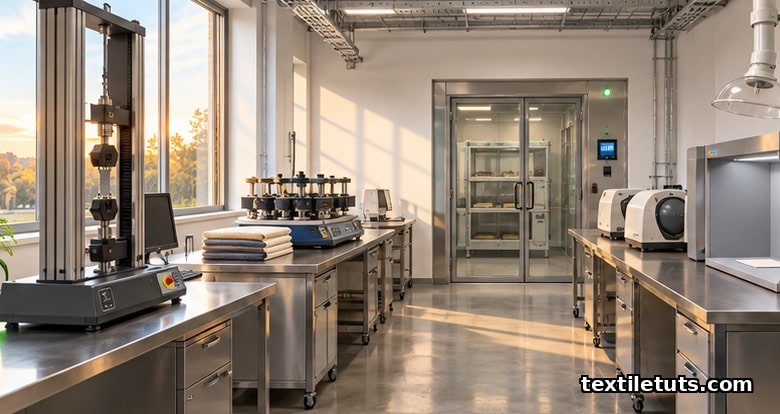
A textile quality laboratory must be designed around ISO/IEC 17025 accreditation with a controlled atmosphere of 20 ± 2 °C and 65 ± 4 % relative humidity (per ISO 139) and at minimum the four cornerstone instruments: a universal tensile tester (ASTM D5034 / ISO 13934-1), a Martindale or Taber abrasion and pilling tester, a spectrophotometer for colour measurement (AATCC Test Method 173), and a calibrated pH/conductivity meter (AATCC Test Method 81).
Get those four instruments, the conditioning room, and the calibration chain right, and a mill, brand QC lab, or third-party testing house can run the bulk of physical, colour, and chemical tests that buyer compliance manuals require.
This guide walks through the layout, equipment list, calibration discipline, and standard methods a textile quality lab needs before it accepts its first sample. It is written for factory quality managers, merchandisers sourcing from new mills, and students building their first laboratory for a course project or thesis.
1. Floor Plan, Conditioning Room, and ISO/IEC 17025 Layout
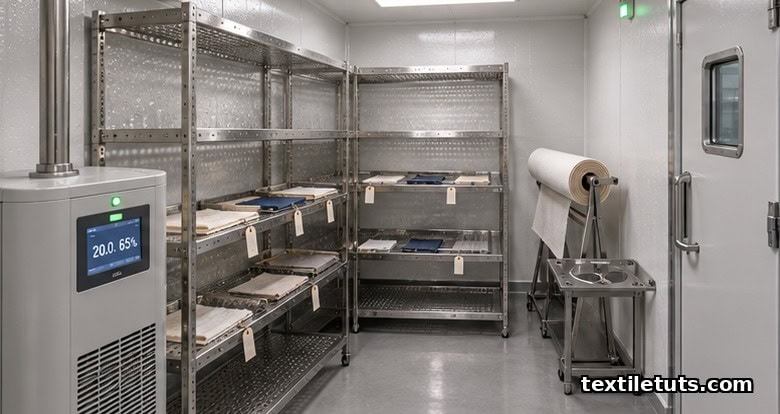
The single most expensive mistake in any new textile lab is treating the conditioning room as an afterthought. ASTM D1776, ISO 139, and ISO 554 all specify the same atmosphere for most physical tests: 20 °C ± 2 °C and 65 % ± 4 % relative humidity. Skipping that single spec invalidates tensile, tear, abrasion, bursting, and shrinkage results because hygroscopic fibres such as cotton, wool, viscose, and lyocell change tensile strength by roughly 1 % to 2 % per 1 % shift in moisture regain.
A practical layout separates four zones: (a) a sample reception and storage area kept at room temperature, (b) the conditioning room sized for at least 24 hours of pre-conditioning (sample mass must reach equilibrium moisture), (c) a wet-lab zone with sink, fume hood, and acid-resistant bench for chemical tests such as pH, formaldehyde, and colourfastness, and (d) the instrument hall where tensile, abrasion, pilling, and spectrophotometer work happens. ISO/IEC 17025 clause 6.4 requires that the laboratory control these spaces and prevent cross-contamination between wet chemistry and precision instruments.
Bench space, lighting at 750 lux to 1,000 lux on inspection tables (AATCC 124 inspection conditions), and vibration isolation for balances and tensile testers should be planned at the drawing stage. A balance reads to ± 0.001 g will give a different answer on a bench that vibrates every time the building’s HVAC cycles.
2. Core Instruments a Textile Lab Cannot Skip
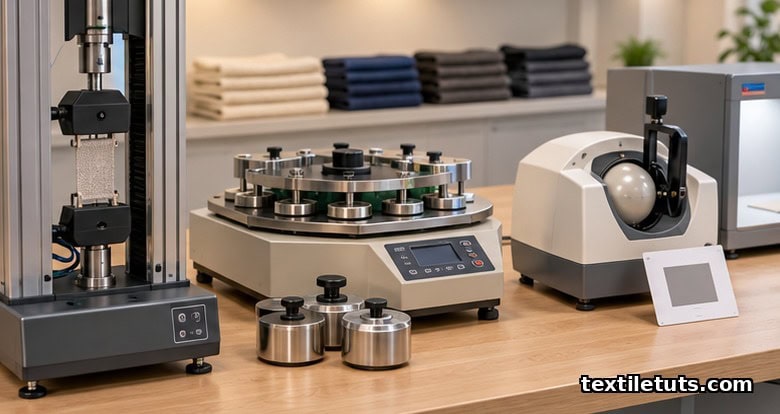
The list below covers roughly 80 % of routine buyer-side testing for woven and knit fabrics. Specialised labs (carpets, technical textiles, geotextiles, medical textiles) add their own dedicated rigs, but the four categories below are universal.
| Instrument Category | Examples | Standards It Covers |
|---|---|---|
| Universal tensile tester (load cell + grips) | Instron 34SC, Tinius Olsen H10KT, James Heal Titan | ISO 13934-1, ISO 13934-2, ASTM D5034, ASTM D5035, ASTM D2261 (tongue tear), ASTM D1424 (Elmendorf), ISO 13937 |
| Abrasion and pilling tester | Martindale (ISO 12945-2), Taber (ASTM D3884), ICI Pilling Box (ISO 12945-1) | ISO 12945-1, ISO 12945-2, ASTM D4970, ASTM D3884, ISO 5470 (rubber) |
| Colour spectrophotometer + light booth | Datacolor 800, X-Rite Ci7800, HunterLab UltraScan; light booth with D65, TL84, A, CWF | AATCC 173, AATCC 6, AATCC 61, AATCC 8, ISO 105-J01, ISO 105-J03, ISO 105-X12 |
| pH, conductivity, and moisture meter | Mettler Toledo SevenCompact pH/cond, Hanna HI2020 | AATCC 81, ISO 3071, AATCC 79 (absorbency), AATCC 135 (dimensional change) |
For a lab that also runs chemical compliance (formaldehyde, pH, heavy metals, azo dyes, AP/APEO), a UV-Vis spectrophotometer, a gas chromatograph with mass selective detector (GC-MS), and an atomic absorption or ICP-OES unit for metals are added. The OECD has documented the textile chemistry methods referenced by most brands; laboratories working to Restricted Substance Lists such as those published by major apparel brands rely on them.
3. Conditioning and Sample Preparation
Every fabric test begins with conditioning. ISO 139 and ASTM D1776 prescribe 20 °C ± 2 °C and 65 % ± 4 % RH for 24 hours minimum, or until successive weighings at 1 hour intervals differ by less than 0.1 % of specimen mass. A sample that skips conditioning may show tensile values that are 8 % to 12 % off the same fabric tested in equilibrium, which is large enough to fail a buyer tolerance on a ± 5 % spec.
Sample cutting matters too. ASTM D5034 specifies a 150 mm × 200 mm strip for woven grab tensile; ISO 13934-1 (strip method) uses 50 mm wide specimens. Cut on a calibrated cutting die or template, not freehand, because edge cuts introduce premature breaks and inflate coefficient of variation. A cutting die for each standard geometry costs a few hundred dollars and saves months of unreliable data.
Sample identification starts at receipt. A unique test specimen number, a chain-of-custody record, and storage at 20 °C / 65 % RH until the moment of test are non-negotiable. ISO/IEC 17025 clause 7.5 expects full traceability from sample receipt to the reported result, including which instrument, which calibration, and which operator ran each measurement.
4. The Standard Methods a Lab Must Stock
A working standards library is not optional. Most buyers and accredited auditors will reject results from a lab that cannot produce a controlled copy of the standard method used. The minimum library should include:
- Tensile / Tear / Bursting: ISO 13934-1, ISO 13934-2, ISO 13937-1, ISO 13937-2, ISO 9073-4 (nonwovens), ASTM D5034, ASTM D5035, ASTM D3787 (bursting strength).
- Abrasion and Pilling: ISO 12945-1, ISO 12945-2, ISO 5470, ASTM D3884 (Taber), ASTM D4970 (Martindale).
- Dimensional Stability (Shrinkage): ISO 6330 (domestic washing), ISO 5077 (drying), AATCC 135, AATCC 150.
- Colourfastness: ISO 105-C06 (wash), ISO 105-X12 (rubbing/crock), ISO 105-B02 (light), AATCC 61, AATCC 8.
- Chemical / Safety: ISO 3071 (pH), ISO 14184-1 (formaldehyde), ISO 17234 (azo dyes), AATCC 81 (pH of fabric).
- Constructional: ISO 7211-5 (mass per unit area, GSM), ISO 20645 (water penetration), ISO 9237 (air permeability).
Many of these standards are paid documents from ISO and ASTM; AATCC methods are part of AATCC membership. Plan a USD 2,000 to USD 5,000 annual standards budget for a small lab and USD 10,000+ for one covering full chemical compliance. The cost is recovered many times over because a single rejected shipment can cost more.
5. Calibration, Reference Materials, and Proficiency Testing
Every instrument needs a calibration plan with a defined interval (weekly, monthly, quarterly, annually). ISO/IEC 17025 clause 6.5 expects laboratories to use only calibrated equipment and to demonstrate traceability to the International System of Units (SI) where possible. The simplest chain looks like:
- Universal tensile tester calibrated annually with a certified load cell or proving ring, plus daily verification against a known-weight check (such as a 1 kg or 5 kg deadweight).
- Spectrophotometer calibrated at the start of each shift with a ceramic white tile and a black trap; tile values trace to a national metrology institute such as NIST (United States) or NPL (United Kingdom).
- pH meter calibrated before each batch using fresh pH 4.01, 7.00, and 10.01 buffer solutions traceable to NIST.
- Abrasion testers and lightfastness cabinets undergo scheduled maintenance plus a periodic cross-check against a reference fabric of known performance.
Beyond instrument calibration, ISO/IEC 17025 also requires a documented internal quality control programme. The two most common tools are proficiency testing rounds, where the lab tests a blind sample supplied by an outside provider (such as AATCC’s Proficiency Testing Program) and compares its results with peer laboratories, and reference material testing, where a stable fabric sample is re-tested at defined intervals to track the lab’s own drift over time. AATCC publishes a Technical Manual every year with up-to-date methods and interlaboratory data; it is one of the few sources a new lab can buy that contains both the procedure and the expected variability between labs.
6. Inspection and Visual Grading
Not every test happens on an instrument. Visual inspection under AATCC 124 or AATCC 9 still decides a roll’s acceptance. The lab needs an inspection table with daylight-balanced lighting at 750 lux to 1,000 lux, a neutral grey surround (Munsell N5 to N7 is typical), and a documented point-grading scheme. Inspectors should be tested for colour vision at least annually (Ishihara 38-plate test or equivalent) because a colour-blind inspector cannot reliably spot off-shade dye lots.
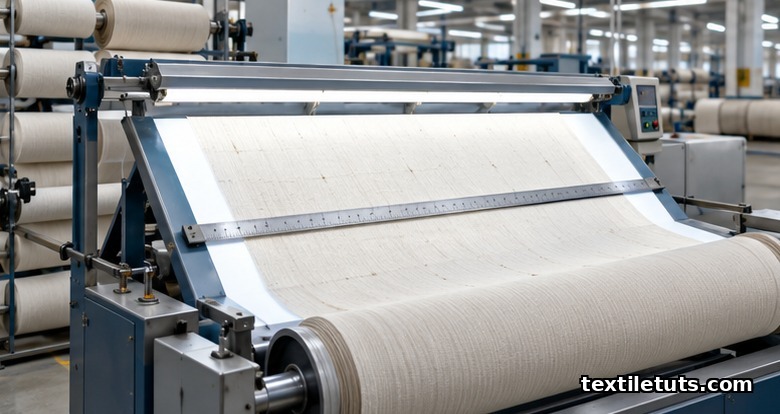
Fabric defects are typically reported per 100 linear metres or per square metre depending on the buyer. A four-point system (ASTM D5430) and a 10-point system (similar to that used in many buyer manuals) are the two most common grading scales; the choice should be locked in the buyer’s quality manual before the lab runs the first inspection.
7. Common Mistakes When Standing Up a Lab
A few recurring failures appear in new labs and in labs that have grown without updating their setup:
- Skipping the conditioning room. A desk in the corner of the lab is not a substitute. ISO 139 results are not valid without it.
- Buying a low-cost tensile tester. Stiffness, grip alignment, and load-cell accuracy separate a research-grade instrument from a budget one. ISO 13934-1 reports a between-laboratory coefficient of variation of about 4 % to 6 % even under best practice; a poor instrument doubles that.
- Confusing standards. ISO and ASTM methods give similar but not identical results. Reporting “ASTM D5034 values” while running ISO 13934-1 is a common audit finding.
- Skipping proficiency testing. ISO/IEC 17025 expects participation. Without it, calibration certificates alone do not prove the lab’s competence on real fabrics.
- No reagent traceability. Chemical standards (formaldehyde, azo dyes, heavy metal spikes) all carry lot numbers and certificates; failing to log them invalidates the chemical test result chain.
8. A Sample Equipment Budget
For a small mill or brand QC lab covering the four core instrument categories above, a realistic new-equipment budget (2026 list prices, USD) is:
- Universal tensile tester (5 kN or 10 kN frame, pneumatic grips, load cell): 18,000 to 35,000.
- Martindale abrasion and pilling tester: 8,000 to 14,000.
- Spectrophotometer (d/8°, sphere): 10,000 to 25,000; light booth: 1,500 to 3,500.
- pH / conductivity bench meter set with electrodes and buffers: 1,200 to 2,500.
- Cutting dies, GSM scale, thickness gauge, GSM cutter (round cutter): 600 to 1,200.
- Conditioning room (insulated chamber + dehumidifier + humidifier + controls): 6,000 to 15,000 depending on size.
- Standards library (first year): 2,000 to 5,000.
Total: roughly USD 40,000 to USD 100,000 for a fully functional physical and colour lab. Adding wet-chemistry equipment (GC-MS, ICP-OES, UV-Vis) raises the figure by USD 80,000 to USD 200,000 because of ventilation, gas supply, and consumable costs.
Frequently Asked Questions
What is the minimum equipment needed to start a textile quality lab?
A starting lab needs a controlled conditioning room (20 ± 2 °C and 65 ± 4 % RH per ISO 139), a universal tensile tester, an abrasion/pilling tester, a spectrophotometer with light booth, and a pH/conductivity meter. With those five items, the lab can run the bulk of physical and colour tests that buyers require.
How much does a textile testing lab cost to set up?
A basic physical and colour lab with the five core items above runs roughly USD 40,000 to USD 100,000 for new equipment (2026 prices). Adding wet-chemistry capabilities for formaldehyde, azo dyes, and heavy metals roughly doubles the budget because of ventilation, instrumentation, and reagent costs.
Which ISO and AATCC standards are most commonly used for textile testing?
The most frequently referenced methods are ISO 13934-1 (tensile, strip), ISO 13937-2 (tear), ISO 12945-2 (pilling by Martindale), ISO 105-C06 (wash fastness), ISO 105-X12 (rubbing/crock), ISO 3071 (pH), AATCC 81 (pH), AATCC 173 (colour measurement), and AATCC 135 (dimensional change after home laundering).
What conditions are required for textile conditioning before testing?
Most physical tests require 20 °C ± 2 °C and 65 % ± 4 % relative humidity for at least 24 hours before testing (ISO 139, ASTM D1776). Specimens are considered conditioned when successive weighings at 1 hour intervals differ by less than 0.1 % of specimen mass.
How does a textile lab achieve ISO/IEC 17025 accreditation?
Accreditation requires documented procedures for sampling, conditioning, instrument calibration with SI traceability, internal quality control, proficiency testing, and a full chain of custody from sample receipt to reported result. Most labs spend 12 to 24 months preparing before a first assessment by an accreditation body, with the first surveillance audit 6 to 12 months after the initial award.
How often should textile testing instruments be calibrated?
Universal tensile testers need annual calibration of the load cell against a certified reference, with daily verification using a deadweight. Spectrophotometers are verified each shift against a calibrated white tile and black trap. pH meters are calibrated before every batch using three-point buffer sets traceable to NIST. Frequency should be in the lab’s documented calibration plan and reviewed during ISO/IEC 17025 audits.
References
- ISO. ISO/IEC 17025:2017, General requirements for the competence of testing and calibration laboratories. International Organization for Standardization — the global standard for laboratory accreditation.
- ISO. ISO 139:2005, Textiles — Standard atmospheres for conditioning and testing. Specifies the 20 °C / 65 % RH standard atmosphere for textile testing.
- ASTM. ASTM D5034 / D5035, Standard Test Methods for Breaking Strength and Elongation of Textile Fabrics. ASTM International — grab and strip tensile methods for woven and knit fabrics.
- AATCC. AATCC Technical Manual (annual). American Association of Textile Chemists and Colorists — the standard reference for AATCC test methods and proficiency testing data.
- ResearchGate / peer-reviewed textile testing reviews. Textile testing and quality control literature. ResearchGate — academic papers on tensile, abrasion, and colour measurement methodology.
- OECD. Chemical testing methods referenced by Restricted Substance Lists in textiles. Organisation for Economic Co-operation and Development — guidance on chemical compliance for apparel.
- MDPI (Textiles journal). Open-access research on textile measurement methods and instrument performance. MDPI — peer-reviewed papers on standardised test variability.
This article is the working reference for setting up a textile quality laboratory. Editorial by Sabbir Ahmed, TextileTuts. Sources: ISO 139, ISO/IEC 17025, ASTM D5034 / D5035, AATCC Technical Manual, OECD chemical guidance, MDPI Textiles journal, as cited.


