
Pinpoint Oxford vs Royal Oxford

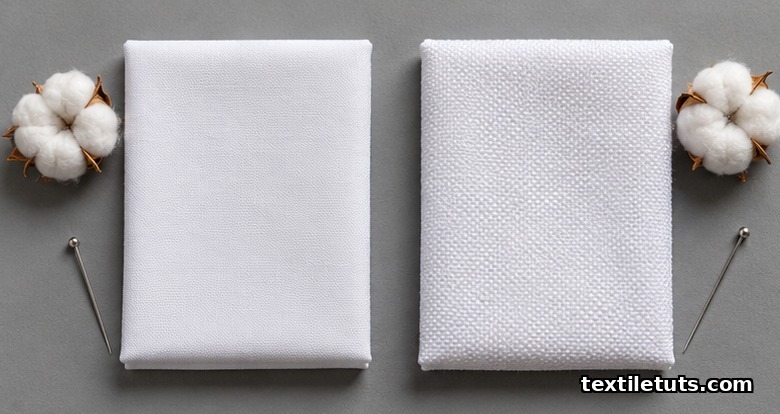
Pinpoint Oxford is a lightweight dress-shirt fabric woven in a 2/1 modified basketweave using 80/2 to 100/2 two-ply combed cotton yarns at a typical finished weight of 110 to 140 g/m², while Royal Oxford uses a true 2/2 basketweave with thicker 50/2 to 70/2 two-ply yarns at 140 to 180 g/m² for a heavier, more textured surface.
Both fabrics belong to the basketweave family of shirting weaves, but they sit at opposite ends of the dress-shirt spectrum when it comes to hand-feel, drape, formality, and price.
This guide walks through the construction, weight, hand-feel, durability, and styling differences between pinpoint and royal oxford so you can pick the right one for a shirt you actually plan to wear and care for.
What “Oxford” Actually Means in Weaving
Oxford cloth is one of the four classic shirting weaves, alongside poplin, twill, and end-on-end, and the only one that uses a basketweave structure. In a plain weave, each weft yarn passes over one warp yarn and under the next, producing a flat surface with a tight checkerboard appearance under magnification.
In a basketweave, two or more warp yarns are grouped and interlaced as one with two or more weft yarns, which is why Oxford cloth shows the small, grouped “dots” or “pearls” that distinguish it from poplin. A 2/1 basketweave (two warps interlaced with one weft) reads smoother because the warp dominates the face, while a 2/2 basketweave (two warps, two wefts) reads textural because both yarn groups sit on the surface equally.
The original Oxford cloth was a coarse, rough fabric used for sportswear at Oxford University in the 19th century. Modern shirting Oxfords split into four recognizable sub-types based on yarn count and basketweave ratio: standard Oxford, pinpoint Oxford, royal Oxford, and imperial Oxford, which is the heaviest and rarest variant woven in a fuller basketweave with the coarsest yarn count.
Pinpoint Oxford Construction
Pinpoint Oxford uses 80/2 to 100/2 combed cotton yarns. The “80/2” notation means a 2-ply yarn whose single-end count is 80s in the English cotton count (Ne), so the finished two-ply yarn is roughly 40s equivalent in single-end thickness. At typical shirt-fabric thread densities of 60 ends per cm warp by 30 picks per cm weft, a finished pinpoint oxford weighs between 110 and 140 g/m² (3.2 to 4.1 oz/yd²).
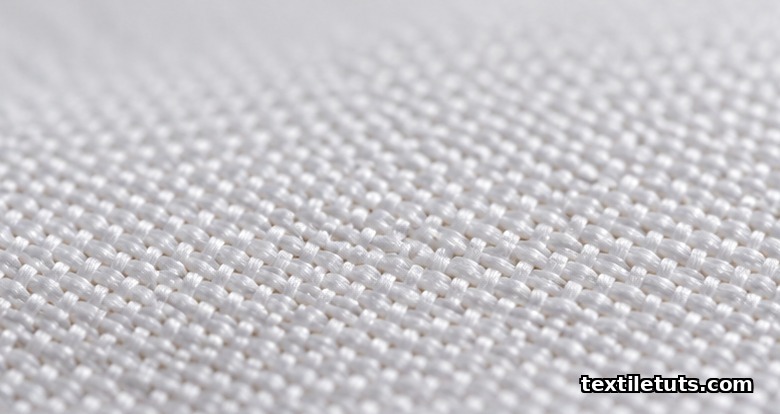
The weave structure is a modified basketweave with a 2/1 arrangement, where the warp floats over two wefts and the weft passes over two warps, but the repeat is tightened so the warp dominates the face. This makes the surface look tighter and slightly smoother than a true basketweave, which is what gives pinpoint its “almost poplin” character on a finished shirt.
Yarn twist is normally in the 3.5 to 4.0 twist multiplier (TM) range for warp and 3.0 to 3.5 TM for weft. Higher warp twist keeps the surface crisp and helps the fabric recover from creasing after wear. Pinpoint oxford is typically mercerized, which adds luster and improves dye uptake. Tensile strength of a typical 120 g/m² pinpoint oxford is roughly 400 to 500 N warp and 200 to 280 N weft when measured by the ISO 13934-1 strip method.
Royal Oxford Construction
Royal Oxford uses a true 2/2 basketweave with thicker 50/2 to 70/2 combed cotton yarns at typical densities of 50 ends per cm warp by 25 picks per cm weft. The grouped yarn pairs sit on the surface and create the small woven “pearls” or textured squares that define the royal oxford look under daylight and especially in product photography.
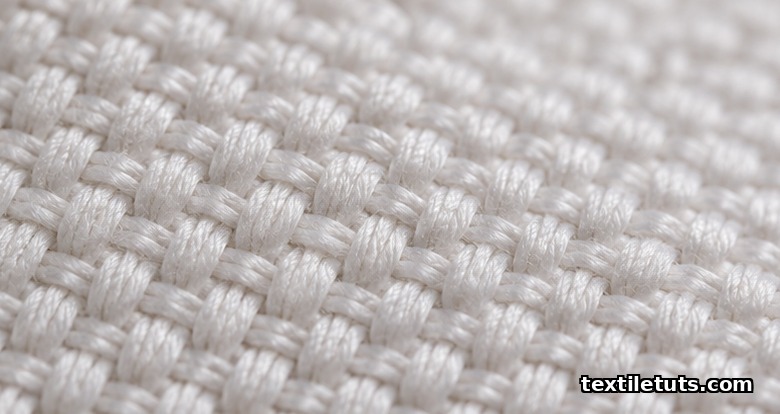
Because the yarn count is coarser and the basketweave is fuller, finished weight lands between 140 and 180 g/m² (4.1 to 5.3 oz/yd²), roughly 25 to 30 percent heavier than pinpoint at the same thread density assumption. Royal Oxford is also commonly mercerized for luster, but because the basketweave floats are longer, the surface scatters light differently and reads as more dimensional than pinpoint.
The longer warp and weft floats make royal oxford slightly less abrasion-resistant than pinpoint. AATCC TM135 dimensional change after five home launderings at 40 °C typically falls between 2 and 4 percent in both warp and weft for both fabrics, but royal oxford shows more surface pilling over time because of the longer float structure, especially at cuff and collar edges.
Hand-Feel and Drape
Pinpoint oxford feels crisp but pliable. The fine two-ply yarns and tight modified basketweave produce a fabric that holds a press well, breaks cleanly at the collar roll, and drapes close to the body. It is the most “structured” of the Oxford family without crossing into twill territory, which is why so many office-uniform programs specify pinpoint oxford for staff shirts.
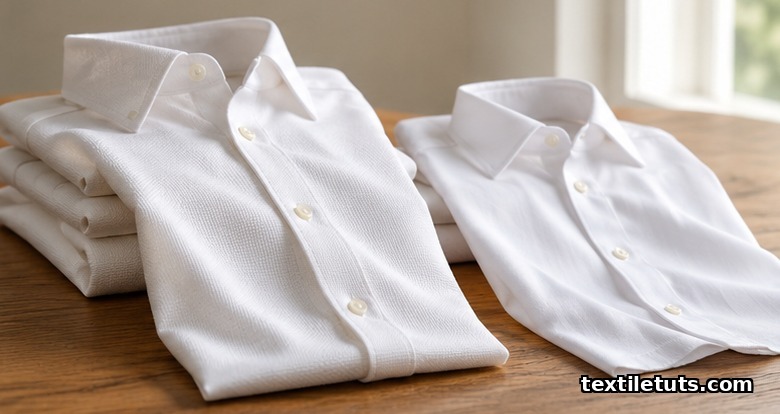
Royal oxford feels soft, lofty, and substantial. The thicker yarns and fuller basketweave give the cloth a slightly spongy hand. Because the fabric is heavier, it drapes with more body and folds rather than falls, which makes it read more luxurious and casual than pinpoint at the same collar style.
Both fabrics are warmer to wear than poplin because the basketweave traps a thin layer of still air between the grouped yarns. Royal oxford traps more air than pinpoint, which is why many shirtmakers market royal oxford as a “transitional” or three-season fabric, while pinpoint oxford is usually rated as a four-season shirting.
Durability and Care
Pinpoint oxford is one of the most durable dress-shirt weaves in production. The dense, short-float structure resists abrasion, and the 2-ply yarns hold up better to laundering than single-ply yarns of equivalent count. A typical pinpoint oxford survives 50 or more home launderings at 40 °C with no significant loss of tensile strength when measured by ISO 13934-1.
Royal oxford is moderately durable but more prone to surface wear because the basketweave floats are longer. Snag resistance is lower than pinpoint, and the fabric shows pilling at the cuff and collar edges first. Use a gentle cycle (40 °C, low spin) and avoid chlorine bleach, which yellows the mercerized cotton fibers over repeated washes.
For both fabrics, tumble dry low or line dry in shade. Hot-iron pressing at 160 to 180 °C restores the surface; over-ironing flattens the basketweave texture of royal oxford, which is the easiest way for a wearer to tell whether a shirtmaker has finished the fabric properly during production.
Styling and Use Cases
Pinpoint oxford is the workhorse of business-casual shirting. It looks polished under a blazer, takes a tie without bunching at the placket, and works for monogramming because the surface is flat enough for embroidery to sit cleanly. White and light blue are the standard colors; the fabric also takes yarn-dyed stripes and small checks well because the basketweave pattern reads through the printed or dyed design.
Royal oxford is the dressier, more textural choice. It pairs naturally with spread collars and contrast collars or cuffs, and reads better without a tie. The visible weave texture photographs well, which is why royal oxford is a common choice for portrait and product photography in made-to-measure and bespoke shirt catalogs.
If you only own one shirt fabric for the office, buy pinpoint oxford. If you want a textured fabric for dinner shirts, weekend blazers, or a more relaxed business-casual look, royal oxford is the better pick. Most menswear brands price royal oxford 15 to 25 percent above pinpoint because of the heavier yarn, the lower loom efficiency of a true 2/2 basketweave, and the extra finishing required to stabilize the longer floats.
Pinpoint Oxford vs Royal Oxford: Comparison Table
| Property | Pinpoint Oxford | Royal Oxford |
|---|---|---|
| Weave structure | 2/1 modified basketweave (warp-faced) | 2/2 true basketweave |
| Yarn count (typical) | 80/2 to 100/2 combed cotton | 50/2 to 70/2 combed cotton |
| Thread density (typical) | 60 ends/cm warp × 30 picks/cm weft | 50 ends/cm warp × 25 picks/cm weft |
| Finished weight | 110 to 140 g/m² (3.2 to 4.1 oz/yd²) | 140 to 180 g/m² (4.1 to 5.3 oz/yd²) |
| Hand-feel | Crisp, smooth, structured | Soft, lofty, spongy |
| Surface texture | Subtle, fine grouped “dots” | Visible “pearls” or texture squares |
| Luster | Moderate (mercerized) | Moderate (mercerized, light-scatter higher) |
| Drape | Cling, falls close to body | Folds with body, more structured fall |
| Tensile strength, warp (ISO 13934-1) | 400 to 500 N | 350 to 450 N |
| Shrinkage after 5 washes (AATCC TM135, 40 °C) | 2 to 4 percent | 2 to 4 percent |
| Pilling tendency | Low | Moderate (cuff and collar edges first) |
| Best styling use | Business-casual, under a tie | Dressier casual, open-collar or no tie |
| Typical price premium | Baseline shirting | 15 to 25 percent above pinpoint |
Frequently Asked Questions
Is pinpoint oxford more formal than royal oxford?
Pinpoint oxford is generally the more formal of the two because its surface is closer to a poplin, so it pairs naturally with a tie and a structured blazer. Royal oxford’s visible basketweave texture reads more casual, which is why most shirtmakers reserve royal oxford for spread-collar, no-tie styling or for evening-wear shirting where the texture catches light.
Can you iron out the texture of royal oxford?
Heavy ironing flattens the basketweave floats and removes the surface “pearls,” but it does not damage the cotton if you keep the iron below 200 °C. Iron at 160 to 180 °C with steam, and press rather than slide the iron across the fabric to preserve the weave structure.
Does pinpoint oxford shrink more than royal oxford?
Both fabrics are combed cotton and behave similarly under AATCC TM135 testing, with dimensional change between 2 and 4 percent after five home launderings at 40 °C. Pinpoint oxford has slightly tighter construction so it can read marginally less shrinkage, but the difference is small enough that the same care label applies to both.
Which fabric is more breathable?
Pinpoint oxford is the more breathable of the two. Its tighter weave and finer yarns produce a denser but thinner fabric, while royal oxford’s heavier basketweave traps more still air and runs warmer. For hot, humid climates, pinpoint is the better pick for year-round wear.
Are royal oxford shirts worth the extra cost?
For most wearers, royal oxford is worth the 15 to 25 percent price premium only if you want the visible texture and the heavier drape for specific occasions, such as portrait sessions, evening wear, or relaxed business-casual styling. For a single office shirt, pinpoint oxford offers better value and longer service life.
References
- ASTM International. ASTM D4035 – Standard Test Method for Yarn Count in Yarn by Use of a Wrap Reel. ASTM — reference method for verifying the linear density (yarn count) of cotton and blended yarns used in pinpoint and royal oxford shirtings.
- International Organization for Standardization. ISO 7211-5:2020 – Textiles: Woven Fabrics – Construction – Methods of Analysis – Part 5: Determination of Linear Density of Yarn Removed from Fabric. ISO — method for confirming yarn count removed from a finished shirt fabric, used to verify 80/2 and 50/2 constructions.
- International Organization for Standardization. ISO 13934-1:2013 – Textiles: Tensile Properties of Fabrics – Part 1: Determination of Maximum Force Using the Strip Method. ISO — strip tensile test referenced for warp and weft strength comparison of the two fabrics.
- International Organization for Standardization. ISO 139:2005 – Textiles: Standard Atmospheres for Conditioning and Testing. ISO — specifies the 20 °C and 65 percent relative humidity conditioning environment for the textile tests cited above.
- AATCC. AATCC TM135 – Dimensional Changes of Fabrics After Home Laundering. AATCC — home-laundering procedure used to measure the 2 to 4 percent shrinkage typical of combed-cotton oxford shirtings.
- Behera, B.K., and Mishra, R. “Comfort Properties of Suiting and Shirting Fabrics.” Journal of Textile and Apparel, Technology and Management, 2008 — peer-reviewed comparison of basketweave, plain, and twill shirting structures on hand-feel, drape, and low-stress mechanical properties.
Editorial by Mohammad Yousuf (Anik), TextileTuts. Sources: ASTM D4035; ISO 7211-5:2020; ISO 13934-1:2013; ISO 139:2005; AATCC TM135; Behera & Mishra (2008) as cited.


