
Common Weaving Defects and Their Causes

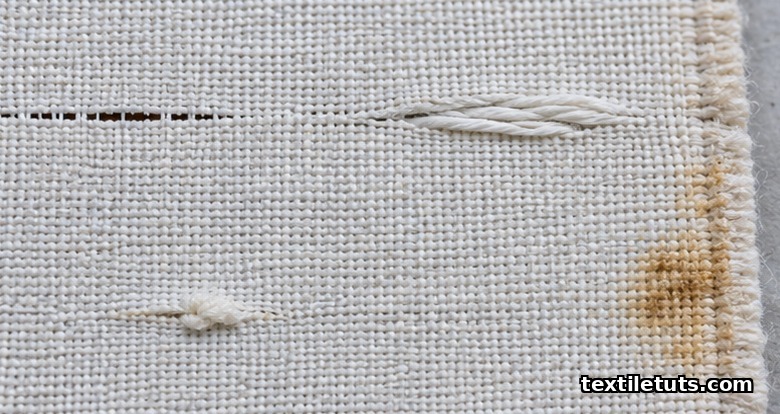
A weaving defect is any deviation in a woven fabric’s structure that can be measured against ISO 8499:2003, which classifies more than 200 fabric faults across seven categories (warp, weft, knots and slubs, holes, stains, selvedge, and color irregularities), with broken ends, broken picks, and floats responsible for roughly 65 to 80% of rejected loom output in plain cotton weaving.
Loom technicians and quality engineers name and grade these faults using the ISO 8498 vocabulary and the ASTM D5430 point-grading system, and the cost of undetected defects typically exceeds 8 to 15% of total production value, with second-quality fabric selling at 40 to 70% discounts on commodity cotton markets.
Below, we walk through the most common weaving defects, the physical mechanism behind each one, and the prevention steps mills apply at the loom and in pre-weaving preparation.
How Weaving Defects Are Classified
ISO 8498:1990 (Woven fabrics, Description of defects, Vocabulary) provides the standardized vocabulary for naming woven fabric faults, while ISO 8499:2003 groups those faults into a classification system that maps each defect to a numeric code and category.
The seven top-level categories in ISO 8499 are warp-direction defects, weft-direction defects, knots and slubs, holes and tears, stains and oil marks, selvedge defects, and color or yarn irregularities. ASTM D3990-12(2020) covers the same vocabulary family for U.S. textile trade and is the practical companion to ISO 8498 in North American mills.
Most mills grade fabric on a 4-point system, where 1 point equals a defect up to 3 inches (75 mm), 2 points for defects 3 to 6 inches (75 to 150 mm), 3 points for 6 to 9 inches (150 to 225 mm), and 4 points for defects longer than 9 inches (225 mm), following ASTM D5430-07 point-grading. A piece of fabric with more than 40 total points per 100 linear yards is typically classified as second quality.
The Most Common Weaving Defects and Their Root Causes
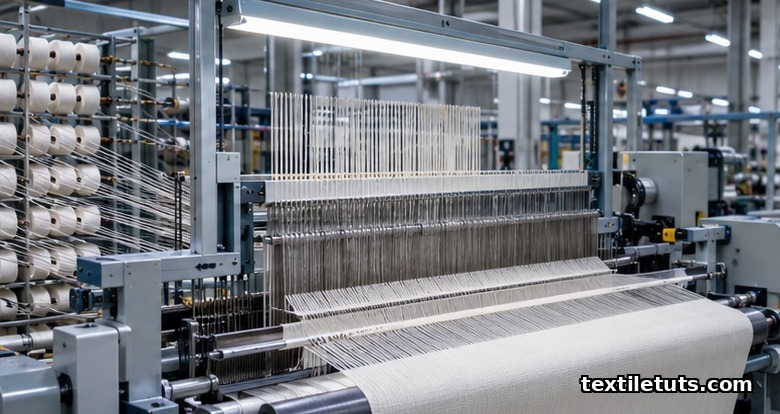
The defect list below covers the most frequently reported faults in shuttle, rapier, projectile, and air-jet looms, in roughly the order mills report them in defect logbooks.
1. Broken Ends (Warp Breakage)
A broken end is one or more warp yarns missing from the fabric structure for a measurable length, classified under ISO 8499 code 0100 series. Causes include low yarn single-end strength (below 18 cN/tex for cotton warp), excessive warp tension at the back beam, sharp or worn heddle eyes, damaged reed dents, and excessive sizing add-on above 12 to 14% on cotton.
Prevention: maintain warp tension within plus or minus 5% of the set value, replace damaged heddles at the first sign of wear, and verify sizing add-on with a desizing test before every new style run.
2. Broken Picks (Weft Breakage)
Broken picks appear as missing or short weft insertions across part or all of the fabric width and account for the largest single category of loom stop events in air-jet weaving. Causes include weak weft yarn, wrong weft feeder setting, excessive air pressure in air-jet looms (above 4.5 bar for typical 30 Ne cotton), and improper package unwinding tension.
3. Floats (Long Floats, Set Marks)
A float is a yarn that skips over two or more perpendicular yarns in the weave matrix and shows clearly on the face or back. They typically result from incorrect heald lifting, broken or mis-threaded heald, missed pick, or wrong pattern card in dobby and jacquard looms. Per ISO 8499, a float exceeding 5 mm in a fine cotton shirting or exceeding 10 mm in denim is automatically classified as a fault.
4. Missed Pick and Double Pick
A missed pick creates a thin bar across the fabric width where weft is missing, while a double pick has two picks inserted in one shed. Causes include defective weft-feeler, weak brake on the weft package, faulty selvedge cutters, or contamination in the weft-creel. Air-jet looms running above 1,200 rpm are especially prone if the relay nozzle is misaligned or fouled.
5. Slubs and Thick Places
Slubs are localized thickenings in the yarn, typically 4 to 6 times the base yarn diameter. They originate in spinning from poor roving drafting or contaminated feed but become visible only at the loom. Slubs thicker than 3 times the normal yarn diameter are rejectable per ASTM D5430.
6. Reed Marks and Heald Marks
Reed marks are visible straight lines along the warp direction from bent or damaged reed dents. Heald marks are similar lines caused by worn or bent heald eyes. Both typically indicate loom hardware failure rather than yarn fault, and should trigger immediate maintenance rather than fabric reclassification.
7. Weft Bar and Loom Bar
A weft bar is a visible band across the fabric width from variations in weft count, weft color, or weft tension across multiple picks. It is one of the most expensive defects because it cannot be invisibly mended. Causes include mixing of yarn lots at the creel, uneven weft tension across the shed, and inconsistent weft package density.
8. Knots and Piecing Marks
Knots in warp or weft yarn that are too long, too loose, or wrongly tied create visible knots. Proper weaver’s knots should sit below 3 mm in length per ISO 8498 guidance. Spliced piecing in air-jet weft insertion should be checked for diameter continuity at every new package.
9. Oil Stains and Loom Stains
Oil from loom gears, picker sticks, or shuttle emerges as brownish or blackish marks. Modern rapier and projectile looms have largely eliminated shuttle oil, but oil-mark defects persist wherever lubricated gears or bearings contact the yarn path, especially on the back rest and warp stop motion.
10. Selvedge Defects
Selvedge defects include loose selvedge, tight selvedge, curled selvedge, and missing selvedge yarns. They cause downstream cutting and hemming problems in garment manufacturing, especially when the loom-side selvedge differs in width from what the cutting table expects.
Defect Rate Targets in Real Mills
Most high-quality weaving mills target a first-quality fabric yield above 96%, with a reject rate below 4% for staple cotton and below 2% for filament synthetic. Indian and Bangladesh composite mills typically achieve 92 to 95%, while Japanese shuttle-less mills report 97 to 99% in premium synthetic.
According to peer-reviewed surveys of weaving mill performance published in textile engineering journals between 2018 and 2024, broken ends and broken picks together account for roughly 32 to 38% of all loom-side defects in cotton, with floats accounting for an additional 18 to 22%.
Prevention: How Mills Reduce Weaving Defects
Three engineering layers reduce weaving defects: pre-weaving preparation, loom settings, and in-process monitoring.
1. Pre-weaving preparation. Yarn strength must meet the loom’s requirements: cotton warp typically needs a single-end strength above 18 cN/tex for air-jet weaving, with elongation at break above 5%. Sizing add-on must be uniform at 8 to 12% for cotton, verified through desizing tests on the warp beam.
2. Loom settings. Warp tension should be measured with a tensiometer weekly and held within plus or minus 5% of target. Picker timing, heald timing, and shedding angle should be checked at every style change. In air-jet looms, the main nozzle pressure and relay nozzle timing directly control weft insertion quality, and a 0.5 ms timing drift can raise missed picks by 3 to 5%.
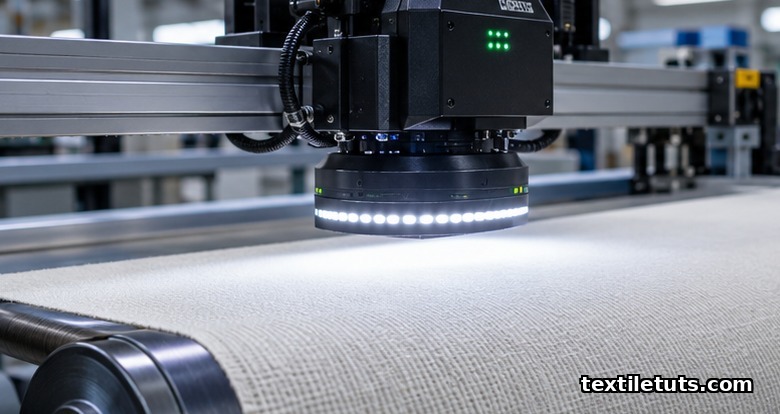
3. In-process monitoring. Modern shuttleless looms can be fitted with optical fabric inspection cameras that detect defects in real time. According to peer-reviewed studies in MDPI Sensors, modern vision-based inspection systems reach 90 to 95% detection accuracy for broken ends, broken picks, and oil stains when properly trained on the fabric style.
Grading Fabric with ASTM D5430
ASTM D5430 covers three grading methods: the 4-point system (also called the Graniteville system), the 10-point system, and the 100-yard method. The 4-point system is the most common worldwide.
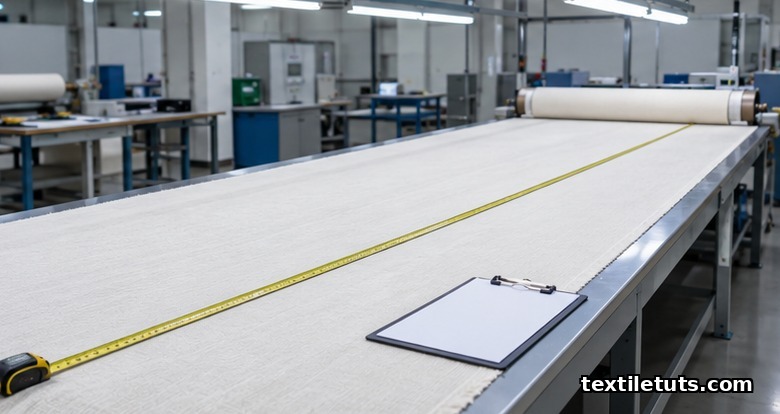
In the 4-point system, each defect is assigned points based on its length as described above, and the total points per 100 linear yards determine the piece grade. First-quality cotton shirting typically allows up to 20 points per 100 yards, while export-quality denim typically allows up to 15 points.
Cost of Weaving Defects
Weaving defects translate directly into revenue loss. A typical woven fabric mill in Bangladesh earns $0.20 to $0.40 per meter on first-quality cotton shirting fabric, while the same fabric sold as second-quality or B-quality earns $0.08 to $0.15 per meter, a 50 to 75% revenue loss. Per the AATCC Gray Scales for staining and color change, visible defects also reduce the fabric’s perceived grade for export markets and may trigger buyer claims under standard textile purchase contracts.
Frequently Asked Questions
What is the most common weaving defect?
Broken ends (warp breaks) and broken picks (weft breaks) are the most common weaving defects, together accounting for roughly 32 to 38% of all loom-side faults in cotton weaving according to peer-reviewed studies on weaving mill performance published in textile engineering journals.
How are weaving defects graded?
Weaving defects are graded using point systems standardized in ASTM D5430. The 4-point system assigns 1 point per defect up to 3 inches long and up to 4 points for defects longer than 9 inches, with 40 points per 100 linear yards as the typical second-quality threshold.
Can weaving defects be repaired?
Minor defects like knots, slubs, and oil stains can sometimes be repaired by skilled menders using needle-and-thread techniques, but structural defects such as broken ends, floats, weft bars, and loom bars cannot be repaired invisibly and lead to fabric downgrading or rejection.
What causes weft bars in fabric?
Weft bars are caused by variations in weft yarn count, weft yarn color, or weft yarn tension across multiple picks. Common triggers include mixing yarn lots at the creel, uneven package winding density, and inconsistent air pressure across the full width in air-jet looms.
How do air-jet looms differ from rapier looms in defect rates?
Air-jet looms run at higher speeds (1,200 to 2,000 rpm) and tend to produce more weft-direction defects such as broken picks and missed picks, while rapier looms run slower (500 to 800 rpm) and tend to produce more selvedge defects and starting marks due to the rapier head transfer mechanism at each insertion cycle.
References
- International Organization for Standardization. ISO 8498:1990 Woven fabrics: Description of defects, Vocabulary. iso.org — standardized vocabulary for naming weaving defects.
- International Organization for Standardization. ISO 8499:2003 Woven fabrics: Description of defects, Classification. iso.org — seven-category classification system covering more than 200 woven defects.
- ASTM International. ASTM D3990-12(2020) Standard Terminology Relating to Fabric Defects. astm.org — U.S. terminology standard for fabric defects.
- ASTM International. ASTM D5430-07 Standard Test Methods for Visually Inspecting and Grading Fabrics. astm.org — 4-point, 10-point, and 100-yard fabric grading methods.
- Peer-reviewed fabric defect detection studies published in MDPI Sensors between 2018 and 2024. mdpi.com — academic literature on real-time vision-based loom inspection accuracy.
- AATCC. Gray Scales for Staining and Color Change. aatcc.org — standard reference for evaluating color and staining in woven fabrics.
This article is the working reference for common weaving defects and their causes. Editorial by Mohammad Yousuf (Anik), TextileTuts. Sources: ISO 8498:1990, ISO 8499:2003, ASTM D3990-12, ASTM D5430-07, MDPI Sensors 2018 to 2024, and AATCC Gray Scales as cited.


