
Leno Weaving: How It Creates Open Fabrics

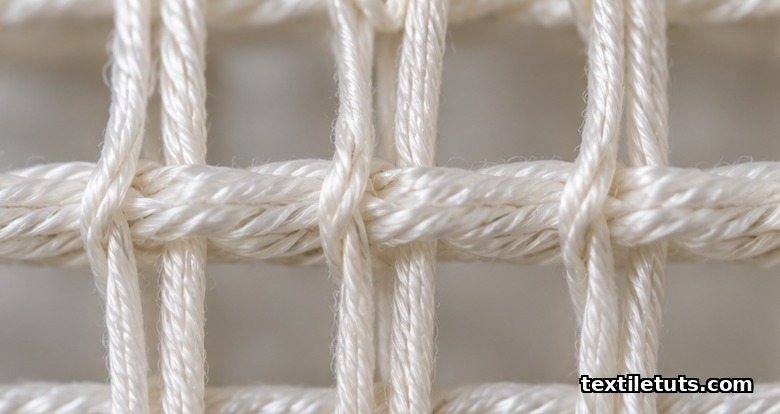
Leno weaving produces open, sheer fabrics by twisting pairs of warp yarns around each weft pick at 4 to 8 twists per cm, yielding cloth with 30 to 70 percent open area where equivalent plain weaves leave only 8 to 15 percent voids. The technique replaces the simple over-and-under interlacing of plain cloth with a controlled half-cross between two warps that locks each pick in place, so the finished fabric stays dimensionally stable even when the warp and weft are spaced far apart. This article explains how the doup mechanism works, how leno compares to plain and basket weaves, where the cloth shows up in industry, and which ISO and ASTM methods govern its quality testing.
Leno is also called gauze weave, doup weave, or cross weave. The names describe the same structure: one warp end crosses around a neighbouring warp end on every pick, gripping the weft from above and below. That single geometric trick is what turns an otherwise loose, holey net into a fabric that can carry load, hold shape, and survive outdoor exposure for years.
What Is Leno Weaving and How Does the Doup Mechanism Work?
Leno is a weave structure in which one warp end, called the doup end or cross end, passes around a stationary ground end on every pick, while the ground end slides freely through a heddle on a second harness. The crossing motion is produced by a doup attachment: a thin loop of twine, fine wire, or filament yarn that is fixed to the doup harness and that pulls the cross end sideways at the beat-up. The result is a stable half-cross that holds each pick between the two warps like a hinge, preventing the weft from shifting even when the warp and weft spacing is wide.
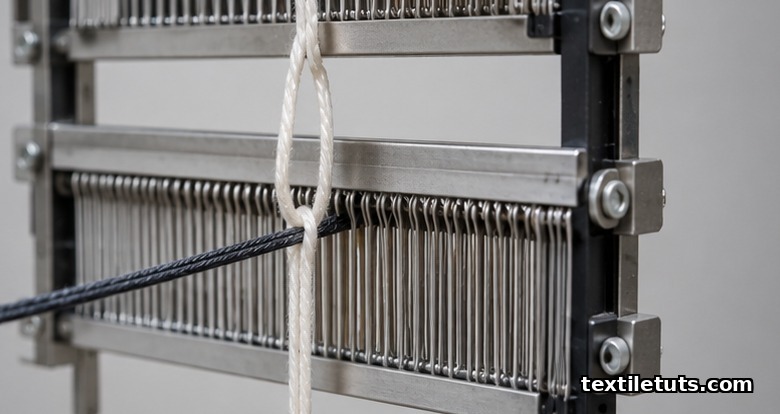
Three elements distinguish a leno from a plain weave on the same loom:
- The doup harness. A second harness above the standard ground harnesses carries a heddle on every doup end and a sliding eye (the doup or mail) through which the ground end passes. When the doup harness lifts, it pulls the doup end across the ground end, producing one twist per pick.
- The crossing direction. Each pick reverses the twist direction so the cloth does not torque on the loom: pick 1 is an S-twist, pick 2 is a Z-twist, and so on.
- The slack warp let-off. The doup end is let off slightly faster than the ground end so that the cross does not pull the fabric tight and distort the shed.
Without the doup attachment, plain-weave warps spaced wider than about 12 ends per cm let the weft slide freely. With it, leno warps as open as 4 to 6 ends per cm still produce a dimensionally stable cloth.
Leno vs Plain Weave: Why the Twist Matters
A plain weave crosses one warp over one weft, then back, in a 1/1 sequence. A leno weave repeats the same over-and-under beat but adds a lateral cross between two warps on the same pick, so the weft is gripped from above and below on every insertion. The practical consequences show up in four measurable properties.
- Open area. A standard plain-weave muslin at 24 ends by 20 picks per cm of 30 tex cotton leaves roughly 8 to 15 percent of the surface as void. A leno at 8 ends by 8 picks per cm of the same yarn leaves 30 to 70 percent void, depending on cross tightness (measured against ASTM D3775 for warp count and the construction analysis in ISO 7211-1).
- Stability. Leno cloth resists weft slip because each pick is locked by the twist. This is the reason agricultural shade nets and filtration scrim hold their shape even when cut to length.
- Air permeability. The wider spacing and stable openings make leno cloths highly permeable. ISO 9237 reports air-permeability values on leno mosquito nets typically 1500 to 4000 mm/s at 100 Pa, against 200 to 600 mm/s for plain cotton sheeting at the same mass per unit area.
- Drape. Because the warps cross each other, leno fabrics are stiffer in the warp direction than a plain weave of the same count. That stiffness is what makes leno useful as a reinforcing scrim in composites and as a stiffener in garment interfacings.
Common Leno Fabric Types and End Uses
Leno structures cover a wide density range, and the end use follows the yarn size, count, and openness.
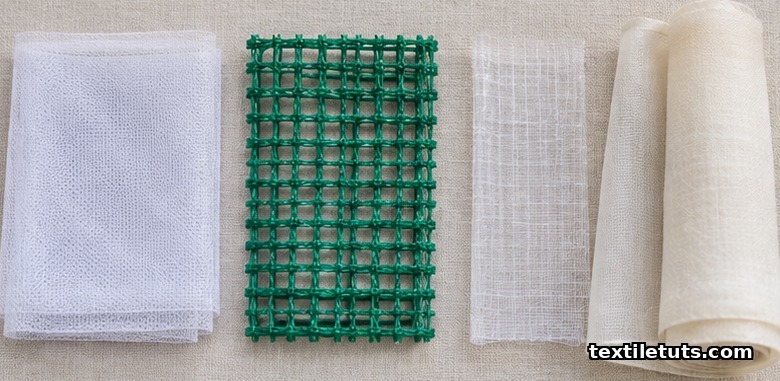
- Mosquito netting and insect screens. Woven from polyester or polyethylene multifilament, 12 to 20 ends per cm, mesh openings of 1.0 to 1.5 mm. The twisted warp holds the mesh square even after years of outdoor UV exposure.
- Agricultural and horticultural nets. Shade nets at 30 to 90 percent shade, crop covers, and hail nets are almost all leno because the structure survives tensioning across hoops without the weft racking.
- Filtration scrim and dryer belts. Leno woven from polyester monofilament, commonly 0.20 to 0.50 mm diameter, is the standard carrier in paper-machine clothing and in liquid filtration. The open structure lets water or air pass while the cross-twist keeps the belt from stretching.
- Marquisette and curtain gauze. Fashion and home-textile leno uses fine cotton, viscose, or polyester at 16 to 24 ends per cm for lightweight curtains, millinery, and bridal veiling.
- Carpet backing. The primary backing of most tufted carpets is a leno weave of polypropylene tape yarn, with the cross-twist locking the tufts in place during tufting.
- Reinforcing scrim. Fiberglass and carbon leno scrims are used in coated roofing, wall coverings, and composite layups. The open structure lets resin wet out while the cross-twist keeps the scrim flat.
Loom Setup: Doup Harness, Reed, and Tension
Weaving leno on a conventional rapier or air-jet loom requires three modifications.
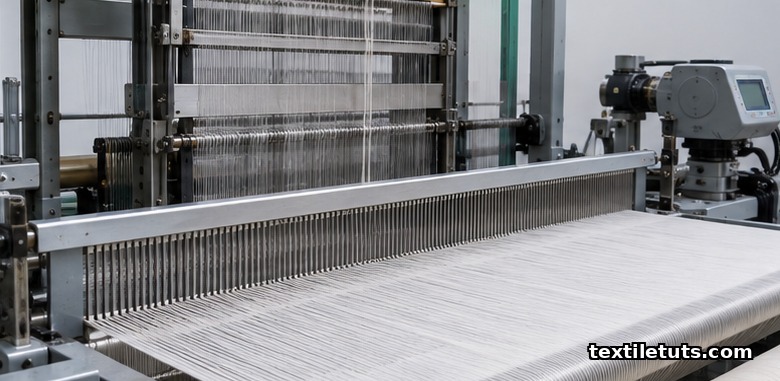
- Doup harness mounting. The doup harness sits behind the standard harnesses. Its heddles carry a doup, a rigid mail or a loop of fine yarn, through which the ground end is threaded, while the doup end itself is on a separate harness in front.
- Reed selection. A coarser reed, with fewer dents per cm, is normal for leno. Reed counts of 4 to 10 dents per cm are typical for mosquito net and shade net production, against 12 to 20 dents per cm for sheeting.
- Let-off and tension. The doup end needs 5 to 15 percent more let-off than the ground end so the cross does not pull the fell line forward. Weft insertion is normally slowed 30 to 50 percent relative to plain-weave speed because the doup motion adds a beat-up cycle.
Modern shuttleless looms with electronic let-off and jacquard doup attachments run leno at production speeds of 350 to 500 picks per minute for 8 ends per cm shade net, against 600 to 800 picks per minute for plain cotton sheeting on the same machine frame.
Quality Control: ISO and ASTM Tests for Leno Fabrics
Because leno cloth is defined by its openness, ISO and ASTM standards built for plain weaves are applied with care.
- ISO 7211-1:1984, Textiles, Woven fabrics, Construction, Methods of analysis. Part 1 covers the determination of yarns per cm in woven fabrics, with the doup ends and ground ends counted separately.
- ISO 3801:1977, Textiles, Woven fabrics, Determination of mass per unit length and mass per unit area. Used together with the count to calculate the open-area ratio of a leno cloth.
- ASTM D3775, Standard Test Method for End (Warp) Count of Woven Fabric. The warp count of a leno fabric is reported as ground ends plus doup ends per cm, not as a single total.
- ASTM D3882, Standard Test Method for Bow and Skewness in Woven and Knitted Fabrics. Leno cloth must meet tighter skew limits, typically 2 percent or less, than plain weave, because the cross-twist amplifies any angular distortion.
- ASTM D3776, Standard Test Method for Mass per Unit Area (Weight) of Fabric. Reported alongside ISO 3801 for cross-checking grammage.
- ISO 13934-1, Tensile properties of fabrics, Part 1: Determination of maximum force using the strip method. Leno scrims for technical use are tested warp-way and weft-way. Warp tensile strength is typically 30 to 50 percent higher than weft because of the cross-twist.
For leno used in personal protective equipment, ISO 13937 (tearing force) and ISO 13935 (seam tensile properties) are commonly added to the test plan.
Care, Finishing, and Limitations of Leno Cloth
Leno’s stability lets it survive repeated laundering better than most open weaves. Polyester and polyethylene leno nets can be washed at 60 degrees C with standard household detergent. Cotton and viscose leno should be treated as delicate and washed at 30 degrees C, following the dimensional-change limits in AATCC TM135, which target 5 percent or less shrinkage after five home-laundering cycles for a properly heat-set leno. Heat-setting after weaving, 180 to 200 degrees C for polyester, 110 to 130 degrees C for polyamide, locks the cross-twist and prevents the cloth from relaxing into a wavy state on the first wash.
The main limitations of leno are:
- Slower production. The doup cycle adds time on every pick, so a leno fabric costs 20 to 40 percent more per metre than the same yarn count in plain weave.
- Doup wear. The doup loops wear out after 2 to 4 million picks and must be replaced, which is a planned maintenance item on any leno line.
- Limited yarn compatibility. Very coarse or very hairy yarns do not cross cleanly. Multifilament and tape yarns are preferred for clean crossings.
- Pattern limits. Complex colour patterns are hard to design because the doup motion only allows one twist per pick. Figured leno, sometimes called spot leno or lenoweave, uses a jacquard doup and runs significantly slower.
Frequently Asked Questions
Is leno the same as gauze weave?
Yes. In most English-language textile literature, leno and gauze refer to the same weave structure. Gauze is the more common term in medical and apparel contexts, while leno is more common in industrial and agricultural contexts. The doup mechanism is identical in both cases.
What is the difference between leno and mock leno?
Mock leno imitates the appearance of leno by grouping warp ends and using a draft that spaces them apart at intervals, but it does not actually twist the warps around each other. Mock leno is cheaper to weave, but it is less stable, has a lower open-area ratio than true leno, and is usually confined to cotton shirting and similar light fabrics.
Can leno fabric be knitted?
No. Leno is defined by the warp-twist action, which is only possible on a weaving loom. Warp-knitted mesh and raschel net are different structures that mimic the look of leno but are produced on a knitting machine, with no twist-and-lock mechanism between warp ends.
Why is leno used for carpet backing?
The cross-twist locks the weft in place so the carpet survives the tufting needles, typically 800 to 1200 needles per metre, without the primary backing distorting. Plain-weave backing stretches during tufting and lets the tufts lean after installation, which is why tufted carpet primary backing has been a leno structure since the 1950s.
What standards apply to mosquito net leno?
WHO specifications for long-lasting insecticidal nets reference ISO 7211-1 for construction, ISO 3801 for mass per unit area, ISO 13937-1 for tear strength, and the WHO PQS performance protocols for wash resistance and insecticide retention. Most national pharmacopoeias and procurement specifications use the same ISO base methods.
References
- International Organization for Standardization. ISO 7211-1:1984, Textiles, Woven fabrics, Construction, Methods of analysis. Part 1: Methods for the determination of yarns per cm in woven fabrics. iso.org.
- International Organization for Standardization. ISO 3801:1977, Textiles, Woven fabrics, Determination of mass per unit length and mass per unit area. iso.org.
- International Organization for Standardization. ISO 9237:1995, Textiles, Determination of permeability of fabrics to air. iso.org.
- International Organization for Standardization. ISO 13934-1:2013, Textiles, Tensile properties of fabrics, Part 1: Determination of maximum force using the strip method. iso.org.
- ASTM International. ASTM D3775-17, Standard Test Method for End (Warp) Count of Woven Fabric. astm.org.
- ASTM International. ASTM D3882-16, Standard Test Method for Bow and Skewness in Woven and Knitted Fabrics. astm.org.
- ASTM International. ASTM D3776/D3776M-20, Standard Test Method for Mass per Unit Area (Weight) of Fabric. astm.org.
- AATCC. AATCC TM135-2018, Dimensional Changes of Fabrics After Home Laundering. aatcc.org.
This article is the working reference for leno weaving. Editorial by Mohammad Yousuf (Anik), TextileTuts. Sources: ISO 7211-1, ISO 3801, ISO 9237, ISO 13934-1, ASTM D3775, ASTM D3882, ASTM D3776, AATCC TM135 as cited.


