
OEKO-TEX Standard 100: Complete Guide

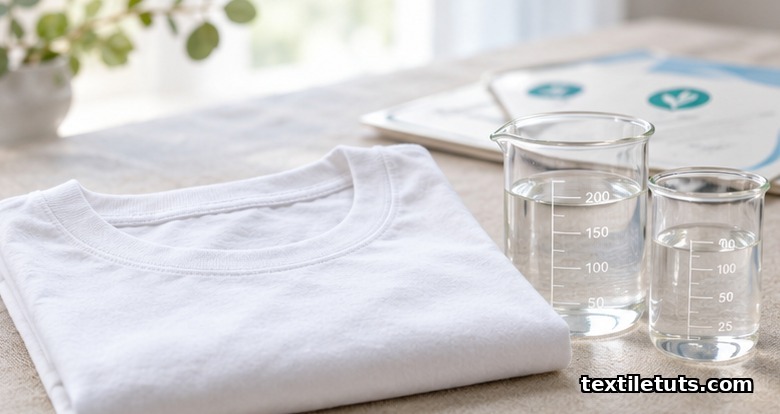
OEKO-TEX Standard 100 tests every component of a textile article, from fiber to finished product, against an annually updated limit-value list of roughly 300 harmful substances, with the strictest tier (Class I, articles for babies and toddlers up to 36 months) capping formaldehyde at 16 mg/kg and many regulated aromatic amines from azo dyes at 20 mg/kg.
The certification, issued by the Zurich-based OEKO-TEX Association and held by tens of thousands of manufacturers and brands across roughly 100 countries, is updated every January so that limit values track new toxicological findings and REACH SVHC additions within roughly 12 months.
This guide walks through what the standard actually tests, how the four product classes differ in practice, what the certification process looks like from sampling to hangtag, and how Standard 100 compares with GOTS, bluesign, GRS, and the EU Ecolabel that shoppers commonly see on textile labels.
What OEKO-TEX Standard 100 Actually Tests
OEKO-TEX Standard 100 is a voluntary product safety label, not an environmental or organic-fiber certification. Its scope is restricted to human-ecological safety: substances that can transfer from a finished textile into a wearer’s skin, mouth, or respiratory tract at normal use conditions. The current Annex 4/6 limit-value catalogue covers regulated chemicals across pH value, formaldehyde, extractable heavy metals, pesticide residues, phthalates, organotin compounds, chlorinated phenols, aromatic amines from azo dyes, polycyclic aromatic hydrocarbons (PAHs), per- and polyfluoroalkyl substances (PFAS), short-chain chlorinated paraffins, plus UV stabilizers and flame retardants that have triggered restrictions under REACH Annex XVII.
The test plan is built per article, not per brand: every component that can touch the wearer’s skin must be screened. For a typical T-shirt this means the shell fabric, the inner neck-tape binding, the print or transfer, the sewing thread, the interlining (if any), and the buttons or snaps. For a mattress cover it adds the foam core and the zipper tape. Components are sampled at the finished-product stage under ISO 17025-accredited laboratory conditions, with the sample mass scaled to the article size so that detection limits remain statistically valid for low-concentration analytes.
The Four Product Classes and Why They Differ
OEKO-TEX divides certified articles into four classes based on skin contact intensity and the likelihood of mouthing behavior, because the toxicological threshold for a carcinogen in a baby romper is not the same as in a decorative curtain. The class is selected by the applicant and verified by the certifier.

Class I, Articles for babies and toddlers up to 36 months
This is the most restrictive tier. It covers rompers, sleep sacks, bibs, plush toys with textile covers, and bedding intended for children under three. Because mouthing and prolonged skin contact are assumed, limit values are set at the lowest toxicologically relevant concentrations the lab can reliably quantify, and many substances that are merely “regulated” in higher classes are outright banned in Class I.
Class II, Articles with direct skin contact
This class covers shirts, underwear, bed linen, towels, and any garment worn directly against the skin for an extended period. It is the most heavily used tier in apparel, and the tier most retail buyers mean when they ask a mill for “an OEKO-TEX certificate.”
Class III, Articles with indirect skin contact
Class III applies to garments worn over a barrier layer (jackets, blazers, suit trousers) and to most home textiles such as curtains, upholstery, and tablecloths.
Class IV, Decoration articles
Class IV covers decoration-only materials such as curtains, cushion covers, and rugs that have no direct skin contact during intended use. Formaldehyde and pH limits are looser here, but heavy metals, amines, and PFAS thresholds remain the same.
| Substance / Parameter | Class I (Baby) | Class II (Direct skin) | Class III (Indirect skin) | Class IV (Decoration) |
|---|---|---|---|---|
| Formaldehyde (mg/kg) | 16 | 75 | 150 | 300 |
| pH value | 4.0 to 7.5 | 4.0 to 7.5 | 4.0 to 7.5 | 4.0 to 9.0 |
| Extractable heavy metals (e.g., Pb, mg/kg) | 0.2 | 1.0 | 1.0 | 1.0 |
| Nickel release (µg/cm²/week) | 0.5 | 0.5 | 0.5 | 0.5 |
| Sum of regulated aromatic amines (mg/kg) | 20 | 20 | 20 | 20 |
| Total phthalates (DEHP, DBP, BBP, etc., %) | 0.05 | 0.05 | 0.05 | 0.05 |
| PFOS / PFOA related substances (mg/kg) | 1.0 | 1.0 | 1.0 | 1.0 |
Values shown reflect the OEKO-TEX Annex 4/6 limit-value list as published in the current edition. Limits are revised every January and may shift between editions, so always check the edition stamped on the certificate.
What the Limit Values Are Based On
Where a statutory limit exists (for example the EU REACH restriction list in Annex XVII, the US Consumer Product Safety Improvement Act thresholds for lead and phthalates, or China’s GB 18401 national safety code for textile products), the OEKO-TEX limit is set at or below the legal floor. Where no statutory limit exists, the limit is derived from the No Observed Adverse Effect Level (NOAEL) of the substance, divided by an assessment factor that reflects dermal absorption, the fraction of the article in contact with skin, and the body weight of the exposed population.
This is why baby items face stricter values than upholstery: the same milligram-per-kilogram concentration represents a much higher internal dose for a 7 kg infant than for a 70 kg adult, and the OEKO-TEX model factors that exposure differential into the class-specific numbers rather than applying a single universal threshold.
How Certification Works in Practice
The certification cycle is annual. A manufacturer or brand applies to one of the OEKO-TEX member institutes (Testex in Switzerland, Hohenstein in Germany, Shirley in the United Kingdom, Centexbel in Belgium, and others) and submits representative samples of every article variant to be covered by the certificate. The lab runs the test package defined in Annex 4/6 for the requested product class.
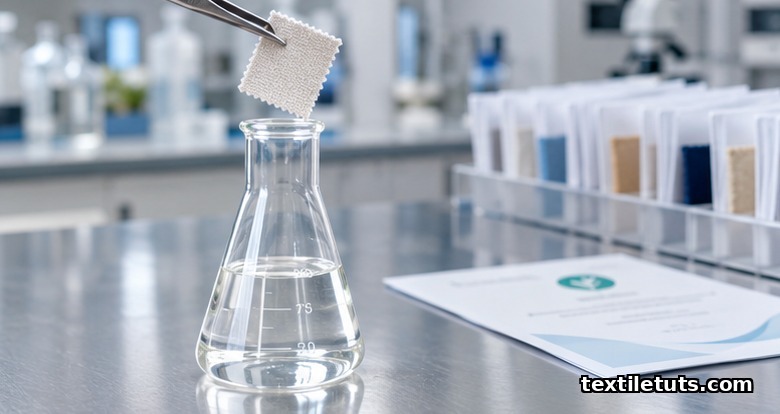
If the article passes, the institute issues a certificate valid for 12 months and assigns a unique label number that can be printed on hangtags, packaging, or e-commerce listings. During the validity period the institute conducts at least one unannounced spot-check audit at the production site, re-tests samples drawn from the running lot, and may suspend or withdraw the certificate if the spot check fails. After 12 months the manufacturer must re-submit samples for renewal.
Because the limit values change every January, a certificate issued in March 2025 references the 2025 edition, and a renewal issued in February 2026 references the 2026 edition, even if the underlying chemistry of the article is unchanged. Manufacturers who reformulate a dye or change a trim supplier mid-cycle must notify the issuing institute and re-test the affected components before continuing to use the label.
OEKO-TEX Standard 100 vs. Other Labels Consumers See
OEKO-TEX Standard 100 is one of several textile labels a shopper may encounter. The distinctions matter because the labels test for different things, and a buyer who treats them as interchangeable will over-claim or under-claim product safety.

| Label | Scope | What it verifies | What it does not verify |
|---|---|---|---|
| OEKO-TEX Standard 100 | Finished article safety | Finished product screened against a current list of regulated substances at every component | Whether fibers are organic, whether the mill is energy-efficient, whether workers are paid a living wage |
| GOTS (Global Organic Textile Standard) | Organic fiber plus processing | At least 70% organic fibers, restricted chemical inputs at processing, social criteria at the processing stage | Final article-level screening for every regulated substance; covers fewer substances than OEKO-TEX but adds an organic-fiber requirement |
| bluesign | Mill-level resource efficiency plus chemical management | Inputs to production are screened against a bluesign Black List; resource use is audited at the mill | Article-level finished-product screening by an external lab on every lot |
| GRS (Global Recycled Standard) | Recycled content plus chain of custody | Recycled fiber content percentage, chain-of-custody from recycler to finished good | Whether the recycled fiber itself is free of contaminants |
| EU Ecolabel | Multi-criteria product sustainability | Limits on hazardous substances, biodegradability, durability, fitness-for-use criteria | Same granular article-by-article chemical screening as OEKO-TEX |
An article can carry more than one label. A GOTS-certified organic cotton T-shirt can additionally hold an OEKO-TEX Standard 100 certificate, and many retailers require both because they answer different buyer questions: GOTS addresses how the cotton was grown and processed, OEKO-TEX addresses what is in the finished shirt.
Limits and Criticisms Worth Knowing
Two limitations show up consistently in peer-reviewed assessments of voluntary textile safety marks. First, OEKO-TEX screens chemicals present in the finished article at the moment of testing; it does not certify what happens during the article’s use-phase, so finishes that degrade under repeated laundering (some anti-odor silver treatments, some dye-fixing agents) are not assessed over the garment’s lifetime. Second, the standard is an article safety mark rather than a sustainability mark: a polyester shirt made from virgin fossil feedstock in a coal-powered mill can carry the Standard 100 label as long as the finished article passes the limit values.
The OEKO-TEX Association addresses the second point through a sister standard, STeP (Sustainable Textile and Leather Production), which audits the manufacturing facility itself, and through Made in Green, which combines Standard 100 article safety with STeP facility certification. Buyers and consumers who want both article safety and verifiable sustainability should look for the Made in Green label rather than the Standard 100 mark alone.
Frequently Asked Questions
Is OEKO-TEX Standard 100 the same as organic cotton certification?
No. OEKO-TEX Standard 100 tests the finished article for harmful substances; it does not verify that fibers are organic, recycled, or responsibly farmed. A conventionally grown cotton T-shirt dyed with compliant chemicals can pass OEKO-TEX, and an organic cotton T-shirt can fail if a dye or print exceeds a limit. For organic-fiber verification, look at GOTS, OCS (Organic Content Standard), or a brand’s own farm-to-garment documentation.
Does an OEKO-TEX label mean a garment is free of all chemicals?
No textile is chemically “free,” because every fiber is a chemical compound. The label means that residues of regulated harmful substances (carcinogenic amines from azo dyes, heavy metals, phthalates, formaldehyde, certain PFAS, and others) are below the limit values specified for the product class. Detection limits typically reach single-digit mg/kg for organic analytes and µg/kg for heavy metals.
How long is an OEKO-TEX Standard 100 certificate valid?
Certificates are valid for 12 months from the date of issue. They must be renewed annually by re-submitting samples to the issuing institute. If the manufacturer changes a dye, finish, or trim supplier mid-cycle, the institute must be notified and the affected components re-tested before the label continues to be used.
Can a supplier self-declare OEKO-TEX compliance without holding a certificate?
No. The OEKO-TEX label number is registered to a specific certificate holder and a specific article number. Misuse of the mark or false claims of certification are pursued through the association’s trademark enforcement and can be reported by buyers at the issuing institute. The label number on any certified article can be verified through the OEKO-TEX online label check.
Does OEKO-TEX Standard 100 cover microfiber shedding and microplastic pollution?
Not directly. The current limit-value list addresses chemical residues that transfer from the textile to a wearer, not the loss of polymer fragments into wastewater during laundering. Microfiber release is regulated, where it is regulated, through effluent standards (for example the EU Urban Wastewater Treatment Directive revisions) and product-design legislation, not through the Standard 100 chemical list.
References
- OEKO-TEX Association. Standard 100: Limit Values and Individual Substances According to Annex 4/6. https://www.oeko-tex.com — the official limit-value catalogue, updated annually each January.
- European Chemicals Agency (ECHA). REACH Regulation (EC) No 1907/2006, Annex XVII Restricted Substances List. https://echa.europa.eu — the EU regulatory baseline that informs many OEKO-TEX limits.
- International Organization for Standardization. ISO/IEC 17025:2017, General requirements for the competence of testing and calibration laboratories. https://www.iso.org — the laboratory accreditation standard that OEKO-TEX test labs must hold.
- International Organization for Standardization. ISO/IEC 17050-1:2004, Conformity assessment, Supplier’s declaration of conformity. https://www.iso.org — referenced in OEKO-TEX documentation for the declaration of conformity chain.
- U.S. Consumer Product Safety Commission. Consumer Product Safety Improvement Act (CPSIA), Section 101 (lead content) and Section 108 (phthalates). https://www.cpsc.gov — the US federal floor that informs OEKO-TEX phthalate and lead limits.
- Peer-reviewed review on phthalate esters in textile products (ScienceDirect / Springer). Open-access review of analytical methods and occurrence of phthalates in fabrics — context for the phthalate limits in the current OEKO-TEX edition.
- Peer-reviewed review on per- and polyfluoroalkyl substances (PFAS) in textile manufacturing (MDPI, Toxics / Environments journal). Open-access review of occurrence, fate, and regulation of PFAS in textiles — context for the PFAS provisions in the current OEKO-TEX edition.
This article is the working reference for OEKO-TEX Standard 100. Editorial by Shahrukh Islam, TextileTuts. Sources: OEKO-TEX Annex 4/6 limit-value catalogue (current edition), REACH Annex XVII, ISO/IEC 17025 and ISO/IEC 17050-1 standards, the US CPSIA, and peer-reviewed reviews on phthalates and PFAS in textiles as cited.


