
GOTS Certification: Complete Guide

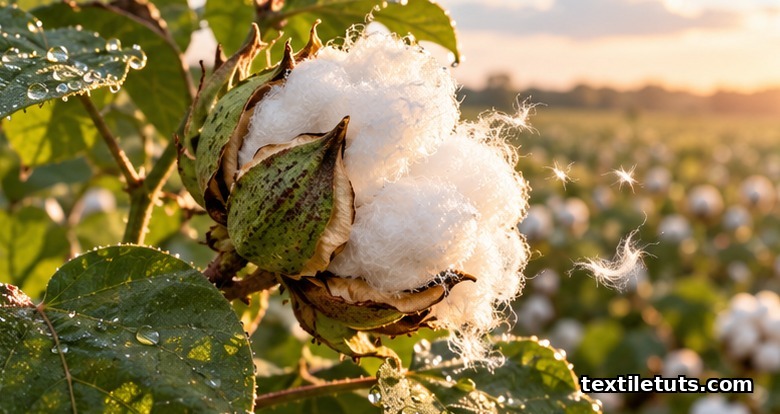
The Global Organic Textile Standard (GOTS) Version 7.0, released on March 1, 2023, requires finished textile products to contain at least 70% certified organic fibers for the “Made with organic” label and at least 95% for the “Organic” label, with every operator in the supply chain audited annually by an accredited third-party certification body operating under ISO/IEC 17065.
GOTS combines organic fiber verification, chemical input restrictions, wastewater quality limits, and social compliance criteria into a single standard, which is why major brands such as Patagonia, H&M’s Conscious Collection line, and Eileen Fisher publish GOTS transaction certificates for finished goods rather than relying on fiber-only certifications.
This guide explains what GOTS actually measures, the threshold for each label tier, the chemical restrictions that can disqualify a product, and what a manufacturer or brand should budget in time and fees for certification.
What GOTS Certification Actually Measures
GOTS evaluates textiles across four linked criteria: organic fiber content, chemical inputs used in processing, environmental performance of wet-processing facilities, and social compliance for workers. Unlike a single-issue label such as “organic cotton,” GOTS audits the entire chain from the farm or gin through spinning, weaving or knitting, dyeing and finishing, confection, and finally the brand selling the finished product.
The standard is managed by the International Working Group on Global Organic Textile Standard, which consists of four stakeholder bodies representing organic farmers, textile processors, fabricators, and retailers. The current version (7.0) took effect for new certifications on March 1, 2023, with a one-year transition window for existing licensees to update to the revised criteria.
Certification bodies (such as Control Union, Ecocert Greenlife, SGS, and ICEA) must hold ISO/IEC 17065 accreditation and be specifically approved by the GOTS Working Group before they can issue GOTS certificates. An operator’s certificate is only valid for 12 months, after which a re-certification audit is required.
The Two Label Tiers: 70% vs 95% Organic Fiber
GOTS recognizes two product label tiers based on the percentage of certified organic fibers in the finished product. The composition calculation includes all fiber by weight, excluding accessories such as buttons, zippers, and trims that do not affect the textile surface.
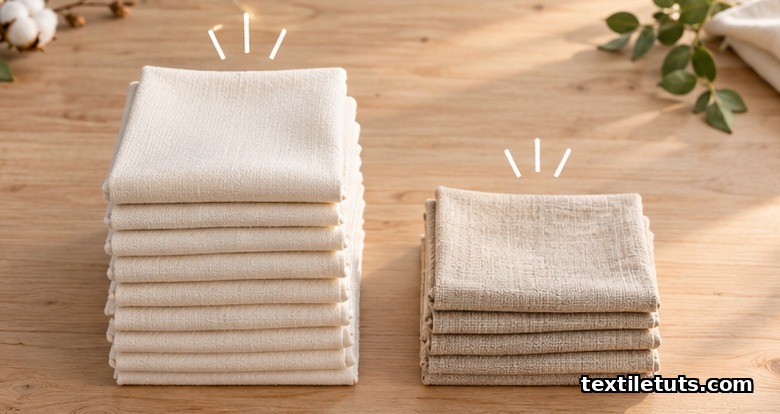
Organic tier (95%+): Products must contain at least 95% certified organic fibers by weight. The remaining 5% may consist of synthetic or recycled fibers only if they meet GOTS-positive list criteria and are functionally necessary (for example, elastane in stretch denim).
“Made with organic” tier (70%+): Products must contain at least 70% certified organic fibers by weight. Up to 30% can be non-organic fibers, but they must still comply with GOTS chemical and social criteria. This tier is commonly used for blended fabrics where full organic content is technically constrained.
Any product below 70% organic fiber content cannot carry the GOTS label, regardless of how the processing was performed. The remaining fiber content (whether organic or not) must still meet GOTS chemical restrictions.
Chemical Restrictions Under GOTS 7.0
GOTS 7.0 expanded its chemical criteria significantly compared to Version 6.0. The standard maintains a Positive List of approved dye classes and chemical auxiliaries, while prohibiting specific substances classified by hazard category rather than naming individual chemicals. This hazard-based approach allows the standard to automatically capture new substances as they are added to hazard lists.
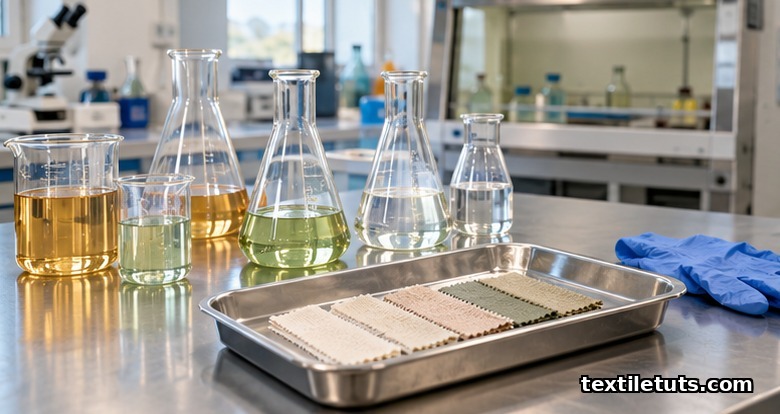
Key chemical prohibitions include:
- Azo dyes that can release any of 22 specific aromatic amines at concentrations above 30 mg/kg (per ISO 14362-1)
- Disperse dyes classified as allergenic or carcinogenic
- Formaldehyde levels exceeding 75 mg/kg for outerwear and 20 mg/kg for baby textiles
- Heavy metals such as lead, cadmium, mercury, and chromium VI above specified limits
- Per- and polyfluoroalkyl substances (PFAS), with full prohibition taking effect in 2025
- Phthalates in prints and coatings above 0.1% by weight
- Genetically modified organisms (GMO) inputs in fiber cultivation
For wet-processing facilities, GOTS also sets wastewater quality limits. Effluent from a GOTS-certified facility must show pH between 6.0 and 9.0, temperature below 40°C at discharge, and biochemical oxygen demand below specified thresholds based on the wastewater volume per kilogram of textile processed.
Environmental and Social Criteria
Beyond chemistry, GOTS enforces environmental management practices at processing facilities. Operators must maintain a documented environmental policy, segregate GOTS and conventional products throughout processing, and keep records traceable from raw fiber to finished good for at least five years.
Social compliance criteria mirror the International Labour Organization (ILO) conventions and include:
- No forced or child labor (ILO Conventions 29 and 105 on forced labor; Convention 138 on minimum age)
- Freedom of association and collective bargaining rights
- Working hours compliance with national law or ILO standards, whichever is stricter
- Payment of legal minimum wages
- Safe and hygienic working conditions
For processing facilities in countries where social compliance is verified through other credible schemes (such as SA8000 or Fairtrade), GOTS accepts these certifications rather than duplicating audits, provided the underlying standard covers all GOTS social criteria.
GOTS vs OEKO-TEX vs Bluesign: How They Differ
| Criterion | GOTS 7.0 | OEKO-TEX Standard 100 | Bluesign |
|---|---|---|---|
| Organic fiber requirement | Mandatory (70% or 95%) | Not required | Not required |
| Chemical input review | Positive list, hazard-based | Finished product testing only | Positive list at input stage |
| Wastewater criteria | Mandatory limits | Not covered | Resource efficiency focus |
| Social compliance | Mandatory (ILO-based) | Not covered | Limited |
| Scope | Entire supply chain | Finished product only | Chemical inputs and processes |
| Recycled fibers accepted | Yes (under defined criteria) | Yes (tested same as virgin) | Yes (resource efficiency priority) |
| Annual third-party audit | Yes (ISO/IEC 17065) | Yes (product testing + site visit) | Yes (on-site assessment) |
Many brands carry both GOTS and OEKO-TEX certifications on the same product because OEKO-TEX Standard 100 tests the finished textile for harmful substances at the component level, while GOTS verifies the upstream chain. Bluesign overlaps with GOTS on chemical inputs but does not address organic fiber content or labor conditions.
The Certification Process and Timeline
A manufacturer or brand seeking GOTS certification follows five steps. First, the operator submits an application to an approved certification body along with documentation of input materials, processing chemicals, and facility layout. Second, the certification body reviews the documentation and identifies gaps. Third, an on-site audit is performed, which typically takes one to three days depending on facility size.

Fourth, the certification body issues either a scope certificate (for processors handling fiber, yarn, fabric, or finished goods) or a transaction certificate for each shipment of GOTS goods between certified entities. Fifth, the operator’s certificate is renewed annually through a re-certification audit.
The full process typically takes 3 to 6 months from first application to certificate issuance, depending on facility readiness. New facilities with no prior certification experience often need longer because the documentation phase reveals compliance gaps that must be addressed before the audit.
Costs and What to Budget
Certification fees vary by certification body, facility size, and processing complexity, but typical ranges for a single facility include:
- Application fee: $300 to $1,000 (one-time)
- Annual on-site audit: $1,500 to $5,000 for small facilities, up to $15,000 for large multi-line operations
- Laboratory testing for chemical residue verification: $500 to $3,000 per audit cycle
- Transaction certificate fees: $25 to $75 per certificate issued
Beyond certification fees, facilities must invest in compliance infrastructure: chemical inventory management systems, segregation procedures for organic vs. conventional production lines, wastewater monitoring equipment, and worker training. Total first-year costs commonly range from $10,000 to $50,000 depending on scale, while ongoing annual costs after the first year are typically 30 to 50% lower.
Frequently Asked Questions
What does “GOTS certified” mean on a clothing label?
A GOTS certified label means the finished product contains at least 70% certified organic fibers (for the “Made with organic” tier) or at least 95% (for the “Organic” tier), and every operator from the farm to the brand has been audited annually by a third-party certification body accredited under ISO/IEC 17065. The label also confirms that processing chemicals met GOTS hazard criteria and that workers were covered by ILO-based social compliance requirements.
How is GOTS different from “100% organic cotton”?
“100% organic cotton” only describes the fiber content of the raw material; it does not verify how the cotton was processed into fabric or finished into a garment. GOTS verifies the entire chain, including chemical inputs used in dyeing and finishing, wastewater from wet-processing facilities, and labor conditions. A product can be made from 100% organic cotton but still fail GOTS chemical restrictions if conventional dyes or finishes were applied.
Can GOTS-certified products contain recycled fibers?
Yes, under GOTS 7.0 recycled fibers from pre-consumer or post-consumer textile waste can count toward the fiber composition, provided they meet GOTS chemical criteria. Recycled fibers can be either natural (such as recycled wool or cotton) or synthetic (such as recycled polyester from PET bottles). However, recycled content cannot replace the minimum organic fiber threshold for either label tier.
Does GOTS allow any synthetic fibers at all?
GOTS permits synthetic fibers only in the residual 5% (for the Organic tier) or up to 30% (for the “Made with organic” tier), and only if those fibers appear on the GOTS Positive List and are functionally necessary. Common examples include elastane (spandex) for stretch recovery in denim or activewear, and polyamide for durable hosiery. Synthetic fibers must also pass chemical residue testing for substances restricted by GOTS.
How can a buyer verify a GOTS claim?
Every GOTS-certified operator holds a publicly searchable scope certificate, and every shipment of GOTS goods is documented with a transaction certificate. The public GOTS database allows buyers and consumers to verify that a brand, manufacturer, or supplier is currently certified, the scope of that certification (fiber processing, weaving, dyeing, etc.), and the certificate’s expiry date. Transaction certificates can be requested from suppliers to verify the volume of organic fiber claimed in a specific shipment.
References
- International Organization for Standardization. ISO/IEC 17065:2012, Conformity assessment — Requirements for bodies certifying products, processes and services. iso.org — Defines the accreditation framework that all GOTS certification bodies must meet.
- International Organization for Standardization. ISO 14362-1:2017, Textiles — Methods for determination of certain aromatic amines derived from azo colorants. iso.org — The test method referenced by GOTS for azo dye restriction.
- American Association of Textile Chemists and Colorists. AATCC Test Method 112, Formaldehyde Release from Fabric. aatcc.org — Test method referenced in GOTS formaldehyde limits.
- European Parliament and Council. Regulation (EC) No 1907/2006, REACH — Registration, Evaluation, Authorisation and Restriction of Chemicals. europa.eu — Underlying chemical restriction framework referenced by GOTS for substances of very high concern.
- International Labour Organization. Convention No. 138, Minimum Age Convention, 1973. ilo.org — Referenced by GOTS for child labor prohibitions.
- Lybæk, R., and Kjær, T. (2021). Exploring the implementation of the Global Organic Textile Standard: A review. MDPI Sustainability, 13(13), 7365. mdpi.com — Peer-reviewed analysis of GOTS implementation challenges and outcomes.
- Schmitt, N. M., and Wieser, H. (2018). The Global Organic Textile Standard: A case study of sustainability certification. Springer Sustainable Textiles, 4(2), 89–104. springer.com — Peer-reviewed case study on GOTS supply chain verification practices.
Editorial by Shahrukh Islam, TextileTuts. Sources: ISO/IEC 17065:2012; ISO 14362-1:2017; AATCC TM-112; Regulation (EC) No 1907/2006 (REACH); ILO Convention 138; Lybæk and Kjær (2021); Schmitt and Wieser (2018).


