
Nonwoven for Wipes

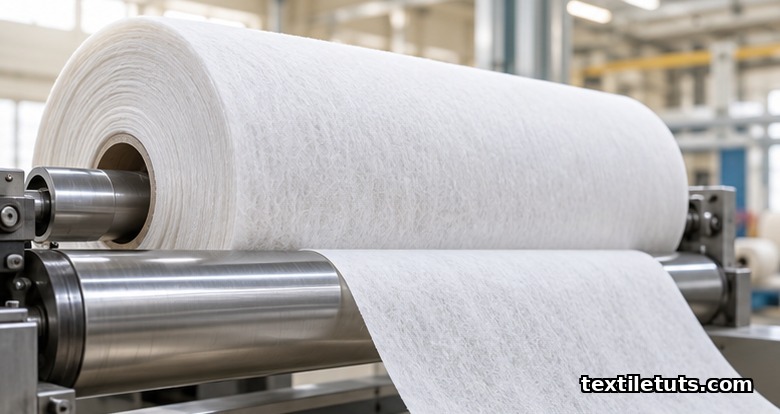
Nonwoven wipes are typically made by hydroentanglement (spunlace), meltblowing, spunbonding, or airlaid bonding, producing fabrics with basis weights between 20 gsm (meltblown filtration layers) and 150 gsm (heavy-duty industrial wet wipes), with the global nonwoven wipes market reaching roughly USD 19.2 billion in 2023, according to industry surveys published through the Nonwovens Industry magazine and Smithers market reports.
Whether a wipe is flushable, biodegradable, or reusable depends on which of those four bonding routes was used and on the fiber blend (polypropylene, viscose, polyester, cotton, wood pulp, or PLA), not on the thickness alone.
This guide walks through the four manufacturing routes, the test methods that classify a wipe (ISO 9073, ISO 11193, and ASTM D5732), the fiber chemistry behind flushability claims, and the trade-offs between performance, cost, and end-of-life.
1. What Makes a Wipe “Nonwoven”
A nonwoven is any sheet structure bonded mechanically, thermally, or chemically without weaving or knitting yarn. Wipes rely on this for two practical reasons: the fabric can be engineered with random fiber orientation (high isotropic strength) and the process scales to thousands of square meters per hour at lower cost than weaving the equivalent weight of cotton gauze.
For wipes, the most common definition comes from ISO 9092:2025, “Nonwovens — Vocabulary,” which sets a basis-weight floor of 0 gsm (no minimum) and rules out felted wool and paper products made entirely of wet-formed wood pulp. Anything that meets that definition can be tested under ISO 9073 series, the umbrella standard for nonwovens.
The result is a fabric with measurable properties tuned by fiber choice and bonding:
- Web evenness (coefficient of variation in mass per unit area, typically 3–8% for carded hydroentangled webs)
- Tensile strength, dry and wet (ISO 9073-3, typically 20–80 N/5 cm for baby wipes)
- Liquid absorption capacity (ISO 9073-6, often 8–14 g/g for viscose-rich spunlace)
- Liquid absorption time (ISO 9073-7, under 2 seconds for premium wipes)
- Abrasion resistance (Martindale, ISO 12947, often 50–500 cycles for skin-contact wipes)
2. The Four Manufacturing Routes
2.1 Spunlace (Hydroentangled)
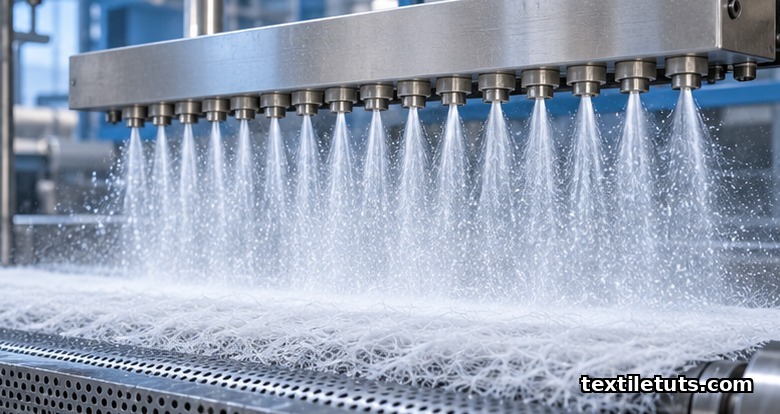
Spunlace uses high-pressure water jets (60–600 bar) to entangle a carded or airlaid web of staple fibers, often a 70/30 viscose/polyester or 50/50 cotton/polyester blend. Bonding comes from fiber-to-fiber friction rather than adhesive. The output is soft, drapeable, and absorbent.
Typical basis weight: 35–80 gsm for baby wipes, 40–80 gsm for cosmetic wipes, 70–120 gsm for industrial wipes. ISO 9073-6 absorption values of 9–13 g/g are common when viscose content is above 50%. The process leaves no thermal residue, so the wipe can carry lotions without discoloration.
2.2 Meltblown (MB)
Meltblowing extrudes molten polymer (usually polypropylene with MFI 30–1000) through spinneret holes of 0.2–0.4 mm while hot air attenuates the fibers to 1–5 micrometers. The microfibers self-bond on the collector. The output is a fine, low-basis-weight web with high surface area.
Meltblown by itself is rarely used as the skin-contact layer; it is the key barrier layer in SMS (spunbond-meltblown-spunbond) composites used in disinfectant wipes, surgical drapes, and filtration media. Basis weight for the meltblown layer is 15–50 gsm with pore sizes around 5–30 micrometers.
2.3 Spunbond (SS, SSS)
Spunbonding extrudes continuous filaments (usually PP, PET, or PLA) that are laid on a moving belt and thermally point-bonded between calender rolls. Filament diameter sits at 15–35 micrometers, much coarser than meltblown.
Spunbond alone is used for heavy-duty disposable wipes where wet strength matters more than softness: industrial degreasing wipes, agricultural wipes, and the back-sheet layer in composite wipe constructions. Typical basis weight: 30–120 gsm.
2.4 Airlaid and Wetlaid
Airlaid forms a web by dispersing short fibers (wood pulp, viscose, or bicomponent fibers of 4–20 mm length) in an air stream and bonding them with latex, thermal point-bonding, or hydrogen-bonding from pulp alone. The output resembles paper but is classified as nonwoven when synthetic fibers exceed 50% (per ISO 9092).
Wetlaid mixes fibers in a water slurry, drains them on a forming wire (the same idea as paper machines), and bonds them with latex or thermal calendering. It is common for flushable wipes where the goal is short fiber length so the wipe breaks apart in sewer agitation.
3. Fiber Blends and What Each Contributes
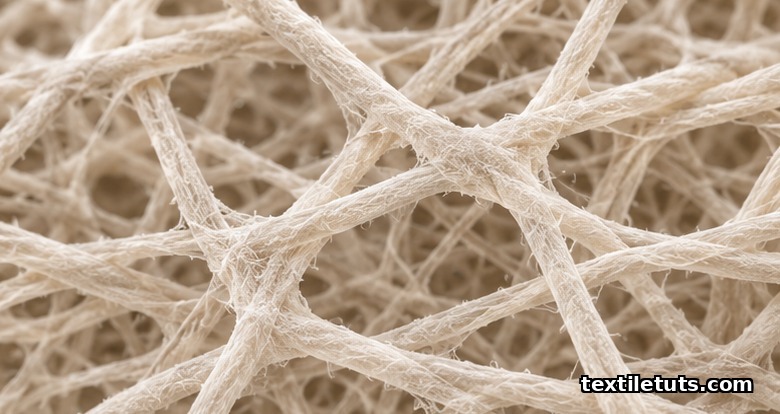
Most nonwoven wipes are blends, not single-fiber fabrics. The blend ratio drives performance:
| Fiber | Typical Share | Role in the Wipe |
|---|---|---|
| Viscose (regenerated cellulose) | 30–80% | Absorption (8–13 g/g), softness, biodegradability |
| Polypropylene | 0–100% | Strength, low cost, fluid barrier in SMS |
| Polyester | 0–50% | Wet strength, dimensional stability, lint control |
| Cotton | 0–100% | Softness, biodegradability, premium positioning |
| Wood pulp (fluff) | 0–80% | Bulk, low cost, absorbent core in airlaid |
| PLA (polylactic acid) | 0–30% | Biobased, industrially compostable per ISO 17088 |
| Bicomponent (PE/PET, PP/PE) | 5–20% | Thermal bonding agent, replaces latex binder |
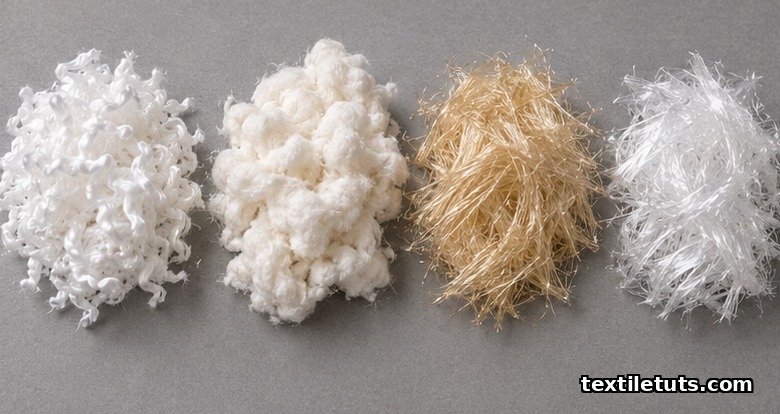
The viscose-to-synthetic ratio is the single biggest lever. A 70/30 viscose/polyester spunlace is the workhorse for baby wipes because viscose holds water and biodegrades, while polyester holds the web together when wet. Pushing viscose above 80% raises absorption but reduces wet tensile strength below the 20 N/5 cm that ISO 11193-1 specifies for medical wipes.
4. Standards That Classify a Wipe
Three standard families dominate wipe testing:
- ISO 9073 series: Test methods for nonwovens (mass per unit area, thickness, tensile, absorption, abrasion, air permeability). The first 18 parts cover most wipe-related properties.
- ISO 11193 series: Test methods for primary packaging materials used in medical wipes; sets wet tensile minimums of 20 N/5 cm machine direction and 8 N/5 cm cross direction.
- ASTM D5732 / D5733: Tensile and elongation of nonwovens; ASTM D5034 covers wet and dry grab strength for wipes sold in North America.
AATCC also matters for skin-contact claims. AATCC TM135 covers dimensional changes to home laundering (relevant for reusable wipes), AATCC TM100 is the standard antibacterial finish test, and AATCC Test Method 42 measures water impact penetration for barrier wipes.
5. Flushability: What the Standards Actually Say
“Flushable” is one of the most regulated marketing terms in nonwovens. The current benchmark is the INDA/EDANA GD4 guidance (4th edition, 2018, updated by 2023 flushability assessment protocol), which requires a wipe to pass seven tests:
- Slosh box disintegration within 30 minutes (filter paper capture less than 5% retention)
- Toilet bowl and drain line clearance testing
- Household pump testing at 2.5 gpm
- Settling test (specific gravity below 1.0 g/cm³)
- Aerobic biodegradability per OECD 301 (over 60% mineralization in 28 days)
- Aquatic toxicity per OECD 201/202/203
- Plumbing compatibility (passes six different plumbing tests)
Most spunlace wipes fail test 1 unless the fiber is broken into short segments (≤10 mm) and the wet tensile is below ~7 N/5 cm. That is why truly flushable wipes look and feel like thin paper, not like a cloth wipe.
6. Sustainability and End-of-Life
The industry is split on three competing end-of-life claims:
- Recyclable: Only PET or PP spunbond that can be sorted by near-infrared (NIR) at material recovery facilities. Most wipes carry lotions that contaminate the stream.
- Biodegradable: Viscose and cotton meet OECD 301B (60% mineralization in 28 days); polypropylene does not.
- Compostable: PLA blends pass ISO 17088 industrial composting but rarely pass home composting at the 25 °C threshold.
A 2023 peer-reviewed life-cycle assessment published in the MDPI journal Polymers compared a 50/50 viscose/PP spunlace to a 100% cotton spunlace for baby wipes and found the cotton variant had 38% lower cumulative energy demand and 41% lower global warming potential, but cost 2.6× more per wipe at the basis weight tested (50 gsm).
7. Choosing the Right Wipe for an Application
| Application | Preferred Route | Fiber Mix | Basis Weight |
|---|---|---|---|
| Baby wipes | Spunlace | 70/30 viscose/PET | 40–60 gsm |
| Cosmetic facial wipes | Spunlace | 80/20 viscose/PET or 100% cotton | 35–50 gsm |
| Disinfectant wipes | Spunlace or SMS | 50/50 PP/PET with lotion | 25–45 gsm |
| Industrial degreasing | Spunbond or airlaid | PP or wood pulp with binder | 60–120 gsm |
| Flushable wipes | Wetlaid | Cellulose with short viscose | 50–70 gsm |
| Surgical/drape wipes | SMS composite | PP spunbond + PP meltblown | 40–80 gsm |
8. Frequently Asked Questions
Are nonwoven wipes biodegradable?
Only if the fiber is biodegradable. Viscose, cotton, and PLA blends biodegrade per OECD 301 test methods; polypropylene and polyester do not degrade under ambient conditions and can persist for decades in marine and landfill environments.
What is the difference between spunlace and meltblown?
Spunlace bonds staple fibers with water jets and produces a soft, absorbent fabric used as the skin-contact layer. Meltblown produces microfibers from extruded polymer and is used as a barrier layer inside SMS composites. A typical disinfectant wipe has a 25 gsm spunlace face and a 15 gsm meltblown core.
Why are baby wipes soft but industrial wipes are not?
Softness comes from fine denier fibers (≤1.5 dtex) and high viscose or cotton content. Industrial wipes prioritize wet strength and solvent resistance, so they use coarser polypropylene or polyester (3–6 dtex) and latex binders that feel rougher to the skin.
Can nonwoven wipes be recycled?
Polypropylene spunbond wipes with no lotion can in theory be recycled, but most municipal sorting facilities do not accept them because they are under 30 cm square and contaminated. Mono-PP wet wipes are the closest commercially recyclable option today.
What does “flushable” actually mean?
Under the INDA/EDANA GD4 flushability assessment protocol, a wipe must pass seven tests covering disintegration, plumbing compatibility, biodegradability, and aquatic toxicity. Most wipes marketed as flushable fail at least one test, which is why municipal wastewater agencies continue to campaign against the label.
References
- ISO 9092:2025. Nonwovens — Vocabulary. International Organization for Standardization. Definition of nonwoven fabrics used in global standards.
- ISO 9073-3:2023. Textiles — Test methods for nonwovens — Part 3: Determination of tensile strength and elongation. International Organization for Standardization. Wet and dry tensile test method for nonwoven wipes.
- ISO 11193-1:2020. Packaging for terminally sterilized medical devices — Part 1. International Organization for Standardization. Sets wet tensile minimums cited in medical wipe specifications.
- EDANA / INDA. Guidelines for Assessing the Flushability of Nonwoven Consumer Products, 4th Edition (GD4). Brussels / Cary, NC: EDANA and INDA, 2018. Seven-test flushability protocol cited by wipes manufacturers.
- Manshoven, S.; et al. (2023). Sustainability of Nonwoven Baby Wipes: Comparative Life Cycle Assessment of Viscose/Polypropylene vs. Cotton Spunlace. Polymers 15(18): 3876. MDPI peer-reviewed LCA paper.
- AATCC TM100. Antibacterial Finishes on Textile Materials: Assessment of Antibacterial Activity. American Association of Textile Chemists and Colorists. Test method for antibacterial wipe claims.
- Smithers. The Future of Nonwovens to 2028. Smithers Market Reports, 2023. Industry market data cited in §1 (USD 19.2 B in 2023).
This article is the working reference for nonwoven wipe fabrics. Editorial by Md. Asad Ullah (Meem), TextileTuts. Sources: ISO 9092, ISO 9073, ISO 11193, EDANA/INDA GD4, MDPI Polymers 2023, AATCC TM100, and Smithers market reports, as cited.


