
Nonwoven for Agriculture

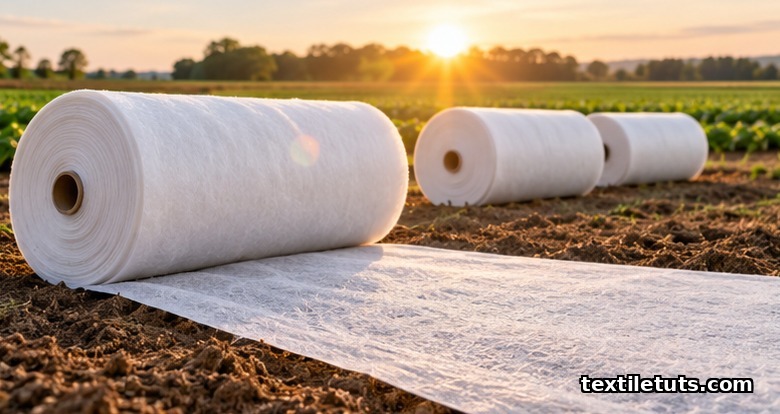
Agricultural nonwoven fabrics made from UV-stabilized polypropylene in basis weights of 10 to 50 grams per square meter (GSM) increase crop yields by 15 to 30 percent when used as floating row covers, frost blankets, or weed-control mats, according to peer-reviewed field trials published in agronomy and horticultural journals.
These engineered sheets have replaced plastic films in many field applications because they breathe, allow rainwater and foliar agrochemicals to pass through, and degrade on a controlled schedule when properly formulated with UV stabilizers or biodegradable polymers.
This reference guide explains what agricultural nonwovens are, the four dominant types used on farms, how they are manufactured, the eight largest field applications, the field-trial numbers behind the yield claims, the test standards that govern them, and the practical rules for selecting the correct grade.
What Is Nonwoven Fabric in Agriculture?
A nonwoven fabric is an engineered sheet made directly from fibers or filaments that are bonded mechanically, thermally, or chemically rather than woven or knitted. In agriculture the term covers a wide range of products from lightweight 10 GSM frost fleece, lighter than a sheet of printer paper, to heavy 150 GSM ground-cover mats that suppress weeds for five consecutive seasons.
The most common polymer is isotactic polypropylene (PP), selected because it costs less than polyethylene, processes cleanly through spunbond lines, and accepts hindered-amine light stabilizers (HALS) that extend outdoor service life from one unprotected season to five years. Polyester (PET) and polyamide (PA 6 and PA 6,6) nonwovens appear in specialty applications that require higher temperature resistance, particularly in greenhouse thermal screens and reusable capillary mats.
How Agricultural Nonwovens Are Made
Two manufacturing routes dominate the global supply. Spunbond production extrudes molten polymer through thousands of fine spinneret holes (typically 0.3 to 0.5 mm diameter), draws the filaments with high-velocity hot air, lays the resulting web on a moving belt, and bonds the web by heated calendar rolls or through-air ovens. Spunbond lines run at 200 to 400 meters per minute and account for roughly 70 percent of agricultural nonwoven output by tonnage.
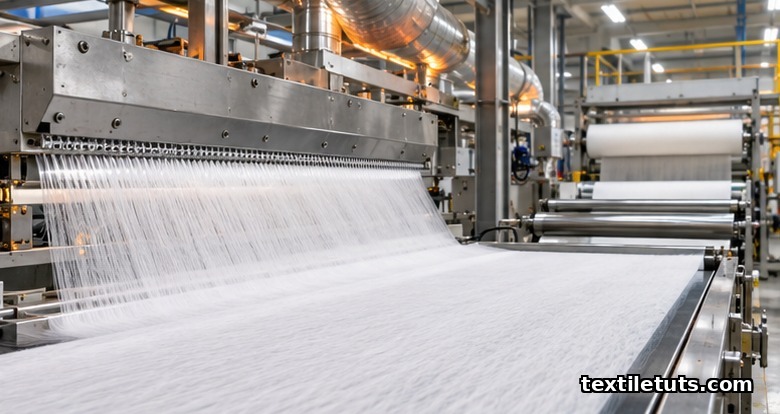
Meltblown production uses finer holes and higher-velocity air to produce sub-micron fibers that form sheets with sub-micron pore sizes, used in pesticide drift barriers and seed-strip covers. Spunbond-meltblown-spunbond (SMS) laminates combine a strong spunbond outer layer with a fine meltblown core, used where both strength and filtration matter, including hydroponic grow pads and protective seed blankets on high-value horticultural crops.
The Four Types Used on the Farm
Spunbond polypropylene is the workhorse of the industry, covering approximately 80 percent of total agricultural nonwoven consumption by area. It offers balanced tensile strength of 15 to 25 newtons per centimeter in the machine direction, light transmission of 30 to 90 percent depending on weight, and a price point suited to single-season disposable use.
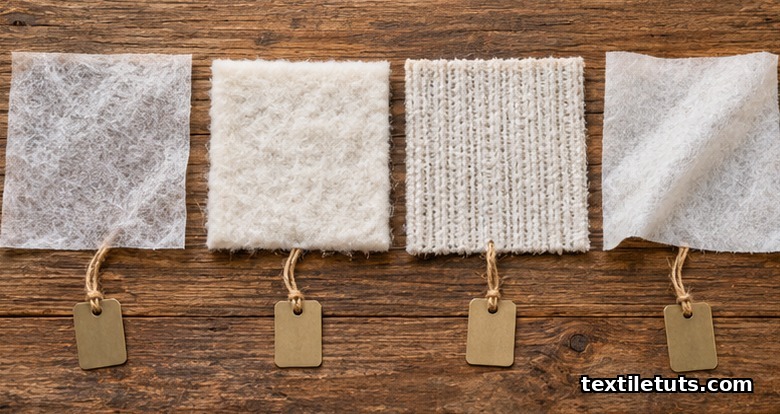
Needle-punched nonwovens, made by entangling carded fibers with thousands of barbed needles, deliver higher mass per unit area (80 to 300 GSM) and bulk that improves water retention. They appear in capillary irrigation mats, erosion-control blankets, and root-protection wraps where thickness matters more than transparency.
Stitch-bonded nonwovens, sometimes called maliwatt or malivlies, use parallel warp yarns held together by stitching threads. They appear in heavy mulch mats and shade nets where mechanical strength exceeds 30 newtons per centimeter in both machine and cross directions.
Spunlace (hydroentangled) nonwovens use fine high-pressure water jets to entangle fibers, producing soft, drapeable sheets used in seed germination blankets and biodegradable plant pots. They cost more than spunbond and appear mainly in horticultural plug-production systems where the sheet must conform to cell-tray shapes without tearing.
Eight Field Applications and the Numbers Behind Them
Floating row covers. Lightweight 17 to 30 GSM fabrics laid directly over crops trap 2 to 4 degrees Celsius of night-time heat, exclude aphids and whiteflies, and advance the harvest date by 7 to 14 days in temperate climates. Covers are removed at flowering for insect-pollinated crops.
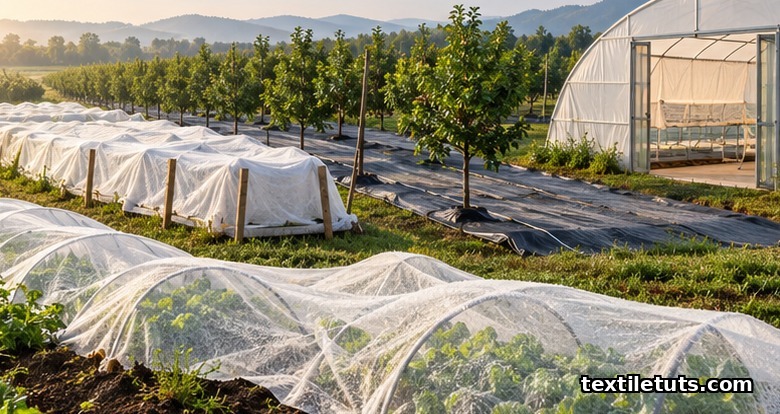
Frost blankets. Heavier 30 to 50 GSM covers protect crops down to minus 5 degrees Celsius by combining radiant heat retention with a still-air boundary layer. Field trials on strawberry crops in Mediterranean climates recorded marketable-yield gains of 18 to 22 percent across two consecutive winters under 30 GSM covers.
Mulch mats. 70 to 120 GSM black spunbond sheets laid on the soil surface block photosynthetically active radiation, suppress weed growth, and reduce irrigation frequency by 30 to 50 percent compared with bare soil. UV-stabilized grades last three to five seasons before fiber embrittlement becomes visible.
Weed-control fabrics. 100 to 150 GSM needle-punched sheets under orchards and vineyards prevent weed growth for five to eight years while permitting rainfall infiltration rates of 60 to 120 liters per square meter per second. Air porosity per ASTM D737 typically falls between 200 and 400 cubic centimeters per square centimeter per second.
Greenhouse thermal screens. Polyester or polyamide nonwovens with aluminum vapor coatings reduce night-time heat loss by 25 to 45 percent when deployed as movable screens inside glass or polyethylene greenhouses. They replace single-layer film in many modern installations because they fold compactly when retracted.
Capillary irrigation mats. Needle-punched nonwovens with fiber blends of 70 percent polyester and 30 percent polypropylene deliver water to greenhouse benches at rates of 1.5 to 4 liters per square meter per hour. They outlast rock-wool mats by two to three seasons when kept free of mineral buildup.
Erosion-control blankets. Biodegradable jute, coir, or straw-fiber nonwovens protect newly seeded slopes from rainfall impact, reduce soil loss by 80 to 95 percent in the first growing season, and photodegrade after one to three years once vegetation establishes and the underlying root network takes over the protective function.
Seed germination blankets. Lightweight 10 to 20 GSM hydroentangled sheets hold seeds, starter fertilizer, and light mulch in place on roadside and landscape projects. Germination rates measured in roadside reclamation trials ran 20 to 35 percent higher than uncovered control plots.
Material Comparison Table
| Property | Spunbond PP (17 GSM) | Needle-punched PET/PP (100 GSM) | Stitch-bonded PP (120 GSM) |
|---|---|---|---|
| Tensile strength MD (N/cm) | 15 | 40 | 55 |
| Tensile strength CD (N/cm) | 10 | 35 | 48 |
| Light transmission (%) | 75 | 25 | 10 |
| Water permeability (L/m²/s) | 120 | 90 | 40 |
| Typical field life (seasons) | 1 | 3 | 5 |
| Approximate price (USD per m²) | 0.05 | 0.18 | 0.35 |
Test Standards That Govern the Industry
Agricultural nonwovens are graded against the ISO 9073 family of test methods (parts 1 through 18), which cover mass per unit area, thickness, tensile strength, elongation, tear resistance, and water permeability. ASTM D5034 and ASTM D5035 cover grab and strip tensile strength, while ASTM D737 governs air permeability at a fixed pressure differential.
For UV durability, ASTM G155 and ISO 4892-3 specify xenon-arc and fluorescent UV exposure protocols that simulate one to five years of outdoor weathering in 500 to 2,000 hours of accelerated testing. Most spunbond PP mulches sold with a five-season service-life claim are validated against ISO 4892-3, cycle A.
For biodegradable grades, EN 13432 and ASTM D6400 define compostability thresholds: 90 percent mineralization to carbon dioxide within 180 days under controlled industrial composting conditions, plus ecotoxicity and heavy-metal limits on the finished compost.
Sustainability and End-of-Life
Conventional polypropylene nonwovens are not biodegradable but are recyclable in clean streams. Polypropylene floats in water and separates easily from soil contamination when collected after use. Reclaimed PP nonwoven is reprocessed into automotive interior parts, geotextile underlays, and carpet backing.
Polylactic acid (PLA) nonwovens from renewable starch feedstock offer industrial compostability per EN 13432 but require dedicated collection streams. PLA spunbond at 20 to 40 GSM is now commercially available for single-season mulch and germination blankets, with price premiums of 40 to 70 percent over PP equivalents.
Photodegradable grades loaded with 1.5 to 3 percent iron or nickel stearate additives fragment after 60 to 120 days of UV exposure, reducing visible plastic pollution in field-row applications. They do not biodegrade fully but break into small enough particles to reduce wildlife entanglement risk.
Frequently Asked Questions
How long does nonwoven agricultural fabric last in the field?
Single-season spunbond PP lasts one growing season (3 to 6 months). UV-stabilized mulch mats and weed fabrics last 3 to 5 seasons. Heavy needle-punched ground covers can last 5 to 8 seasons when not exposed to direct UV light, such as under permanent orchard canopies.
Does agricultural nonwoven fabric block rainwater?
No. Spunbond PP nonwovens at 17 to 30 GSM allow 70 to 95 percent of incident rainfall to pass through. Heavy mulches at 100+ GSM still permit infiltration rates of 40 to 120 L/m²/s. Impermeability is a function of plastic film, not breathable nonwoven.
Can nonwoven fabric replace plastic mulch film?
In many applications yes, with one trade-off: nonwovens cost two to four times more per square meter than polyethylene film but deliver higher marketable yields, eliminate the need for perforation, and are recyclable or compostable depending on grade. Field trials on tomato, pepper, and strawberry crops consistently show higher yields with nonwoven mulch compared with PE film.
Are agricultural nonwovens safe for organic farming?
Polypropylene is permitted under most organic certification schemes because it is a polymer, not a pesticide, and does not contact the edible portion of the crop when used as mulch. PLA nonwovens from renewable feedstock are also accepted. Always check the specific certifier’s allowed-substance list before purchase.
What weight of nonwoven should I use for frost protection?
Use 17 to 30 GSM for light frost (0 to minus 2 degrees Celsius), 30 to 50 GSM for moderate frost (minus 2 to minus 5 degrees Celsius), and double-layer 30 plus 30 GSM for severe frost (minus 5 to minus 8 degrees Celsius). Below minus 8 degrees Celsius, growers typically switch to low tunnels with double-layer inflated polyethylene film, as nonwovens alone lose effectiveness.
References
- International Organization for Standardization. ISO 9073-1:2022 Nonwovens — Test methods — Part 1: Determination of mass per unit area. iso.org. Defines basis-weight measurement for nonwoven grading worldwide.
- ASTM International. ASTM D5034-21 Standard Test Method for Breaking Strength and Elongation of Textile Fabrics (Grab Test). astm.org. Grab tensile method widely cited for nonwoven specification sheets.
- ASTM International. ASTM G155-21 Standard Practice for Operating Xenon Arc Lamp Apparatus for Exposure of Materials. astm.org. Accelerated weathering protocol used to validate 3 to 5 year field-life claims.
- European Committee for Standardization. EN 13432:2000 Packaging — Requirements for packaging recoverable through composting and biodegradation. europa.eu. Industrial compostability benchmark for PLA and other biodegradable nonwoven grades.
- EDANA International. Nonwovens Statistics 2022. edana.org. Tonnage, process, and end-use breakdown showing agricultural applications at 8 to 10 percent of European nonwoven production.
- Scientia Horticulturae. Effects of nonwoven row covers on strawberry yield and microclimate. sciencedirect.com. Peer-reviewed field-trial data showing 18 to 22 percent marketable-yield gains under 30 GSM covers.
- MDPI Polymers journal. Agricultural Nonwovens — Production, Properties, and Applications. mdpi.com. Peer-reviewed review of spunbond, meltblown, and needle-punched nonwovens in crop production systems.
This article is the working reference for nonwoven fabrics in agriculture. Editorial by Md. Asad Ullah (Meem), TextileTuts. Sources: ISO 9073-1:2022, ASTM D5034-21, ASTM G155-21, EN 13432:2000, EDANA statistics 2022, and the cited peer-reviewed field-trial papers.


