
Nonwoven Fabrics: Complete Guide to Manufacturing Methods

What are nonwoven fabrics?
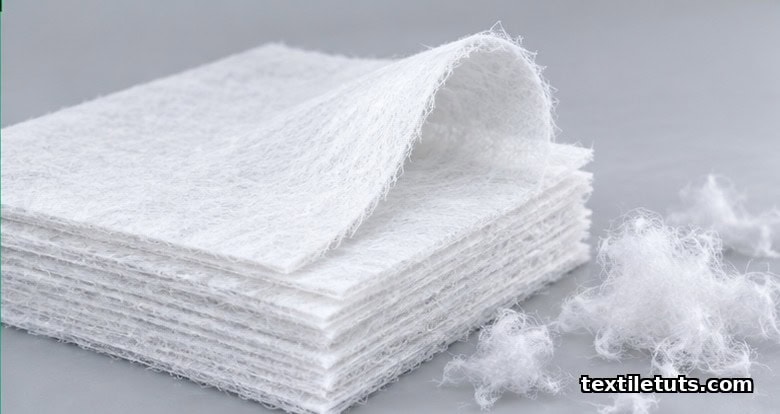
Nonwoven fabrics are textile structures made directly from fibers (or from polymer melt) without the spinning, weaving, or knitting required to make conventional fabrics. The fibers are bonded together by mechanical, thermal, or chemical means to form a fabric sheet. Nonwoven fabrics are used wherever a disposable or low-cost fabric is acceptable, or where a specific property (high absorbency, filtration efficiency, barrier performance) is more important than the structural properties of woven or knit fabrics.
The global nonwoven market is roughly USD 50 billion, with the largest end uses being hygiene products (diapers, feminine hygiene, adult incontinence, 30% of the market), wipes (20%), construction and geotextiles (15%), automotive (10%), and medical/surgical textiles (8%). The nonwoven industry is the fastest-growing segment of the broader textile industry, driven by demand for disposable hygiene products, medical textiles, and sustainable alternatives to traditional fabrics.
Why nonwoven fabrics are used
Nonwoven fabrics are used because they offer a combination of properties that woven and knit fabrics cannot match:
- Cost, nonwoven fabrics are typically 30-70% cheaper than equivalent woven or knit fabrics, because the production process is continuous and fast (100-500 m/min vs. 1-5 m/min for weaving).
- Absorbency, nonwoven fabrics can be engineered for high absorbency (10-20x their weight in water) by using hydrophilic fibers and low-density structures. This makes them ideal for wipes, diapers, and medical absorbent products.
- Disposability, many nonwoven applications are single-use, where the cost of laundering exceeds the cost of the fabric. Nonwovens are optimized for one-time performance.
- Specific properties, nonwoven fabrics can be engineered for specific properties (filtration, barrier, absorbency) that are difficult to achieve in woven or knit fabrics.
- Versatility, nonwoven fabrics can be made from a wide range of fiber types (natural, synthetic, recycled) and can incorporate additives (antimicrobial, flame retardant, water repellent) in a single step.
Nonwoven manufacturing methods
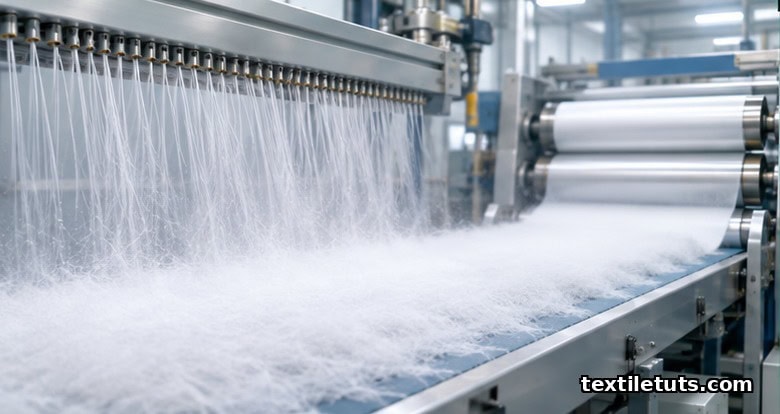
Nonwoven manufacturing has two main stages: web formation (creating a loose web of fibers) and web bonding (consolidating the web into a coherent fabric). Each stage has multiple methods.
Web formation
The main web formation methods are:
- Spunbond, a polymer melt is extruded through spinnerets to form continuous filaments, which are then laid down on a moving belt in a random web. Spunbond webs are strong (because the filaments are continuous) and are used for applications requiring structural integrity (geotextiles, roofing, carpet backing).
- Meltblown, a polymer melt is extruded through a die with hot air, which attenuates the melt into very fine fibers (typically 1-5 microns in diameter). The fine fibers are collected on a screen to form a web. Meltblown webs have very fine pores and are used for filtration (face masks, HVAC filters) and absorption (oil sorbents, wipes).
- Spunlace (hydroentanglement) – a carded web of staple fibers is entangled by high-pressure water jets. The water jets push the fibers into each other, creating mechanical bonds without adhesives. Spunlace webs are soft and absorbent and are used for wipes, medical textiles, and some apparel.
- Carded, staple fibers are passed through a carding machine to align them into a web. Carded webs are uniform but not as strong as spunbond webs. They are used as the basis for further processing (needlepunching, thermal bonding, chemical bonding).
- Airlaid, staple fibers (typically short fibers, including fluff pulp) are suspended in air and deposited on a screen. Airlaid webs can be very thick and absorbent. They are used for absorbent cores in diapers and feminine hygiene products.
- Wetlaid, fibers are suspended in water and deposited on a screen, similar to paper-making. Wetlaid webs can be made from very short fibers and are used for some filtration and specialty papers.
Web bonding
The main web bonding methods are:
- Thermal bonding, the web is passed through heated rollers, which melt the surface of the fibers and bond them together. Most often used with bicomponent fibers (where the sheath melts at a lower temperature than the core). Thermal bonding is fast and clean (no chemicals or water) and is used for hygiene products, filtration, and some apparel.
- Chemical bonding, the web is saturated with a chemical binder (typically an acrylic latex or a polyvinyl acetate emulsion), then dried and cured. Chemical bonding is versatile and can produce a wide range of hand and strength properties, but the chemical residue can be an issue for some applications (skin contact, medical use).
- Mechanical bonding (needlepunching) – the web is passed through a bed of needles that mechanically entangle the fibers. Needlepunching is used for thick, heavy nonwovens (geotextiles, carpet backing, automotive). The resulting fabric is strong but has a coarse surface.
- Mechanical bonding (spunlace/hydroentanglement) – the web is entangled by high-pressure water jets. The resulting fabric is soft, strong, and absorbent. Spunlace is used for wipes, medical textiles, and some apparel.
- Needlepunching with heat, combines needle entanglement with thermal bonding for higher strength and stiffness.
Properties of nonwoven fabrics
Nonwoven fabric properties are determined by the fiber, web formation, and bonding method. The main properties are:
- Weight (gsm) – nonwovens range from 10 gsm (lightweight coverstock for hygiene) to 500+ gsm (heavy geotextiles).
- Thickness, nonwovens are typically thicker than equivalent woven or knit fabrics because the fibers are not tightly packed.
- Tensile strength, depends on the fiber and bonding. Spunbond nonwovens are among the strongest; airlaid nonwovens are among the weakest.
- Tear strength, generally low for nonwovens because the fibers can pull apart more easily than in a woven structure. Spunlace nonwovens have better tear strength because of the entanglement.
- Absorbency, can be very high (10-20x weight) for airlaid absorbent cores, or moderate (3-5x weight) for spunlace wipes.
- Softness, spunlace nonwovens are the softest; needlepunched nonwovens are the coarsest.
- Barrier properties, meltblown nonwovens have excellent barrier to particles and liquids, which is why they are used in face masks and protective apparel.
- Filtration efficiency, meltblown nonwovens are the workhorse of filtration media, with efficiencies of 95-99.99% depending on fiber diameter and web structure.
End-use applications
Nonwoven fabrics are used in a wide range of applications. The major categories are:
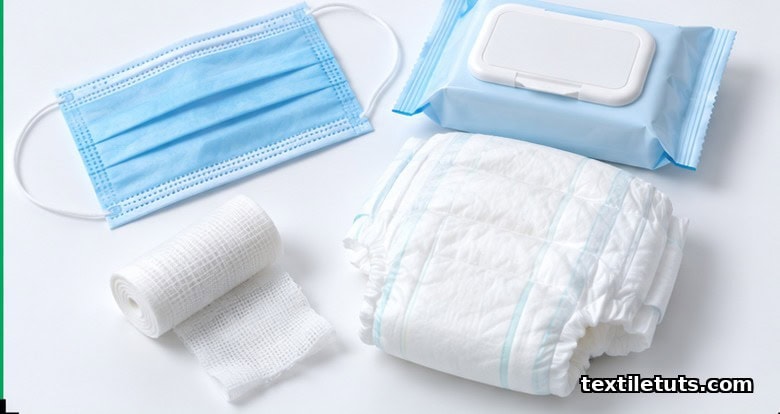
- Hygiene products, the largest end use, accounting for 30% of nonwoven production. Used in diapers, feminine hygiene, and adult incontinence. Typically a multi-layer structure with a hydrophilic top sheet, an absorbent core (fluff pulp + superabsorbent polymer), and a hydrophobic back sheet.
- Wipes, the second-largest end use. Used in baby wipes, household wipes, industrial wipes, and personal care wipes. Typically spunlace nonwovens for softness and absorbency.
- Construction and geotextiles, used for soil stabilization, drainage, road underlayment, and erosion control. Typically needlepunched or thermally bonded polypropylene nonwovens.
- Automotive, used for carpet backing, headliner, trunk lining, and seat backing. Typically needlepunched or thermally bonded polyester or polypropylene nonwovens.
- Medical and surgical, used in face masks, surgical gowns, drapes, and wound dressings. Typically SMS (spunbond-meltblown-spunbond) composites for barrier performance and spunlace for softness.
- Filtration, used in HVAC filters, face masks, water filters, and industrial filtration. Typically meltblown nonwovens for fine particle capture.
- Furniture and bedding, used in mattress ticking, pillow covers, and upholstery backing. Typically spunbond or spunlace nonwovens.
- Agriculture, used as crop covers, weed barriers, and root protection. Typically spunbond or spunlace nonwovens.
Spunbond-meltblown-spunbond (SMS) composites
SMS is the most important nonwoven composite for barrier applications. The structure is three layers: a spunbond top layer (strong, abrasion-resistant), a meltblown middle layer (barrier to particles and liquids), and a spunbond bottom layer (strong, abrasion-resistant). The meltblown layer provides the barrier, and the spunbond layers provide the strength and abrasion resistance.
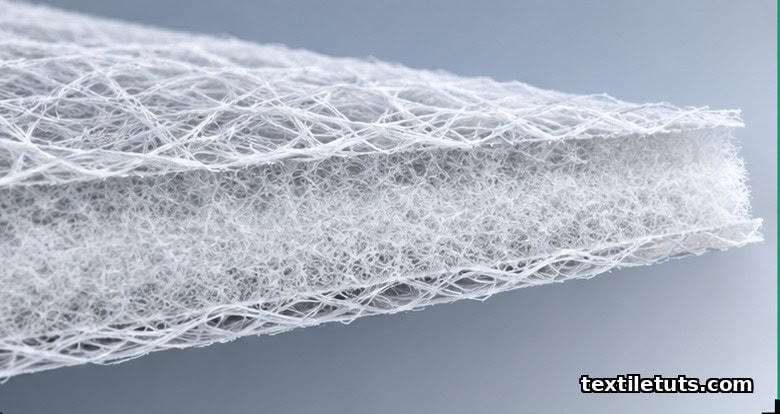
SMS is the standard fabric for surgical gowns, face masks, and protective apparel. The basis weight (gsm) and the meltblown layer thickness determine the barrier performance: a 25 gsm SMS is suitable for basic protective apparel, while a 60+ gsm SMS is required for high-barrier applications (sterile surgical gowns, etc.).
Testing nonwoven fabrics
Nonwoven fabrics are tested for the same properties as woven and knit fabrics, with some additional tests specific to nonwovens:
- Weight (gsm) – ISO 3801, as for woven fabrics.
- Tensile strength, ISO 9073-3, similar to woven but specimen size may differ.
- Tear strength, ISO 9073-4 (trouser tear) for nonwovens.
- Bursting strength, ISO 3303-1 (hydraulic) for nonwovens, especially for thinner nonwovens where tensile testing is not practical.
- Absorbency, ISO 9073-6 (absorption capacity) and ISO 9073-7 (absorption time) for absorbent nonwovens.
- Linting, ISO 9073-10, the tendency of nonwoven fibers to shed. Important for cleanroom and medical applications.
- Barrier properties, ASTM F1670 (synthetic blood penetration) and ASTM F1671 (viral penetration) for medical nonwovens.
- Filtration efficiency, various methods, typically measuring the percentage of particles of a defined size that the nonwoven captures.
Environmental and sustainability considerations
Nonwoven fabrics are a mixed bag from a sustainability perspective. On one hand, many nonwoven applications are single-use (disposable diapers, wipes, face masks), which generates a lot of waste. On the other hand, nonwoven production is more efficient than woven or knit production (less water, less energy, no spinning step), and some nonwoven applications replace heavier woven products (e.g., nonwoven shopping bags vs. woven cotton bags, which have higher total environmental impact when life-cycle assessed).
The sustainability initiatives in the nonwoven industry include:
- Bio-based and biodegradable fibers, polylactic acid (PLA), viscose from sustainably-managed forests, hemp and flax fibers. These materials reduce the petroleum dependence of synthetic nonwovens and offer end-of-life options (composting) for some applications.
- Recycled fibers, recycled polyester from PET bottles is increasingly used in nonwoven production. The recycled fiber has shorter length than virgin fiber, but for nonwovens (where fiber length is less critical than for spinning) the recycled fiber performs well.
- Compostable nonwovens, nonwovens made from PLA or other biodegradable fibers can be composted at end-of-life, providing a closed-loop option for single-use applications.
- Reusable nonwovens, some nonwoven applications (reusable shopping bags, some industrial wipes) are designed for multiple uses, reducing waste.
The nonwoven industry is one of the most active in developing sustainable alternatives, because the volume is so high (millions of tons per year) that even small improvements in sustainability have a large cumulative impact.
Frequently Asked Questions
What is the difference between a nonwoven and a felt?
Both nonwovens and felts are fabric structures made from fibers without weaving or knitting. The historical difference is that felt is traditionally made from wool (or wool blends) using moisture, heat, and friction to mat the fibers together. Modern nonwovens include felts but also include many other fiber types and bonding methods. In contemporary usage, “nonwoven” is the broader category, and “felt” refers specifically to a matted-wool structure.
Can nonwovens be recycled?
Some nonwovens can be recycled. Polyester and polypropylene nonwovens can be melted and re-extruded into new fiber (mechanical recycling). Cotton and other natural-fiber nonwovens can be mechanically recycled into shorter fibers (similar to recycled cotton from textiles). The recycling of nonwovens is less developed than the recycling of woven or knit fabrics, in part because most nonwoven applications are single-use (no incentive to design for recyclability) and the fiber blends are complex (hard to separate).
Why are face masks made of nonwoven fabric?
Surgical and N95 face masks use SMS (spunbond-meltblown-spunbond) nonwoven composite fabric because the structure provides the right combination of properties: the spunbond layers are strong and abrasion-resistant, the meltblown middle layer provides the barrier to particles and aerosols, and the overall structure is breathable enough for comfortable wear. Woven fabrics are too thick and not breathable; knit fabrics are not barrier-effective; nonwovens are the only structure that meets all the requirements at the right cost.
What is the future of nonwoven fabrics?
Three areas: (1) sustainability, bio-based fibers, recycled content, compostable end-of-life options, and reduced water/energy use in production. The nonwoven industry is the most active in this area because of the high volume and single-use nature of many applications. (2) Smart nonwovens, nonwovens that incorporate sensors, conductive elements, or responsive materials for applications in healthcare monitoring, environmental sensing, and wearable electronics. (3) Higher-performance nonwovens, pushing the boundaries of strength, barrier, and filtration performance for technical applications. These advances are happening now, with significant investment from major nonwoven manufacturers and the broader textile industry.
Why are some nonwovens so much stronger than others?
Nonwoven strength is determined by the fiber type, fiber length, web formation method, and bonding method. Spunbond nonwovens (continuous filaments, mechanically entangled) are among the strongest; meltblown nonwovens (very fine fibers, thermally bonded) are the weakest. Needlepunched nonwovens (mechanically entangled) are also strong. The fiber type also matters: polyester and nylon are stronger than polypropylene; high-tenacity fibers (designed for tire cord) are much stronger than regular textile fibers. Within a given fiber type, longer fibers give stronger nonwovens than shorter fibers.
References
- EDANA (European Disposables and Nonwovens Association). Nonwovens Industry Statistics and Market Report. https://www.edana.org, primary industry source for nonwoven market data and trends.
- INDA (Association of the Nonwoven Fabrics Industry). Nonwovens Market Report. https://www.inda.org, US nonwoven industry association with comprehensive market data.
- ISO 9073-1:2023, Textiles, Test methods for nonwovens, Part 1: Determination of mass per unit area. https://www.iso.org/standard/82301.html, primary international standard for nonwoven weight.
- ASTM F1670 / F1671, synthetic blood and viral penetration resistance for medical nonwovens.
This article is the working reference for nonwoven fabrics. Editorial by Asad Ullah Meem, TextileTuts. Sources: EDANA and INDA industry reports, ISO 9073-1, ASTM F1670/F1671 as cited.


