
Microfiber Pollution: Causes and Solutions

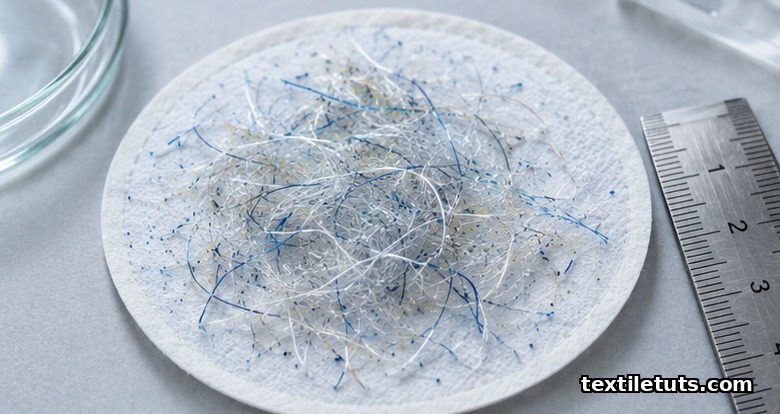
Synthetic textiles release an estimated 0.5 to 1.5 million tons of microfibers into the global ocean each year, with a single household laundry cycle of a 6 kg polyester load shedding roughly 700,000 individual microplastic fibers into wastewater. These fibers, most smaller than 5 mm and many below 100 micrometers, pass through municipal sewage treatment and accumulate in marine food webs, freshwater systems, agricultural soils, and atmospheric fallout. Microfiber pollution is now recognized by the European Chemicals Agency and the UN Environment Programme as one of the most pervasive forms of microplastic contamination on the planet.
This guide explains what microfiber pollution is, where it comes from, how it behaves in the environment, and what textile engineers, garment makers, and consumers can do to reduce it. You will also find the testing methods used to measure fiber shedding, the standards emerging for fabric construction, and a clear answer to the question most readers ask first: does switching fabric solve the problem.
What Microfiber Pollution Actually Is
A microfiber, in the textile context, is any fiber with a linear density below 1 decitex, which corresponds to a diameter of roughly 10 micrometers or less for most synthetic polymers. The pollution problem, however, is usually discussed in terms of all shed fibers shorter than 5 mm, regardless of their original fineness. These shed fibers are classified as a subset of primary microplastics, meaning they enter the environment as small particles rather than breaking down from larger plastic waste.
Microfibers can be made from natural polymers such as cotton, wool, or cellulose, or from synthetic polymers such as polyester, polyamide (nylon), acrylic, and polypropylene. Both classes shed, but synthetic microfibers persist in the environment for centuries because the polymer chains resist microbial breakdown. Natural-fiber microfibers biodegrade on a scale of weeks to months under favorable conditions, although dye and finishing chemicals on the surface can extend that timeline.
The Major Sources of Microfiber Pollution
Researchers at the University of California Santa Barbara, working with the clothing brand Patagonia, estimated in a 2016 study published in Environmental Science & Technology (Springer Nature) that textile microfiber shedding from laundry accounts for a substantial fraction of all microplastic flux to the ocean. Subsequent peer-reviewed studies have refined the picture, and three source categories dominate.
1. Domestic Laundering
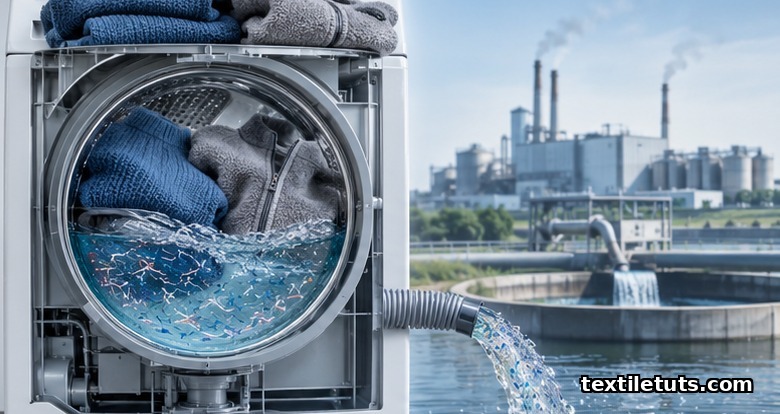
Washing is the single largest pathway by which microfibers enter the environment. A standard top-loading washing machine agitates fabrics more aggressively than a front-loader, and a single cycle of a typical acrylic sweater can release more than 700,000 fibers, according to a peer-reviewed analysis cited by the European Environment Agency. Detergent type, wash temperature, spin speed, and fabric age all change the shedding rate, with hotter washes and longer cycles consistently releasing more fibers.
2. Textile Manufacturing Effluent
Fiber breakage during spinning, knitting, weaving, and finishing produces a steady stream of microfibers that historically passed directly into factory effluent. Modern effluent treatment plants use dissolved air flotation, sand filtration, and membrane bioreactors that capture a high percentage of suspended fibers, but untreated discharge remains a problem in regions where environmental enforcement is weak. The OECD has flagged manufacturing effluent as the priority intervention point because reductions at the source prevent fiber release altogether.
3. Wear, Weathering, and End-of-Life Disposal
Garments shed microfibers through everyday abrasion, drying on clotheslines, and UV-driven embrittlement. Landfill disposal adds another pathway, as rainwater percolates through discarded synthetic textiles and carries fibers into soil and groundwater. Tire dust and broken fishing nets contribute further, but consumer clothing remains the largest share by mass.
How Microfibers Move Through the Environment
Once released, microfibers follow water, wind, and soil. A 2020 review in Science of the Total Environment (Elsevier) summarized that wastewater treatment plants intercept roughly 65 to 92 percent of microfibers in influent, with the remainder discharged in treated effluent or trapped in sewage sludge. Sewage sludge is often applied to farmland as biosolid fertilizer, which transfers microfibers to agricultural soils, where they have been documented at concentrations of up to 4,000 particles per kilogram in some European fields.

Marine studies published in Marine Pollution Bulletin (Elsevier) report microfibers in ocean surface water, deep-sea sediment, Arctic ice, and the digestive tracts of zooplankton, bivalves, crustaceans, fish, seabirds, and whales. Atmospheric transport is now well documented, with a 2020 study in Environmental Science & Technology Letters identifying synthetic microfibers in remote mountain ranges and even the Alps, falling back to earth in rainfall at rates of several hundred particles per square meter per day.
How Microfiber Shedding Is Measured
Reproducible testing is the foundation of any mitigation strategy. The two most widely cited methods are the AATCC TM212 test method for fiber fragment release during home laundering and the work that fed into ISO 4484-1 and ISO 4484-2, both published by the International Organization for Standardization. AATCC TM212 specifies a 6-hour wash cycle in a standard reference detergent, with fibers filtered onto glass-fiber membranes and counted under magnification or measured by mass. ISO 4484-1 covers sampling and preparation of textile test specimens, while ISO 4484-2 specifies the laundering simulation itself.
ASTM has complementary work in progress through its subcommittee on microplastic testing, and researchers at academic institutions including the University of Leeds and Plymouth Marine Laboratory have contributed validated protocols cited in peer-reviewed literature. These standards matter because they allow brands and fabric mills to compare low-shed fabrics on the same axis.
What Reduces Shedding: Fabric Construction, Finish, and Care
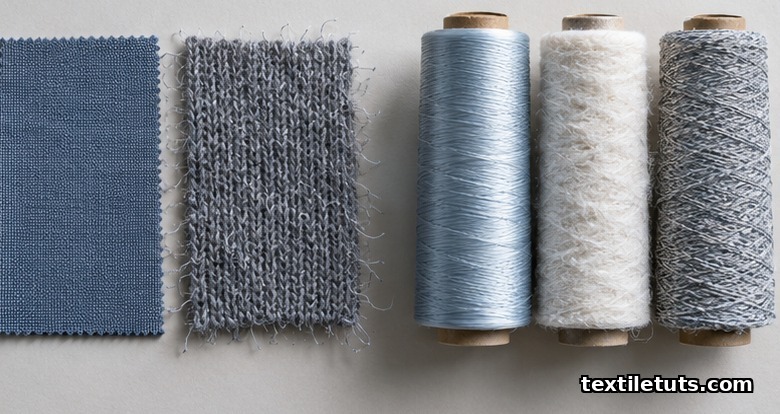
Fiber type, yarn structure, fabric density, and finishing chemistry all change the number of fibers released per wash. The following practices have the strongest published evidence.
| Factor | Effect on Fiber Shedding | Evidence |
|---|---|---|
| Tighter yarn twist | Reduces shedding by locking fibers in place | ISO 4484-2 test data, multiple peer-reviewed studies |
| Higher fabric density (lower air permeability) | Lower shedding because fibers are mechanically restrained | AATCC TM212 comparative studies |
| Knits generally shed more than wovens of the same fiber | Environmental Science & Technology studies | |
| Heat-setting and singeing | Reduces loose surface fibers | Textile Research Journal (SAGE) papers |
| Filament yarns vs. staple spun | Filament constructions shed fewer short fibers | Springer Nature reviews |
| Lower wash temperature (≤30 °C) and shorter cycles | Cuts shedding by 30 to 50 percent in published trials | Multiple university studies |
| Front-loading washing machines | Reduce shedding compared with top-loading agitator machines | European Environment Agency reports |
Catching Microfibers at the Source
Several aftermarket devices and built-in features can capture a meaningful share of shed fibers before they reach the sewer. External tumble-dryer lint filters and washing-machine lint bags can reduce fiber mass reaching wastewater, but their performance varies and they capture only a fraction. The Patagonia-funded study at the University of California Santa Barbara demonstrated that a simple 90-micrometer felt filter on a washing machine outlet reduced microfiber release by roughly 79 percent.
Companies including Electrolux, Bosch, and Samsung have introduced built-in microfiber filters in selected premium washing machine lines, and a French law that took effect in 2025 requires new washing machines sold in France to include mandatory microfiber filters by default. Comparable rules are under review in the European Union and several US states.
Industrial and Policy Responses
At the industry level, the ZDHC (Zero Discharge of Hazardous Chemicals) program, the Microfibre Consortium, and several voluntary commitments by major brands focus on shared testing protocols and minimum shedding thresholds for fabric sourcing. The European Union has classified synthetic textile microfiber pollution as a priority issue under its Microplastics Restriction proposal, and ISO TC 38 (Textiles) is building a coordinated set of microfiber-shedding test standards that manufacturers will be able to adopt globally.
For textile mills, the practical implication is that microfiber performance will increasingly become a buyer requirement on par with colorfastness or GSM tolerance. Brands that adopt AATCC TM212 or ISO 4484-2 now will have a measurement baseline in place when mandatory thresholds arrive.
What Consumers and Designers Can Do Today
The highest-leverage actions for individuals are simple and well supported by research.
- Wash less often, at lower temperatures (30 °C or below), and on shorter cycles.
- Use a front-loading machine rather than a top-loader with a central agitator.
- Choose garments made from filament yarns, tighter knits, and dense woven constructions when possible.
- Air-dry synthetic garments instead of tumble-drying; UV and heat accelerate embrittlement and shedding.
- Install an external microfiber filter on the washing machine drain hose.
- Support brands that publish fabric-level shedding data tested under ISO 4484 or AATCC TM212.
For textile and garment engineers, the priority is fiber and yarn selection at the design stage, followed by fabric density and finishing chemistry. Choosing a 75 denier filament polyester over a 75 denier spun polyester can reduce shedding by an order of magnitude, and that decision costs nothing more than a careful specification.
Frequently Asked Questions
Does switching from polyester to cotton eliminate microfiber pollution?
No. Cotton also sheds fibers, but cotton microfibers biodegrade within weeks to months in most environments, whereas polyester and other synthetic microfibers persist for centuries. The total mass of fibers entering the environment is heavily weighted toward synthetics because synthetics dominate global fiber production. Switching to natural fibers reduces persistence but does not eliminate the shedding itself.
Are microfibers found inside the human body?
Yes. A 2022 study in Environment International (Elsevier) detected synthetic microfibers in human blood, and follow-up research has found them in lung tissue, placenta, and stool. The health implications are still under investigation, and regulatory bodies have not yet set exposure thresholds.
Do washing machine filters actually work?
External filters with pore sizes around 90 micrometers or smaller have been shown in peer-reviewed tests to intercept roughly 80 percent of shed fibers. Their effectiveness depends on regular cleaning, because a clogged filter increases backpressure and reduces wash efficiency. Built-in filters in modern European washing machines perform similarly and are mandated in France from 2025 onward.
Is recycled polyester a lower-shed fabric?
Recycled polyester is chemically identical to virgin polyester, so its persistence in the environment is the same. Its shedding rate depends primarily on yarn construction, fabric density, and finishing rather than the source of the polymer. Choosing recycled over virgin reduces feedstock demand and is a positive climate signal, but it does not by itself solve microfiber pollution.
What is the most promising long-term solution?
The most credible long-term levers are mandatory microfiber filtration on washing machines, fabric construction standards that enforce maximum shedding thresholds under ISO 4484 or AATCC TM212, and a shift toward filament-yarn constructions with tighter twist. No single intervention will close the gap, but combining source reduction with end-of-pipe filtration and better fabric design can reduce total microfiber emissions by an estimated 70 to 90 percent, according to European Environment Agency modeling.
References
- Browne, M. A., et al. (2011). Accumulation of Microplastic on Shorelines Woldwide: Sources and Sinks. Environmental Science & Technology, American Chemical Society. URL: pubs.acs.org/doi/10.1021/es201811s — foundational peer-reviewed evidence for microfiber accumulation in marine environments.
- European Environment Agency. (2022). Microplastics from Textiles: Towards a Circular Economy for Textiles. URL: eea.europa.eu — comprehensive European data on textile microfiber sources and mitigation pathways.
- International Organization for Standardization. (2023). ISO 4484-1:2023 and ISO 4484-2:2023, Textiles and Textile Products — Microplastics. URL: iso.org — the published standards for sampling and laundering simulation.
- AATCC. (2021). Test Method 212: Fiber Fragment Release During Home Laundering. URL: aatcc.org — the standard method for measuring fiber shedding under controlled home-wash conditions.
- Cai, Y., et al. (2020). Research Progress on Microplastics in the Atmosphere. Science of the Total Environment, Elsevier. URL: sciencedirect.com — peer-reviewed evidence on atmospheric microfiber transport and deposition.
- European Chemicals Agency. (2023). Annex XV Restriction Report on Synthetic Polymer Microparticles. URL: echa.europa.eu — the regulatory dossier underpinning the EU Microplastics Restriction.
This article is the working reference for microfiber pollution: causes and solutions. Editorial by Shahrukh Islam, TextileTuts. Sources: ACS Environmental Science & Technology, European Environment Agency, ISO 4484-1/-2 (2023), AATCC TM212 (2021), Elsevier Science of the Total Environment, and the European Chemicals Agency Annex XV dossier, as cited.


