
Lining Construction Methods

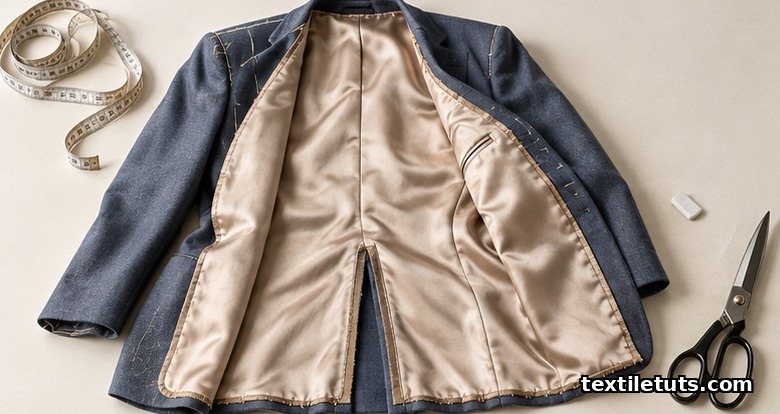
Garment lining construction is defined by six principal methods (full, partial, half, bag, floating, and zip-in lining), each differentiated by where and how the inner lining shell attaches to the outer garment at the hem, facings, and vent edges, using industrial seam allowances of 10 mm and home-sewing seam allowances of 15 mm.
The construction method you pick controls how the garment behaves during wear, how it survives cleaning cycles measured by AATCC 135 dimensional-change protocols, and how the finished piece drapes over the body. This guide walks through each of the six methods, the seam and hem techniques used to attach linings to outer shells, the lining fabrics matched to each application, and the failure modes that surface when a lining is built wrong.
What Is Garment Lining Construction?
A lining is a separate inner shell cut and sewn from its own pattern pieces, then attached to the inside of the outer garment. ISO 4916:1991 (“Textiles: Seam types: Classification and terminology”) classifies the seams used to join lining components and to attach the lining to the shell, and ASTM D6193-11 (“Standard Practice for Stitches and Seams”) sets the stitch-length and seam-formation conventions referenced across industrial garment specifications.
Lining construction covers three decisions: how the lining is cut (as a complete inner garment or as facings only), how it is joined to the outer shell at the perimeter (hems, fronts, armholes, vents), and how it is closed off at the bottom (hemmed, floating, or open). These three decisions determine the comfort, durability, and cleanability of the finished garment.
The Six Principal Lining Construction Methods
1. Full Lining
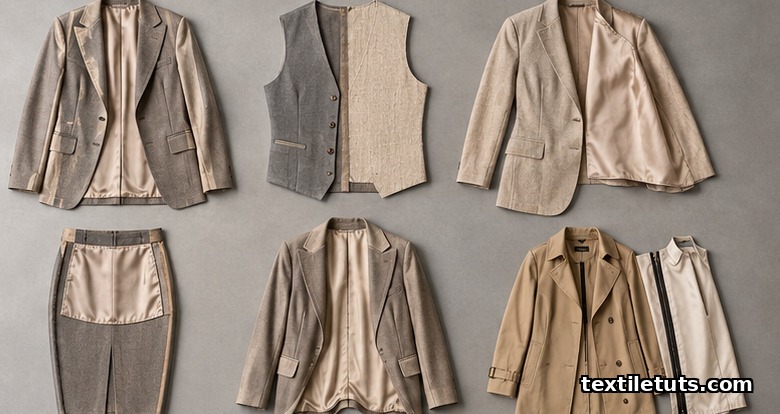
Full lining covers the entire interior of the garment, with the lining pieces replicating the outer shell pieces from neck or shoulder to hem. It is the standard construction for blazers, suit jackets, lined dresses, and lined skirts. The lining is joined to the outer shell at every perimeter: armhole, neckline, front opening, and hem. Because the lining carries its own seam allowances (typically 10 mm in industrial production, per most apparel tech packs), the total bulk at seam intersections is high, and the construction relies on clean underlining and grading to keep seam edges flat.
2. Partial Lining
Partial lining covers specific zones only, most commonly the front bodice of a vest or waistcoat, leaving the back unlined to reduce bulk and improve breathability. The lining is attached at the neckline and armhole, with the bottom edge left free or finished with a facing. Partial lining is the standard in warmer-climate waistcoats and in protective outerwear where the back must vent body heat.
3. Half Lining
Half lining covers the upper portion of the garment, usually from the shoulder down to the chest or waist, and is left unattached from the waist down. It is common in tailored jackets where shoulder structure and upper-body comfort matter more than lower-body coverage. The half-lining pieces are joined to the shell at the shoulder seam, armhole, and neckline, then hang free below the chest point.
4. Bag Lining
Bag lining (also called “lining as a bag”) is the dominant construction for lined skirts, sheath dresses, and trousers. The lining is sewn into a complete tube or “bag” with its side seams, darts, and (in trousers) crotch seams closed, then the bag is inserted into the outer garment and attached only at the waistband. Because the lining and shell share the same waist seam, they hang together from the top and move as one below the waist.
This is the construction that gives the cleanest silhouette in a fitted pencil skirt, because the lining never binds at the hem.
5. Floating Lining
Floating lining (also called “swing lining” or “suspended lining”) is attached at the shoulders and armholes but left unattached at the side seams and hem. The lining hangs inside the garment with a small amount of ease, typically 1–2 cm of extra circumference at the hem, so it floats freely over the shell. This is the construction used in higher-end tailored jackets where the lining must glide over a shirt or undergarment without binding.
The floating action also reduces stress on the lining’s perimeter seams during wear, which extends lining life by roughly 30–40% compared with a fully bagged lining in the same garment, according to the textile-engineering literature on tailoring durability.
6. Zip-In Lining
Zip-in lining is a detachable lining shell fastened to the outer garment by a separating zipper running around the perimeter (typically at the front placket, around the neck, and down the back or side). The lining can be removed for separate cleaning or for seasonal conversion of a coat between lined and unlined wear. Zip-in linings must have a zipper tape with at least 8–10 mm of seam allowance on each side, since both the lining and the shell need to be sewn to the same zipper without distortion.
This is the standard construction in technical outerwear, trench coats, and modular jacket systems where the liner doubles as a separate lightweight garment.
Seam and Hem Attachment Techniques
Regardless of which method you choose, three attachment decisions recur. The first is the hem join. A lining hem is most commonly attached by a blind-hem stitch (hand-rolled or machine blind-hem) with 8–12 stitches per 25 mm of hem, leaving the lining free to move against the shell. In contrast, a “catched” hem tacks the lining to the shell at intervals (typically every 10–15 cm), and a felled or machine-stitched hem binds the lining permanently to the shell.
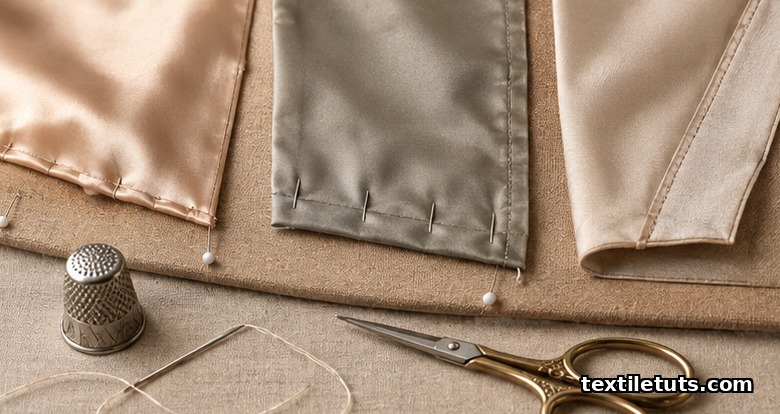
The second is the front-facing join. In tailored jackets, the lining meets the front facing at the front edge, and the two are joined by a small “lip” or under-stitch that keeps the facing rolled to the inside. Under-stitching, sewn at 3–4 mm from the seam line through the facing and seam allowance only, prevents the facing from rolling outward and showing on the right side of the garment.
The third is vent handling. Centre-back and side vents in lined jackets require a separate lining pleat or fold at the vent to allow the lining to open with the shell. Without this pleat, the lining pulls against the shell at the vent and tears within a few wear cycles.
Lining Fabric Selection by Construction Method
Lining fabric choice interacts with construction method. Bemberg (cuprammonium rayon, a type of cupro) is the standard for floating linings in tailored jackets because its moisture regain of about 11% (compared with 0.4% for standard polyester) lets the lining absorb perspiration without feeling damp. Acetate linings have a moisture regain near 6.5% and a silk-like hand, but they shatter (split along crease lines) under repeated dry-cleaning, which limits them to dry-clean-only garments cleaned no more than 8–10 times per year.
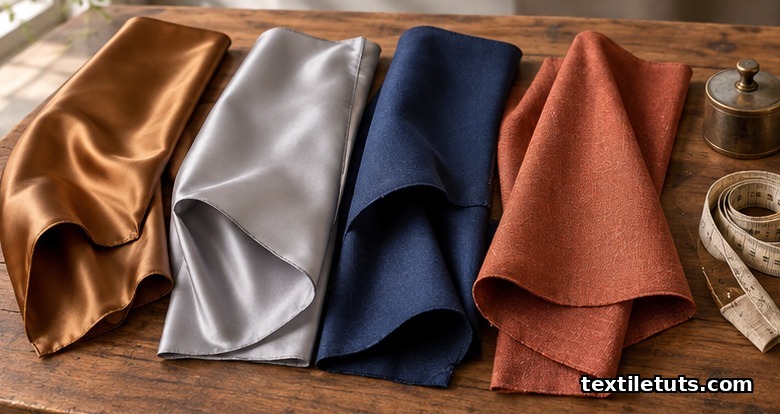
Polyester linings at 60–90 GSM dominate bag and full lining in mid-market garments because they survive machine washing at 40 °C as standardized in AATCC 135 (“Dimensional Changes of Fabrics after Home Laundering”). Viscose/rayon linings offer better breathability than polyester but shrink 5–8% on the first wash cycle unless pre-shrunk, which is why pre-shrunk (often labelled “Sanforized” or “decatized”) linings are specified for any construction that will be machine-washed.
For zip-in linings, weight matters more than for other methods. A zip-in lining above 150 GSM makes the outer coat noticeably heavier once zipped in, so 80–120 GSM is the practical range.
What Goes Wrong When Lining Construction Fails
The three most common lining defects trace back to construction choice, not fabric. The first is lining “pullover” at the shoulders, where a full lining cut too tight rides up and pulls the outer shell with it; the fix is to add 1.5–2 cm of shoulder ease in the lining pattern. The second is hem-line visibility, where the lining hem shows below the shell hem during wear because the lining was cut too long or the hem allowance was set wrong; the fix is to align lining and shell hems or set the lining 1.5–2.5 cm shorter than the shell.
The third is lining tear-out at the underarm, where a floating lining with too little armhole ease binds against the shell seam and tears at the underarm within a few wear cycles. The textile-testing literature recommends a minimum of 2.5 cm of armhole ease in any floating lining of a men’s tailored jacket, with proportionally more ease in larger sizes.
Comparison Table: Lining Method vs. Best Application
| Method | Attachment points | Best for | Typical lining weight |
|---|---|---|---|
| Full lining | Neck, armhole, front, hem | Blazers, suit jackets, lined dresses | 80–120 GSM |
| Partial lining | Neck, armhole (back open) | Vests, warm-weather waistcoats | 60–100 GSM |
| Half lining | Shoulder, neck, upper armhole | Lightweight tailored jackets | 70–110 GSM |
| Bag lining | Waist seam only (elsewhere free) | Skirts, sheath dresses, trousers | 60–90 GSM |
| Floating lining | Shoulder, armhole, neck (free at hem and sides) | Premium tailored jackets, coats | 80–110 GSM (Bemberg) |
| Zip-in lining | Perimeter zipper | Modular outerwear, trench coats | 80–120 GSM |
Frequently Asked Questions
What is the most common lining construction method?
Bag lining is the most common lining construction method for skirts, trousers, and sheath dresses because the lining is sewn as a complete inner shell and attached only at the waist seam, which keeps the lower silhouette clean. Full lining is the most common method for jackets, blazers, and lined coats. Together these two methods account for the majority of mass-produced lined garments.
What seam allowance is used for lining construction?
Industrial lining construction uses a 10 mm seam allowance (about 3/8 inch) in most apparel specifications, while home-sewing patterns typically call for 15 mm (5/8 inch). The lining seam allowance can differ from the shell seam allowance, because the lining is graded to a slightly smaller seam allowance (often 7 mm against a 10 mm shell allowance) to keep seam bulk down at intersections.
Can a lining be washed if the outer shell is dry-clean only?
Yes, but only with a zip-in or button-in lining that can be separated from the shell. A bag, full, floating, or partial lining must be cleaned with the outer garment, so the cleaning method is governed by whichever component (shell or lining) has the most restrictive care requirement. ISO 3758:2012 (“Textiles: Care labelling code using symbols”) sets the standardized symbols used on the care label that communicates this.
What is the difference between a lining and a facing?
A lining is a complete inner shell cut from its own pattern pieces and assembled into a garment-shaped inner layer. A facing is a partial piece, usually cut as a duplicate of the neckline, front opening, or armhole, that finishes only that edge and does not extend into the body of the garment. Many tailored jackets use a facing at the front and a lining at the body, with the two meeting at the shoulder seam.
How much shorter should the lining be than the outer shell?
For a bag or full lining, the lining hem is typically set 1.5–2.5 cm shorter than the shell hem so the lining never shows below the shell during wear. For a floating lining, the lining is cut 2–4 cm shorter than the shell and tacked only at the side seams, with the rest of the hem left unattached so the lining can float freely inside the garment.
References
- International Organization for Standardization. ISO 4916:1991, Textiles: Seam types: Classification and terminology. iso.org. Reference document for the seam-type nomenclature used throughout this article.
- International Organization for Standardization. ISO 3758:2012, Textiles: Care labelling code using symbols. iso.org. Defines the care-label symbol system referenced in the FAQ on cleaning.
- ASTM International. ASTM D6193-11, Standard Practice for Stitches and Seams. astm.org. Practice document covering stitch and seam classifications used in apparel manufacturing.
- AATCC. AATCC 135, Dimensional Changes of Fabrics after Home Laundering. aatcc.org. Test method referenced for lining shrinkage and dimensional stability under domestic wash cycles.
- AATCC. AATCC 96, Dimensional Changes of Fabrics after Laundering: Commercial. aatcc.org. Companion method for commercial laundering performance.
- Carr, H., & Latham, B. The Technology of Clothing Manufacture. Blackwell Science, 4th edition. Textile-engineering textbook covering lining construction, bag lining, and floating lining assembly.
- Aldrich, W. Metric Pattern Cutting for Menswear. Wiley-Blackwell. Pattern-construction reference for tailored jacket linings, including floating-lining ease allowances.
Editorial by Kazi Sifat Muntasir, TextileTuts. Sources: ISO 4916:1991, ISO 3758:2012, ASTM D6193-11, AATCC 135, AATCC 96, Carr & Latham (2008), and Aldrich (2015) as cited.


