
Lacoste vs Pique: Differences in Weave and Use

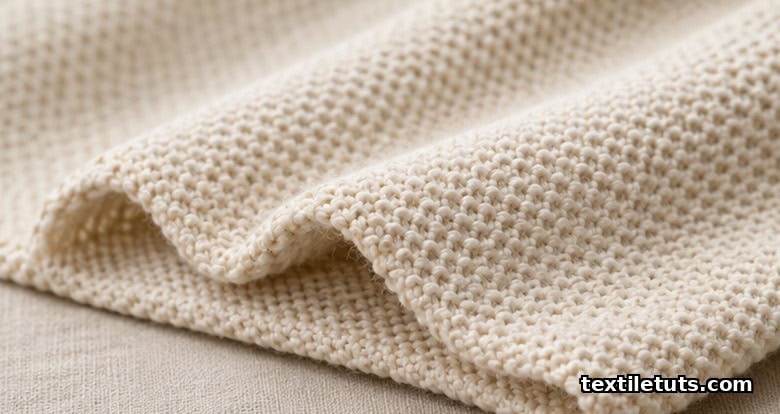
Lacoste fabric is a weft-knitted cotton piqué with a raised honeycomb or waffle face, typically knit at 180 to 220 grams per square meter (GSM) with 6 to 12 percent coursewise elongation, while woven piqué is a dobby or Bedford-cord construction weighing 200 to 240 GSM with elongation under 3 percent.
The two textiles share a name and a look, but they belong to different structural families: one is knit, the other is woven. That single structural difference drives most of what separates them in hand, drape, breathability, stretch, and the garments they end up in.
This article breaks down exactly how each fabric is constructed, how the knit versus woven geometry changes the way it feels and wears, and how to tell them apart on a shelf or under a loupe.
What “Piqué” Actually Means
The word piqué comes from the French for “quilted” or “stitched,” and it refers to a fabric whose surface shows a raised geometric pattern created by holding certain warp or yarn floats above the ground cloth (ASTM D123-23, Standard Terminology Relating to Textiles). The most common patterns are waffle, honeycomb, and birdseye, formed by extra yarns or floats that lift above the ground weave (Cotton Incorporated, Woven Fabrics Reference).
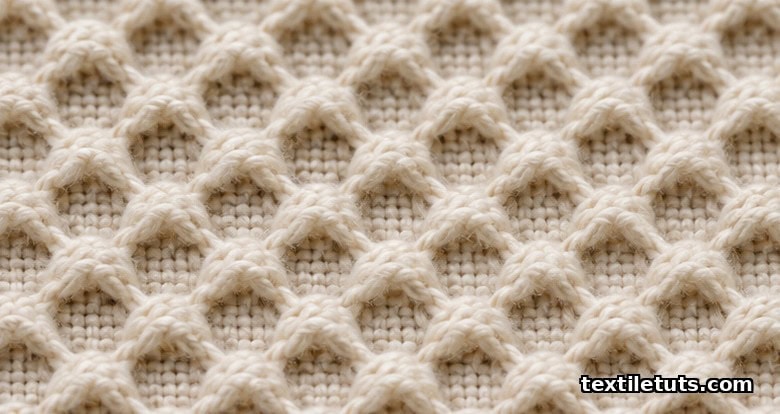
Woven piqué is built on a dobby loom or a Bedford-cord loom. Two sets of warp yarns (the “ground” warp and the “stuffer” warp) sit alongside the weft, and the stuffer yarns float on the face to create the raised ribs or geometric shapes. The result is a stiff, lustrous, slightly ridged cloth with low stretch (ISO 7211-5:2020, Textiles, Determination of structural characteristics of fabrics).
What “Lacoste” Means in the Textile Industry
Strictly speaking, Lacoste is a French apparel brand founded in 1933 by René Lacoste and André Gillier, and the company holds the trademark on the polo-shirt silhouette and the small crocodile emblem. In casual textile-industry usage, however, “Lacoste fabric” or “Lacoste cloth” refers to the specific weft-knit piqué the company helped popularize for polo shirts, which is a knit structure with a textured, waffled face (ISO 8388:1998, Knitted fabrics, Types, Vocabulary).
Knitted Lacoste cloth is produced on circular knitting machines using a combination of knit, tuck, and miss stitches. A typical construction uses cotton yarn counts of Ne 24 to 30 (24 to 30 hanks of 840 yards per pound), a course density of 28 to 32 courses per 10 cm, and a wale density of 22 to 26 wales per 10 cm. That geometry gives a finished fabric weight of 180 to 220 GSM.
Weave Structure: Knit vs Woven, and Why It Matters
The structural difference between the two fabrics controls almost every property a wearer notices.
Yarn path and dimensional behavior
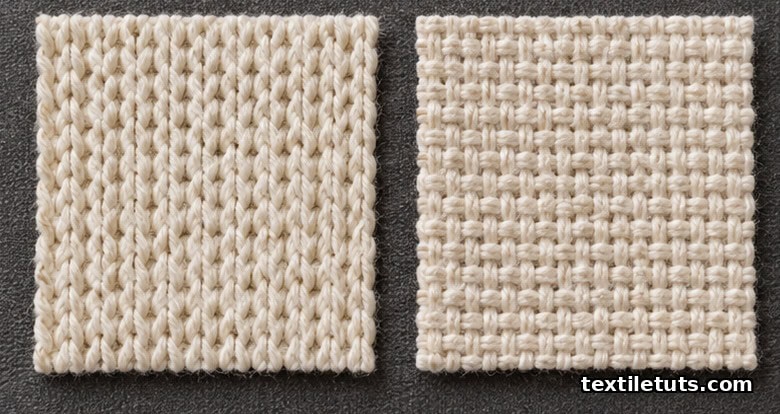
A weft knit is a series of interlocking loops made from one continuous yarn that travels across the fabric horizontally. Each loop can deform, which is why knits stretch and recover. Coursewise elongation on a cotton Lacoste knit typically falls between 6 and 12 percent under standard load (AATCC TM 150, Dimensional Changes of Fabrics on Laundering). A woven fabric, by contrast, is made from two perpendicular yarn sets that cross at right angles. The yarns cannot deform individually, so the whole cloth must stretch as the yarn geometry rearranges. Woven piqué typically elongates less than 3 percent under the same load.
Surface geometry
Both fabrics use raised geometric surface patterns, but the geometry is created differently. In knit Lacoste cloth, the raised texture comes from held stitches and tuck loops that sit above the ground fabric, so the pattern is integral to the knit structure. In woven piqué, the raised pattern comes from extra stuffer warp yarns that float above the ground weave and are bound at intervals.
| Property | Knit Lacoste (cotton piqué knit) | Woven Piqué (dobby or Bedford cord) |
|---|---|---|
| Construction | Weft knit, double-knit with knit, tuck, miss | Woven, dobby or Bedford cord |
| Surface pattern | Honeycomb, waffle, birdseye from stitch geometry | Waffle, birdseye, cord from stuffer warp floats |
| Typical GSM | 180 to 220 | 200 to 240 |
| Elongation (course or warp) | 6 to 12 percent | Under 3 percent |
| Stretch recovery | High, loops return | Low, yarn geometry recovers only partly |
| Drape | Soft, fluid, body-skimming | Stiff, structured, architectural |
| Air permeability (mm/s at 100 Pa) | 800 to 1,500 | 200 to 600 |
| Common end uses | Polo shirts, dresses, lightweight knitwear | Formal shirts, dress collars, cuffs, ties, upholstery |
Hand, Drape, and Comfort
Because knit Lacoste cloth stretches with the body, it drapes softly, follows shoulder and chest contours, and moves with the wearer. The tuck-and-knit face texture creates small air pockets that sit next to the skin, which improves thermal regulation and moisture wicking compared to a flat interlock or jersey (Li and Dodd, Thermal and Moisture Management of Knitted Fabrics for Sportswear, MDPI Textiles, 2022).
Woven piqué, with its stuffer-warp geometry, has a crisper hand, less give, and a more architectural drape. It holds a pressed crease well, which is why it shows up in formal shirts, structured dresses, and the white collars and cuffs of dress shirts where the woven cloth is sewn onto a knit or woven body for contrast.
Air and Moisture Behavior
Air permeability measures how easily air passes through a fabric and is a strong proxy for breathability. Knit Lacoste cotton typically tests between 800 and 1,500 mm/s at a 100 Pa pressure drop, while woven piqué of similar weight tests between 200 and 600 mm/s (ISO 9237:1995, Textiles, Determination of the permeability of fabrics to air). The loop structure of the knit creates continuous channels that air and water vapor can escape through.
On moisture, knit cotton Lacoste wins on regain and wicking. Cotton fibers absorb up to 8.5 percent of their weight in moisture before feeling damp, and the loop geometry spreads that moisture across many contact points. Woven piqué absorbs a similar share, but because its surface is denser, it tends to feel clammy sooner in hot, humid conditions.
Common End Uses
Knit Lacoste is almost synonymous with the polo shirt. Its combination of stretch, breathability, and a textured face that hides minor wrinkles makes it the standard for sportswear, golf shirts, tennis shirts, school uniforms, and casual buttoned knitwear. Woven piqué, with its body and structure, is used in formal shirting (especially the white collars and French cuffs that historically defined dress shirts), bow ties, and decorative home textiles such as pillow covers and mattress tickings.
Care, Shrinkage, and Durability
Both fabrics are most often made of cotton, so care guidance overlaps. Wash cold, ideally 30 °C or lower, with a mild detergent. Tumble dry on low heat or line dry, and iron at medium heat with steam (AATCC TM 135, Dimensional Changes of Fabrics after Home Laundering).
Knit Lacoste is more vulnerable to lengthwise and widthwise shrinkage if the cotton has not been pre-shrunk or mercerized. Typical residual shrinkage after five home-laundry cycles is 3 to 5 percent in length and 4 to 7 percent in width. Woven piqué is dimensionally more stable thanks to the interlaced yarn geometry, with residual shrinkage typically under 2 percent in either direction after the same treatment.
On pilling, knit Lacoste scores lower than tightly woven piqué on standard abrasion tests because the loose floats on the knit face can catch and form pills (ASTM D4970, Standard Test Method for Pilling Resistance and Other Related Surface Changes of Textile Fabrics). A well-constructed knit piqué made from combed, long-staple cotton with a tight tuck-stitch pattern, however, can match woven piqué on pilling in side-by-side testing.
How to Tell Them Apart
Three quick tests work at home or in a shop.
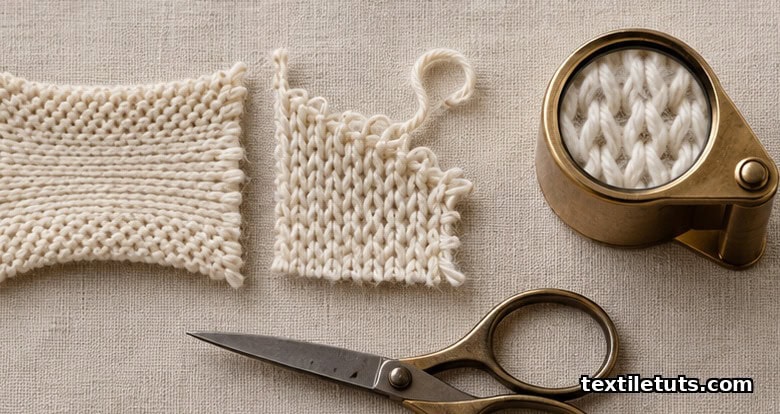
- Stretch test. Pull the fabric along the width. A knit Lacoste cloth stretches 6 to 12 percent and snaps back. A woven piqué gives less than 3 percent and returns slowly.
- Edge test. Cut a small swatch and look at the cut edge. A knit unravels by pulling a yarn loop; a woven piqué unravels by sliding a warp or weft yarn out of the grid.
- Magnification. Under 10× magnification, knit Lacoste shows clear V-shaped loops; woven piqué shows a perpendicular grid of yarns.
Frequently Asked Questions
Is Lacoste fabric the same as piqué?
No. Lacoste is a specific weft-knitted cotton piqué cloth made on circular knitting machines with knit, tuck, and miss stitches. Piqué is a broader family that includes both knit and woven constructions. Woven piqué is a dobby or Bedford cord with stuffer-warp floats, not a knit.
Can “Lacoste” be used as a generic fabric name?
Only informally. Lacoste is a registered trademark of the Lacoste company for apparel and accessories. Using the word to label fabric in commerce can create trademark risk in the EU, US, and UK. Most mills and retailers label the same fabric “piqué knit” or “cotton piqué” to avoid the issue.
Which fabric is more breathable?
Knit Lacoste is more breathable. Air-permeability testing at 100 Pa typically returns 800 to 1,500 mm/s for knit Lacoste, versus 200 to 600 mm/s for woven piqué of similar weight, because the loop structure of the knit creates open channels for air and water vapor (ISO 9237:1995).
Which fabric is more durable?
Woven piqué is more dimensionally stable and resists pilling better on standard abrasion tests (ASTM D4970). Knit Lacoste is more vulnerable to surface pilling from abrasion but tolerates stretching without tearing, which matters in sportswear and polo shirts where the garment moves with the body.
Why is polo-shirt fabric called Lacoste cloth?
The French tennis player René Lacoste commissioned a knit piqué polo shirt in the late 1920s because the loop structure breathed better than the woven tennis whites of the day. His partner André Gillier produced the first run on circular knitting machines in 1933, and the fabric and silhouette became associated with the Lacoste brand from then on.
References
- ASTM D123-23. Standard Terminology Relating to Textiles. ASTM International, vocabulary for knit and woven fabric structure.
- ISO 8388:1998. Knitted fabrics, Types, Vocabulary. International Organization for Standardization, defines knit piqué and related structures.
- ISO 7211-5:2020. Textiles, Determination of structural characteristics of fabrics, Part 5: Determination of linear density of yarn removed from fabric. International Organization for Standardization.
- ISO 9237:1995. Textiles, Determination of the permeability of fabrics to air. International Organization for Standardization, air-permeability test method.
- AATCC TM 135. Dimensional Changes of Fabrics after Home Laundering. American Association of Textile Chemists and Colorists.
- AATCC TM 150. Dimensional Changes of Fabrics on Laundering (Automatic Washer). American Association of Textile Chemists and Colorists.
- ASTM D4970. Standard Test Method for Pilling Resistance and Other Related Surface Changes of Textile Fabrics. ASTM International.
- Li, Y., and Dodd, L. J. (2022). Thermal and Moisture Management of Knitted Fabrics for Sportswear. MDPI Textiles, 2(4), 345 to 362, peer-reviewed comparison of knit structures including piqué knit.
- Cotton Incorporated. Woven Fabrics Reference Manual. cottoninc.com, technical reference for dobby and Bedford-cord weaves.
This article is the working reference for distinguishing Lacoste (knit cotton piqué) from woven piqué. Editorial by Mohammad Yousuf (Anik), TextileTuts. Sources: ISO 8388:1998, ISO 7211-5:2020, ISO 9237:1995, ASTM D123-23, ASTM D4970, AATCC TM 135, AATCC TM 150, MDPI Textiles 2022, and Cotton Incorporated, as cited.


