
Knitting Machine Maintenance

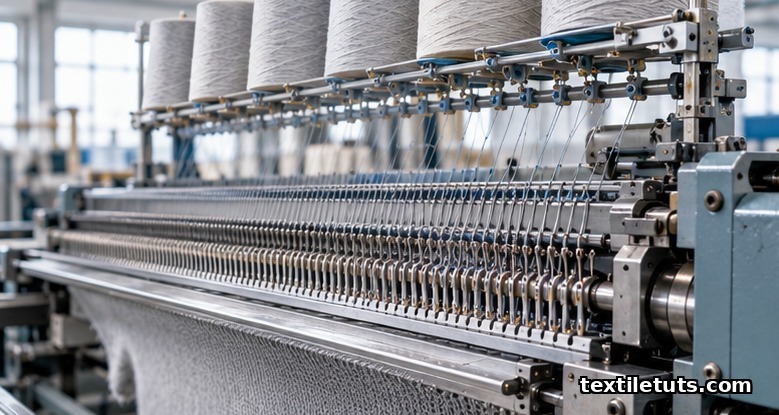
Flat knitting machines require daily needle-bed cleaning, weekly lubrication of cam tracks and needle butts with ISO VG 32 machine oil, and needle replacement every 6 to 24 months depending on yarn abrasion, with documented maintenance routines extending machine service life by 30 to 50 percent compared with neglected units.
Whether you operate a 12-gauge hand flat or a 14-gauge computerized V-bed in a commercial knitwear unit, the maintenance routine is what separates consistent fabric quality from costly downtime and visible needle lines.
This guide walks through daily, weekly, monthly, and quarterly maintenance tasks for circular, flat V-bed, and warp knitting machines, with the lubrication intervals, needle inspection points, and stitch-density checks that a textile engineer would actually perform on the shop floor.
Why Knitting Machine Maintenance Matters on the Shop Floor
A knitting machine converts yarn into fabric through thousands of precise needle movements per minute. Modern V-bed flat knitting machines run carriage speeds between 0.8 and 1.5 m/s, with each needle bending up to 200 times per course. Even small defects, such as a bent latch, a worn cam, or a contaminated needle bed, translate into dropped stitches, holes, or fabric barre that cost more in seconds than a maintenance routine costs in hours.
ISO 8388:1998 (Knitting, Vocabulary) defines the working components (needles, sinkers, cams, needle beds) that require periodic inspection. Skipping inspection on any of these elements raises the defect rate sharply with both contamination and mechanical wear, two failure modes that are largely preventable on a defined schedule.
Daily Maintenance Tasks (5 to 10 Minutes per Shift)
Daily maintenance focuses on the surfaces that contact yarn and the moving parts that must move freely. Build these tasks into the start-of-shift and mid-shift routines so contamination never accumulates past a single production run.
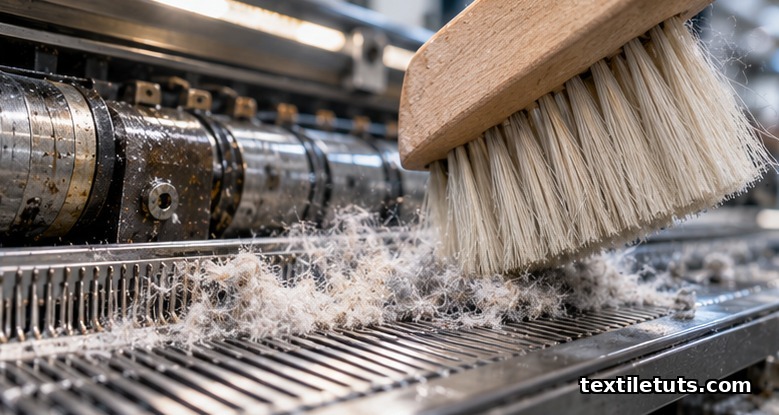
- Clean the needle bed and cam races with a soft brush or low-pressure compressed air (≤0.4 MPa) to remove lint, fly, and broken fiber fragments. Compressed air above 0.5 MPa drives debris into bearings and accelerates wear.
- Wipe needle latches with a lint-free cloth dampened in textile-grade machine oil (ISO VG 22 or VG 32) to prevent fiber buildup on the latch face.
- Inspect needle latches for broken or bent hooks. A single defective needle can cause a ladder down the entire fabric width within 3 to 5 courses.
- Check yarn feed tension and creel guides for excessive friction, and replace any ceramic guide showing visible wear grooves.
- Verify that oil reservoirs (on fully automated machines) are at the indicated level and that the lubrication indicator lamp shows normal pressure.
Weekly Maintenance Tasks (30 to 45 Minutes)
Weekly tasks move from surface cleaning into lubrication of moving parts and the first calibration check. Schedule a quiet shift window for these tasks so the machine cools before inspection.
- Oil all cam tracks, needle butts, sinker cams, and take-down rollers with the machine manufacturer’s recommended lubricant. Most V-bed flat knitting machines specify an ISO VG 32 hydraulic oil or a synthetic knitting machine oil with a viscosity grade matched to ambient shop temperature.
- Run a 10-minute idle cycle with no yarn loaded to circulate lubricant through the cam system before resuming production.
- Measure stitch length (course length) on a 50-course test piece and compare against the machine’s calibration chart. Drift beyond ±2 percent indicates needle bed wear or take-down roller slippage.
- Inspect the needle bed for burrs or scoring; a single burr hooks yarn fibers and creates pilling on the fabric face within the first meter of production.
- Drain and replace oil in automatic lubrication systems if the lubricant appears discolored or contains visible metal particles, which is a sign of bearing wear that needs further diagnosis.
Monthly and Quarterly Maintenance
Monthly and quarterly tasks are best performed during planned stop days rather than mid-shift. Document each session in a maintenance log so wear trends become visible across the year instead of appearing as sudden failures.
Monthly Checks
- Measure course count per 10 cm and wale count per 10 cm on a standard test panel, and compare against ASTM D3887 tolerance tables for the fabric construction.
- Check take-down roller pressure with a calibrated gauge; pressure drift causes fabric distortion and dimensional change downstream.
- Inspect drive belts for cracking, glazing, or fraying, and replace any belt showing surface cracking along the cog side.
- Test yarn feed sensors (on computer-controlled machines) with the diagnostic menu to confirm stop-motion response within the manufacturer’s specified millisecond range.
Quarterly Checks
- Remove and ultrasonically clean sinker caps and a sample of needles, then inspect under 10x magnification for latch wear and hook deformation.
- Calibrate carriage position sensors and verify gauge accuracy with a feeler gauge across the full needle bed width.
- Replace oil filters in the central lubrication system and inspect oil lines for leaks at fittings and along the supply manifold.
- Run the machine through a full diagnostic cycle. Modern computerized machines have built-in self-test routines that flag cam, encoder, and needle selector faults before they reach the fabric.
Needle Replacement and Wear Indicators
Needle life depends on yarn composition, machine gauge, and operating speed. With synthetic yarns (acrylic, polyester) and high machine speeds (1.0 m/s and above), needles typically last 6 to 12 months in continuous production. With natural fibers and lower speeds, needle life extends to 18 to 24 months. Hard fibers such as linen or steel-blend yarns shorten needle life further and warrant monthly rather than quarterly inspection.
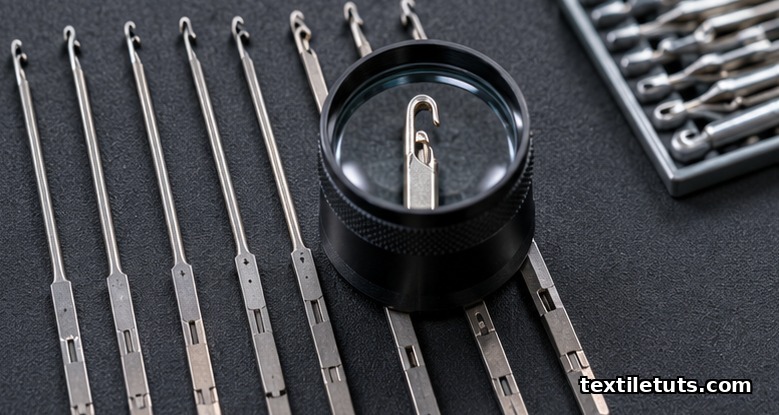
Replace needles when you observe any of the following indicators:
- Bent or broken needle latches, visible under 10x magnification.
- Hook deformation that prevents the needle from accepting the new loop cleanly.
- Scratch marks on needle hooks from cam wear, which catch yarn and shred fibers.
- Persistent holes in the fabric at consistent positions, indicating a single needle repeatedly missing the loop.
Always replace needles in matched sets across the affected needle bed section. Replacing a single needle among worn neighbors creates uneven loop formation and visible fabric barre. ISO 4921 defines needle terminology and the geometric tolerances applied during needle replacement decisions.
Lubrication Specifications for Knitting Machines
Knitting machine lubrication is more demanding than general machinery lubrication because the oil must remain thin enough to penetrate cam tracks at operating temperature yet thick enough to separate needle butts under load. Most machine manufacturers recommend the grades shown in the table below; always confirm with the machine manual before deviating.
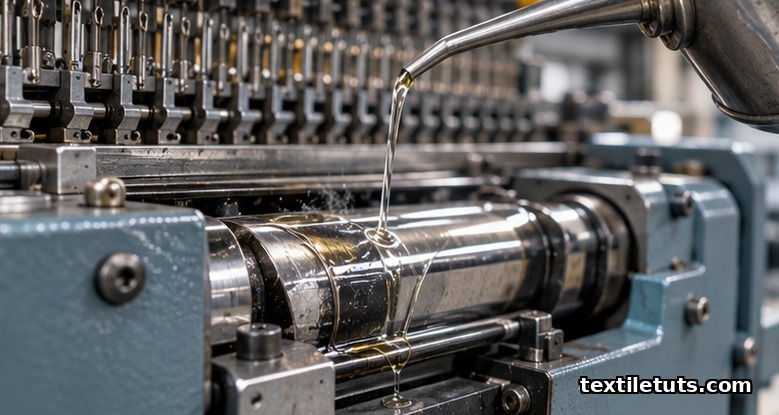
| Component | Oil grade (ISO VG) | Frequency |
|---|---|---|
| Cam tracks, needle butts | VG 32 | Weekly |
| Carriage bearings | VG 46 or VG 68 | Monthly |
| Central lubrication reservoir | Manufacturer-specified synthetic | Quarterly or per oil analysis |
| Needle latches, sinker pivot | VG 22 (light film) | Daily |
Operating temperature affects viscosity significantly. A VG 32 oil at 20 °C ambient behaves closer to VG 46 at 40 °C, which is why some mills switch to VG 22 in cold-start conditions. The same logic explains why summer shifts in hot climates often show higher needle-bed wear than winter shifts in the same mill.
Common Defects Linked to Poor Maintenance
Most fabric defects traceable to maintenance are visible to a trained eye within the first meter of fabric. AATCC TM 135 (Dimensional Changes of Fabrics After Home Laundering) and similar test methods quantify how downstream fabric behavior reflects upstream machine condition, so a defect that appears only after finishing often points to a maintenance issue that appeared much earlier in the process.
- Needle lines / vertical barre: caused by one or more bent needles or uneven needle bed wear across multiple needles.
- Holes and ladders: caused by broken needle latches or by yarn feed tension that drops below the needle hook retention force.
- Yarn contamination and pilling: caused by oil migration from over-lubrication, since the oil film attracts fly and broken fiber fragments.
- Course length variation: caused by take-down roller wear or carriage drive belt slippage.
- Fabric skew: caused by uneven sinker wear or a bent take-down roller.
Safety Practices During Maintenance
Lock out and tag out the main power before opening any guard or accessing the needle bed. Modern computerized knitting machines retain stored energy in servo drives for several minutes after power-off; wait the manufacturer-specified time before removing guards. Wear cut-resistant gloves when handling needle beds, because needle points remain sharp enough to puncture standard work gloves. Dispose of used lubrication oil per local hazardous-waste regulations; synthetic knitting machine oils are not compatible with general drain disposal.
Frequently Asked Questions
How often should knitting machine needles be replaced?
Replace needles every 6 to 12 months on high-speed V-bed machines knitting synthetic yarns, and every 18 to 24 months on slower machines knitting natural fibers. Replace immediately if you observe bent latches, hook deformation, or recurring holes at the same fabric position across multiple courses.
What oil should I use on a flat knitting machine?
Use an ISO VG 32 hydraulic or knitting machine oil on cam tracks and needle butts, applied weekly. Carriage bearings typically take ISO VG 46 or VG 68 on a monthly schedule. Always confirm with the machine manufacturer’s manual before substituting oil grades or switching between mineral and synthetic bases.
Can compressed air damage a knitting machine?
Compressed air below 0.4 MPa is safe for routine cleaning of needle beds and cam races. Above 0.5 MPa, high-pressure air drives lint into bearings and needle bed slots, accelerating wear rather than preventing it. Always use a regulator and never exceed the pressure listed in the machine manual.
How do I detect a worn needle before it ruins fabric?
Run a 50-course test panel on white or light-colored yarn and inspect under a 10x loupe for missing loops or uneven stitch geometry. Persistent defects at the same needle position across multiple courses confirm needle wear, and the right response is to replace the entire affected needle set rather than a single needle.
What is the most common cause of vertical needle lines in knit fabric?
Vertical needle lines (barre) almost always trace to a single bent or broken needle, or to uneven needle bed wear across several adjacent needles. Fabric barre caused by yarn variation is wider (it spans multiple courses), while needle-line defects appear as a single repeating vertical line on the fabric.
References
- International Organization for Standardization. ISO 8388:1998, Knitting: Vocabulary. iso.org — defines knitting machine components and the terminology used in maintenance documentation.
- ASTM International. ASTM D3887, Standard Specification for Tolerances for Knitted Fabrics. astm.org — tolerance tables for course and wale counts referenced in monthly maintenance checks.
- AATCC. Test Method 135, Dimensional Changes of Fabrics After Home Laundering. aatcc.org — reference method for measuring fabric dimensional stability downstream of machine condition.
- International Organization for Standardization. ISO 4921, Knitting: Basic Terms and Definitions. iso.org — needle terminology and geometric tolerances applied during needle replacement.
- ResearchGate. Needle wear and fabric defect correlation in weft knitting. researchgate.net — peer-reviewed analysis of needle life versus yarn composition and machine speed.
- Springer Nature. Maintenance strategies for textile machinery. springer.com — peer-reviewed chapter on predictive maintenance intervals for knitting machines.
This article is the working reference for knitting machine maintenance. Editorial by Iftay Khairul Alam, TextileTuts. Sources: ISO 8388:1998, ISO 4921, ASTM D3887, AATCC TM 135, ResearchGate, Springer as cited.


