
Knit Fabric Shearing and Sueding

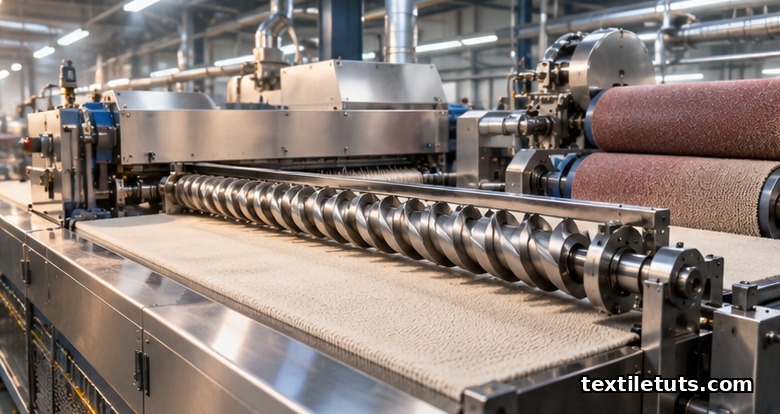
Shearing cuts the raised fibers of a knit fabric to a uniform pile height of 0.5 to 1.5 mm using a spiral or straight blade rotating at 1,200 to 1,800 rpm, while sueding abrades the fabric surface with emery- or sandpaper-covered rollers running at 15 to 25 m/min to raise broken fiber ends and produce a soft, peach-skin hand.
Together, these two mechanical finishing processes convert a plain loop-structured knit into a smooth, pile-bearing, or sueded fabric used in fleece, velour, and stretch suede for activewear, loungewear, and upholstery.
This guide explains how shearing and sueding actually work on knit substrates, why they behave differently on knits than on wovens, the machine parameters that matter, and how finished fabrics are tested for pilling, abrasion, and surface stability.
Why Knit Fabrics Need a Different Shearing and Sueding Approach
Knit fabrics are not woven. They are made of interlooped yarns, which means their surface is full of yarn loops, not straight yarn segments. This structural difference changes how shearing and sueding interact with the fabric.
On a tightly woven twill, the surface presents parallel warp and weft yarns that can be sheared to a clean, even nap. On a single jersey or interlock knit, the surface presents hundreds of curved loops per square centimeter. A shearing blade that works perfectly on a twill can snag and distort loops on a knit if the contact angle, blade speed, and fabric tension are not adjusted for the looser structure.
For this reason, knit finishing lines run at lower linear speeds (typically 10 to 25 m/min versus 30 to 60 m/min on wovens) and use lighter blade contact pressure. The goal is the same: a uniform surface. The path is gentler.
What Shearing Does to a Knit Surface
Shearing is a dry mechanical process. A fabric passes over a rotating cylinder fitted with spirally wound blades (the spiral shearing head) or with straight blades arranged in a staggered pattern. Loose fiber ends, raised pills, and uneven loops are cut to a defined height, leaving a flat, even surface.
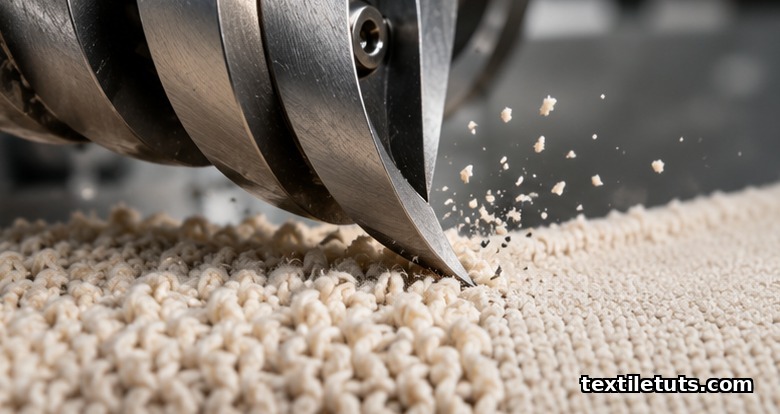
On knit fabrics, shearing serves three practical purposes:
- Pill removal and prevention of re-pilling. Loose fiber ends on the surface are the precursors to pills. Cutting them off at the source delays visible pilling during wear and washing.
- Loop height equalization. After raising or brushing, knit loops stand at uneven heights. Shearing evens them out to a controlled pile height, typically between 0.5 and 1.5 mm depending on the desired fabric style.
- Surface preparation for further finishing. A uniform surface accepts subsequent coatings, prints, or raising operations more evenly than a randomly hairy surface would.
The shearing cylinder typically carries 12 to 24 blades arranged spirally so that only one blade contacts the fabric at any moment. This reduces loop distortion on knits compared with older straight-blade heads, which could engage multiple blades at once and pull loops out of shape.
What Sueding Does to a Knit Surface
Sueding (also called sanding or emerizing when done on rollers) is a controlled abrasion process. The knit fabric passes over one or more rollers wrapped with emery paper, sandpaper, or a coated abrasive belt. The abrasive grains break the surface fibers of the yarns, raising countless short fiber ends that give the fabric its characteristic soft, peach-skin feel.
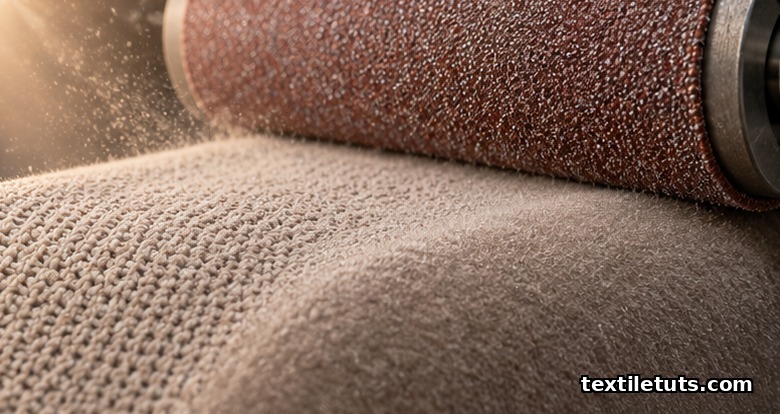
Three practical effects of sueding on knits:
- Hand and drape transformation. Sueded knits drape more softly and feel noticeably warmer to the touch than unsanded knits of the same construction.
- Surface opacity. The broken fiber ends scatter light more uniformly, giving sueded knits a matte appearance that hides the underlying loop structure.
- Thermal insulation. The raised micro-fiber layer traps still air, raising the fabric’s thermal resistance without adding significant weight, which is why sueded knits are common in light fleece and activewear linings.
Grit size controls the aggressiveness. Coarser grits (around 80 to 120) raise longer fiber ends and produce a more brushed appearance; finer grits (240 to 400) produce a smoother sueded hand. Most knit sueding lines use grit 180 to 320 at a fabric speed of 15 to 25 m/min, with one to four rollers in series depending on the desired effect.
Shearing and Sueding Work as a Sequence
On knit finishing lines, shearing and sueding are typically sequenced with raising (brushing) and heat-setting. A common sequence for a fleece or sueded knit is:
- Heat-setting on a stenter at 180 to 200 °C to stabilize dimensions.
- Raising with wire-covered rollers to pull fiber ends out of the yarn structure.
- Sueding with emery rollers to abrade the raised surface and create the sueded hand.
- Shearing to cut any remaining long fiber ends to a uniform height.
- Final heat-setting and softening to lock in the surface and tune the hand.
The order matters. Sueding before shearing ensures that long, raised fibers are cut to a uniform pile rather than left at uneven heights. Shearing before sueding wastes effort, because the sueding rollers will raise new long fibers that should have been cut afterward.
Common Knit Fabrics That Use These Processes
Shearing and sueding appear in several commercial knit categories. The exact machine settings differ by fabric construction, fiber content, and target end-use.
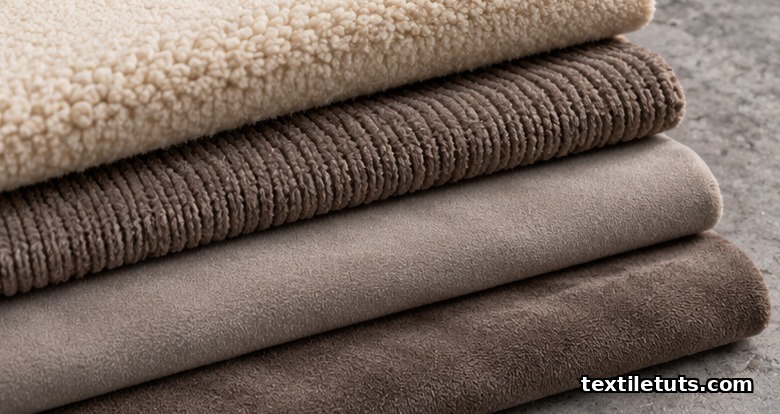
- Polar fleece is usually made from sheared, raised, and lightly sanded polyester or polyester-cotton knit. Shearing produces the uniform 1 to 2 mm pile; sanding softens the surface without crushing the pile.
- Velour (knit velour, used in upholstery and apparel) is a heavily sheared knit with a pile height typically between 1.0 and 1.5 mm. Sueding is usually omitted, because velour’s classic look depends on intact vertical fibers, not abraded ones.
- Sueded jersey for activewear, leggings, and linings uses light sueding (grit 280 to 400) with minimal shearing. The aim is soft hand and opacity, not visible pile.
- Stretch suede for garments (often polyester or nylon/spandex blends) uses aggressive multi-roller sueding to mimic the nap of genuine suede, followed by light shearing to clean up the surface.
How Finished Knits Are Tested for Pilling and Abrasion
Because shearing and sueding are mechanical processes that change fiber length and surface structure, finished knits must be tested to confirm they will hold up to wear and washing. Three test families dominate.
Pilling resistance. Pilling tests rub or tumble the fabric under controlled conditions and count the pills formed. ISO 12945-2 (Martindale method), ASTM D3511 (brush pilling), and AATCC TM 150 (random tumble) are the most widely used standards. A well-sheared knit typically scores 4 to 5 on a 5-grade scale (ISO 12945-2) after 2,000 rubs, because cutting the loose fiber ends at the source removes the raw material that pills would form from.
Abrasion resistance. The Martindale abrasion test (ISO 12947, ASTM D4966) and the Wyzenbeek test (ASTM D4157) measure how many cycles the fabric can withstand before threads break or mass loss exceeds a threshold. A sueded knit loses a small amount of mass in the first 5,000 cycles as loose surface fibers are removed, then stabilizes.
Surface change after washing. ISO 6330 (domestic washing) and ISO 3175 (dry cleaning) define the wash cycles. After 5 to 20 washes, a sueded knit should still meet the same pilling grade it met before washing. If shearing was incomplete, pills will appear quickly; if sueding was too aggressive, the fabric will thin and show base fabric.
Process Variables That Determine Final Quality
Five variables control the outcome of shearing and sueding on knit fabrics. Adjusting them correctly is what separates a stable, soft, pill-resistant knit from one that pills after two washes.
Fabric tension. Knits stretch. Excess tension during shearing or sueding distorts the loop structure permanently. Lines use a controlled overfeed (typically 5 to 15 percent) at the entry of the machine.
Cylinder speed and blade geometry. Higher cylinder speeds cut more cleanly but generate more heat. For knits, 1,200 to 1,800 rpm on a 200 mm diameter cylinder is the common operating window. Spiral blades with a 0.5 to 1.0 mm land engage one point at a time, protecting loops.
Abrasive grit and roller pressure. Coarse grit (80 to 120) creates aggressive sueding suitable for upholstery base cloth; fine grit (320 to 400) creates the soft peach-skin hand used in apparel. Roller pressure is set so that the abrasive grains penetrate the yarn surface by about one-third of the yarn diameter, no more.
Number of passes. A single sueding pass at 20 m/min gives light surface abrasion. Four passes at the same speed give a deep sueded effect suitable for stretch suede. More passes increase fabric softness but reduce abrasion resistance proportionally.
Pre- and post-heat setting. Heat-setting the knit before shearing and sueding locks the dimensions and prevents shrinkage during finishing. Heat-setting after finishing stabilizes the surface and sets the sueded hand. Typical stenter temperatures are 180 to 200 °C for polyester and 150 to 170 °C for cotton-rich blends, held for 30 to 60 seconds.
Troubleshooting Common Defects
Even with the right equipment, knit finishing produces predictable defects when variables drift.
Re-pilling after one or two washes. Almost always indicates insufficient shearing. Long surface fibers were left intact, and they tangled into pills during the first wash cycle. Re-shearing at a lower pile height (for example, dropping from 1.2 mm to 0.8 mm) is the corrective action.
Visible streaks or bands across the fabric width. Usually a worn or damaged blade on the shearing cylinder, or uneven abrasive wear on a sueding roller. Both can be checked by running a colored test fabric through the line; streaks appear as soon as the tool is dull.
Loss of stretch or shape recovery. Heat-setting temperature was too high, or fabric tension was too high during finishing. Knits with spandex or elastane are especially sensitive and should not exceed 180 °C in heat-setting.
Thin or see-through areas after sueding. Abrasive grit was too coarse, or roller pressure was too high. The fabric was abraded beyond the surface and the yarn structure itself was damaged.
Frequently Asked Questions
Does sueding weaken knit fabric?
Sueding abrades and removes a small amount of surface fiber, which reduces the fabric’s mass per unit area by roughly 3 to 8 percent depending on the number of passes and grit aggressiveness. The base yarn structure remains intact when the process is correctly controlled, so tensile strength loss is minimal (typically less than 5 percent on a knit of the same construction). Excessive sueding, however, can thin the fabric and reduce abrasion life.
How is knit shearing different from shearing a woven fabric?
The blade geometry, contact pressure, and line speed are all lower on knits. Wovens tolerate aggressive multi-blade contact and higher speeds because the straight warp and weft yarns do not distort under shear. Knits require spiral blades, lower cylinder speeds (1,200 to 1,800 rpm versus 2,500 to 3,500 rpm), and slower fabric speeds (10 to 25 m/min versus 30 to 60 m/min) to avoid pulling loops out of shape.
Will a sueded knit pill less than an unsanded knit?
Yes, when shearing and sueding are correctly sequenced. Sueding followed by shearing removes the loose surface fiber ends that pills form from, so the finished fabric typically scores 4 to 5 on ISO 12945-2 pilling grade, compared with 2 to 3 for an unsanded knit of the same fiber and construction.
Can knit fabrics with spandex be sheared and sueded?
Yes, but at lower heat-setting temperatures and gentler abrasive contact. Spandex begins to lose elasticity above 180 °C in dry heat and is sensitive to high roller pressure. Most stretch knit finishing lines cap stenter temperatures at 170 °C and use finer grit (240 to 400) with two to four passes rather than coarser abrasives.
Are shearing and sueding sustainable finishing processes?
Both are mechanical and do not require water or chemical baths, which makes them more sustainable than wet chemical finishing. The trade-off is energy consumption from the motor-driven cylinders and rollers. Modern lines recover lint and fiber dust from the shearing and sueding stations and recycle it back into yarn production, reducing material waste to under 2 percent of input mass in well-run operations.
References
- International Organization for Standardization. ISO 12945-2:2020, Textiles — Determination of fabric propensity to surface fuzzing and pilling — Part 2: Modified Martindale method. iso.org — defines the Martindale pilling test used to evaluate sheared and sueded knit surfaces.
- International Organization for Standardization. ISO 12947-2:2016, Textiles — Determination of abrasion resistance of fabrics by the Martindale method — Part 2: Determination of specimen breakdown. iso.org — covers the Martindale abrasion cycles commonly reported for finished knit fabrics.
- ASTM International. ASTM D3511/D3511M-13, Standard Test Method for Pilling Resistance and Other Related Surface Changes of Textile Fabrics: Brush Pilling Tester. astm.org — describes the brush pilling method used to compare sheared and unsheared knit surfaces.
- AATCC. AATCC TM 150-2018, Test Method for Pilling Resistance — Random Tumble. aatcc.org — defines the random tumble pilling procedure for knit and woven fabrics.
- International Organization for Standardization. ISO 6330:2021, Domestic washing and drying procedures for textile testing. iso.org — sets the wash cycles used to confirm pilling stability of finished knits after multiple launderings.
- International Organization for Standardization. ISO 3175-2:2017, Dry-cleaning procedures for textile testing. iso.org — covers the dry-cleaning cycles relevant to sueded knits used in apparel and upholstery.
- Tarhan, M. and Sariisik, M. A comparison of the performances of some raised and sheared knitted fabrics. researchgate.net — peer-reviewed study comparing raised-and-sheared versus raised-only knits on Martindale pilling grade.
This article is the working reference for knit fabric shearing and sueding. Editorial by Shahrukh Islam, TextileTuts. Sources: ISO 12945-2, ISO 12947-2, ASTM D3511, AATCC TM 150, ISO 6330, ISO 3175, and the Tarhan and Sariisik study as cited.


